Geography, history and intention: how Moscow streets get their names
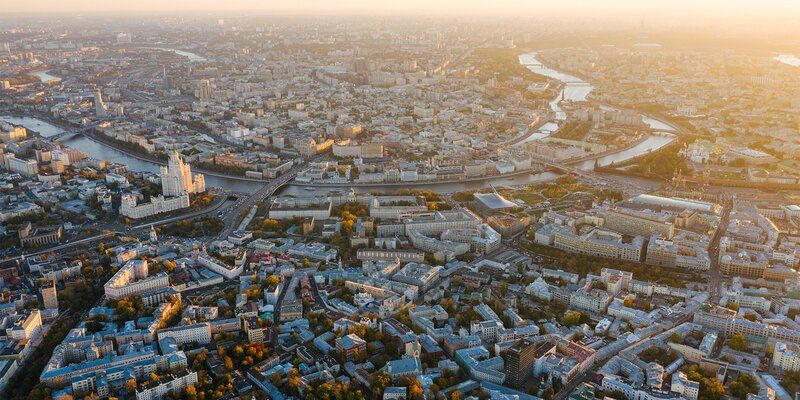
Moscow has over five thousand streets, lanes and embankments, and their number grows year to year, as new neighborhoods, roads and transport objects are built. Each new street or bus stop should get a name which would be both unique and logical.
To do that, you have to analyze and categorize great chunks of data. That is what the experts from the Moscow Analytical Center do. They told mos.ru how they classify Moscow toponyms and how new place names appear on the city map.
So people don’t get lost
The main goal for those in charge of Moscow toponyms is to eliminate any doubles and inconsistencies. A city can’t have multiple streets with the same name: that could make life much more complicated. The mail will be coming to the wrong address, and the emergency services too. Nevertheless, accidents happen: for example, when the city limits move to incorporate townships where streets with the same name already exist.
When Moscow expanded in 2012, they decided to leave the street names in the new areas as is, in order to avoid mass renaming and the confusion that would follow. They just started adding the old township or settlement name to the address. As a result, an official address in the Troitsky and Novomoskovsky Administrative Districts can look like this: Moscow, Troitsk, Sirenevy Boulevard. There’s also a Sirenevy Boulevard in the eastern part of Moscow.

In order to keep the doubles from springing up, the toponymic data is being thoroughly analyzed and summed up in classifiers. There are four of those in Moscow. They summarize all the data about streets, territories and municipal structures.
“69 streets in Moscow got their names in the last year alone, with 20 more this year. Each decision like that is based on a sequence of long and complicated procedures: getting consent from the locals, approval of the Municipal interdepartmental commission for naming territorial units such as streets, underground stations, organizations and other objects in Moscow, as well as in some cases, petitioning specialized institutions, including Federal ones,” Maksim Ivanov, CEO of the Moscow Analytical Center, told us.
The Center staff keep a registry of new streets and underground stations, or old ones being renamed. A special resolution issued by the Moscow Government or the appropriate urban district administration is needed to put this procedure in motion. The Analytical Center keeps the change record for every object, and corrects mistakes that happen from time to time.
Whose name’s on the plaque?
The city object naming procedure is complicated, long and full of barely noticeable details. For example, to name a street in honor of a person, at least 10 years should elapse after that person’s passing. On top of that, each idea should be reviewed by an interdepartmental commission that decides how appropriate it would be for the given area and district.
In 2018, the city was deliberating on how to call the nameless streets and drives spanning the area where the former Likhachev Factory (ZIL) used to stand. Eventually, some of them were named after the factory’s founders. Now Moscow has Ivan Likhachev Prospekt, named after the founding father of the Russian automotive industry and the manager of the plant for 25 years. Ryabushinsky Brothers Street commemorates the founders of AMO Automotive Plant (ZIL); ZIL Boulevard – the plant itself. Where cars used to be assembled in the past, there’s going to be the Moscow branch of the Hermitage. That was the reason to name some of the streets in that area after well-known Russian avant-garde painters such as Pyotr Konchalovsky, Ilya Chashnik, Nikolai Suetin, Mikhail Larionov, etc.

Here, in the southern part of Moscow, there’s now Valery Kharlamov Square commemorating the legendary ice hockey player. It’s close to the Ice Hockey Museum at Avtozavodskaya Street. Kharlamov is not the only famous athlete whose name is now enshrined in the streets of Moscow. A street named after the renowned volleyball coach Alexander Gomelsky appeared on the map in 2018. Under his leadership, the CSKA volleyball club won the national championships 16 times. The USSR national team he also trained won multiple European and World Championships, as well as Olympic Games. Alexander Gomelsky Street is located near the CSKA sports center, close to Leningradsky Prospekt.
There’s now Tchaikovsky Square right at the heart of Moscow: along the Garden Ring, between Povarskaya and Bolshaya Nikitskaya. Right beside it is a cultural center, also named after Tchaikovsky.
Irkutskaya to the east and Belomorskaya to the north
Quite a few of the Moscow streets are named to honor other Russian and ex-USSR cities. They also can’t just be foreign objects inside our historical place-naming system. Those names are not put there at random, they follow the real geographical location of the cities they mention. For example, Irkutskaya Street could only ever be located in the eastern part of Moscow, and Belomorskaya Street – in the northern part of it.
If you propose, for example, to rename Osenny Boulevard into Elistinsky Boulevard, your idea wouldn’t fly. The logic behind it is simple: Osenny Boulevard is located in the western part of the city, while Elista city is to the south of Moscow. So if there’s ever a street in Moscow that honors the Kalmyk capital, it will be in the south.

There are lots of streets like that among the Moscow toponyms. For example, there are almost forty streets named after Crimean cities, as well as artists, writers, seafarers and other famous people born at the peninsula. Naturally, most of them are in the South and Southwest Administrative Districts: Simferopol Highway, Simferopolsky and Chernomorsky Boulevards, Balaklava and Nakhimov Prospekts, streets named after Artek, Koktebel, Feodosia and Dzhankoy.
Back to the roots
Another important requirement to the place names of Moscow is for them to serve as markers for their districts’ history. For example, only Nizhegorodsky District could get a street with the name “Karacharovskaya” because that’s where Karacharovo Village was located from the 16th century and up to the 1930s.
This summer, the Heroic Oil Riggers Park will appear on the map of Moscow. Naturally, it is located next to Moscow Oil Refinery, near 1st Kapotninsky Proyezd inside the 2nd Kapotnya Block. Following the same principle, the green area in front of the Rosseti Moscow Region head office at Vavilov Street was named after Moscow Energy Workers.

Sometimes, new streets help us bring the old placenames back to our consciousness. Not long ago, a drive in Khoroshevo District was officially renamed into Voyennoye Pole Street. A “Voyennoye Pole” (military field) for military maneuvering and target practice used to be located there in the 19th century. The nearby Khodynka Field used to accommodate military camps, as well as Nikolayevskiye Barracks in the late 19th century and Oktyabrskiye Barracks in the 20th century.
The unnamed drive connecting Academician Sakharov Prospekt and Orlikov Pereulok is now called Domnikovsky Pereulok. The street located in that area up to 1962 used to be called Domnikovskaya Street. Later it changed name to Masha Poryvayeva Street. Veslovsky Proyezd in Kapotnya owes its name to the Veslovo ravine, also called Mikhalevo marsh. There is now Barkhatny (Velvet) Pereulok in Novo-Peredelkino; in 1830s, merchant Yepaneshnikov owned a rug factory there. It produced “velvet rugs made of Spanish and Russian wool”.

On top of that, a street name should reflect its configuration. Only a street that goes up or down can be named Podyomnaya (Sloped). It wouldn’t be right to call a street like that Ravninnaya (Flat).
In the recent years, all street signs and plaques in Moscow are getting their Latin equivalents. The Analytical Center also makes sure that the Latin version of each and every Cyrillic name is spelled correctly and strictly follows GOST standards. The spelling system they chose for that is English, as opposed to French or some other ones.
Thus, the objective of the Moscow Analytical Center is to make all the information systems in Moscow speak one language, and to make it so that that language is error-free and follows all the established norms.