Sergei Sobyanin: 75 Russian regions are connected to MosMedAI

Moscow is definitely Russia’s top center for developing and piloting AI-powered MedTech solutions as every year it comes up with more and more digital developments with dozens of tools being refined and implemented on a step-by-step basis, Sergei Sobyanin blogs.
“It all started literally in the field — back in 2020, during the COVID-19 pandemic. Then AI-based technologies were pioneered in practice to support routine coronavirus pneumonia tests. The use of AI proved extremely successful, and since then we have been scaling it up to cover other types of tests,” the Moscow Mayor wrote.
Over six years, Moscow piloted 200 AI-based solutions. 67 of them have become standard practice at metropolitan healthcare institutions.
For example, last year, innovative tools were introduced and employed to diagnose multiple fractures of the ankle, wrist, and shoulder joints. Hospitals have also begun to use AI to detect arthrosis.
Whereas throughout 2024 AI-based tools analyzed four million medical images taken in Moscow’s hospitals, in January 2026 alone, the figure rose up to two million.
Moscow has created not just another handy digital service but a pivotal instrument for improving the efficiency of radiation diagnostics, with a colossal positive impact in terms of time, quality, and costs.
This tool is now being successfully scaled up across the country. At the behest of Russian President Vladimir Putin, a digital platform, MosMedAI, was created specifically to analyze medical images. 75 regions — more than 2,000 healthcare institutions — have joined it since 2024. Additionally, two federal centers, namely, Almazov National Medical Research Center and Kuban State Medical University, were connected to it in late 2025.
Today, MosMedAI provides regional doctors with access to eighteen AI-based tools. Three algorithms each analyze mammography, fluorography, and chest X-ray images, plus CT brain scans. Five more AI-based services focus on chest CT scans. In April 2026, an AI tool reading spinal X-rays to diagnose scoliosis was introduced.
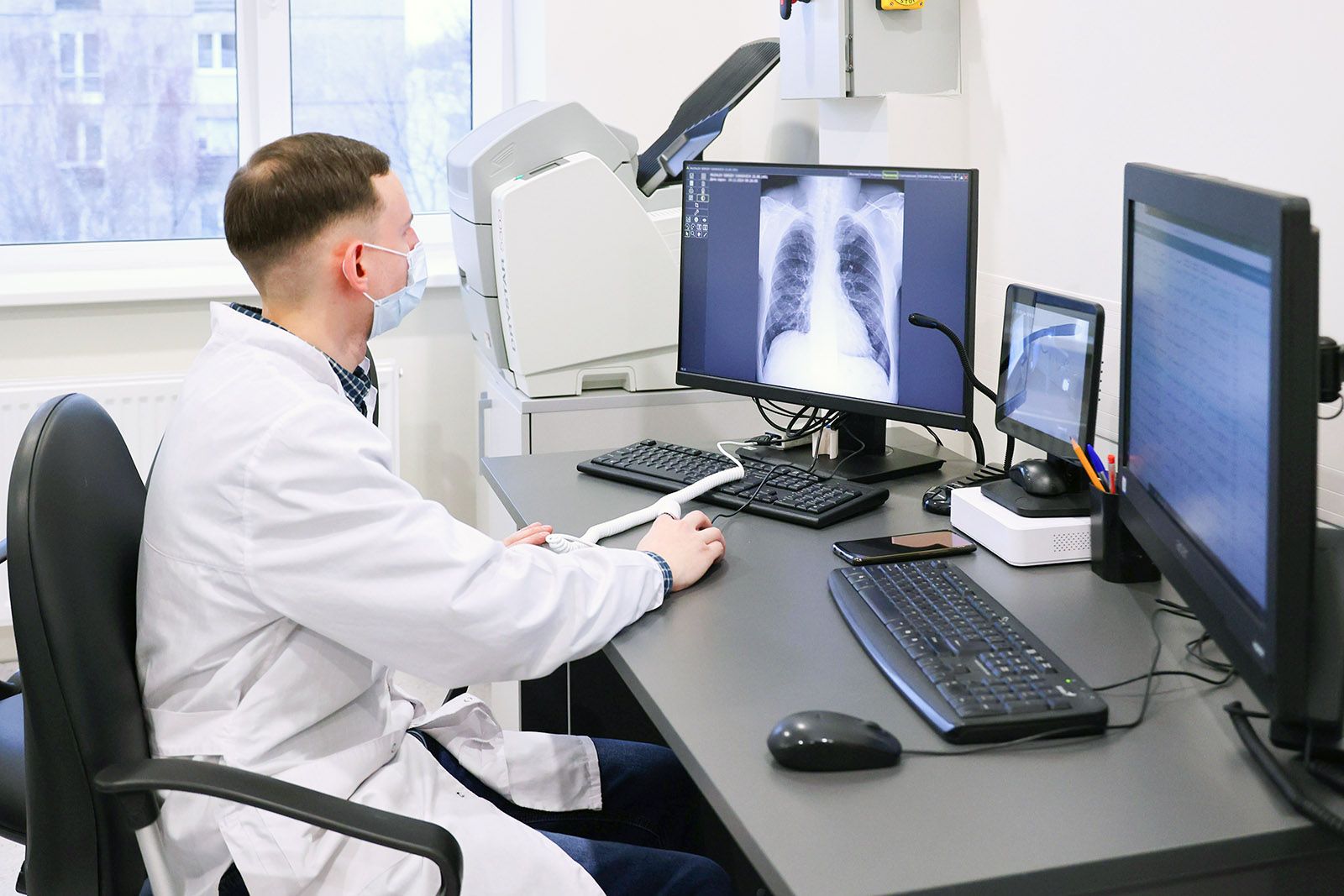
In 2024, 0.9 million regional images were processed using the platform, while in the first three months of this year, the figure reached approximately 3.2 million, twice as many as in Moscow itself.
For regions, connecting to the MosMedAI platform provides capital-level expertise without the need to expand the staff. Furthermore, diagnostic timelines have got significantly shorter as AI completes the initial analysis in just a few minutes, whereas previously the interpretation of complex diagnostic tests would take up to one day.
On top of that, regions can improve the quality of diagnostics as the algorithms help identify abnormalities that are invisible to the human eye. And that is certainly vital for the early detection of cancer and lung diseases.
The economic effect is of great importance, too, however. Connection to the platform is free of charge, so regions are able to implement state-of-the-art technologies without extra development and procurement costs.
“What are the benefits for Moscow? First of all, millions of tests from the regions build up the ever-growing array of anonymized big data to be the basic material for further training and improving our AI models. This will improve the quality of diagnostics at the next stage,” Sergei Sobyanin wrote.
In Moscow: AI early detects weak bones
The future of medicine is a synergy between human expertise and the technological capabilities of artificial intelligence. Moscow is already creating a digital foundation for the success of Russia’s healthcare.