President Putin and Moscow Mayor Sobyanin launch testing of self-driving metro train without passengers

President of the Russian Federation Vladimir Putin and Moscow Mayor Sergei Sobyanin have launched the official testing of Russia's first self-driving metro train. The event took place at the Aminevskoye electric depot of the Moscow metro. An exhibition of self-driving vehicles also opened there, largely consisting of unmanned (autonomous) systems created on the order of the Moscow Government.
According to Sergei Sobyanin, during the first stage of tests, the self-driving train will run during the night with a train operator onboard, but without passengers and off-schedule. Three more test stages are to be completed in the coming years.
"Over the next two years, we will complete three more stages, and by 2027, the train will already run fully self-driving, without an operator, and on the regular schedule. And by 2030, we will have a completely self-driving metro line, meaning that all trains on this line will be self-driving," said the Moscow Mayor.
Sergei Sobyanin also demonstrated other examples of self-driving technology, including an ice-class unmanned surface vehicle.
"What a curious exhibit — an ice-class unmanned boat cruising the Moscow River all year-round. It performs control functions, video surveillance, identifies violators, and so on," shared Mayor Sobyanin.


Particular attention should be paid to the autonomous import-substituting systems manufactured in Moscow, which are used for diagnosing and repairing oil, gas, and utility pipelines, as well as medical and delivery robots already operating in city hospitals. Industrial robots are among the most popular systems of this type.
"In fact, industrial robots and robots in warehouses and retail are the most popular ones today. We are talking about thousands of machines that are already replacing a significant amount of unskilled labor. And we anticipate about 35 thousand more to join (forecast for the coming years)," highlighted Sergei Sobyanin.
Unmanned aerial systems help create a digital twin of the city and are also used for monitoring land use and illegal construction.
"Tens, hundreds of thousands of photographs are integrated and create a three-dimensional image of the city, while also monitoring utilities and controlling about 60 per cent of all issues related to land use, illegal construction, and so on. Such an enormous, gigantic task can now be easily managed," said the Moscow Mayor.


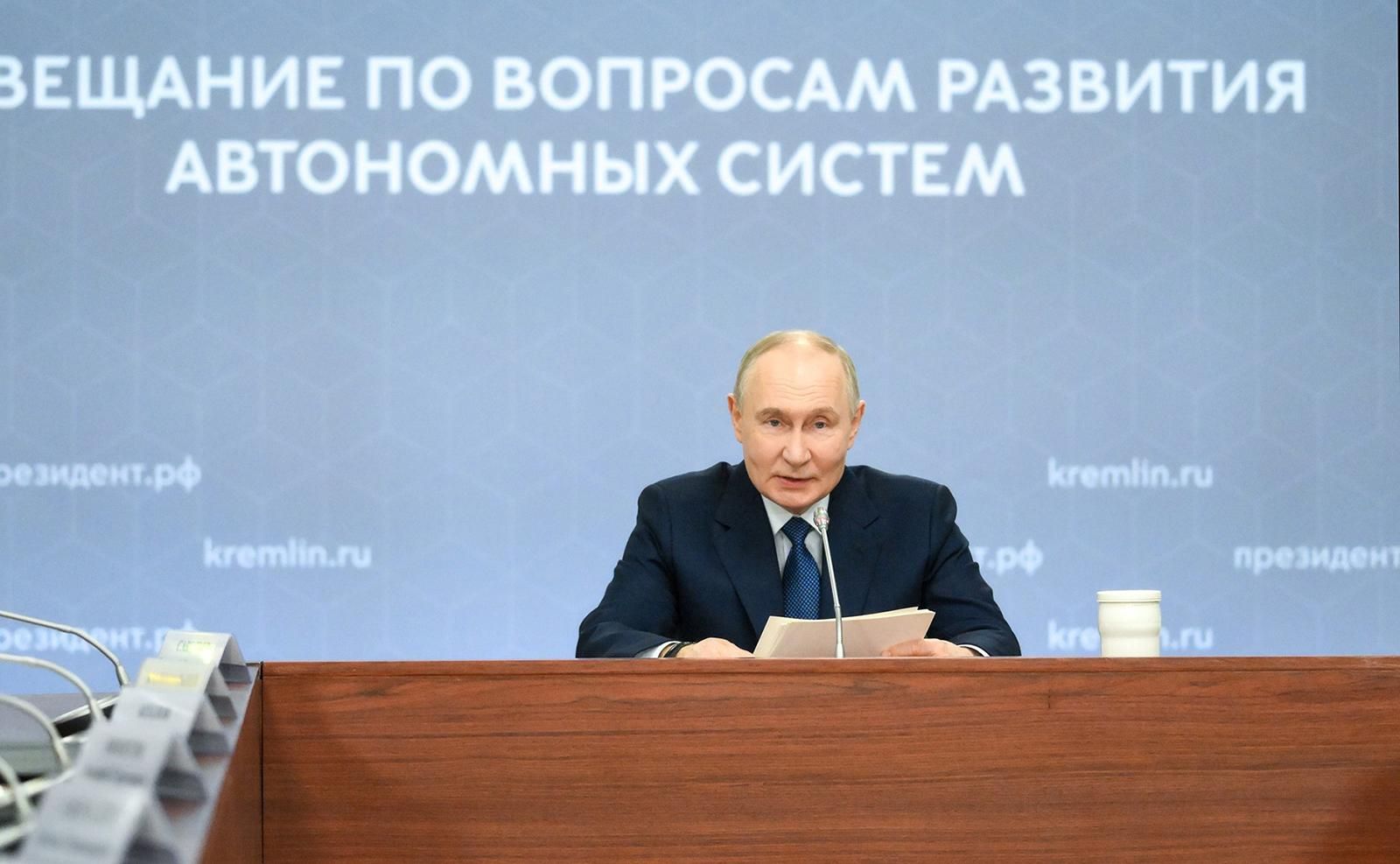
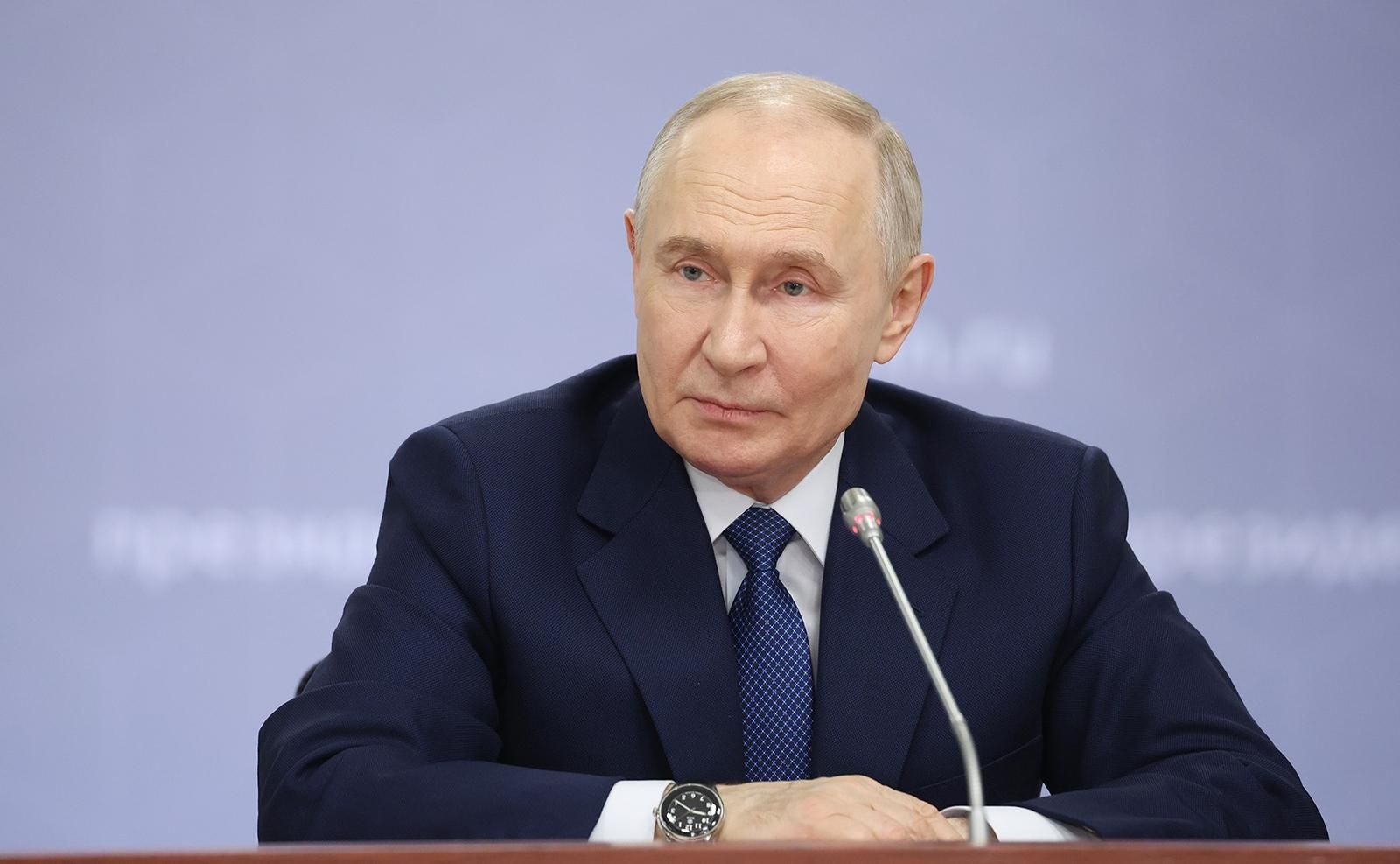
At the Aminevskoye electric depot site, Vladimir Putin held a meeting on the development of unmanned systems. In his opening speech, the President of Russia mentioned that the country has the leadership potential in the field of unmanned technologies.
"It is obvious that we have the scientific, HR, and industrial potential to be among the global leaders in the development, production, and, of course, widespread implementation of autonomous systems. These key technologies, along with digital platforms and artificial intelligence, determine the future of the entire world, and, undoubtedly, the successful implementation of our most important plans and initiatives will also depend on this," said Vladimir Putin.
The President of Russia also emphasized the importance of the federal subjects of the Russian Federation in the development of unmanned technologies. According to him, Moscow is the undisputed leader in creating an economy of unmanned systems, and this experience must be replicated in other regions.
"We should also introduce the best practices of Moscow, which today is the undisputed leader in creating an economy of unmanned systems, in other subjects of the Federation. And I ask Mayor Sobyanin to incorporate a mechanism for sharing experience with colleagues from other regions regarding the application of data processing systems, autonomous solutions, artificial intelligence, including solutions for quality improvements in the work of passenger transport. This is an important public dimension of using advanced technologies," stated the President of Russia.
As Vladimir Putin noted, the national self-driving transport industry must be hosted on a sovereign technological and production platform, relying on domestic scientific and engineering schools, including in areas like microelectronics and optics. In turn, the development of autonomous systems will require a revision of the personnel training mechanism in transport, logistics, and other industries. Plans are also in place to attract specialists who already have experience operating unmanned vehicles, including servicemen and veterans who operated combat drones.
"I ask the Government, together with the 'Defenders of the Fatherland' Foundation, to create additional opportunities to attract wounded veterans and servicemen to the development, production, and operation of autonomous systems," stated Vladimir Putin.
The President of Russia added that their experience, knowledge, and skills should be in demand in civilian life as well.


First self-driving metro train
Testing of self-driving equipment begins on the Big Circle Line (BCL) aboard the Moscow-2024 train without passengers.
The self-driving software was developed and is maintained by specialists from the Moscow Center for Research and Development of Unmanned Transport. The software comprises several systems — train, infrastructure, schedule, and dispatching — and it can independently perform acceleration, braking, and opening and closing of doors at stations. Furthermore, the software allows for maintaining the required distance between trains in coordination with the Moscow metro's traffic management system.
"I have reported to the President of Russia Vladimir Putin about the start of the Moscow-2024 train tests on the BCL. At the first stage, it will be tested without passengers aboard — only with an operator who will monitor the system and ensure safety," wrote the Moscow Mayor in his channel on the MAX messenger.
Source: Sergei Sobyanin’s Max channel
At the first stage, the tests will involve such key train control systems as:
— The auto-driving system, which controls acceleration, braking, maintaining permissible speed, and precise stopping of the train;
— The automatic fall detection system, which detects people or foreign objects for prompt action to prevent incidents;
— The machine vision system, which detects anomalies on the rolling stock's path;
— The communication system with the dispatch center, which transmits real-time data from the train and helps respond to incidents quickly. In the future, the equipment will also be able to automatically create train schedules.
Later, it is planned to test the self-driving technology on the newest Moscow-2026 metro train.
As a result, by the end of 2026, a working prototype of the train will be ready. It will run regularly on the line on schedule alongside other trains, without passengers, keeping the standard intervals of the Moscow Metro. In 2027, the first passengers will be allowed on the train.
Pursuant to the urban transport development strategy, the first self-driving metro line is to be launched by 2030.
"In 2027, the first passengers will be allowed on the train. By 2030, we expect to launch the first self-driving metro line. I have told President Putin about the development of self-driving vehicles and plans for its incorporation. Moscow is one of the world leaders in the use of unmanned technologies in the urban conditions and social sphere," Sergei Sobyanin shared on his channel in the MAX messenger.
Source: Sergei Sobyanin’s Max channel
Today, the Moscow Metro has the shortest intervals between trains among world metros: during peak hours on main lines, the intervals are 60–90 seconds long. For comparison: standard intervals in the Paris Metro are from 2.5 to 3 minutes, in Beijing, they are from 1.5 to 2 minutes. With self-driving technologies, it will be important to maintain and, if necessary, further reduce this figure.
Moscow Metro trains are produced by the Metrovagonmash engineering company. The Moscow-2024 train is 97% Russian-made.
Self-driving technologies: Moscow's experience
Moscow is one of the world leaders in implementation of unmanned technologies in urban management and social sphere. Thanks to the synthesis of Russian scientific, educational, and production potential, a new industry is essentially being created in the capital, strengthening the city's leading position in the field of innovation.
"Under the experimental legal status, the Lvyonok-Moscow self-driving tram is already operating, a large-scale traffic monitoring and management system has been launched, commercial deliveries using robots are being tested, autonomous boats are being tested, a digital twin of Moscow has been created, an experiment has been conducted on robotic year-round cleaning of five city parks, robotic systems are being developed in healthcare, trade, and logistics," wrote the Moscow Mayor in his MAX channel.
Source: Sergei Sobyanin’s Max channel
Self-driving tram
In September 2025, Sergei Sobyanin launched Russia's first fully self-driving Lvyonok-Moscow tram with passengers aboard. Following the route No. 10 from Shchukinskaya Metro Station to Kulakova Street, it has already transported over 60,000 passengers. The self-driving tram has traveled over 25,000 kilometers around the capital without a single traffic violation. It operates in standard urban conditions alongside other trams. An employee of the tram department of the Moscow Metro is present in the cabin, performing visual control, opening and closing doors when necessary, resolving other issues related to the operation of the tram, and monitoring payments.
The work on the introduction of self-driving technologies into Moscow's tram network is ongoing: as of the end of 2025, four self-driving trams are running the lines, some in laboratory mode, including the three-section tram Vityaz-Moscow. It began test rides to prepare for the subsequent launch of passenger traffic.
By the end of 2026, 15 trams of the Krasnopresnenskaya tram network will be equipped with self-driving technologies.
Following the urban transport development strategy, by 2030, over 350 Moscow trams (about two-thirds of the capital's fleet) are to be equipped with self-driving technologies, and by 2035, the share of self-driving trams should be almost 90%. As a result, the accuracy of Moscow's tram schedule should become even more precise.
Moscow's self-driving tram is a unique project that has no analogues. It is the only transport of its kind in the world that carries passengers in a fully self-driving mode. No other country has a solution with such a level of autonomy at the moment.
The modern Moscow trams like Lvyonok-Moscow and Vityaz-Moscow were manufactured by the Russian company "PC Transport Systems" that is a part of CJSC Transmashholding. The software and the self-driving system were fully developed by the Moscow Government employees.
The launch of Russia's first self-driving tram is the result of the work of the team at the Center for Advanced Transport Development of Moscow, which Sergei Sobyanin opened in May 2024 in Kuntsevo. Capital specialists with experience at leading Russian and international companies independently developed the software and selected a unique set of equipment for the self-driving tram, which is not used anywhere else in the world, including radars, lidars, and cameras.
The project has been implemented thanks to the Russian Government establishing an experimental legal status for launching fully self-driving transport. The document was prepared by the Russian Ministry of Economic Development and initiated by the Moscow Government. Moscow is the first city in Russia to adopt such a status.
Thanks to efficient cooperation with the Central Bank of the Russian Federation, the capital's self-driving tram became Russia's first vehicle insured using a smart contract with settlements in digital rubles.
The capital's self-driving tram control system is the property of the Moscow Government and operates more accurately and efficiently than its foreign counterparts. The innovative solutions and reliability of Russia's first self-driving tram have been repeatedly recognized with prestigious national and international awards.
A shipyard for construction of innovative electric vessels has opened in Moscow—Sergey Sobyanin
MIA unmanned boat
At the request of the Ministry of Internal Affairs of the Russian Federation (MIA of Russia) and on the order of the Moscow Government, an unmanned boat was developed to ensure transport security and environmental patrol of water bodies. In late 2025, a second-generation boat with a domestic hull was produced for targeted use.
The development of the boat's software and its testing is led by the team of the Moscow Transport Complex.
Currently, the prototype's following functional capabilities have been tested:
— Autonomous movement, obstacle avoidance;
— Inspection of hydraulic structures for the presence of foreign objects;
— Detection of people in the water, dropping a lifebuoy while maintaining position near the person in the water and communication with the dispatcher;
— Photo and video recording of ship speeding and the availability of registration marks;
— Photo and video recording of emergencies aboard ships within the Moskva.Reka automated information system — smoke, collisions;
— Constant real-time video surveillance and suppression of violations via loudspeakers.
During the 2026 navigation season, boats for eco-monitoring of the Moscow River water area will be tested. The following functional capabilities will be checked:
— Studying the relief and creating a three-dimensional seabed mode;
— Assessing water quality, identifying pollution;
— Determining the volume of bottom sediments.
In 2026, the serial production of unmanned boats is to launch at the unique high-tech enterprise for the production and maintenance of electric boats — the Moscow Shipyard, opened on November 26, 2025.
In 2026, up to 10 boats are to be manufactured, including five intended for the MIA of Russia. These boats will identify and record offenses on the water, at piers, and on the embankments. Another five boats will be used for environmental patrolling in order to ensure security and immediate response in the water area. This will become one of the best instances of introducing unmanned technologies into all spheres of the city's development. Plans for 2027 include the production of another 15 unmanned boats.
Unmanned river passenger boats
In 2026, software will be upgraded for using innovative unmanned technologies with regular river passenger boats Moskva 1.0. By the end of this year, a plan for implementing an autonomous navigation mode should be approved, taking into account the current control system.
After successful testing, the first unmanned passenger boat will launch as early as 2028.
Intelligent Transportation System
The Intelligent Transportation System (ITS) is a large-scale traffic monitoring and management system based on advanced technologies. This is a critically important element of traffic management in the capital. The ITS consists of unique Russia-made systems owned by the Moscow Government.
The Automated Traffic Control System (ATCS) is the central link in traffic lights control, analyzing traffic in real time using detectors and cameras. It automates processes based on intelligent management, allowing for the use of various traffic scenarios for private, public, and special transport. Today, 70 per cent of all capital traffic lights are connected to the ATCS.
This is the first traffic lights management system in Russia that ensures integration with a large number of controllers. The practice of transmitting real-time information about traffic lights operation to geo-services and navigation apps was tested in Moscow in 2025. This is the first such solution in Russia and Europe.
For the first time, navigation apps can show the signals of all traffic lights in Moscow. Drivers can see the current traffic lights signals — red, yellow, or green — in the services like Yandex Maps, Yandex Navigator, and the electronic map application 2GIS. If a traffic light has a timer, the services indicate how much time is left until the signal changes. This helps drivers slow their cars down more smoothly before a red light and start moving promptly on a green signal.
In 2025, a video analytics system was launched at Moscow traffic lights as a key tool for developing self-driving transport. On certain routes, smart traffic lights now recognize an approaching tram and give it priority at an intersection, reducing time loss by approximately 20 per cent.
Information about the status of traffic lights is transmitted to the electronic systems of self-driving trams, delivery robots, self-driving taxis, and drivers' navigation apps via secure data transfer protocols.
Delivery robots
In 2019, Yandex launched the first commercial deliveries using autonomous robots. Today, commercial deliveries are performed by 200 robots, and by the end of 2026, their number is to increase up to three thousand units.
Delivery robots are designed for autonomous deliveries within a radius of up to two kilometers, delivering about 15 orders a day. It moves independently around the city — chooses the optimal route and overcomes obstacles, knows how to use pedestrian crossings and look around, sees approaching objects in advance, and understands traffic light signals.
Since their launch, delivery robots have traveled more than 1.8 million kilometers in autonomous mode and completed over 850 thousand orders. Robotic delivery is completely automatic and remotely monitored by an operator, and the average speed of the robot on sidewalks is four kilometers per hour.
Such robots are an autonomous, reliable, safe, and fully eco-friendly tool for delivering goods that creates a positive image of the urban environment.
Moscow Digital Twin
The Digital Twin of Moscow project was carried out with the use of unmanned aerial systems; it is one of the key technological solutions in the capital's management system. This is a constantly updated 3D model of the city with an area of over 16 thousand square meters, built on the basis of aerial photography and laser scanning data.
In 2025, 2,258 square kilometers of urban territory were captured using unmanned aerial vehicles, and over 2.6 million aerial photographs were taken. For these purposes, "Storm" UAVs are used (flight range—100 kilometers, flight time—two hours), produced in the capital.
Today, the Digital Twin of Moscow contains 7.5 thousand analytical data layers from all spheres of city life — from traffic to the state of utilities. Using them, the capital's authorities make decisions concerning infrastructure development and the quality of life improvement for Moscow residents.
Supervision
Unmanned aerial systems improve the quality of supervisory activities; they are capable of carrying out the following work:
— Controlling the use of real estate — analyzing the use of land plots, identifying unauthorized constructions and other violations (the sphere of the Moscow State Inspectorate for Control over the Use of Real Estate);
— Conducting construction supervision — aerial monitoring of objects to identify violations of urban planning norms and deadlines (the sphere of the Moscow Committee for State Construction Supervision).
Aerial monitoring automates control, replacing mass on-site inspections and manual inspection with the analysis of orthophotomaps and 3D models. Today in Moscow, 60 percent of violations are detected using remote monitoring. For these purposes, the Sibiryachok UAV is used, its video camera equipped with a 160x optical zoom. It is produced in the capital, has a flight range of 10 kilometers, and a flight time of 30 minutes.
The Moscow Government organized forest fire monitoring via unmanned aerial vehicles on the territory of the Ryazan region to detect fire sources and promptly plan measures to eliminate them. In 2025, 3,255 specialists and 944 units of equipment were involved in this work.
For these purposes, Ptero-G1 UAVs (flight range—1,350 kilometers, flight time—15 hours, production —Ptero LLC, Moscow) and Storm UAVs are used.
Mobile groups of operators of unmanned aerial systems have been deployed for fire monitoring. The video data stream received in real-time from unmanned aerial vehicles is integrated into the Unified Data Storage and Processing Center geographic information system.
Housing and communal services
In 2024–2025, an experiment on year-round robotic cleaning of five city parks was conducted in Moscow, involving 20 Pixel cleaning robots, which ensured the cleaning of territories with a total area of 618 hectares. Their maximum movement speed is 10 kilometers per hour, cleaning productivity is two hectares, and autonomous operation time is up to 16 hours per day. The developer is Avtonomika LLC — a resident of the Lomonosov Cluster; their production sites are located in the capital.
The experiment showed that today robots' capabilities allow for high-quality cleaning of 100 per cent of hard surfaces and performing up to 50 per cent of necessary operations for maintaining park territories, including snow removal, watering paths, and distributing anti-ice reagent. Thus, the need for corresponding personnel is reduced to 30 per cent.
Furthermore, in May 2025, Moscow conducted the first successful tests on the application of unmanned technologies in the Mosvodokanal JSC system. They showed that the Tubot robotic systems, produced by Tubot LLC in the Skolkovo innovation center, are capable of moving through horizontal and vertical pipelines up to two kilometers without interruption.
This allows for the necessary infrastructure diagnostics without additional excavation and cutting of utility networks, reducing the cost of maintaining pipeline systems by 80 per cent.
Healthcare
Today, robotic complexes operate in more than 10 Moscow medical institutions, helping perform the following functions:
— Delivery of goods inside a hospital building and between buildings — including medicines, documents, meals, medical devices, and other necessary items. Such robots are utilized at Filatov Clinical Hospital No. 15, Pirogov Clinical Hospital No. 1, Vorokhobov Clinical Hospital No. 67, Sklifosovsky Research Institute for Emergency Medicine, and Botkin Moscow Moscow Multi-Purpose Clinical Center;
— Consulting and routing of patients. Consulting robots works at Filatov Clinical Hospital No. 15, Vorokhobov Clinical Hospital No. 67, Sklifosovsky Research Institute for Emergency Medicine;
— Receiving, storing, and packaging medicines. Robotic pharmacies operate in Filatov Clinical Hospital No. 15, Davydovsky Clinical Hospital No. 23, in Yudin Clinical Hospital, Konchalovsky Clinical Hospital, Yeramishantsev Clinical Hospital, Buyanov Clinical Hospital, Infectious Clinical Hospital No. 1, Morozovskaya Children's City Clinical Hospital, and the Kommunarka Moscow Multi-Purpose Clinical Center.
Among the robotic complexes, they have the Promobot consultant robot, able to move 0.2 meters per second and work autonomously for up to 10 hours.
Trade and logistics
There is a great potential for introducing robotic systems in the trade and logistics industry.
In 2024–2025, over a thousand robots were introduced at warehouse and retail facilities in Moscow, moving goods, sorting items, forming pallets, and assembling orders. For this, the following devices are used:
— AMR (movement speed—up to 2.5 meters per second, load capacity — up to 1.5 thousand kilograms, operating time without recharging — up to 24 hours, production — Moros LLC, Moscow, Minsk);
— Robo-TS stacker (load capacity — 1.4 thousand kilograms, maximum speed — 1.67 meters per second, maximum lift height — 4.5 meters, production — Robo-TS LLC, Moscow);
— Collaborative robot RC3 (load capacity—three kilograms, working zone radius — 800 millimeters, maximum speed — two meters per second, production — Robopro LLC, Moscow).
The plan is that by 2030, up to 42 thousand robots could be introduced in the capital's trade sector. As a result, labor productivity in warehouse operations will increase by 16 per cent, and the need for low-skilled personnel could decrease by 40 per cent (about 55 thousand people).
On the rails to the future. How the unmanned laboratory tram operates
Aminevskoye electric depot
The Aminevskoye electric depot is one of the largest in the Moscow Metro; it opened in 2024. On a land plot of 15.7 hectares, 55 buildings and structures with a total area of 100 thousand square meters were erected, including a stabling and repair building, an administrative and amenity building, a motor depot, a rail welding station, a warehouse, a train washing chamber, and a personnel building.
The Aminevskoye electric depot provides for the repair, washing, and operation of trains running on the Moscow Metro's Big Circle Line.
In accordance with the train life cycle contract, trains assigned to the Aminevskoye electric depot are serviced by the manufacturer's service company throughout their entire 30-year service life. Thanks to the transition to this model, the Moscow Government significantly reduces transport maintenance costs, while also improving its quality, meaning passenger trips become even safer and more comfortable.
For the repair, washing, and operation of trains, the cutting-edge equipment has been installed in the depot. Alongside washing and a wheel pair lathe, completely new technical solutions were applied for the first time on the initiative of metro specialists.
Five stationary upper platforms for servicing car climate control units were set up in the depot. For the first time in the Moscow Metro, a technology for servicing air conditioning systems using suspended platforms in the stabling part of the building was applied. Air conditioners are washed in another room — the train washing chamber; a separate platform was equipped here for this purpose. Due to the separation of processes, it is easier for personnel to service air conditioners, and diagnostics and repair proceed much faster.
Rolling stock leaves the Aminevskoye electric depot via three connecting branches 2.5 kilometers long from the running tunnels on the side of the Davydkovo and Aminevskaya Stations. The connecting branches include two unique viaducts with a total length of almost one kilometer. They are used for the first time for trains to enter and exit the capital's metro depot.
Over two thousand new jobs have been created at the depot. There are all conditions for effective work and proper rest for personnel, including a canteen for 140 seats. Rest rooms for locomotive crews are organized like hotel rooms — located in one block with a bathroom.
The medical service includes rooms for pre-trip examinations, a doctor, a medical psychologist, a vaccination room, a treatment room, and a rehabilitation activities room.
In addition, the depot has a sports and gym with an instructor's office, an assembly hall for 180 seats, and utility rooms.
A new simulator — Moscow-2020 train simulator — has been installed here, and a modern training classroom has been equipped where train operators undergo training and improve their qualification.
The Aminevskoye electric depot is within walking distance of surface transport stops on Aminevskoye Motorway and Vereiskaya Street. This significantly shortens employees' commute to work.