Triumph, protection, adornments: #Москвастобой (Moscow with you) on Moscow’s archways and gates
(11).jpg)
It is believed that the tradition to erect triumph gates in Russia was established by Peter the Great. The first such structures came into being in 1696 to commemorate the return of the troops from the Azov campaigns. In 1709, seven triumphal arches were erected to mark the victory in the Battle of Poltava.
Find out where the most famous gates of Moscow are (or were) located using the #Москвастобой project (Moscow with you) compiled by the Moscow Tourism Committee.
Tverskaya Zastava Square
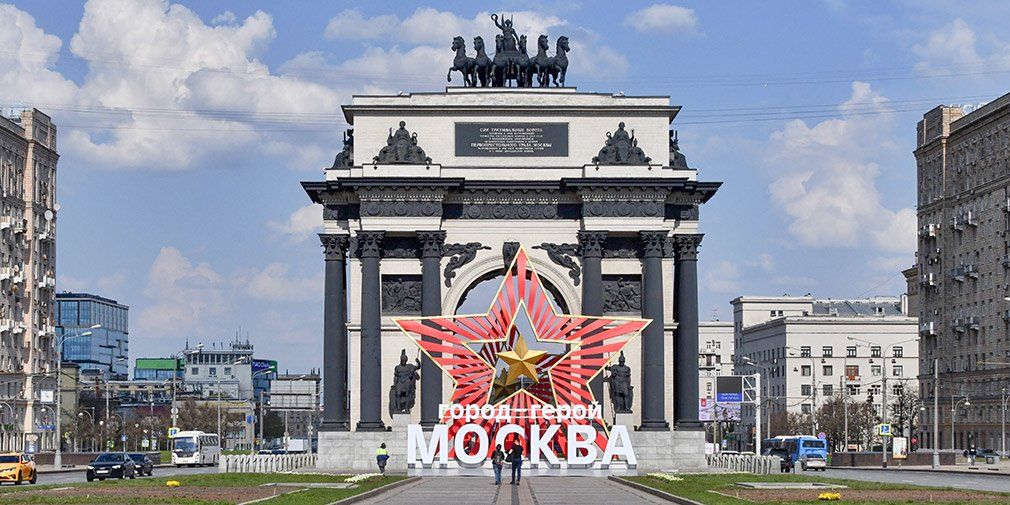
In 1834, a grand Triumphal Arch was erected on Tverskaya Zastava Square covered with white stone, adorned with sculptures and topped with a chariot driven by the goddess of victory, Nike.
Previously, there were wooden gates there built in 1814 to mark the return of the Russian troops from Paris. The new project was developed by Joseph Bové in line with Emperor Nicholas’s orders. The gates were inscribed with the words “Saviour of the Fatherland” Alexander I.
The arch survived until the 20th century: an electric tram ran under it at the turn of the century. In 1936, the arch was dismantled, but in the 1960s, it was decided to rebuild it in a new place, on Kutuzovsky Prospekt. The decorations were restored from old photos and blueprints. The architect’s model kept in the Architecture Museum also helped the renovators. Several decades later, a flowerbed was planted and illumination installed near the gates during the renovation.
VDNKh’s main entrance
.jpg)
During city events the archway of VDNKh’s main entrance becomes a venue for light and musical shows. But in fact it symbolises the Soviet people’s victory in the Great Patriotic War. It was built in the 1950s and designed by architect Innokenty Melchakov. The arch is adorned by six pairs of columns with figures of a tractor driver and a kolkhoz woman on top. Right after the arch, there is a beautiful view of the Main Walkway and the Central Pavilion.
Main entrance of Gorky Park
.jpg)
Another iconic arch can be found on Krymsky Val Street, next to Muzeon Park and the Moskva River embankment. It is difficult to miss, because it is the main entrance to Gorky Park.
There is a small museum dedicated to the history of the park inside the arch, as well as an observation point with a view of Vorobyovy Gory, Shukhovskaya and Ostankino towers and the building of the Foreign Ministry.
Voskresenskiye Gate
.jpg)
A gate was built on the bank of the Neglinnaya River in the mid-16th century. It protected the city and was locked for the night to reopen in the morning, when local shops began their business day.
The locals called the gate differently, most often like the river, Neglinnye Gate. There was a second name, Kuryatnye, because it was located near the riverbed (‘kurya’ meant ‘riverbed’). There was also a third name, Lion’s Gate, because Ivan the Terrible ordered to place lions given by the English King Philip there for a short time for everyone to see the magnificent present.
In the 17th century, Tsar Alexis welcomed the bringing of a copy of Iviron Theotokos sent from Mount Athos. The legend has it that the miraculous icon moved to the gates of the Monastery of Iviron several times and was called the Gatekeeper for this reason. The Russian tsar decided to follow the tradition: he received the copy near Neglinnye Gate and ordered that a chapel should be built there. Another name, Iviron Gate, derives from this. During the Soviet era, the gate was dismantled but restored in the 1990s and named Voskresenskiye.
Figure gates in the Tsaritsyno Museum Estate
.jpg)
An unusual gate can be found in the Tsaritsyno Museum Estate. The figure gates were one of the first designs by architect Vasily Bazhenov in Empress Catherine the Great’s estate. They separate the palace and the park. The intricate arch is adorned by a vine with two crenellated turrets resembling a crown on both sides.
At first the decorations were even more romantic and included vases, cupids and a couple of pugs. One of the figurines can now be found in the Shchusev Architecture Museum.
Red Gate
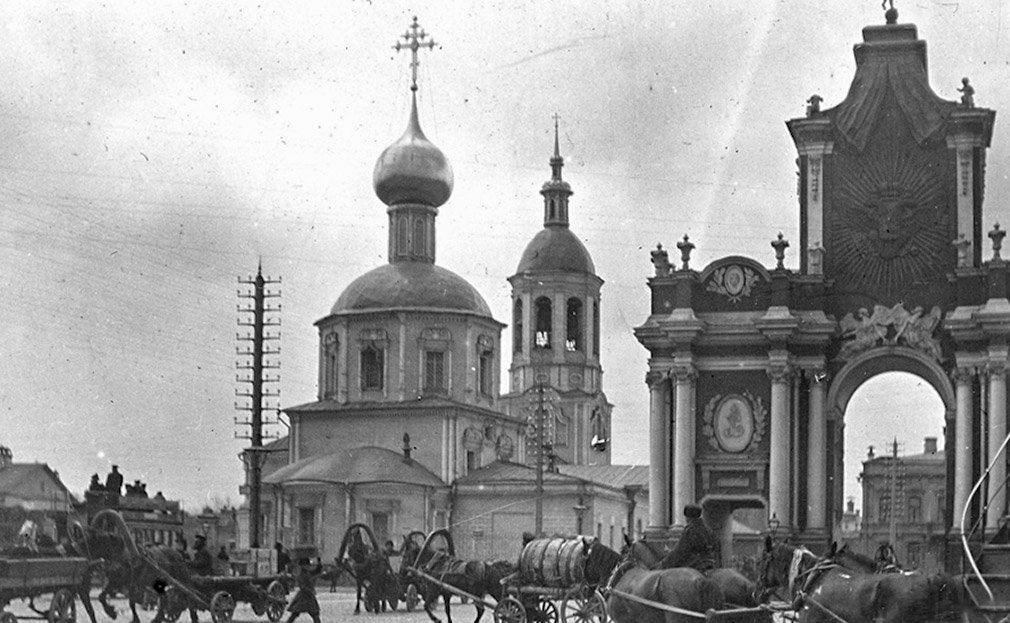
The original Krasnye Gate, or Red Gate, was built at the orders of Peter the Great to mark the victory in the Battle of Poltava. It burnt down several times but was restored on important occasions such as the coronation of Empress Elizabeth. There are several versions of the name’s origin: it may have been given after the renovation, when they once again became red, which meant beautiful, or because they were painted red, or perhaps just because they led to Krasnoye Village.
In the 1750s, the gates were rebuilt in stone by architect Dmitry Ukhtomsky. It was decided to dismantle them in 1927 because they made it difficult for the traffic to move.
Learn more about Moscow landmarks, their history and cultural venues at the #Москвастобой media platform.