Tea time with Vladimir Vysotsky and his samovar: The poet’s luxurious collection
(47).jpg)
The Vladimir Vysotsky Museum keeps numerous items from his collection of tea accessories: tea caddies , samovars and various other utensils. Vysotsky was a big tea enthusiast; he collected different sorts of tea and even invented his own way of brewing it. This article about the role of tea in Vysotsky’s life and work, was jointly compiled by Mos.ru and the Mosgortur travel agency.
Childhood samovar and tea time tradition
When the war broke out, Volodya Vysotsky was only three years old. His father went off to the front and the little boy stayed in Moscow with his mother. Soon they were evacuated to the village of Vorontsovka in the Buzuluksky District of the Chkalov Region (now the Orenburg Region) where they stayed until the summer of 1943.
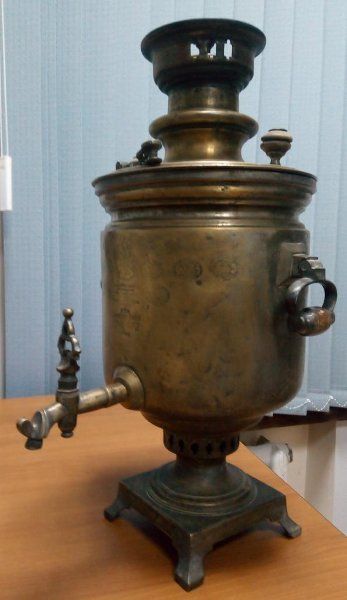
Perhaps it was then that Vysotsky developed his passion for tea. His mother Nina’s samovar is now among the exhibits at the Vladimir Vysotsky Museum. Vladimir preserved the family tradition throughout his life.

In the first episode of Eldar Ryazanov’s 1987 documentary series, Four Encounters with Vladimir Vysotsky, his mother spoke about his special love for tea. “He would bring tea from every country that he visited. The tea bought in England was particularly delicious; it probably came from one of the colonies. Those were heavenly teas. He was a huge tea lover. The first thing he would say entering the door was “Mummy, put the kettle on please.” We would drink tea like this very often, just the two of us. We always had tea at home. It was like a religion. We were simply mad about tea,” Nina recalled.
Vladimir Vysotsky’s name had links to tea long before he was born. In the middle of the 19th century, Wolf Wissotzky, whose surname sounded the same in Russian as Vladimir’s, founded Wizzotzky Tea Company, one of the largest tea producers in the Russian Empire. The company mostly imported Cantonese tea that was shipped by sea from the Chinese port of Canton (now Guangzhou). By the early 20th century, the company started expanding and opened branches in Europe and North America. After the October Revolution it was nationalised and transferred toTsentrochai, an organisation handling seized tea production facilities. Wolf Wissotzky’s descendants emigrated and opened branches all over the world. Today the company is based in Israel.
Rare product and Vysotsky’s recipe
Vladimir Vysotsky’s tea collection boasted some rare foreign varieties that were almost impossible to get at the time. His friends knew about his passion and brought him tea from every corner of the world.
In 1975, Vladimir Vysotsky with his wife, Marina Vlady, moved into the first and only flat he ever owned, in Malaya Gruzinskaya Street. He was a very welcoming host and friends often gathered in the poet’s kitchen. Those get-together s would last until morning and the tea brewed by Vysotsky himself played an important role at the parties in his home.
GosydarstvenniimyzeiVladimiraVisockogo.jpg)
Boris Strugatsky recalled one such gathering. Vysotsky’s biographer Mark Tsibulsky included Strugatsky’ account of meeting Vysotsky for the first time in his book, Vladimir Vysotsky in Leningrad: “I think it happened around the mid-1970s in Moscow. Vysotsky invited us to the Taganka Theatre (to watch Galileo) and after the play we went to his flat along with about 30 other people. We drank tea and Vysotsky sang. It was the first time I had listened to The Sail.”
.jpg)
Vysotsky loved tea-making ceremonies and even invented his own signature one. He would take a pinch of different teas and then brew them together in a pot. The shelves in his kitchen were stacked with colourful caddies up to the ceiling. He was happy to share rare sorts and original blends with his friends.
.jpg)
“His kitchen was very bright and there were lots of colourful tea towels hanging on the walls, a massive tea cosy in the form of a doll, a nickel-plated sink and an endless number of tea caddies in all shades. The tea itself, it was a completely foreign, heavenly beverage with a wonderful colour and taste. Seeing my admiration, he immediately said that he is a big tea lover and an expert too. He buys tea in English shops and makes wonderful blends. As he was saying this, he generously filled a giant tea caddy with one of his wonderful blends for somebody’s mother.” (Ilya Poroshin, the son of Vladimir Vysotsky’s close friend, Valery Yanklovich)
.jpg)
Necessary condition
His colleagues remember that the actor always had caddies of tea in his dressing room at the theatre and in his hotel rooms while on tour. Playwright and screenwriter Eduard Volodarsky (in 1969, Vysotsky was in a film he wrote, White Explosion) recalled:
“During the autumn tour in Tbilisi in 1979, my room was just one floor below his. It was hot; windows were open. He was writing a song and sang different variations of the same lines over and over again for two weeks. Every now and then, he would call me up to his room, make me some tea and sing me the song trying out newlyrics or entirely new verses.” (From Andrei Peredry’s Vladimir Vysotsky. One Hundred Friends and Foes)
.jpg)
Of course, legal riders did not exist as a concept in the Soviet Union – but the poet sometimes asked for certain favours from his hosts. In 1977, Vysotsky performed in Konstantinovka and several years later a local newspaper published some first-hand accounts. “Interestingly, although Vladimir was humble and unassuming, he still did request a couple of things. He wanted a setee in his dressing room so that he could get some rest before and between concerts. And he also said he’d like a samovar and some Ceylon tea (a rarity at the time).”
.jpg)
Night shifts
Vysotsky attended rehearsals at the Taganka Theatre during the day and performed in the evening. Nighttime was chiefly left for writing songs. The poet would fight away weariness and sleepiness by drinking strong tea and never worked without it. In Vladimir, or Interrupted Flight, Marina Vlady recalled:
“For hours you would smoke, throw crumpled paper in the wastepaper basket, drink litres of scalding tea, strum a guitar in search of new chords and then sit still as if mesmerised by the white glow of the lamp. Suddenly, I would hear the most unspeakable cursing and laughter. There it is, that’s it! Sometimes all it takes is just one line and everything else just falls into place and fits together. And at break of dawn, when the light in the room turned pink, I would wake up shivering because I hadn’t had enough sleep and you would gloat and read to me the results of your night work.”
.jpg)
Vladimir Vysotsky’s friends and colleagues said that composing a new song, he would shut down and distance himself from the world around him. In a moment of epiphany, he could abruptly get up from dinner and get to work.
Tea often featured in Vysotsky’s poetical sketches.