Moskva trains' predecessors: what the first metro trains looked like
(11).jpg)
The history of the Moscow metro development is a chronicle of industrial records, technological progress and continuous adaptation to new environments. On the Moscow metro opening day, there were only 13 metro stations. Today, the Moscow metro system is one of the largest in the world. It boasts 275 stations including Moscow Central Circle stations. During the 85 years, more than ten different types and modifications of trains have been running on the metro lines.
Over the past decade, the carriage fleet has been expanded and upgraded as never before. 2010 through 2019, four types of trains have been launched. These are the latest modifications of numbered trains, as well as Rusich, Oka and Moskva trains. Having started the decade with 12.6% of new trains, the Moscow metro fleet has been 57% updated by 2020, with 2,997 carriages procured.
.jpg)
.jpg)
.jpg)
.jpg)
.jpg)
.jpg)
.jpg)
.jpg)
.jpg)
.jpg)
Late in March, 14 most advanced Moskva trains were launched on Nekrasovskaya and Big Circle lines. Trains started running after the opening of Yugo-Vostochnaya, Okskaya, Stakhanovskaya, Nizhegorodskaya, Aviamotornaya and Lefortovo stations on 27 March. Innovative trains are more comfortable for passengers, with wider doorways, gangways between all the carriages, larger HD screens, and UV lamps for air disinfection.
Read in the article by mos.ru about the history of metro trains — from the very first ones to innovative Moskva trains.
A and B
The first Moscow metro trains were assembled in 1934 at the Mytishchi Machine-Building Plant specially for the metro's opening. By the regular traffic launch, there were 58 A-series carriages. Each of them had leather-upholstered sofas — a total of 52 seats. A carriage could carry some 260 people.
By the way, the first A and B type carriages were sand-yellow, with a light top and a dark red, almost brick red bottom. After some time in operation, they were repainted in more traditional colours: green and blue.

Until January 1936, metro had four-car trains running with 5 min headway, replaced later by six-car trains. Production of A-series carriages ceased in 1937. They have been running in the metro for about 40 years. Then they were taken out from service.
Today, Izmailovo electric depot has an A series carriage train. In 2015, on the occasion of the 80th anniversary of the Moscow metro, it was completely restored.

The first B-series carriages were produced in 1937 for the lines opened during the second phase of metro construction — Pokrovsky Radius with Ploshchad Revolyutsii and Kurskaya stations, and Gorkovsky Radius (a section of today's Zamoskvoretskaya line) with Ploshchad Sverdlova (Teatralnaya), Mayakovskaya, Belorusskaya, Dynamo, Aeroport and Sokolniki stations.
They were actually upgraded A-series carriages. Overall dimensions, wheelsets, traction motors and motor-compressors of A and B series sections were the same, with the rest of the equipment slightly different.
However, B-type carriages had an upgraded ventilation system, which provided more uniform air exchange in the cabin. These carriages were running until 1976.
G — Gorkovsky
These carriages were assigned letter G, as they were to run along Gorkovskaya Line. The first six cars were produced in 1940, but due to the war, their full-scale production was not launched until seven years later.
G-series carriages were 8 tons lighter than A- and B-type cars. They were motorised and supplied with new electrical equipment, including motor braking.

At the time of development, a G-series carriage was one of the most advanced metro cars in the world, both in terms of technical performance, dynamic and speed indicators, and reliable operation.
V - Voyenny (Military)
By the end of the Great Patriotic War in 1945, the Moscow metro had only 278 carriages. With growing passenger traffic and new stations opened in the wartime, there was a shortage of rolling.
So, in 1945-1946, German C1 and C2 electric cars were being upgraded along with the production of G-series carriages. 120 Berlin metro trains were delivered to Moscow in 1945. These carriages were called V — Voyenny (Military).
Before the upgrade, their doors closed automatically, but passengers had to open them from inside on their own. The seats had maroon plush upholstery. It was removed to make cords to fence the escalators during repair.

Seat upholstery was replaced by leather one, with linkrusta — thick patterned paper — used instead of wood panelling.
First, foreign carriages were running on Sokolniki — Park Kultury Line. Later some of them were transferred to Kalininskaya (now Filyovskaya) Line, after making passenger cabins cold-proof (as the tracks run on the surface between Kievskaya and Filyovskaya stations).
In the early 1960s, all B-series cars were decommissioned, with some of them converted into electric locomotives and track recording cars used for economic needs.
D and E — in alphabetical order
The experimental batch of D-series carriages produced in 1949 was called M5 (5th-generation metro car). After upgrade, they were called UM5. They were mass-produced from 1955 to 1963.
The name D was given simply because the previous series —A, B, V and G — were named in the alphabetical order. New carriages were running from 1956 through 1995.
Visually, they did not differ much from G-series carriages, but the number of seats was reduced to arrange more space for passengers standing near the doors. Also, D-series cars were 7 tons lighter, which reduced electricity consumption. They also differed in running gear, electrical and mechanical equipment.
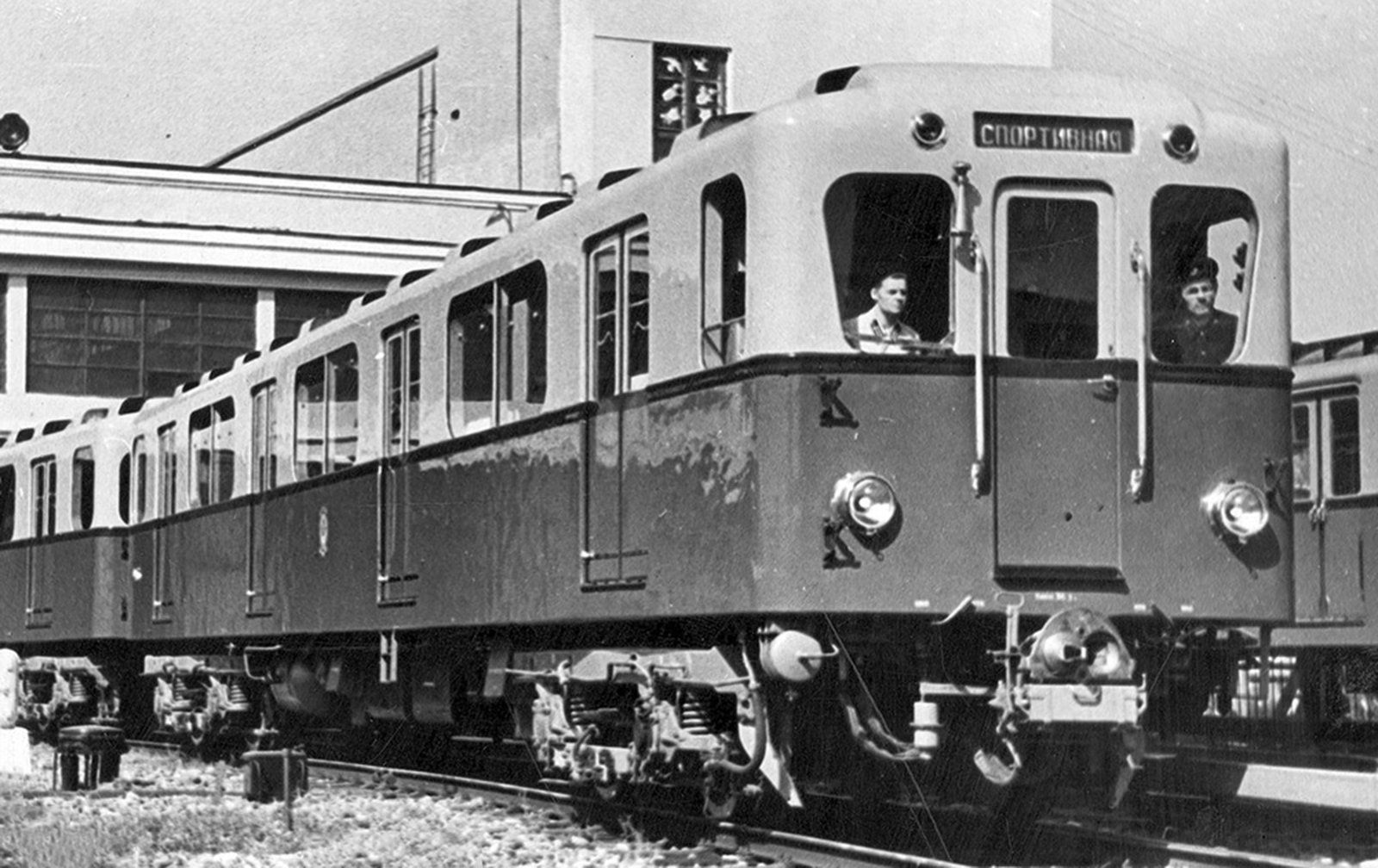
D-series carriages ran on Kirovsko-Frunzenskaya (now Sokolnicheskaya), Arbatsko- Pokrovskaya, Filyovskaya and Kaluzhsko-Rizhskaya lines.
They had been produced until 1963, when the Mytishchi Machine-Building Plant launched production of E-type carriages. By the time, the total fleet of rolling stock in the Moscow metro had grown by more than 3.5 times from 1945 and reached 1,078 carriages.
The experimental E-series trains were produced in 1959–1960 — there were only seven of them. Produced on a large scale from 1963 till 1969, they were running until 2008.
New carriages had corrugated metal strips on the body to reinforce siding and improve aerodynamics. For the first time, the doorways were widened in the cars to make boarding and alighting easier. This made carriages lose their symmetry, with the doorways shifted relative to the body's centre. For the first time, aluminium alloys were used in production of doors and other body elements.

The E-series cars differed significantly from their predecessors not only in exterior, but also in their dynamic and driving properties. So, design speed increased to 90 kph. It allowed a higher capacity for metro lines.
These carriages were running on Sokolnicheskaya, Zamoskvoretskaya, Arbatsko-Pokrovskaya, Filyovskaya, Kaluzhsko-Rizhskaya and Tagansko-Krasnopresnenskaya lines. In addition to the Moscow metro, E-series carriages were running in Leningrad, Kiev, Tbilisi and Baku.
Yem and Yezh
New design stations that had appeared in Leningrad in the 1960s was not compatible with E-series carriages. They required a new type of carriages with similar parameters. So, doorways became symmetrical once again, due to a different seat arrangement, with seats near the driver's cabin removed. New material — laminated plastic — was used instead of lincrusta in the finishing of new carriages.
The Yem- and Yezh-series cars were fully compatible with E-type cars. They were usually mixed in one train.
.jpg)
Upgraded Yezh-3 carriages are still running on Tagansko-Krasnopresnenskaya line of the Moscow metro. As of early April 2020, there are only two such trains running on the line. Four of them are on standby. Soon, they all will be replaced by Moskva trains.
Numbered trains
The biggest series of carriages both in the history of the Moscow metro and in the world is 81-717/714. They are often called numbered ones. You can still see them in 18 metro stations around the world.
The first numbered carriages were produced in 1976. In 1978, they were launched to run the metro lines. Advanced wiring scheme allowed to reduce energy consumption by 5-6%. The exterior and interior look of the cars have changed, too. Salons of numbered carriages had fluorescent lighting for the first time. And due to the fact that the middle cars no longer housed the driver's cabin, their capacity has increased. In total, the train's carrying capacity increased by 10 per cent.
Numbered cars had automatic speed control devices and emergency communication between passengers and the driver.
.jpg)
Today, the operating fleet of the Moscow metro has more than 2,300 carriages of this type. They have been running along all lines except Arbatsko-Pokrovskaya and Nekrasovskaya ones. Today, they carry passengers on Sokolnicheskaya, Zamoskvoretskaya, Kaluzhsko-Rizhskaya and Lyublinsko-Dmitrovskaya lines.
Yauza
The first train made of carriages of 81-720/81-721 type (Yauza) was assembled in 1990–1991. They were running from 1998 through 2019 along Lyublinsko-Dmitrovskaya and Kakhovskaya lines.
With a new traction drive control system, these trains could run smoothly.
The second Yauza modification had an asynchronous traction motor, used for the first time in Russian metro carriage production. All more advanced metro trains have this type of electric drive.
The maximum design speed increased to 100 kph. Carriage capacity increased by 30–40 people due to the reduction in the number of seats and arrangement of spacious end platforms. For the first time, contour seats were installed.
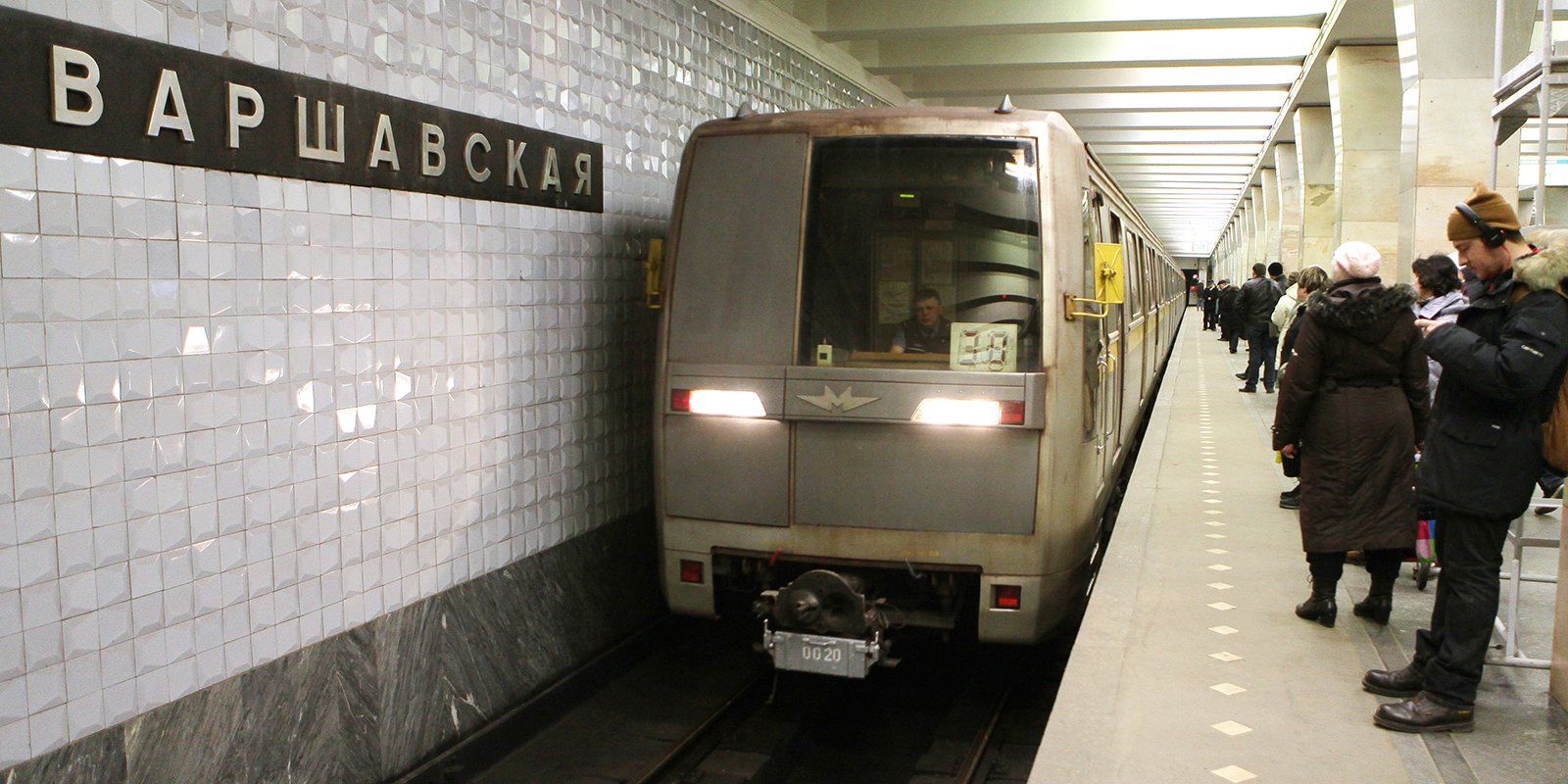
Yauza carriages were also equipped with a microprocessor-based automatic control and technical diagnostics system, an electric pneumatic brake control system, new fire extinguishing and fire alarm systems, emergency communications and radio broadcasting for passengers. There was a ramp for evacuation of passengers in emergency.
Small windows and air ducts disappeared from Yauza's interiors to be replaced by a forced ventilation system with low-noise units.
Rusich
Large-scale production of Rusich trains (type 81-740/81-741) lasted from 2003 till 2013. There are 724 carriages of this type in the Moscow metro: they are running on Arbatsko-Pokrovskaya, Circle and Butovskaya lines.
The trains were to be fit to run on surface lines. Designing and production of the first experimental train made of two carriages took record-breaking one and a half year. Key parts of Yauza carriages were taken as a basis, with the articulated body structure used for the first time. This design allows to take turns without reducing speed.

The interior design was completely redeveloped, with impact-resistant double-glazed windows with tinted glass, cut-resistant seats with soft inserts, and multi-layer floor arranged. Double-leaf doors were made plug ones for the first time to be tightly sealed against the carriage body.
This has significantly reduced the noise level during movement.
Another innovation was a heating system mounted in the passenger cabins, with air conditioning added later. Later, similar carriages with increased number of doors were developed for underground lines, too.
Oka
Trains made of 81-760/761 series carriages (Oka) were produced from 2010 till 2016. The train was presented on 19 June 2010, when Maryina Roshcha Station was opened. However, Oka trains were massively running in the Moscow metro only in 2012.
Today, there are 1,312 carriages of this type in Moscow. They are running along Serpukhovsko-Timiryazevskaya, Kalininskaya, Solntsevskaya and Big Circle lines.
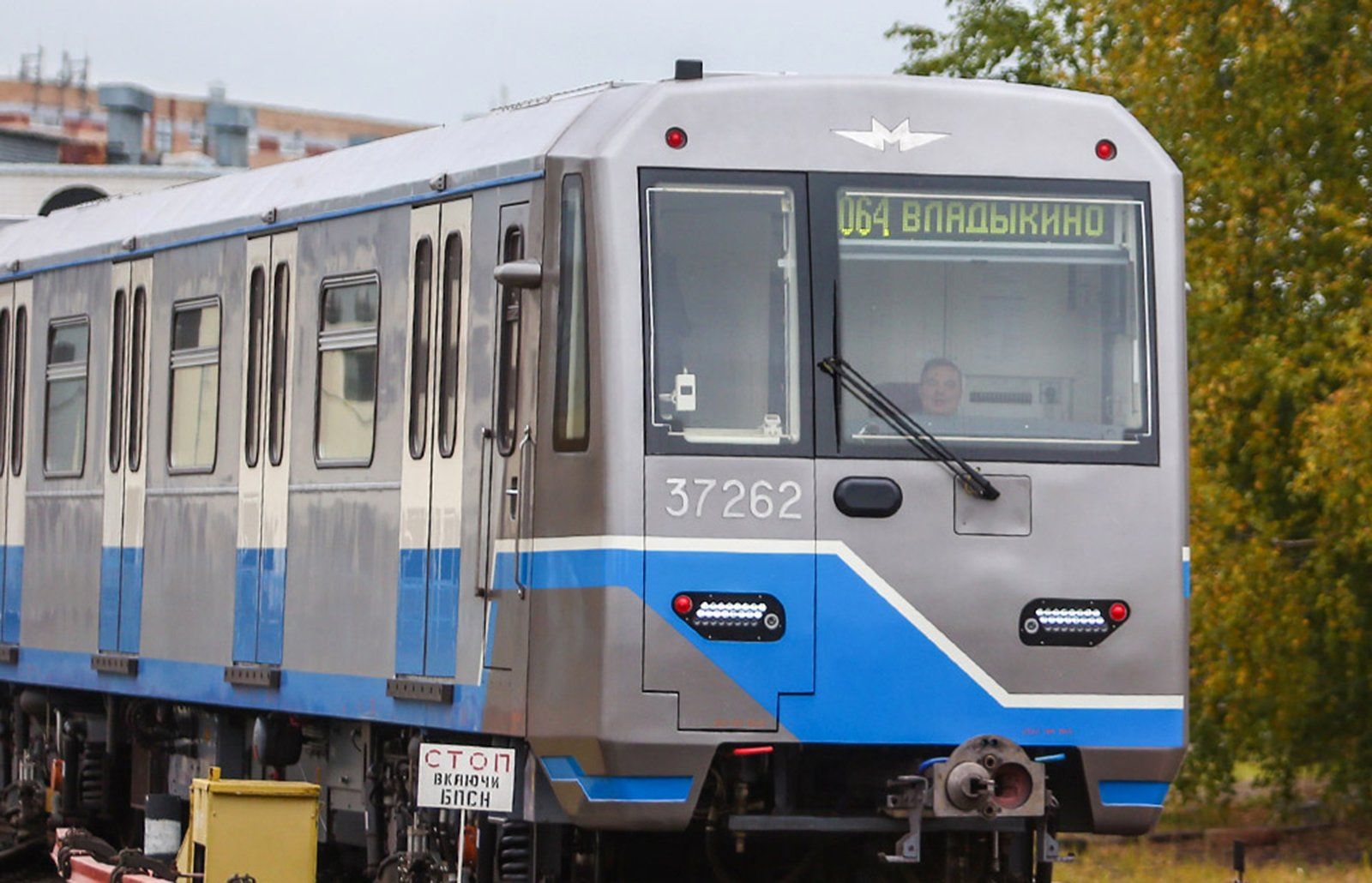
The cabins are air-conditioned, with control cars offering space for one wheelchair or stroller. The walls, ceiling and floor have easy-to-clean coating that meets the requirements of fire safety and sanitary standards.
For the first time, this model had gangways between all the carriages.
Moskva trains
In April 2017, the most advanced Moskva trains launched in the metro (81-765/766/767 series). Moskva trains are reliable, comfortable and more spacious than their predecessors.
Today, Moskva trains are the second most widespread trains in the Moscow metro system — they make up more than 20 per cent of the rolling stock, second only to numbered trains. You can mostly see them on the platforms of Tagansko-Krasnopresnenskaya line stations, with some 80 trains of this type running along the line, and on Sokolnicheskaya, Filyovskaya, Kaluzhsko-Rizhskaya, Solntsevskaya, Nekrasovskaya and Big Circle lines.
The trains have gangways between all the carriages. Wider door openings and wheelchair spaces in the control cars make them convenient for passengers with restricted mobility. Additionally, passengers can use USB ports to charge their devices or use wall-mounted touchscreens to find a station, map a route or calculate travel time.

.jpg)
.jpg)
.jpg)
.jpg)
Last year, upgraded Moskva trains (Moskva-2019) launched in the metro. They are equipped with dynamic braking. With the new system, trains come to a standstill more smoothly.
Upgraded trains have larger HD screens above the doors. It is easier to see the name of the station now. There are new hex-shaped handrails mounted on the ceiling, next to the doors. These handrails do not take up much space, while being convenient for passengers standing at the door ready to alight.