Miniature monkey with huge eyes: first Azara’s night monkey born in the Moscow Zoo
.jpg)
The Moscow Zoo has now a baby of the rare Azara’s night monkey. This species is on the IUCN Red List. Over the past ten years, the number of these animals has been declining steadily.
Azara’s night monkeys appeared in the Moscow Zoo last May. A nine-year-old male and four- and two-year-old females were brought from Riga. The Moscow Zoo has never had this species before. The animals were placed in a spacious Nocturnal World enclosure on the lower tier of the Ape House. It has dim lighting imitating twilight for night monkeys to feel comfortable and safe.
The baby was born in mid-December, but zoologists have had no opportunity to look closer at it for a long time, as caring parents used to hide their baby, holding it tight.
'Only six months have passed since the night monkeys moved to the Moscow Zoo, but our specialists managed to create comfortable conditions for them and get their first young. Zoologists suggest that the baby weighs about 200 g. However, it is impossible to examine it so far, as it can stress out both the baby and the parents. Visitors to the Zoo can already watch the baby growing up in Nocturnal World. It spends most of the time on his father's back. A curious fact about Azara’s night monkeys is that it is males that usually care for the young. The father cares for babies, carries them around and brings them to the mother only to feed them,' said Svetlana Akulova, Director General of the Moscow Zoo.
Azara’s night monkeys are listed on the European Studbook. The Moscow Zoo now takes part in replenishment of the species.
These monkeys are monogamous, they have one couple for life. If one of the partners dies, the other grieves and even refuses to eat for a long time. As a rule, these animals live in small groups of four to eight individuals, including a breeding couple and their offspring of different ages. The baby monkey is to be transferred later to one of the best foreign zoos to join the reserve population of the species.
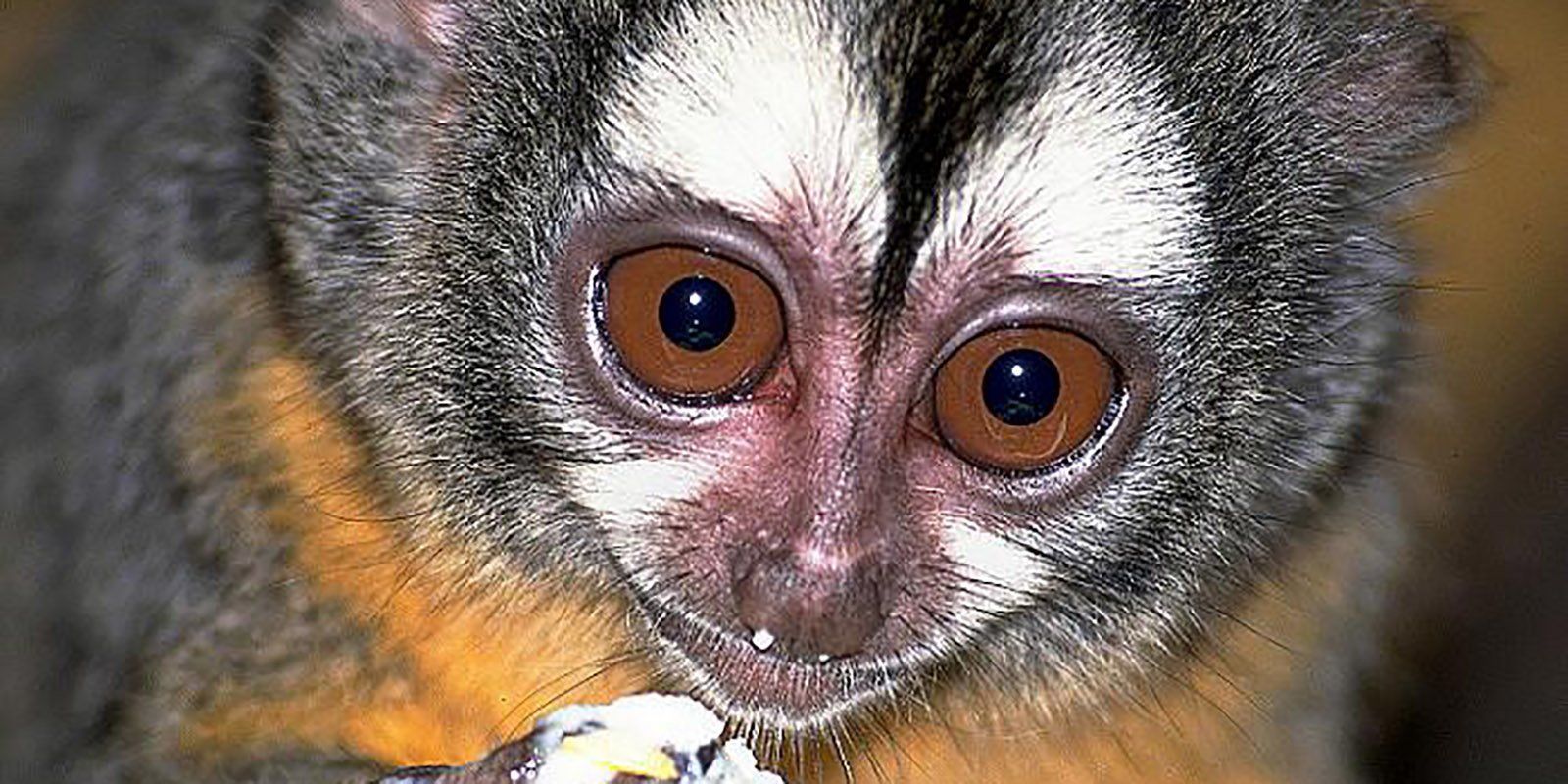
In the wild, Azara’s night monkeys live in the rainforests of Peru, Brazil and Bolivia. With their tiny ears, huge eyes, a small nose and a long bushy tail, these monkeys look very unusual. Their big eyes forming a large part of the muzzle provides an excellent nocturnal vision. Besides, the apes use their keen hearing to navigate in the dark and hunt.
Monkeys looking like lions: Moscow Zoo has now its first rare golden lion tamarins
Night monkeys are active only in the dark time of the day. In the morning and in the afternoon, they normally sleep in tree hollows or other shelters. Nocturnal lifestyle saves them from tropical predators such as ocelots and jaguars. Primates of other species living in the neighbourhood sleep at night, so night monkeys usually encounter no competitors in search for food. However, they are often persecuted by larger capuchin monkeys, which forces night monkeys to run away from the trees with ripe fruit. Though cunning monkeys came up with a solution: to get ahead of their rivals, they eat many fruits unripe. The primates also enjoy eating small lizards, insects, and bird eggs.
Adults are usually 29 to 40 cm long and weigh about 1 kg. Their gorgeous tail can reach 45 cm. The monkeys use it to balance while jumping. Their coat colour varies from silver grey to brown. Adult animals have a white-haired muzzle with a wedge-shaped dark pattern on the forehead.
Azara’s night monkeys have a wattle and expanded trachea and can make a variety of sounds similar to meowing, barking, or even growling.
The number of these animals has been declining due to deforestation. Also, monkeys often become victims of poachers: due to their unusual appearance, they are caught to become exotic pets. However, night monkeys do not make good pets.
Last year, over 1,000 young were born in the Moscow Zoo. These include African ground hornbills, common trumpeters, Humboldt penguins, Kirk's dik-diks, Eurasian lynx, East Caucasian turs, crocodile newts, and other animals. Sumatran orangutans, bharals, Mexican beaded lizards, fur seals, and lion-tailed macaques had their young, too.