How Moscow ponds change: simple source of water turns into comfortable recreation area
.jpg)
Embankments of Moscow reservoirs attracted citizens at all times, but walking along them was not always safe and comfortable. Read in mos.ru article what has changed in recent years, why more and more Muscovites spend their time near the ponds, where in Moscow you can find the cleanest water, which of the existing ponds is the oldest one and whose prank on the Lyublino Ponds reached us across the centuries.
The Presnya had the purest water, while Tsaritsyno has most fish
Before the city water supply system was arrangement in Moscow in 1779, ponds and wells had been the main sources of drinking water. There was a great variety of them, more than 850.
A lot of ponds were located in the valleys of the Presnya and the Neglinnaya rivers. Fish breeding was popular in the area of the Neglinnaya River, and Presnensky Ponds boasted the purest water in Moscow directly supplied to Tsar Alexei Mikhailovich. You can still find two of the four Presnensky Ponds on the Moscow map, in the Moscow Zoo. Lower and Middle Presnensky Ponds were drained in 1908. They were separated by Gorbaty (Humpback) Bridge you can see today near the Government House. Today it is just a decoration.

Once the modern Revolutsii Square had some ponds, in the area between Manezhnaya and Teatralnaya squares. They supplied water to a huge stone and brick lined protective dyke (28-34m wide and 9-12 m deep), running along the eastern Kremlin wall and connecting the Neglinnaya River with the Moskva River near the Beklemishevskaya Tower. Remnants of the dam that was used to fill the dyke with water were discovered in the 1930s near the corner Arsenalnaya Tower when laying the first line of the Moscow metro.
At that time, Upper Tsaritsyno Pond boasted plenty of fish. Scribe books of 1675-1679 listed species of fish available in the pond, with pike, bream, ide, perch, roach and carp among them. Later, the number of species reached 14, with sturgeon, sterlet, catfish, burbot and pike perch added. However, by 1889, the pond was already half-shallow, overgrown, with the water surface covered with silt. Manager of Tsaritsyno estate Rakhmanov wrote that "fever has spread in Tsaritsyno", it was even called Tsaritsyno fever. Doctors associate it with contamination of air by the pond's guck.

Today, according to Mosvodostok state enterprise, Moscow has more than 300 ponds and lakes, with their total area covering about 900 ha. To date, they have turned into true Moscow jewels.
Borisovsky Pond named after the tsar
Names of Orekhovo-Borisovo, Northern and Southern Orekhovo-Borisovo districts, Borisovo metro station, the park and the pond are associated with the name of Tsar Boris Godunov.
A boyar that distinguished himself in 1591 in the battle with the Crimean Khan Ğazı Geray, who later became a tsar, was granted hunting lands next to the Tsar's residence in Kolomenskoye.
The local Gorodnya (Dam) River had long been a source of income for local peasants, as evidenced by its name, since they built dams to breed fish in ponds supplied to the Royal kitchen.
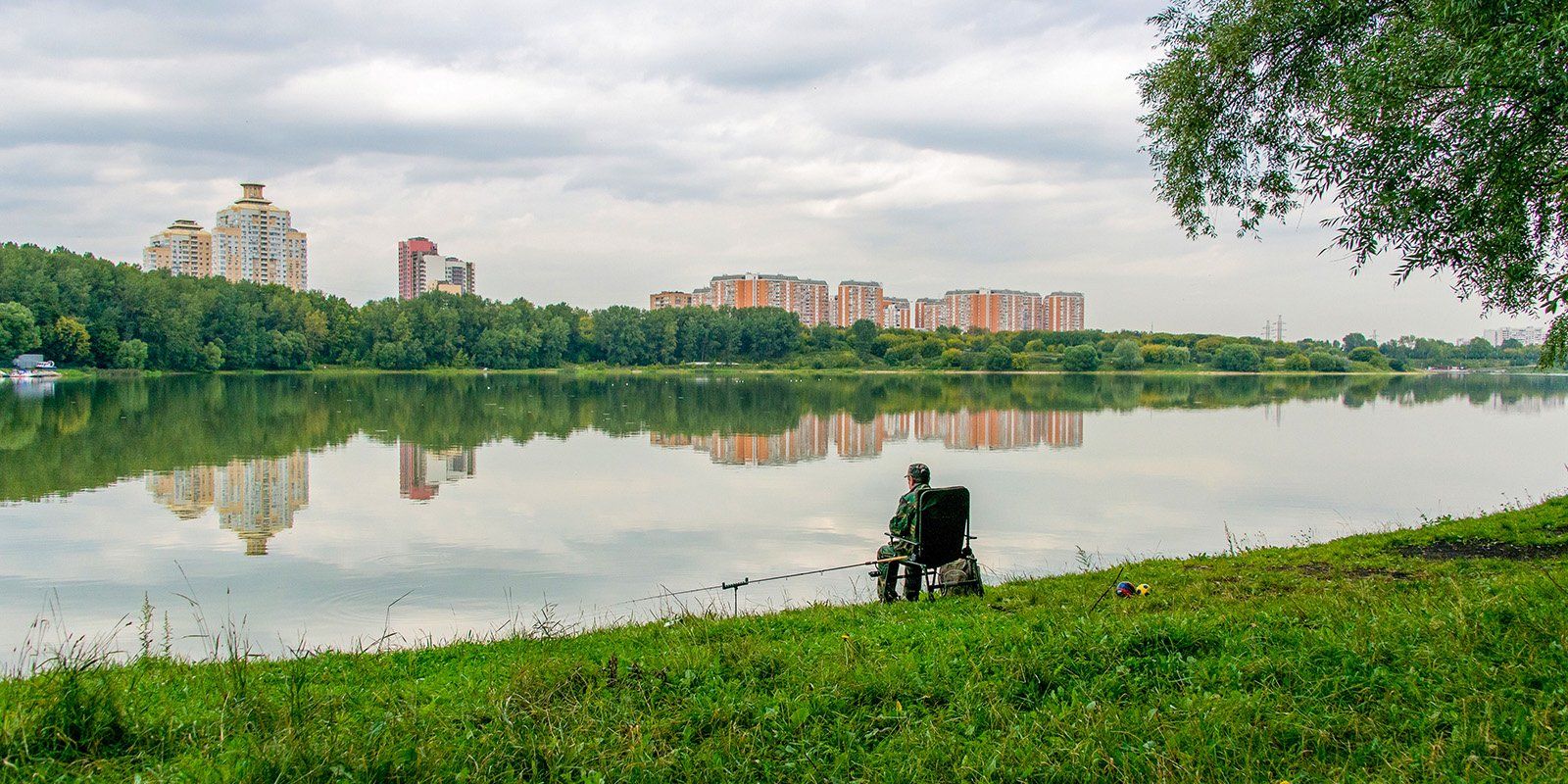


Boris Godunov ordered to build a stone dam in order to turn these several small ponds into one large pond to ensure smooth operation of a mill in the village. Thanks to the unique structure, a huge pond was formed, still being the largest reservoir of the old Moscow. 2.5 m deep, it covers over 75 ha.
The dam was named Tsareborisovskaya (or Godunovskaya), (Boris Godunov’s). Tsareborisovsky (or Tsarevoborisovsky) Pond was first mentioned in official documents of 1600. The first root of the word, 'Tsar', was lost during the Soviet period, but carp were still bred in Borisovsky Pond until 1970.


A new stage in the history of Borisovskiye Ponds started in 2011. Borisovskiye Prudy Park opened on the pond banks — a landscaped recreation area with gazebos, football pitches, ping-pong tables, and 18 playgrounds for children. More than 30 sports grounds, including tennis courts and workout areas appeared in the area, with three modern skate parks, one of which opened in autumn 2018. The recreation area near the water has umbrellas and sun loungers. The total length of Park's bike lanes is more than 7 km. Borisovskiye Ponds have already become one of the most favourite recreation areas of Muscovites.
Greenhouse Ponds, also convenient for ducklings
Once, there were oranges, peaches, grapes, pineapples, watermelons, apricots supplied to the Royal kitchen, laurel and olive trees grown in Tsaritsyno greenhouses — the best greenhouses of the first half of the 19th century located near Moscow.
To irrigate them, a pond was created in the second half of the 18th century, and in the early 19th century there were two more ponds arranged. By the end of the 19th century, the ponds almost dried up, and then turned into swamps.

.jpg)
.jpg)
.jpg)
Soon, the Greenhouse Ponds are to be cleaned of silt and dirt, with their banks reinforced. Surrounding grounds are to be improved to provide comfortable walking and recreation areas by the water, with footpaths updated, new benches and trash bins installed, energy-saving street lamps installed, and the dam decorated with architectural lighting.
Embankment area is to have the same species of plants that grew there 200-300 years ago: yellow water lilies, cane, reed mace and bulrush. It will be comfortable for all, as there will even be special downhill runs arranged for ducklings to approach the water easily.
Biryulevskiye Ponds: silence and comfort
Biryulevskiye Ponds are not so old, as, for example, Borisovskiye Ponds. Five ponds, Upper, Shokoladka, Round, Lower and Central ponds connected by Biryulevsky Stream, were excavated in 1938-1942 during landscaping of Biryulevsky Arboretum. The park and the nursery is a brainchild of a dendrologist and engineer Vsevolod Polozov, created to study species of trees and shrubs, most resistant to the Moscow climate. These seedlings were then used for city landscaping.


Muscovites have always loved to walk in silence here, and local fishermen fished Amur sleeper and crucian carp. However, over the years, ponds have overgrown, and their banks have become unsuitable for recreation.
In 2016, the ponds were cleared of silt and debris. There are observation decks, sports grounds, gazebos arranged in the area of the Upper and Lower Biryulevskiye Ponds. Last year, more than 50,000 trees and shrubs were planted in the Arboretum. An ecology trail has been laid through the entire Park — a 2.5 km long wooden flooring, with lights installed and recreation areas arranged.


Ongoing changes: today, new road-and-path network with navigation and lighting is being developed in the Arboretum. Soon, there will be soft-surface children's and sports grounds, benches, litter bins, signs and information boards. Text on navigation signs will also be in Braille. Walking will become even more comfortable here.
Chernevskiye and Gavrikovskiye Ponds: gems of the largest park beyond Moscow Ring Road
Chernevskiye Ponds located in the modern Yuzhnoye Butovo district were first mentioned in the 'Economic Notes' of the 1770s: "Chernevo village is located in a ravine. ... There is a garden with fruit trees next to it, three ponds in a ravine with fish: crucian carp and tench, which, like fruits, are used for household consumption."


In the 1940s, Chernevskiye Ponds almost disappeared, they became shallow and turned into a swamp. Today, historic Chernevskiye and Gavrilovskiye Ponds have become real gems of the largest landscape park of Moscow beyond the Moscow Ring Road. Covering the area of 142.5 ha, it is as large as Gorky Park and Sokolniki Park. Previously, this area was almost never used, but today everything has changed.


Cascade ponds have been cleaned, filled with fish, with fishing bridges, duck houses and wooden decks along the banks built. The Park has now 14 sports grounds and 17 children's playgrounds, and over 12 km of bike lanes, summer stages and a green theatre, roofed gazebos and pergolas. The Landscape Park has become a long-awaited gift to the residents of Yuznoye Butovo.
Big Ochakovsky Pond revived
The pond between Michurinsky Prospekt and Ozyornaya Street, which owes its name to the Ochakovka River, has appeared on Moscow's map quite recently, in the 1950s.
.jpg)
During construction of Ochakovo — Nikulino road, a dam was built on the river to form a pond. In 1979, during the construction of Michurinsky Prospekt, the second dam was erected to divide the pond into four parts. Despite the fact that the surrounding area was not particularly landscaped those years, there were always plenty of people walking around.
.jpg)
.jpg)
.jpg)
.jpg)
But now the Park near the Big Ochakovsky Pond is totally different. Its landscaping and improvement are almost complete: anytime soon it will have paths and a recreation area with a terrace. The pond has been cleaned and has fish now. The banks have paved footpaths and new lights, flower beds and planted hedges. At the request of local residents, the pond still has its water lilies intact, and an ecology trail along the bank.
Lublinskiye Ponds: about 'Crime and Punishment' novel
The origin of Lublinsky Pond is unknown. We only know that it had already existed when Lyublino Estate was owned by the Active State Councillor Nikolai Durasov (1760-1818). Then the pond had sterlet, pike perch and crawfish, and the Palace was perhaps the most hospitable and welcoming place in the area. Durasov was very generous and cordial person, as his contemporaries noted, but these traits went together with his extravagance and extreme faux pas.
.jpg)
.jpg)
.jpg)
The pond is associated with the famous prank of the estate's owner. Guests driving up to the house along the bridge saw the owner in a boat who happily welcomed them. But when they got out of their carriages near the house, they were greeted again by Durasov standing on the porch, who seemed to get there in a matter of seconds. The visitors were bewildered: how could he be in two places at the same time — in the boat and in the Palace? The answer was simple: the owner did not even leave his house. In the boat, a disguised serf theatre actor welcomed the guests.
Lyublino Estate, turned into a summerhouse village in the mid-18th century, served well for the Russian literature. In 1866, building No. 8 on Letnyaya (Summer) Street was rented by Fyodor Dostoevsky. This is where he wrote his novel 'Crime and Punishment'.
Since then, everything has changed. The buildings have been dilapidated and the traces of former splendour have been lost. Embankment and walking paths required renovation.
.jpg)
.jpg)
.jpg)
Revival of the Park's area is an ongoing process. New embankment with bridges for recreation and fishing, a boat station with a pier welcome its visitors now. A pavilion to hold celebrations and weddings has been built. The interior decoration, an amphitheatre and dance floor are to be finished soon. The unique ground with 32 hanging swings is to become a new attraction of Lyublino district.
Cherkizovsky Pond: a pond having two names
Cherkizovsky pond is one of the oldest reservoirs in Moscow. It has been known since the 14th century, when the nearest village was owned by the former Horde Prince Cherkiz (Serkiz). He was baptized under the name Ivan and enlisted to serve Prince Dmitry Donskoy. His son Andrei was killed in 1380 in the battle of Kulikovo, fighting for Moscow Principality.
Later, from the late 14th century until 1764, Chudov Monastery owned the grounds surrounding the pond. Bishops and the Metropolitans of Moscow recreated there. This is how the pond acquired its second name, Bishop Pond.
.jpg)
.jpg)

Today, professionals are engaged in Cherkizovsky Pond's improvement. A promenade with wooden flooring is to be constructed on its western bank, with sites for playing chess arranged. The eastern bank will have swings and gazebos. Children's and sports grounds are to be arranged in the adjacent area. A boat rental station will open at the pier. In total, the area covering some 20 ha will be improved. Shytova Embankment on the western bank of Cherkizovsky Pond will be pedestrianised at the request of citizens, with the roadway and sidewalks combined in one space.
As for Cherkizovsky Pond, it will enjoy ecological rehabilitation. A 'hydrobioplateau' is to be upgraded in the northern part of the reservoir. It is a shallow area with special water plants that provide natural biological water purification.