“We are Committed to our Audience”. Interview with Director of the Museum of Cosmonautics
The Museum of Cosmonautics is now finishing the preparations to unveil the reworked collection presented in the “Dawn of the Space Age” hall, which kick-started the history of the Museum in 1981. Opened at the foot of the Monument to the Conquerors of Space, the Museum keeps all the mementoes of the victories and defeats of Soviet space projects, space suits, man-made satellites and spacecraft.
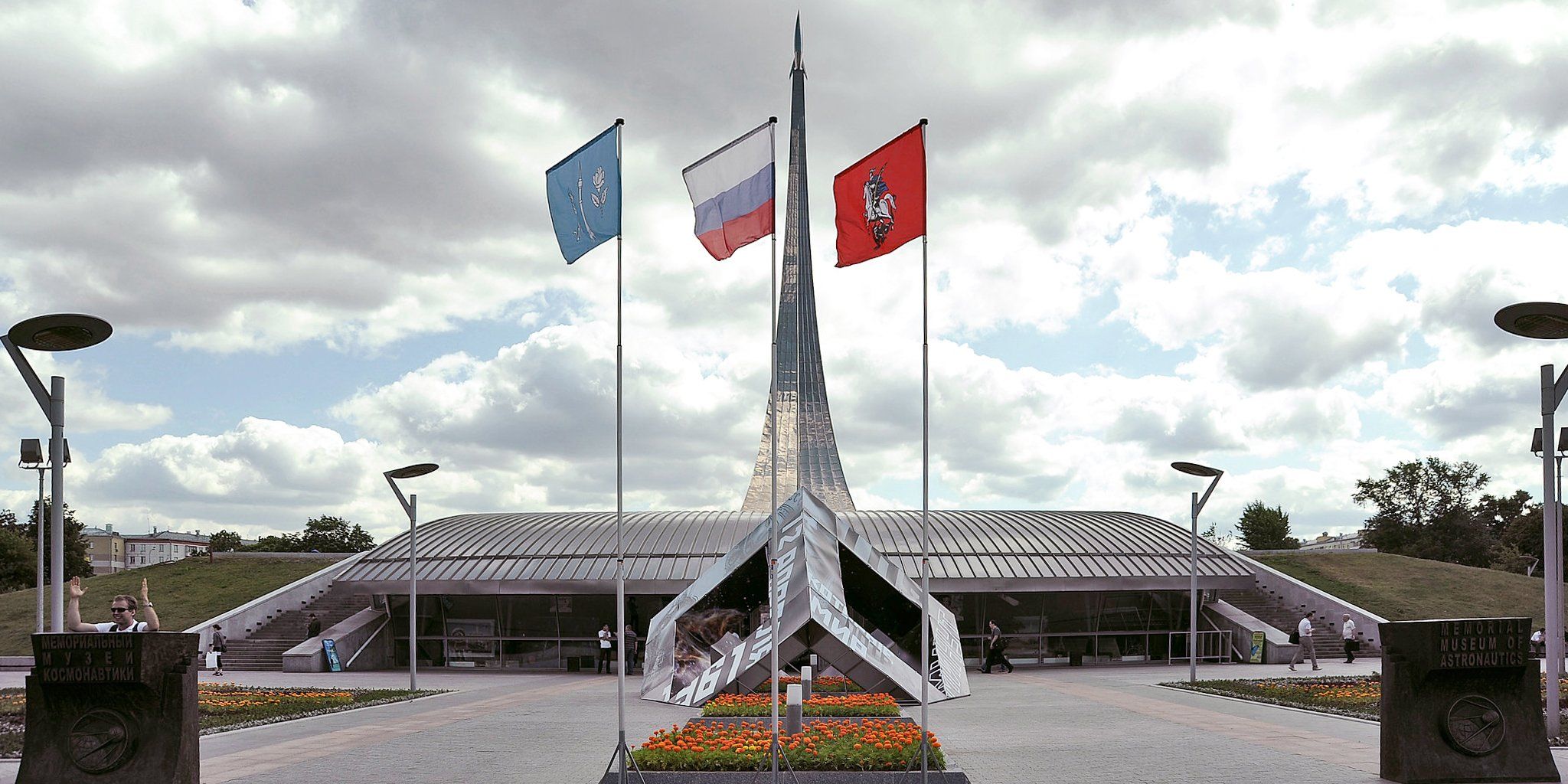
After the extensive renovation in 2009, the Museum expanded to seven more exhibition halls, a cinema hall and a conference hall. Today it’s not just a science history museum, but also a place promoting sciences. The former main collection has been transformed into the Dawn of the Space Age hall. Shortly before its planned opening, Natalia Artyukhina, the Museum's Director, told us about what the visitors could expect to see inside the renewed hall.
You’ve worked to improve the Dawn of the Space Age exposition for nearly a whole year. What have you changed?
The 16th of August is an important day for us: the renovated collection in our central hall, the Dawn of the Space Age, is going to be presented to our visitors. That is one of the most important events for our Museum this year. All our staff and our partners have done enormous work.
I think we were able to achieve our main goal: to immerse our audience in the spirit of the first years of space exploration in the 1960s and the 70s. Our goal is to make our visitors feel, right after stepping foot into our Museum, that we were the first in Space. We want them to see the true human stories behind the space artefacts: the stories of scientists, engineers and technicians, in addition to the cosmonauts.
We developed a new presentation approach for our new Dawn of the Space Age exposition. The hall now, in addition to the collection items, contains a digital exhibition that helps deepen the information presented regarding the spacefaring history. We set up the new equipment and repaired the historical stained window.
Coming to the Introductory Hall the visitors are now greeted with the River of Time, a special installation made by the TASS News Agency. They see an unbroken flow of space-related photographs made in the 1960s – 1980s and retrieved for that case from the TASS archives.

Which items and artefacts are the visitors going to see in the Central Hall after the renovation?
Among the new items displayed in the Dawn of the Space Age Hall are the Vostok launch vehicle model with a detailed diagram of its operation, an RD-107 liquid propellant engine, and documents related to Yuri Gagarin’s flight, the training of the first Soviet cosmonauts and the EVA projects.
We moved the engineering model of the first man-made Satellite to the centre of the Hall. On October 4, 1957 that Satellite opened the way into Space. Without it, there would be no first man into space, multiple scientific and engineering discoveries would become impossible, and our Museum wouldn’t exist.
As for our old friends – they are still there. You can see the famous space dogs, Belka and Strelka, the genuine package in which they were recovered, the training space suit used by the first six cosmonauts, a model of the Vostok launch vehicle that carried Yuri Gagarin into space, even the ECG of the First Cosmonaut taken the day before his flight.

Do you have any large projects planned for the rest of this year?
We have finished one of our most ambitious projects: reworked the First Hall exposition. Our plans for the future relate to modernization of other halls.
4 November marks 55 years since the Monument to the Conquerors of Space was unveiled. The astronauts believe it to be one of the few monuments in the world which are the truest to the spirit of the space exploration. We launched a tablet exhibition on the subject of its history in the Introductory Hall in August.
Before the year’s end we urge every one of you to not miss our LEONOV exhibition. We prepared it to celebrate the 85th birthday of Alexey Leonov, twice the Hero of the Soviet Union, a Soviet cosmonaut. Did you know that in addition to being a spacefarer, he’s also an accomplished artist. Right now our Museum has an exhibition of his paintings from our reserves and from his own private collection. We made a free audio guide for the exhibition. It is voiced by Leonov himself.
For this year, we also plan to equip our Museum with special QR-codes, which our visitors will be able to scan to later inquire into the space-related materials in video, photo and text forms. The personal stories of cosmonauts and scientists serve as logical extensions of our collection and make a visit to our Museum even more interesting for our guests.

This year marks 5 years of your tenure as the Museum of Cosmonautics Director. What changes has the Museum gone through in that time?
I joined the Museum in 2014, 5 years after the renovations, which served to expand the useful space from 3,000 to 9,000 sq m. The collections also went through some changes. Back in those years, about 300,000 people visited the Museum in a year. In 2018, we had 653,000 visitors. No doubt, a lot of work was required to achieve that. I was fortunate enough to preserve the amazing team that formed before my time and expand it with new, younger staff with a lot of creative potential.
Like with theatre, a museum starts with a coat hanger and the administrator’s smile. In 2015, we designed and implemented the new Introductory Hall, expanding the coat stowage room twice compared to its previous size, adding a new cashier’s deck and a self-service shop.
We reworked the Museum’s visitors flow from the ground up. In doing so, we were guided by our basic principle: “We are Committed to our Audience”. Now we offer all our services online: you can book a tour or buy tickets. To avoid ling lines, we've equipped the Introductory Hall with terminals to print tickets on the spot. We added spaces where they can relax in silence.

What uses have you found for the new technologies in your permanent exhibition?
Our Museum has digital screens for the special TASS projects, video labels, touch-tables where our visitors can get extra information. There are also some interactive items such as gloves, the same that cosmonauts wear during their EVA activities. A person can put his or her hand into this glove and try to loosen a screw like that. This gives you an idea of how difficult even the simplest actions can be when performed outside of the spacecraft, in open space.
Since last autumn, we offer a free smartphone app called Let’s Go to the Museum. There is a hall layout available and, after approaching a certain item, you can listen to the tale of its history or study some extra materials. For some items, especially when it comes to engineering devices, we have also developed a kind of brief animated descriptions. The app also includes an animated tour voiced by cosmonaut Alexander Laveykin, a Hero of the Soviet Union.
Recently your Museum opened a new tour called the Soyuz TMA Training Simulator. Is it mainly for entertainment or education?
Both. It’s an individual interactive tour allowing a visitor to try and dock a spacecraft to the ISS, guided by an operator. The whole process takes at least 40 minutes. In essence, it’s the training simulator for the cosmonauts. Another such device is installed at Yuri Gagarin Cosmonaut Training Centre. Of course, you can’t master the process in 40 minutes, so it serves both as a no-nonsense introduction to the cosmonaut’s job, and an entertainment.

Is your Museum aimed more to the children or to adults? Who are your target audience?
Together with the Higher School of Economics we ran a survey to find out that every third of our visitors is a child and the rest are adults. However, we are interested in all age groups. 6-year old children are absolutely different from 12-year old teenagers. Our guides always keep that in mind and tailor their tours to their audiences.
We welcome about 100,000 foreign visitors per year. Two thirds of those people come with organized groups. We work extensively with both travel agencies and translator guides. We were the most popular museum during the 2018 World Cup: of the 22,000 fans who visited the museums of the Moscow Department of Culture, 17,500 came to us. At the time, our Museum felt like Nikolskaya Street.
Do foreign cosmonauts also come to visit?
We are partners of the Russian Branch of NASA and the European Space Agency office, so the foreign cosmonauts do visit us sometimes. I can’t say it happens often: their training programs don’t’ leave them a lot of free time.
We have renewed the First Crew tradition. Even now, right before their flights and after them, the cosmonauts visit the Sergey Korolev Memorial House, which is a branch of our Museum. Aleksandr Skvortsov, Luca Parmitano and Andrew Morgan all visited us and sat under the famous horseshoe which brings success and luck.
Is there any place for the modern art in the Museum of Cosmonautics?
If you are talking about interesting artworks, them of course, the Museum of Cosmonautics has a place for everything. We often host unique exhibitions not directly related to the space exploration. However, we don’t have dedicated exhibition spaces. You can’t mix the already existing collection with other totally unrelated items. However, we have a special hall called Space History and Culture. It’s used to display works of art and often personal exhibitions of space artists centred around visionary worlds and the link between the man and the Universe. Space encompasses everything from the philosophy of the Macrocosm to heavy technology and intricate engineering solutions.
The Museum of Cosmonautics has uniquely rich reserves. Are there any items among them that have never seen the light of day?
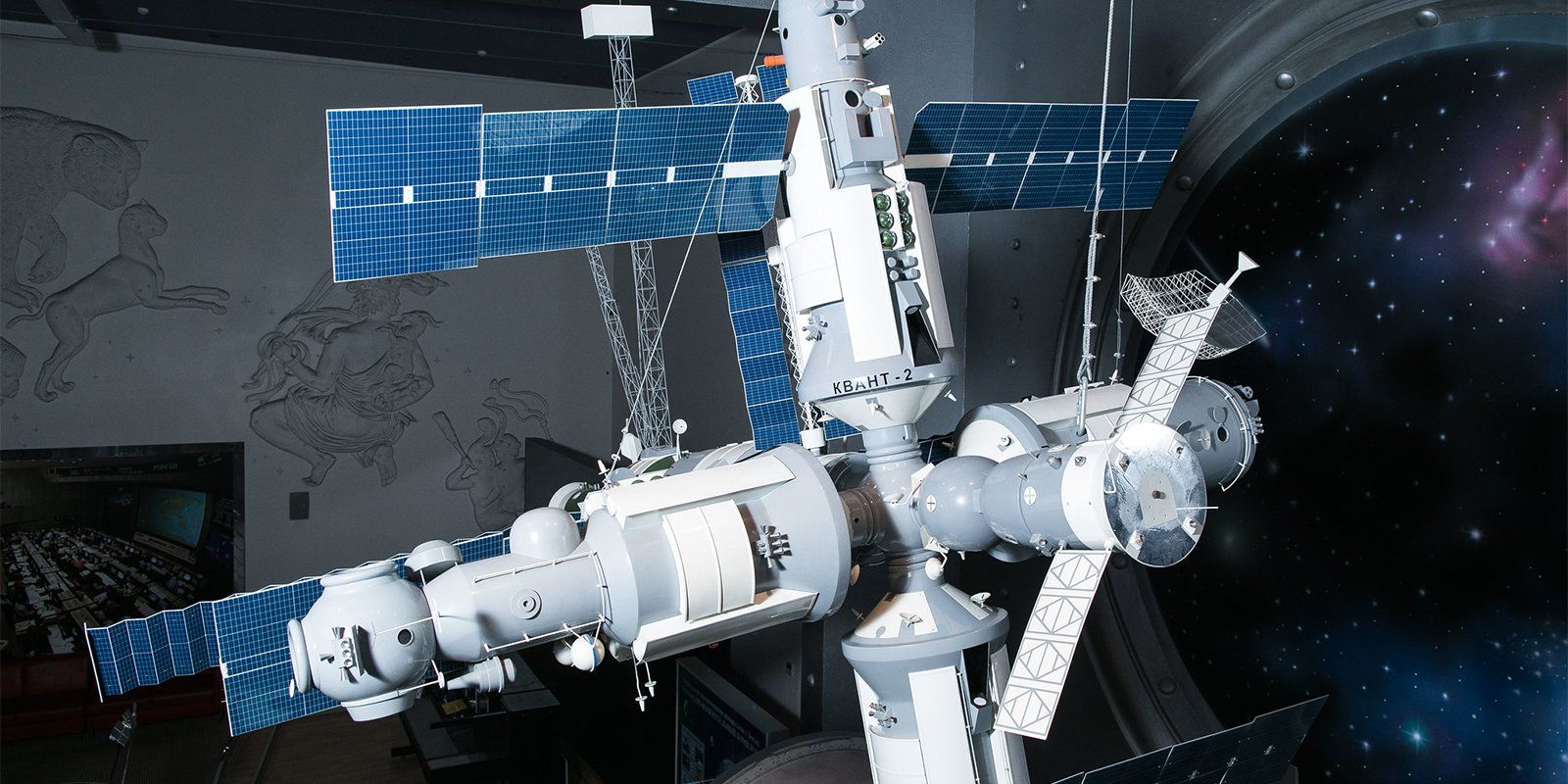
Of course, we have enough artefacts to keep on surprising our audience. We have about 100,000 units in storage, but our exposition currently contains only 3,000 items. Recently, our Museum has acquired some absolutely unique items: engineering models of lunar sample return devices from Luna 24 and Venera 13 units, the star-tracking unit from Luna 16 and the lunar base engineering model. They were on display during the big PROCOSMOS show that took place in St. Petersburg last spring. We now have the first race track from the Mir Station: a unique sports equipment for astronauts.

How often are you able to replenish your reserves? Tell us about your last acquisitions.
Just recently, we were able to acquire the football that Anton Shklaperov brought back from orbit and that was used during the opening ceremony of 2018 World Cup. We replenish our holdings all the time, not taking any breaks even for a minute. The hunting for items is an obsession: you want to have them all! I’m completely aware of the fact that the items we have must be available to the contemporaries as well as to our descendants. Everything gets lost, forgotten eventually, but the Museum is a place where memories are preserved. Genuine items have their own magic, and they will always attract people's attention.
Every year your Museum holds the Donor Day. Which donation do you remember the most fondly?
The Donor Day is an organized event attended by people whose items have already been chosen for the Museum’s holdings. There have been a lot of donations which impressed me. Most recently, the following two made me pause.
The first one is a letter that Faina Ranevskaya, an actress, addressed to her friend, a journalist Tatiana Tess. Ranevskaya wrote her letter two days after the tragic death of Yuri Gagarin. The second one is the ID of Cosmonaut No.10, issued to Pavel Belyaev and donated by his widow, Tatiana.
Prepared jointly by mos.ru and Mosgortour.