Sovremennik: The theatre’s history as told by its founders
.jpg)
19 December is the birthday of Galina Volchek, director, actress and Artistic Director of the Sovremennik Theatre. To mark the date, mos.ru is publishing a long read with archive photos and stories from the Sovremennik Theatre that grew from informal conversations in a class of students at the Chekhov Moscow Art Theatre School with their young teacher, Oleg Yefremov.
Oleg Yefremov began teaching at the Chekhov Moscow Art Theatre School in 1949. He was not yet a film star (six more years would pass until his first screen appearance) but a fresh graduate of the drama school who did not get hired by the Chekhov Moscow Art Theatre, and an actor of the Central Children’s Theatre (now Russian Academic Youth Theatre).
“After only a few classes, all of us, individually and as a group, were completely thrilled with him. He was a man of our generation. He was older, of course, but not so much that the age difference was significant. He was one of us, but with more power, authority, experience and knowledge,” Galina Volchek recalls.
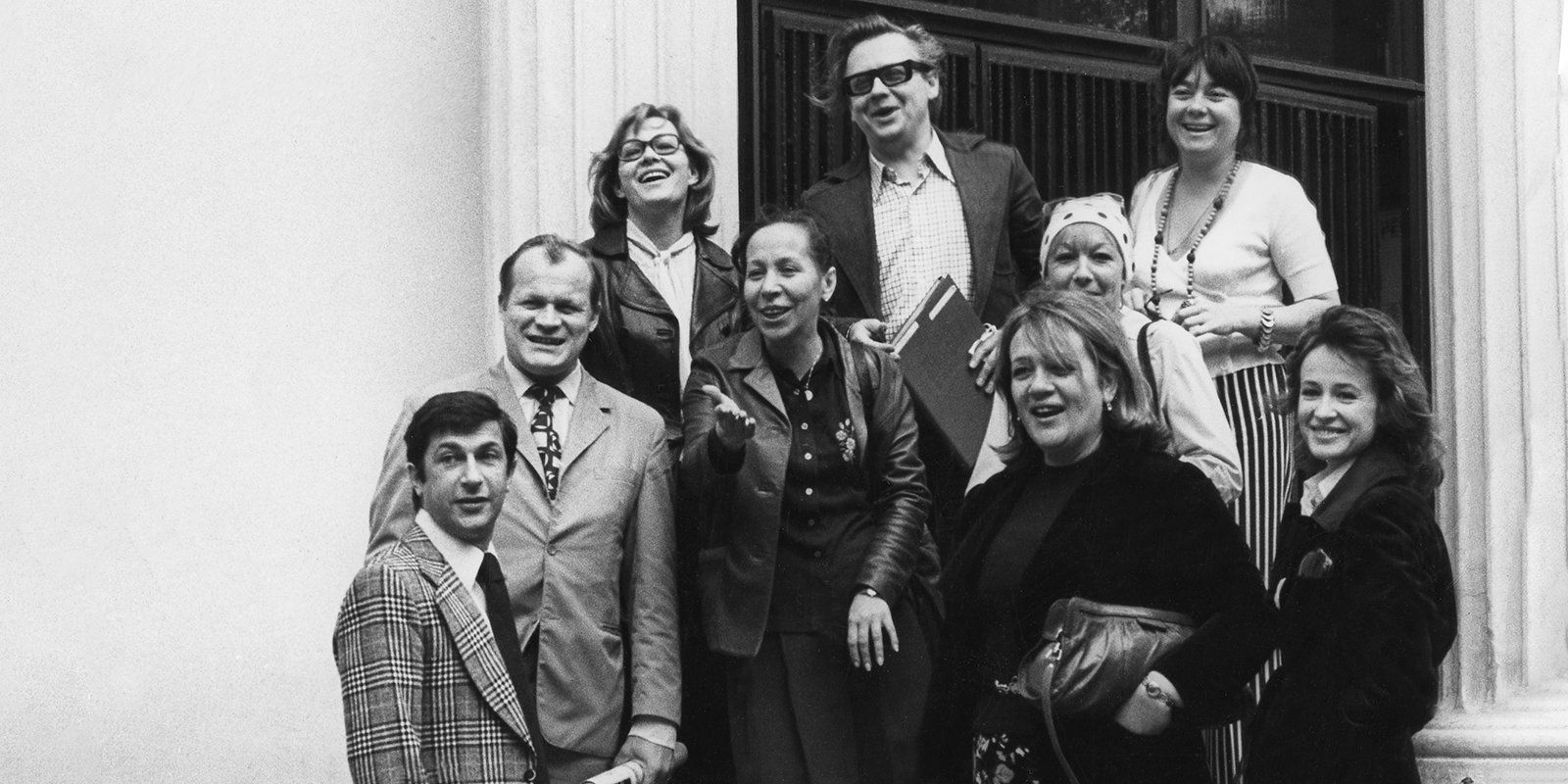
By the mid-1950s, Yefremov, who preached against the Stanislavsky theatre that be viewed as outdated at the time, became the centre of a circle of particularly devoted students. They included Galina Volchek, her classmates Igor Kvasha, Svetlana Mizeri, Lyudmila Ivanova, 1954 freshman Yevgeny Yevstigneyev and recent graduate Oleg Tabakov. They spoke about theatre a lot – and everybody agreed that the Chekhov Moscow Art Theatre, which set the tone for Moscow’s theatrical scene at the time, was not paying enough attention to contemporary playwrights.
“We were worried that the fresh wind of our times rarely swept onto the stage, something that Stanislavsky and Nemirovich-Danchenko always saw as a vessel carrying the most recent ideas and modern people,” Oleg Yefremov wrote in 1961.
So they started creating their own theatre. It was Yefremov who suggested producing Viktor Rozov’s The Ever Living, which was hardly known at the time and which would later provide a story for Mikhail Kalatozov’s film, The Cranes Are Flying. Yefremov cast his favourite students and recent graduates. At night, they would secretly gather in the studio and rehearse until dawn, after which they went back to the theatres where they worked.
.jpg)
.jpg)
.JPG)
.JPG)
.JPG)
.JPG)
“We didn’t have money for a taxi. We would finish, say, at 4 in the morning and had to wait until the metro opened. The wait was never a burden. On the contrary, it was hard to leave, to part until the next day. We didn’t want the rehearsals and the conversations to ever end. When Yefremov got a role in The First Echelon and became the richest in our beggarly company, he spent almost all of the modest money he earned from the film to pay for our taxis,” Galina Volchek recalls.
The play premiered also in secrecy one night. For fear of criticism, theatre workers were not invited. Students at Lomonosov Moscow State University and the Moscow Aviation Institute were the first audience of the first production by the future Sovremennik Theatre. Despite late hours, the place was full. The play finished at four in the morning.
“The reception was great, which was in itself our joy. Excited, we left the stage and then somebody rushed into our dressing room yelling, ‘You must come back! People refuse to leave. They want to talk to you about the play.’ The discussion ended up as an improvised rally. ‘You must not leave or lose track of each other! It will be a theatre of our generation. You must build it no matter what,’” Igor Kvasha shared his memories.
This is how the Sovremennik Theatre started, which was just a Young Actors’ Studio at the time. It didn’t even have its own stage. The theatre borrowed a stage from the school for its first plays and later presented them on the stage of the Chekhov Moscow Art Theatre itself. A loophole was found in the Soviet Labour Code. Since there were jobbing workers on collective farms, was it possible to be a ‘jobbing worker’ in a theatre and produce plays on the theatre’s order?
But the Chekhov Moscow Art Theatre stars did not accept the young actors in their circle.
.JPG)
.JPG)

.jpg)
“Once, while introducing the young actors, somebody said: ‘Here they are, our future gravediggers.’ I really liked the description because it fully matched the true nature of our group. The ‘Gravediggers’ from the Young Actors’ Studio were not just unwelcome but rejected with deafness and surliness. I can’t even remember anybody from the Chekhov Moscow Art Theatre ‘elite’ who was sincerely interested in our existence,” Oleg Tabakov said.
Mikhail Kedrov, who was then Artistic Director of the Chekhov Moscow Art Theatre, started coming to rehearsals and interfering with Yefremov’s direction. This happened, for example, in 1959 with Five Nights based on an Alexander Volodin play. Nevertheless, the young actors managed to produce their own play, in two versions, by Oleg Yefremov and Galina Volchek.
Yefremov encouraged the actors to direct plays. Galina Volchek didn’t have directing ambitions; she mainly wanted to help her friends. Several actors, including Stanislav Lyubshin, were about to get fired from the company as they didn’t acquit themselves well during the season. The actors decided to make their own version of Five Nights. It was hard to direct without a director and the actors asked Volchek to oversee their performance.


“She couldn’t be on stage at the time because she was pregnant. But she couldn’t just sit still either, so she came to the theatre almost every day. Galina couldn’t be just an onlooker. We started to analyse the play and the relationship between the characters very thoroughly. Galina’s analysis, coupled with our psychophysics, and her close attention to each actor’s unique personality resulted in a completely different play,” Stanislav Lyubshin noted.
Five Nights directed by Galina Volchek was welcomed by both Oleg Yefremov and the entire studio, especially the play’s writer who had just arrived from Leningrad where legendary Artistic Director of the Bolshoi Drama Theatre Georgy Tovstonogov presented his version of the play. The actors stayed with the company and the play remained in the repertoire. The theatre received one more new director.
In 1958, the Young Actors’ Studio received the title Sovremennik (“contemporary”) but still remained a studio within the Chekhov Moscow Art Theatre. By the 1960s, the tension between the Chekhov Theatre and Sovremennik reached its peak. The studio was being forced out of its home theatre. The studio actors produced a very topical and daring play based on The Naked King by Yevgeny Schwartz. The press criticised the play for the lack of ideological content while the show was completely sold out. A rumour started that the undesirable play and the entire theatre were about to be shut down. The company made a desperate decision to present The Naked King every day on different stages until the end of the season.


“We finished the season on a sweltering night at the Film Actor Theatre and Studio. We finished the King and whooped into our dressing rooms tearing off costumes, skins, wigs and stickers. I scraped down gum off my nose and threw it on the wall. For two months in the scorching Moscow of 1960, we played, sang and danced the King almost 50 times. But it was worth it,” Mikhail Kozakov recalls.
Nobody knew what would happen next. The reception hosted by Nikita Khrushchev for cultural workers became the last drop. Of all the directors at Moscow theatres, Oleg Yefremov was the only one who did not get an invitation. Nina Doroshina who played the princess in The Naked King was the reception host. She had the important duty to get a minute and approach Khrushchev, explain the situation and ask for help. She did not get a chance to approach the First Secretary of the Communist Party and somebody told the distressed actress that she should approach a woman who was standing nearby with Anastas Mikoyan.
“Mikoyan looked at me and asked: ‘Why is this girl crying?’ The elegant woman immediately replied: ‘I know why this girl is crying, and I know why she approached me and what she wants to ask me.’ And through my tears, I started rambling: ‘Mr Yefremov didn’t get invited. The theatre will be shut down because of The Naked King but it was this and that…’ She stopped me in mid-sentence. ‘Don’t worry. Don’t cry. You still have to work today. And you will have to work a lot. I will try to help you.’ The woman was Yekaterina Furtseva who soon became the Minister of Culture,” Nina Doroshina recalls.
On 15 Aril 1961, the Sovremennik company received its first audience in a new building, which was its own theatre. The theatre was at Mayakovskogo Square between the monument to the poet and the entrance to the Peking restaurant. However, it was demolished in 1974.
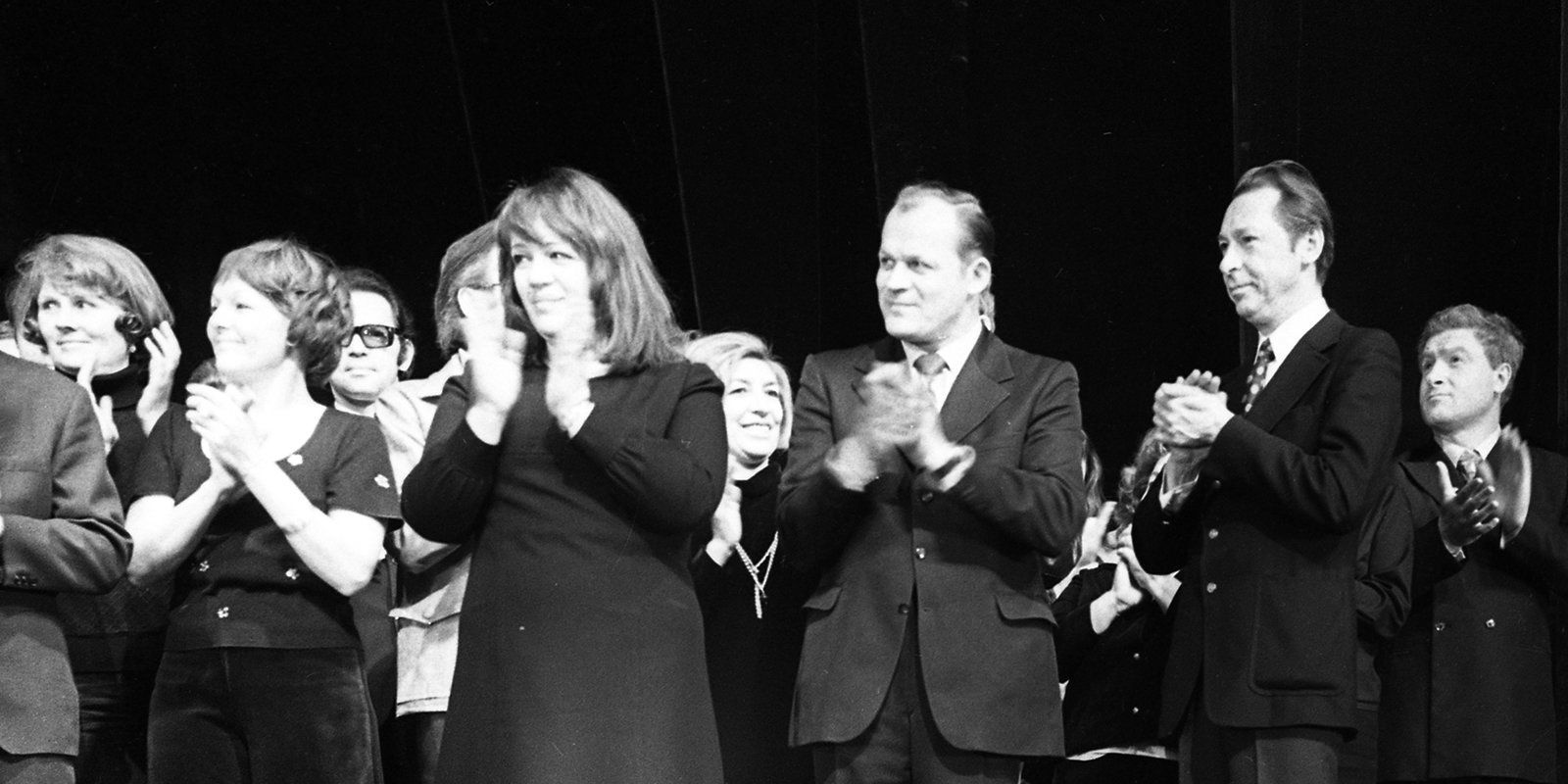
In 1965, the Sovremennik was given the status of a fully recognised theatre. For the first time, Yefremov and his actors sighed with relief. They were not some jobbing workers at the Chekhov Moscow Art Theatre but a city theatre with its own payroll schedule and funding.
.JPG)
.jpg)
.jpg)
.JPG)
.JPG)
.JPG)
Sovremennik Theatre actors began getting film roles. For filming to not interfere with the theatre, Yefremov proposed an experiment: make a film together. He took half of the company to Saratov and directed a film for Mosfilm Studios about workers building a bridge.
The film was based on a documentary story by Naum Melnikov. The filming took place in the area of an actual bridge construction but the audience didn’t believe that Moscow intelligentsia would wear working-class uniforms. The State Cinematography Committee also objected to several scenes including those with drinking. Building a Bridge did not get censored but was not rated for broad distribution.
The Seagull became the last play directed by Oleg Yefremov at the Sovremennik Theatre. He decided to resign. Before leaving the theatre that was created as a counterpoint to the dominance of traditional material on the stage of the Chekhov Moscow Art Theatre, Yefremov turned to one of Chekhov’s most popular classic plays.
The work began with a thoughtful reading of Stanislavsky’s notes. It was Stanislavsky who discovered Chekhov the playwright but at the same time, according to Yefremov, Stanislavsky did not understand Chekhov’s plays. As it turned out, the contemporary actors didn’t quite understand Chekhov either and didn’t know how to act out his plays. In 1972, Polish director Adrzej Wajda, who was invited to Sovremennik by Galina Volchek to direct a performance, saw Yefremov’s The Seagull.
.jpg)
.JPG)
.JPG)
.jpg)
Liliya Tolmachyova who played Arkadina recalled that Adrzej Wajda was thrilled. “I came to a rehearsal in the morning. Wajda took me by the hands and cried with delight: ‘Lila, this is genius. Trust me. It is genius. Oleg is a genius. You, Lila, are a genius. The play is so contemporary, so intelligent. And it is so hilarious! Everybody is crying; nobody can hear anyone.’ He repeated exactly what Yefremov told us at rehearsals: ‘Nobody can hear anybody. Lila, this is why we live this way.’”
The Seagull remained in the repertoire until the early 1990s. The show was cancelled only after Yevgeny Yevstigneyev’s death. He played Dorn and the company could not imagine anybody else taking this role.
Yefremov was invited to be chief director at the Chekhov Moscow Art Theatre. The entire Sovremennik company saw his departure as a betrayal. Disappointed in the ideals of the Thaw and contemporary directing, Yefremov saw his new calling in saving the Chekhov Moscow Art Theatre that was going through a difficult time. Yefremov assumed Sovremennik would merge with the theatre but the company decided otherwise.
“These two theatres enjoyed different popularity with the audience. Even during dry spells, people lined up for Sovremennik tickets all day while the Chekhov Moscow Art Theatre tickets were always available and the house was often, let’s say, not really full,” Oleg Tabakov noted.
Oleg Yefremov’s appointment as the chief director of the Chekhov Moscow Art Theatre and Oleg Tabakov’s appointment as the director of Sovremennik were reported by newspapers simultaneously. Galina Volchek later became Sovremennik’s Artistic Director.
“I have to confess, I never wanted to be a chief director. But there was no choice. They took a long time to persuade me and eventually succeeded. Perhaps, their choice was based on Yefremov’s words that I was “a party devotee” more than anybody else. By “a party devotee” he meant that I had a pathological sense of duty,” Galina Volchek recalled.
During the 1970s, Sovremennik started inviting guest directors. Andrzej Wajda directed his Sticks and Bones written by David Rabe. Peter James directed Shakespeare’s Twelfth Night. In 1973, Georgy Tovstonogov arrived in Moscow from Leningrad to direct Balalaikin and Co. based on Saltykov-Shchedrin’s Modern Idyll. Another maître, Sergei Mikhalkov, was asked to write a play based on the novel. Surprisingly, he agreed and wrote the first version and then another one.
The play turned out to be time-relevant and full of social satire and topicality. Even the play’s author did not expect this. The Sovremennik company was worried that the play would not be approved by the Department of Culture.


.jpg)
.jpg)
.jpg)
“The day before the hearing, I asked Mikhalkov: ‘Seryozha (I already called him Seryozha), please wear your Gold Star [Hero of the Soviet Union].’ In his characteristic tone of earnestness mixed with irony, he replied: ‘Don’t worry, I even sleep with it.’ But he was late for the discussion. He came in when the situation was already tense and announced: ‘Well, it’s been a while since the autocracy was dealt such a devastating blow.’ Who could object to the criticism of autocracy?” Yelizaveta Kotova, Head of the Literature Department at Sovremennik, said.
In 1974, the theatre moved again, to a new building on Chistoprudny Boulevard. It was a big and spacious building that saw new directing debuts. In 1976 actress Lilya Tolmachyova directed Faryatyev’s Fantasies based on an Alla Sokolova play.


The film of the same title starring Marina Neyolova and Andrei Mironov basically started with the play.
Neyolova was immediately cast as Lyubov. Igor Kvasha played Faryatyev. The stage was designed by the legendary David Borovsky who constantly worked with Yury Lyubimov at the Taganka Theatre. The music was composed by another legend, the Leningrad avant-garde musician Oleg Karavaichuk. The music was discussed via inter-city telephone connection. Karavaichuk listened to scene descriptions, touched the keys, hummed something and drummed the beat on the table. He created a masterpiece.

“It was close to the premiere. I called Oleg Karavaichuk: ‘Mr Karavaichuk, when are you coming to Moscow? We need to record the music. We need an orchestra.’ ‘I will record the music and send you a tape.’ This is how we worked, over the phone. Of course, I was worried. But when I received the tape, there was nothing to criticise. No changes were necessary. It was that music that we eventually played during the show,” Liliya Tolmachyova recalls.
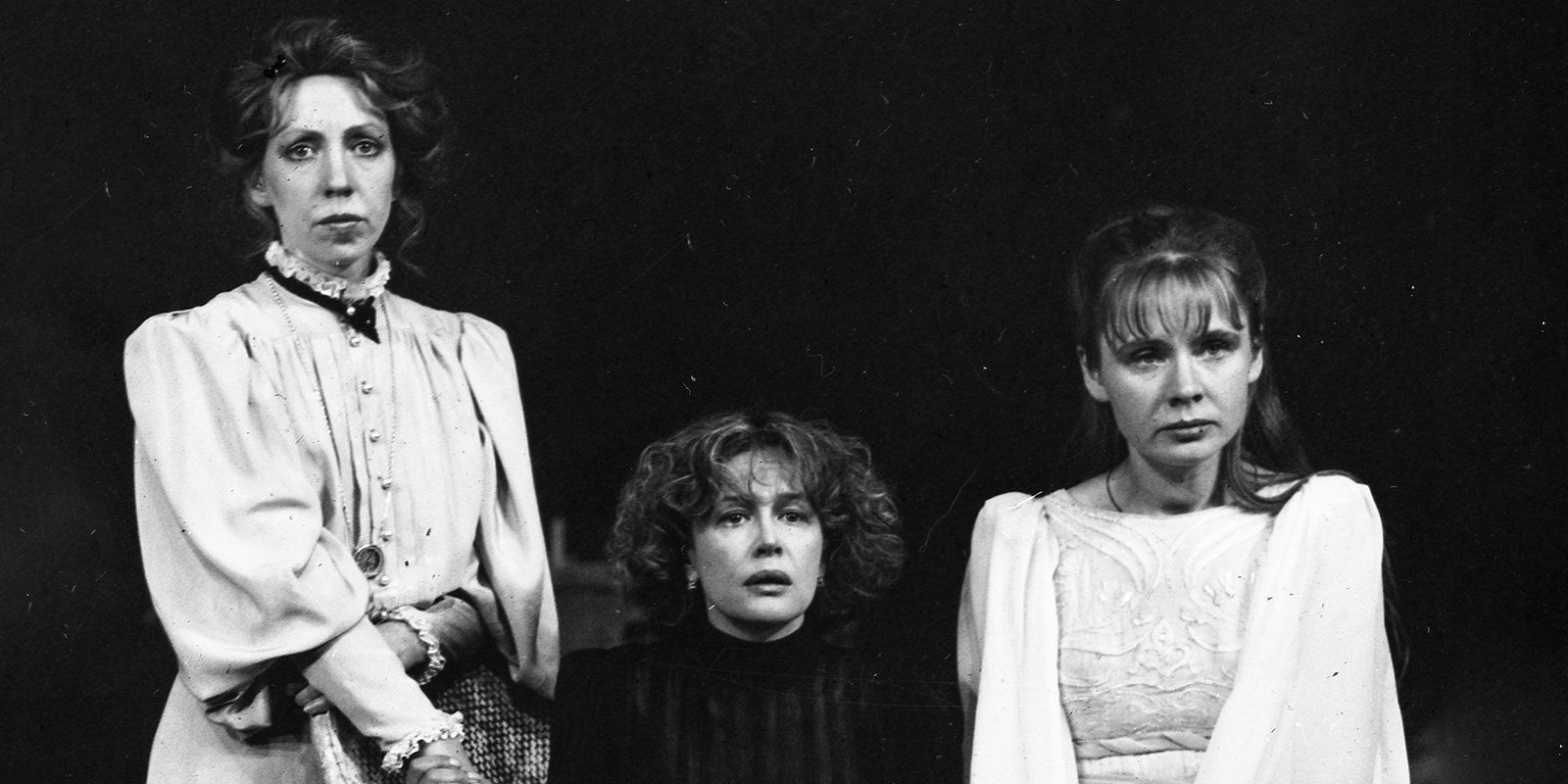
In the early 1980s, Sovremennik turned to Chekhov once again. Galina Volchek began rehearsing Three Sisters. Like her teacher at the time, she realised that young actors did not understand how to play Chekhov. They just recited the monologues with the intonations of a school teacher. It was boring, pretentious and plain. Volchek encountered this lack of understanding during both productions of Three Sisters, in 1982 and in 2001 with a new cast.


.jpg)


“I remember Chulpan Khamatova asked me during a rehearsal, ‘Why don’t the three sisters go to Moscow? What is stopping them? They could just buy tickets and go…’ Chulpan is not a person who needs things to be explained. It was a generational question, a question from the people her age that arises out of protest, out of hatred towards clichés. We had to go through a lot of difficulty until Chulpan, for example, understood that my Irina Prozorova could hardly be called a comely sweet girl. She is rebelling against the life around her, against herself. She could hit her sister’s head with a pillow,” Galina Volchek explained.
Three Sisters, with a soundtrack by Mieczysław Weinberg and costumes by Vyacheslav Zaitsev, still runs at the Sovremennik Theatre.
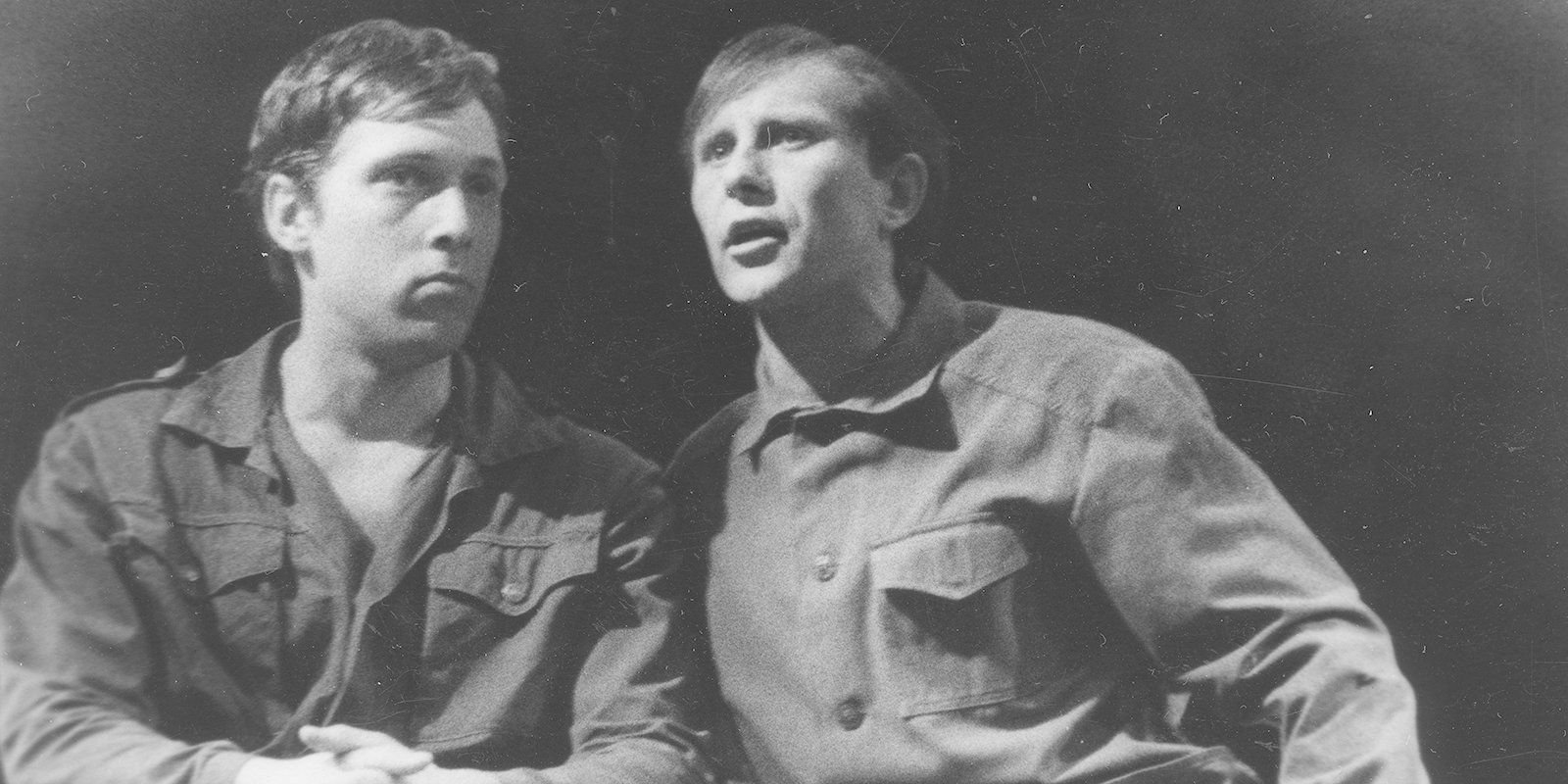
By the late 1980s, Sovremennik opened a new studio for young actors, Sovremennik-2, led by Mikhail Yefremov, Oleg Yefremov’s son. The second Sovremennik was based on the class of the Moscow Art Theatre School that brought together the children of the first Sovremennik company actors including Alexandra Tabakova, Maria Yevstigneyeva and Mikhail Yefremov.
In 1986, they directed a student play based on Yury Olesha’s Conspiracy of Feelings. The play was shown at the studio, on the stage of Lenkom’s Debut youth association and at the Sovremennik Theatre. After the show, Galina Volchek invited the entire class of 15 people to work at the theatre. Sovremennik-2 existed for only three years but it was enough to win the audience’s admiration. The Seventh Labour of Hercules had a full house every night just like The Naked King at the time.
.jpg)
.jpg)
.jpg)


“Despite the lack of a dramatic continuation, I think it was good and also fun. For which, of course, I’m thankful to Ms Volchek. We wanted our own voices to be heard – and they were heard. Whether people liked it or not, it doesn’t matter. We did not play somebody else’s game. We were ourselves, with our flaws and advantages. And I think we were cool,” Mikhail Yefremov said.
Sovremennik finished the 20th century with Three Comrades. To understand the feelings of the lost generation of the people who went through the war, actors watched war chronicles and talked to a person who was saved from captivity during the Chechen War. Later he said that these meetings helped him recover and heal his mental wounds.
The rehearsals were already in progress when the company realised they did not have the ‘fourth friend,’ the car called Karl. Then workers at a car plant hand built a car especially for their favourite theatre. The car still appears on the stage in Three Comrades. Galina Volchek says that the play taught the theatre true comradery.
The audience’s feeling of immersion that was born with the theatre when it just began is still alive today. The Sovremennik is like a good friend who is treated with warmth, love and respect.

.jpg)
.jpg)

.jpg)

The photos used in this article are from the archives of the Sovremennik Theatre. Citations were taken from a book published for the theatre’s 50th anniversary (by Yevgeny Kuznetsov, Anna Shalashova and Yekaterina Voronova).