Record-breaking construction projects and tomorrow’s transport today: Moscow’s passengers face the agony of choice
(11).jpg)
The first section of the Big Circle Line has opened, and three metro stations opened on the Lyublinsko-Dmitrovskaya Line (Line No. 10) three days ago. But this is not the limit. In fact, 95 percent of city residents will have metro stations in their respective neighbourhoods or at a walking distance soon enough.
Surface transit is also hot on the metro’s heels. New interchanges, designated transit lanes and convenient routes allow people to move about quickly and comfortably. For example, it takes Magistral system buses only 20 minutes to travel between Novy Arbat and Prospekt Mira.
Additional electronic services have been introduced for riders’ convenience. Today, people can plot their own routes and deposit money on their fare passes using the Moscow Metro and Mosgortrans (Moscow City Transit Authority) mobile apps.
This mos.ru story discusses various public transit changes in 2017 and looks at what riders can expect in the next few years.
How the metro, the Moscow Central Circle and commuter trains develop
The city is concentrating on new metro-line sections, as it continues to expand the capital’s transport infrastructure. Over ten kilometres of new metro routes were built last year. The Minskaya, Lomonosovsky Prospekt and Ramenki stations have opened on the Kalininsko-Solntsevskaya Line (Line No. 8), and the Zamoskvoretskaya (No. 2) Line’s Khovrino station also receives passengers today.
The first trains also hit the Big Circle Line last year. This metro line’s first section opened in February 2018, with passengers now using the Petrovsky Park, CSKA, Khoroshovskaya, Shelepikha and Delovoi Tsentr stations. This line is to be completed in 2021-2022. About 400,000 people in the Khoroshovsky, Aeroport, Timiryazevsky, Presnensky and Savyolovsky districts will save up to 20 minutes daily.
At over 60 kilometres, the Big Circle Line will be the longest metro circle line in the world. It is longer than the 57-kilometre second circle line of the Beijing Metro.
.jpg)
In the past seven years, the city has built over 120 kilometres of new metro lines, as well as 64 metro and Moscow Central Circle (MCC) stations.
There are also plans to extend the metro’s Sokolnicheskaya Line (Line No. 1) by 2020. Its 9.4-kilometre open-air section linking the now operational Salaryevo station with Kommunarka rural town includes the Filatov Lug, Prokshino, Olkhovaya and Stolbovo stations.
In addition to new stations, the city is launching the new Moskva metro trains. These new-generation trains have been operating on the Tagansko-Krasnopresnenskaya Line (Line No. 7) since April 2017. They have gangway carriage connections and wider doors for entering and leaving them more quickly. They offer a more comfortable and safer ride due to enhanced soundproofing, powerful heating, ventilation and air conditioning (HVAC) systems and reduced vibration levels. The trains also feature USB ports for recharging smartphones and multimedia information systems.

In the past six years, the Moscow Metro has purchased over 1,900 new carriages or 40 percent of the total number. This includes 264 Moskva train carriages in 2017. The new trains run on the Kaluzhsko-Rizhskaya (No. 6), Butovskaya (L1), Filyovskaya (No. 4), Arbatsko-Pokrovskaya (No. 3), Kalininskaya-Solntsevskaya (No. 8/8A), Circle (No. 5) Serpukhovsko-Timiryazevskaya (No. 9) and Tagansko-Krasnopresnenskaya (No. 7) lines, as well as on the first section of the Big Circle Line. There are plans to buy over 1,600 carriages in 2018-2020. This will upgrade over 65 percent of the metro’s rolling stock.
The metro’s security system is also being overhauled. Experts are installing an intelligent video surveillance system for monitoring current developments and for automatically detecting emergencies. In all, 17,000 cameras have been installed in the metro, including the already operational 5,500 smart cameras. Over 10,000 security guards are posted in metro stations.
As for the railway system, new commuter trains are also making their appearance. The Central Suburban Passenger Company has purchased two new-generation Ivolga (EG2TV series) trains with no inside platforms. This allows passengers to shuttle between carriages more quickly. Each train has media screens, overhead racks, jacket hangers, convenient railings near the doors, modern climate control systems, restrooms and free Wi Fi.
These trains also have convenient aisles that are 220 mm (15 percent) wider than those in older carriages. Their noise levels have been reduced by 45 percent. Today, Ivolga trains operate on the Moscow Railway’s Kiev Line, and they will start running on Moscow Central Diametre (cross city railway) routes soon.
In 2017, the Central Suburban Passenger Company bought 24 new-generation commuter trains in the EP2D series that currently operate on all Moscow Railway lines. The new cars have all the latest conveniences. It is possible to purchase two-carriage and three-carriage trains in this series for low-traffic routes. Earlier commuter trains could not be shortened.
The new trains’ drivers sit inside more advanced cabins that lack protruding sections and shrug off potential joyriders who cling to handrails and footboards of earlier train versions. Today, train drivers use removable ladders, and joyriders are unable to get the ultimate thrill.
End (head) carriages have crumple zones to protect passengers and crews in a head-on collision. These crumple zones absorb most of the energy, keeping passengers as safe as possible.
A new electric/pneumatic brake control system reduces the commuter train’s braking distance in an emergency. Electric emergency braking valves in carriages stop the train faster.
The new passenger compartments boast modern climate control systems with air filtration, newly designed inner doors allowing luggage-toting riders to enter and exit more quickly, ticker-tape media screens and carriage-mounted route indicators. Special engineering solutions make it possible to carry people with disabilities.
The new modern commuter trains are equipped with comfortable chairs, climate control systems, security cameras and biological (composting) toilets. The new commuter trains on the Moscow railway hub feature free Wi Fi.
Eleven bi-level Aeroexpress trains entered service in November-December 2017. These new-generation trains run from Kievsky Railway Station to Vnukovo International Airport, as well as Pavelets Railway Station to Domodedovo International Airport.
Stadler Co. of Switzerland made the new bi-level trains especially for Aeroexpress Co. Rolling stock renovation is another corporate development stage in the run-up to the 2018 FIFA World Cup. The company has already completed a new platform at Domodedovo International Airport and continues to upgrade another one during preparations for the biggest international sporting event of the year. It is involved in renovating a platform at Pavelets Railway Station and upgrading the Wi Fi network. All this will guarantee maximum comfort, safety and security for World Cup guests and participants.

The introduction of new bi-level Aeroexpress trains is an important part of creating a high-quality transit infrastructure. The trains develop a speed of up to 160 kph. A four-carriage train has 396 seats, with six-carriage trains offering 700 seats, including 84 business-class seats. Each carriage has several media screens, comfortable convertible chairs and free Wi Fi.
In 2017, service intervals were reduced on the Moscow Central Circle (MCC). Trains started arriving and departing at reduced intervals from 1 May, and this increased the number of extra passenger seats by 88,000 daily. Launched in September 2016, the 54-kilometre surface beltway links outlying districts and helps riders save time. The commuter trains accommodate people with disabilities, passengers with children, cyclists and parents with prams. They also feature restrooms, climate control systems and Wi Fi access.
.jpg)
Surface transit: new routes and modern trams
In 2017, the city launched the second stage of the Magistral bus and tram system offering convenient surface routes via central districts. The project has increased daily surface-transit ridership by one-third. Launched in 2016, the project’s first stage merged 39 city routes. New routes were added last year, and current routes have become more convenient.
The city now requires a new concept for commercial (private) bus companies. Private carriers operate 2,000 new buses on 211 routes. All public transit routes have common standards, with bus validators accepting all current tickets, including city residents’ social cards.
The number of designated transit lanes has increased, allowing buses to avoid traffic congestion in most districts. The city has opened 265 kilometres of designated transit lanes since 2010, including 16 kilometres in 2017.
New-generation Vityaz-M trams, that entered service last spring, boast climate control and GLONASS satellite navigation systems, electronic media screens and can accommodate people with disabilities. These trams ride more smoothly and quietly than the older trams. Riders can also board and disembark five times faster because each tram has five doors and no turnstiles.
In 2016, the city held the most expensive national tram-purchase tender, and the first trams were delivered last year. Under a 30-year service-life contract, the city is to receive 300 Vityaz-M trains, which includes manufacturer maintenance and service to ensure uninterrupted and high-quality performance over this period.
Last year the city renovated 25 kilometres of tram tracks and used noise mitigating technology for the new tracks. This reduced trams noise levels appreciably. The city will continue to install curbs to separate tram tracks from carriageways.
Mosgortrans operates one of Europe’s newest and most advanced bus fleets with an average fleet age of only five years.
.jpg)
Expanded electronic services for passengers
Last year, the city launched the Moscow Metro and Mosgortrans mobile apps allowing users to plot routes to any destination, including the Moscow Region. The apps include information on park-and-ride facilities, metro stations and metro-line closures for repairs and maintenance, and emergencies, in real-time mode. Android/NFC equipped smartphones can support Troika card data; users can record all types of tickets with this app.
The Mosgortrans mobile app provides updates on transit schedules, estimated time of arrival and offers optimal routes. Earlier, the city launched the Moscow Parking Space and Moscow Assistant services allowing users to notify officials of traffic and parking violations.
The city continues to introduce new fare-payment options. Metro and MCC riders can now pay fares with bank cards and mobile phones. An integrated ticket system encompasses the metro, the MCC and surface transit. Troika cards are the most popular. In 2017 alone, city residents and tourists bought almost five million of them, and the total number now tops 17 million.
The city boasts leading positions in numerous international and national smart-city rating surveys. In 2014, Moscow introduced the regional navigation-information based intelligent traffic control system for monitoring the local road situation from satellites. This data helps analyse traffic patterns, predict the road situation and inform people about traffic congestion. By 2017, the system encompassed the entire local public and commercial transit system. Taxicabs and car-share vehicles will also be included in this system.

Moscow Central Diametres and electric buses: projects for the next few years
The city is launching a new ambitious project called Moscow Central Diametres, that will serve as surface metro lines, running through the center of the city and linking the capital with the Moscow Region. Railway lines, currently being upgraded, are being used as another option to get through the middle of the city. They will turn dead-end railway routes into thruway ‘diametres,’ will connect with metro and MCC stations and will help reduce congestion at metro and railway stations and on local roads. Six-minute service intervals are stipulated. New-generation Ivolga (EG2TV series) trains will operate on diametrical routes. The first two routes linking Odintsovo with Lobnya and Podolsk with Nakhabino are to open next year.
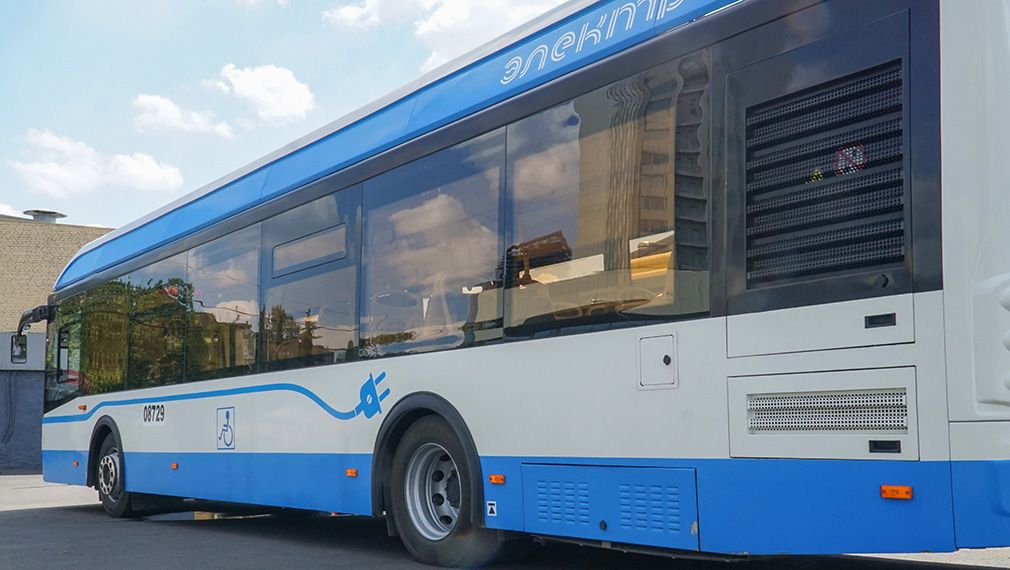
The city will also introduce electric buses that boast certain advantages over conventional buses and trolleybuses. Electric buses are environmentally friendlier and more comfortable than diesel buses. They will offer a smoother ride and reduce noise levels. Electric buses won’t need the overhead cables that the trolley busses use, which tend to malfunction during bad weather and can paralyse entire routes. The new electric buses will be adapted to local weather conditions and will travel 40 kilometres before recharging.
From 2021, the city will start purchasing electric buses only as diesel buses are phased out. This is a global trend, with London, New York, Los Angeles, San Francisco, Amsterdam, Copenhagen and Cape Town also planning to scrap diesel buses from 2020.
International transport organisations recognise the city’s infrastructure expansion achievements. In 2017, Moscow received the most prestigious global transport award from the International Association of Public Transport (UITP) during its summit in Montreal. Called Special Recognition, this award lauds Moscow for successfully implementing its ambitious and integrated urban transport strategy in the past six years. In addition, Tom-Tom Co. of the Netherlands noted the rapid development of the city’s metered parking system since early 2018. It took Moscow only three years to jump from first place (worst traffic congestion) to 13th place.