Double foundation with a reinforced concrete shaft inside: how Ostankino Tower was built
(11).JPG)
The decision to build a 540-metre TV tower was made in 1957. The Soviet TV broadcasting network had to be expanded, as the Shabolovka TV Tower could no longer handle the increasing broadcasting volumes. The new tower was to have an observation deck at a height of 337 metres. Few foreign engineers believed that this colossal tower could be built on a relatively shallow foundation but time has proved the designer right: the Ostankino TV Tower marked its 50th anniversary on 5 November this year. It is so solid that it can withstand an 8-point earthquake and hurricane wind of up to 44 mps.
From reinforced concrete glass to prestressed concrete
Chief designer Nikolai Nikitin came up with the tower design overnight.
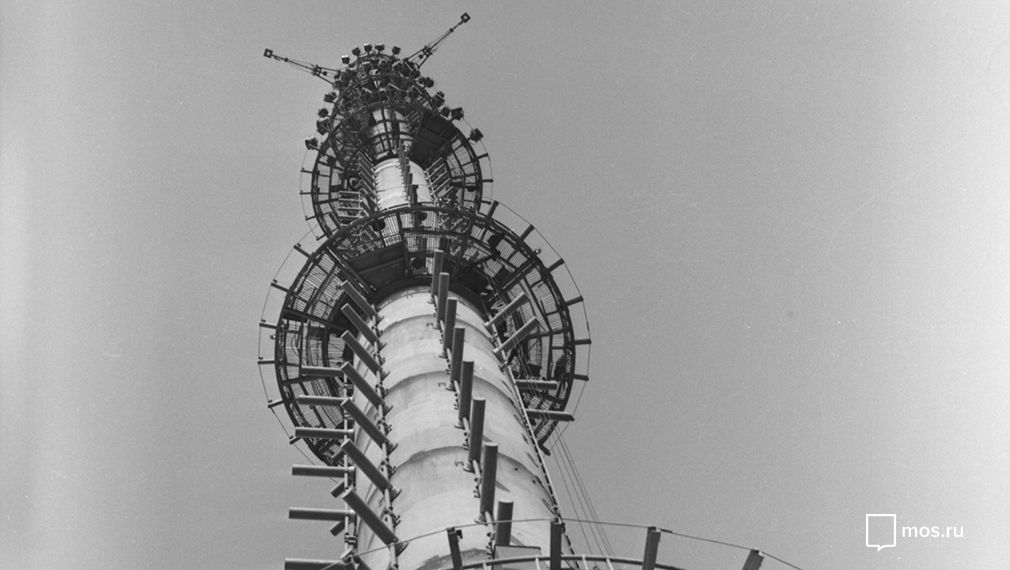
He imagined the imposing structure, which weighs 55,000 metric tonnes, as a flower, a lily with a strong stem turned upside down. Construction of the “flower” began in June 1960. In a relatively short time, approach roads, underground utilities and temporary buildings were completed. The project also involved engineers Moisei Shkud and Boris Zlobin, and architect Dmitry Burdin. Leonid Batalov who was the head of Mosproekt’s Workshop 7 was appointed chief architect of the tower project.
The chief designer of the project wanted the tower be firmly anchored to the ground, with the foundation outweighing the structure by many time, which was to provide resilience and stability
The foundation of the tower itself is 9.5 metres in diametre set in a base 3 metres high and 74 metres in diametre. It is 4.65 metres underground. The overall diametre of the splaying “legs” is 60.6 metres, which is 18 metres down in the ground and 63-metres high. Up to the 385-metre level, the TV tower is made of pre-stressed concrete.
Normally, such tall structures rely on a deep foundation. But Ostankino’s designer decided to make the tower resilient and stable by making its foundation far heavier than the structure itself.
Ostankino Tower’s weight is distributed between the foundation and the trunk in a strict 1:3 proportion, with the centre of gravity at the height of 110 metres. That is why only the antenna-bearing section shifts from side to side.
.JPG)
.jpg)
.JPG)
.jpg)
Chief designer Nikolai Nikitin used to say, “A man relies on his feet standing on an even smaller area but he doesn’t fall”
Foreign engineers said that a structure this high should have a foundation going at least 40 metres underground but Nikolai Nikitin and his team had a more innovative solution. Nikitin proved that a balanced tension of cables inside the tower would tie the whole structure together into a resilient system that would be unaffected even by the strongest wind.
The chief designer used to say, “A man relies on his feet standing on an even smaller area but he doesn’t fall.”
To protect the tower from the wind and sun, 149 steel cables were installed inside the trunk, 50 mm from its internal surface, with a tension of over 10,000 metric tonnes. The cables strung the tower’s outer body together and bore the transverse tensions, thereby preventing the concrete from cracking and protecting the steel framework from corrosion.
The builders laid more than one foundation. In the centre of the foundation, they put up a huge 63-metre reinforced concrete shaft to hold the fast lifts, conduits for utility and water pipes and an emergency staircase, power lines and communication cables. The lifts adjust their speed automatically depending on the signals from the sensors monitoring the tower’s leaning amplitude.
Electricity is supplied contactlessly and inductively as in a transformer: the lifts have current collectors and the lift shaft contains elements for an inductive power supply. The shaft was also a bulwark for beams of 15 floors. Two foundations for two independent structures – the TV tower and the shaft – make it possible to transfer various levels of force to the ground in spite of the swaying tension.
On 5 November 1967, four TV and three radio programmes went on air, broadcasting as far as 120 km
The project had used the latest construction technology – the BK-1000 crane assembled and inserted metal sections, and the trunk was set with the world’s only self-lifting mechanism weighing 300 metric tonnes.
Construction was completed on 12 February 1967 with the lifting of the several-tonne foundation of the 148-metre metal antenna resembling a wheat stalk.
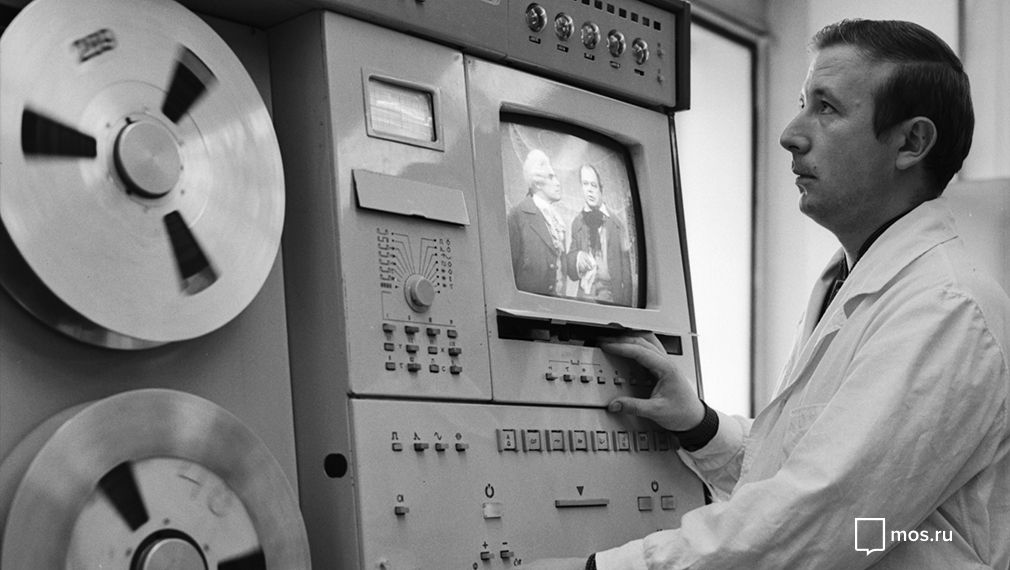
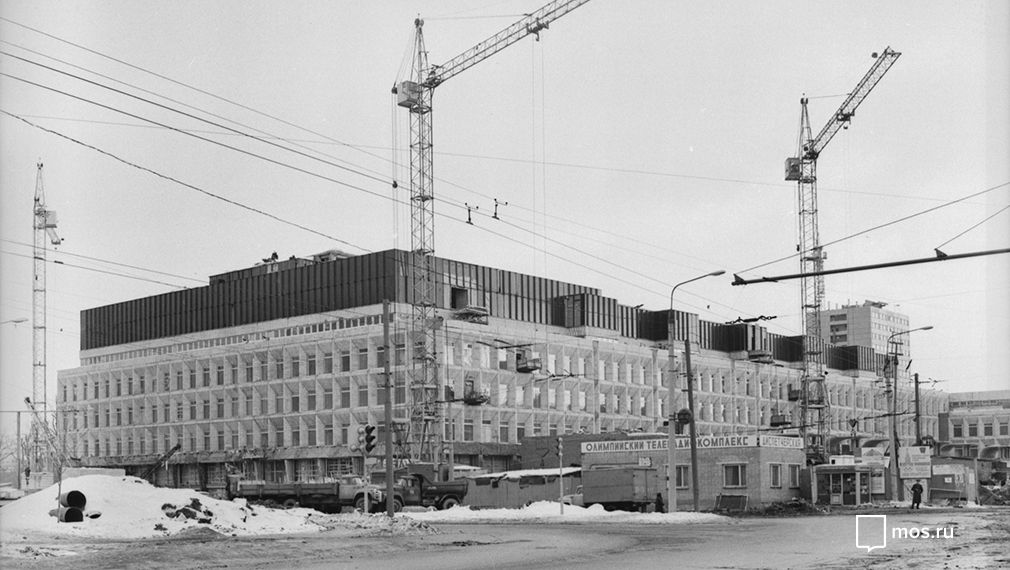
On 5 November 1967, four TV and three radio programmes went on air, broadcasting as far as 120 km, and also on this day a new TV centre was opened at 12 Akademika Korolyova Street. At the time, the Ostankino Tower was the tallest structure in the world. In 1970, the project’s leading participants received government awards.




Fire at 460-metres
The Ostankino TV Tower has survived two powerful hurricanes but was badly damaged by a fire on 27 August 2000. As many as 121 of the 150 pre-stressed structure cables were damaged, lifts were not operational. Power, ventilation, air-conditioning, water lines, communications and the alarms all failed.
It took several years to restore the tower. The building was again reinforced with cables, but this time with inflammable casings and heat-resistant lifts.
In January 2009, the observation deck reopened to the public.
.jpg)
.JPG)
Not broadcasting alone
Apart from broadcasting, the Ostankino Tower has performed other functions, for example, meteorological. At its foundation, there is a concert hall with 750 seats, Korolyovsky, and also event halls. The renowned restaurant, Sedmoye Nebo, has three rotating levels at 328, 331 and 334 metres.
There is also an observation deck at 337 metres, which is the only deck with a 360 degree view of Moscow. About a thousand people visit the observation deck daily. Some couples have held their wedding ceremonies on the tower.
“Run-up” races have been held on the stairs to the 337-metre level. The tower grounds have also hosted the Farewell to Summer festival, the international sky-diving festival Moscow Base Open Air, and the Olympic torch relay Sochi-2014.
This August, the second observation deck was opened at the 85th level for visitors to learn about the tower’s internal structure. There is no safety glass on this deck. During the Interior Tower tour, visitors can get a good look at one of the 21 meteoreyas, or giant pillars with sensors that measure the wind direction and speed, air temperature and humidity. Guides introduce visitors to Moscow’s tallest meteorological complex. The new observation deck was rated third on the list of Moscow’s innovations in the third quarter of 2017. Moscow residents rated this event at 4.8 points on the Active Citizen site.
A total of 60,000 stamps featuring the Ostankino TV Tower and the Ostankino TV Centre will be issued to mark the 50th anniversary of the tower. They will be available at Moscow post offices before the end of the year.


