Touring the Soviet Versailles: Don’t miss these VDNKh attractions
.jpg)
Every weekday, VDNKh, Russia’s largest exhibition, museum and leisure/recreation facility, receives about 60,000 visitors with about 250,000 on weekends. Over the decades, the exhibition centre has thrived and then fallen into disrepair, but it now ranks among the city’s most popular public spaces, boasting architectural landmarks, a park, a concert stage and even a music museum.
VDNKh’s 78-year history
Opened in 1939, the All-Union Agricultural Exhibition (VSKhV) displayed the best industrial, agricultural and cultural achievements from the first days of its work. The 136-hectare exhibition featured 400 sculptures, several hundred paintings and art panels, as well as 250 structures, including various pavilions, cafés, a Green Theatre, a concert stage, a circus and two cinemas. A large adjacent park offered a parachute tower, a Ferris wheel, a fun house with optical illusions, merry-go-rounds and a huge playground for children. From 1 August through 25 October 1939, the exhibition received over 3.5 million visitors.
In June 1941 the exhibition centre was shut down because of the war. Most of the exhibits and the exhibition’s library were emptied. Antiaircraft artillery was deployed there, and the pavilions were camouflaged with dark fabrics. Not a single bomb hit VSKhV during the war.
The exhibition reopened in August 1954, the area was expanded to 207 hectares, new pavilions and the arched main entrance were built, and the fountains Friendship among Nations and Stone Flower sprayed their watery plumes. Four years later, VSKhV was renamed VDNKh (National Exhibition of Economic Achievements).
.jpg)
.jpg)
.jpg)
VDNKh’s new era
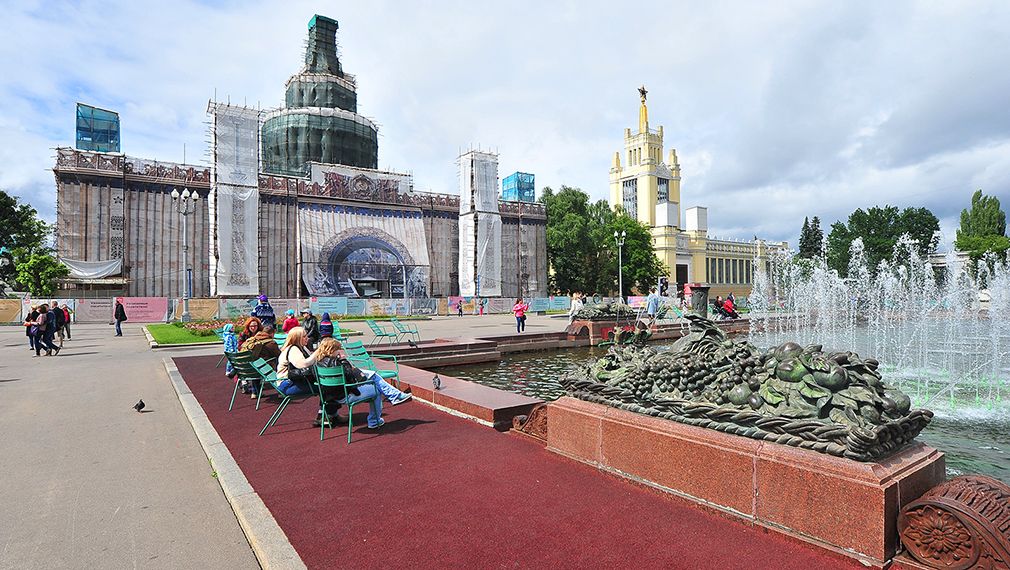
The exhibition centre received a new lease of life in 2014 when a massive reconstruction project got underway. Pavilions No. 18 Belarus, No. 16 Hydrometeorology and No. 57, now housing the historical park Russia, My History, were the first to be upgraded. In 2016, the city moved to restore the green area on the Central Alley, and this year’s project covers its central section.
In the next two years, workers will restore 37 pavilions and 17 fountains. Eleven new museums will open, over 1,800 trees and shrubs will be planted, and a landscape park with a cableway, a maze and a water garden will be laid out.
Don’t miss these VDNKh attractions
Worker and Collective Farm Woman museum-exhibition centre
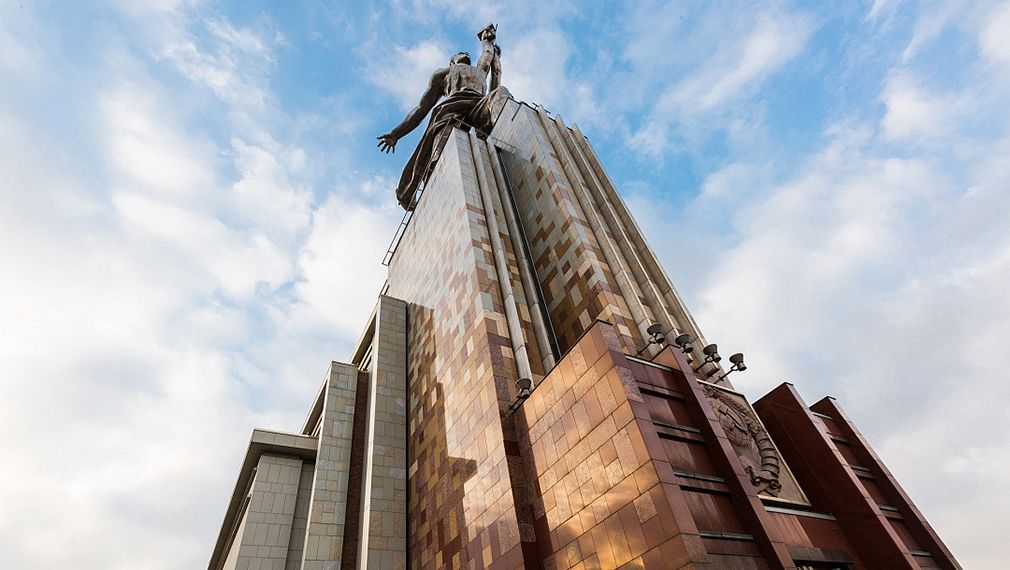
Before entering the exhibition centre/park, visitors can see the sculpture Worker and Collective Farm Woman by Vera Mukhina. The sculpture was first displayed in Paris in 1937 during the International Exposition of Art and Technology in Modern Life. The Soviet pavilion was designed to show the achievements of the young Soviet state and its development, which it did. A high multi-tier building and pedestal was topped with the massive sculptured duo.
After the exhibition, the sculpture stood for a long time near VDNKh’s southern entrance. By 2009, the city built a pavilion-pedestal, an exact replica of the unique 1937 pavilion, on Prospekt Mira, and Mukhina’s famous sculpture was placed on top. Today, the pavilion houses a museum-exhibition centre, and an open observation deck with a great view of the city.
Main and northern arched entrances
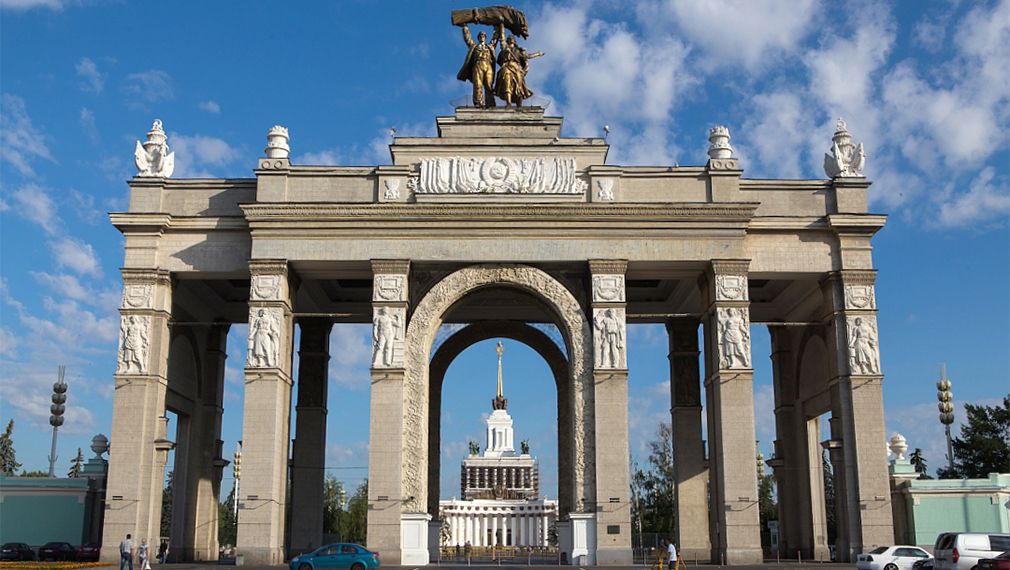
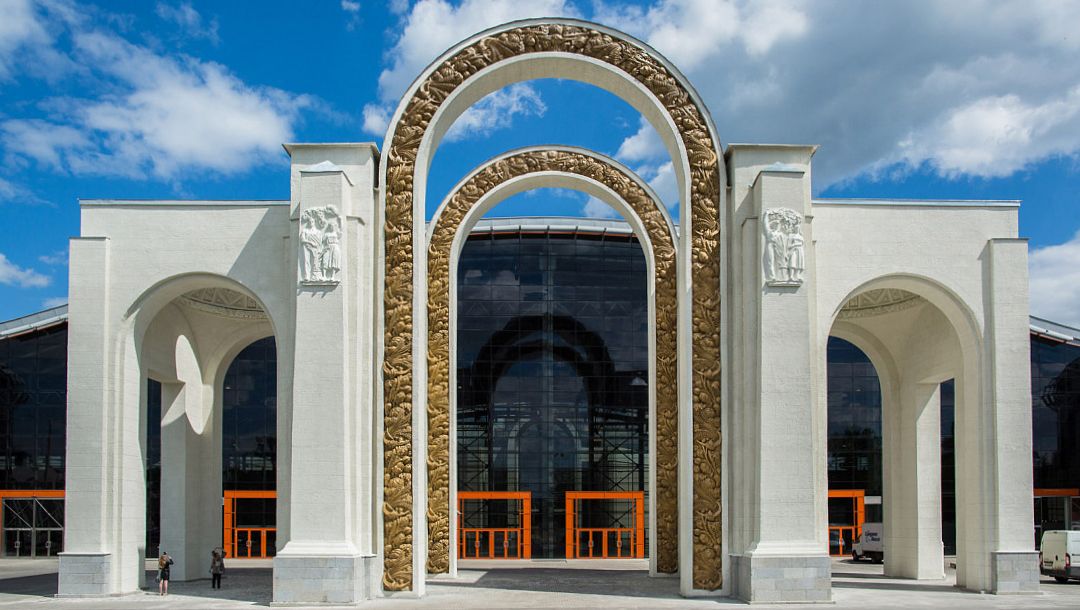
Most visitors enter VDNKh via the main arched entrance done in Roman Empire architecture. The pylons are decorated with bas-reliefs, and the sculpture Tractor Driver and Collective Farm Woman stands on top of the arch. Both figures raising a sheaf of grain ears to a 32-metre height symbolise the Soviet Union’s heavy industry and agriculture.
This arch is currently being restored, and the three-span arched northern entrance with gilded ornamentation has already been renovated. Built in 1939, it was not upgraded for decades but now looks like it did 78 years ago.
Tsentralny Pavilion
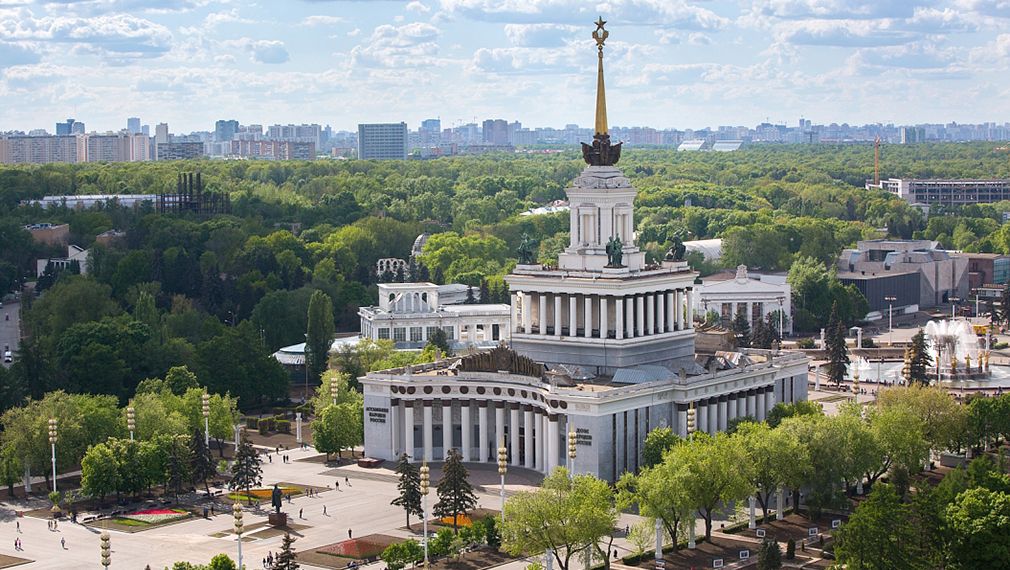
The 97-metre tall Tsentralny (Central) Pavilion, one of the most imposing VDNKh structures, has three tiers, a colonnade, a spire with a star and features garlands of plaster fruits and vegetables.
The city restored the pavilion in 2014, with experts locating a high relief called “Glory to the Soviet Nation, the Color-Bearer of Peace!” This high relief had been considered irretrievably lost. It turned out that the well-preserved high relief was merely wrapped with plywood and thus remained intact. This masterpiece with a total area of 90 square metres shows over 1,500 representatives of the Soviet nation marching in front of major socialist-era construction projects, including the Lomonosov Moscow University skyscraper, the Dneproges hydroelectric power station, etc.
Restoration teams also found a huge drum with a 1935 canvas painting by Alexander Gerasimov called The 2nd All-Union Congress of Collective Farmers and Exemplary Workers measuring 6.75 by 11 metres. This paintingwas also thought to be lost.
VDNKh fountains: Friendship among Nations, Stone Flower and Golden Ear
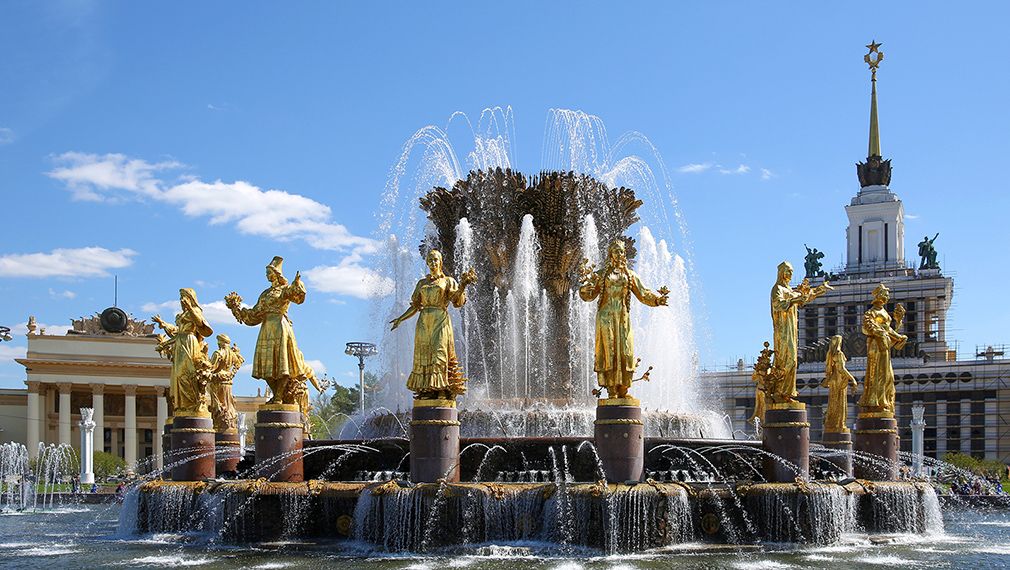
Friendship among Nations, the most famous fountain, features 16 gilded women locked in a circular dance. These figures resembling Demeter, the goddess of agriculture, harvest, fertility and sacred law, symbolise the 16 post-Soviet republics. Russia is holding a golden sheaf of wheat, Belarus is holding an apple-tree branch, and Uzbekistan is holding a cotton-flower. The fountain cup is decorated with a golden sheaf of wheat, hemp and sunflowers.
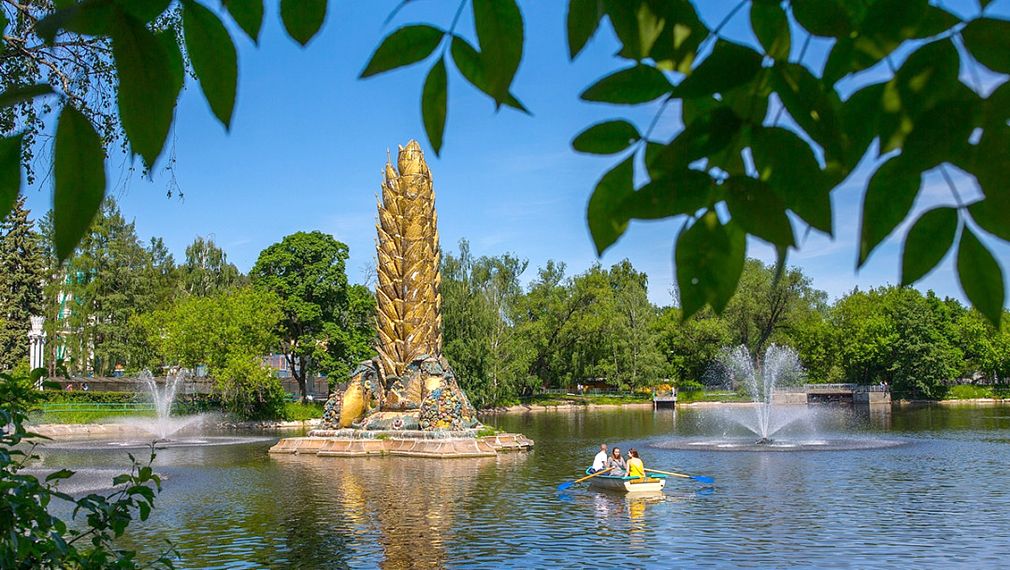
The Stone Flower fountain resembling the Latona fountain in Versailles and the Golden Ear fountain also symbolise fertility. The former fountain seems to grow from crystals and semi-precious stones, with bronze and iron fish swimming in the cup. And the cup is located in the middle of a pond; the powerful pumps simultaneously generated 66 vertical streams of water. Thirty of these streams reached a height of 25 metres. This fountain no longer operates, but it will be restored in the future.

Yak-42 airliner, Vostok and Buran space shuttle aircraft
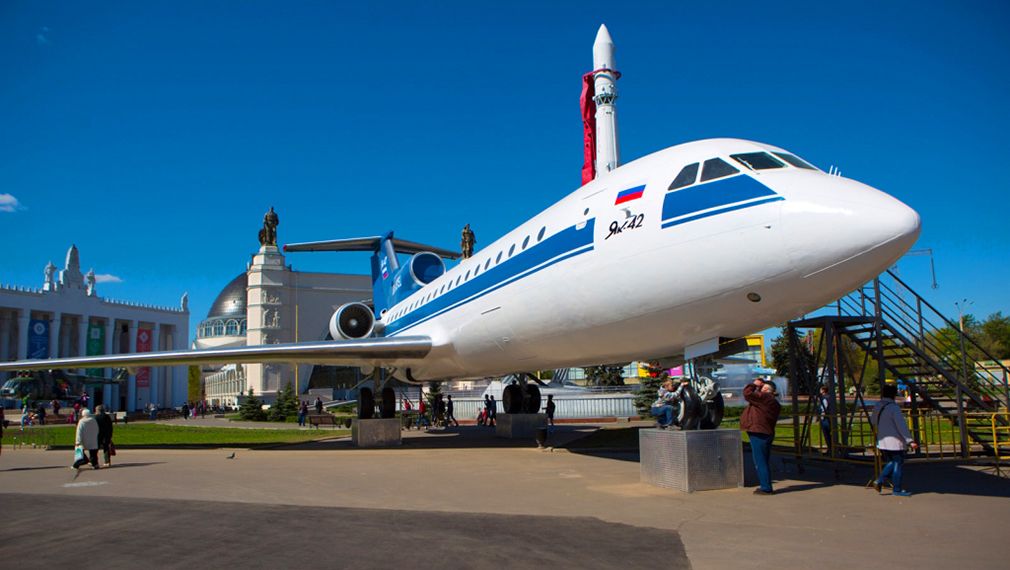
A Soviet-era Yak-42 airliner was installed on VDNKh’s Industry Square in 1981. In December 1981, this plane which has a maximum range of 2,500 kilometres set the world endurance record for planes under 55 tonnes. At that time, the Yak-42 flew from Moscow to Khabarovsk non-stop, covering 8,200 kilometres.
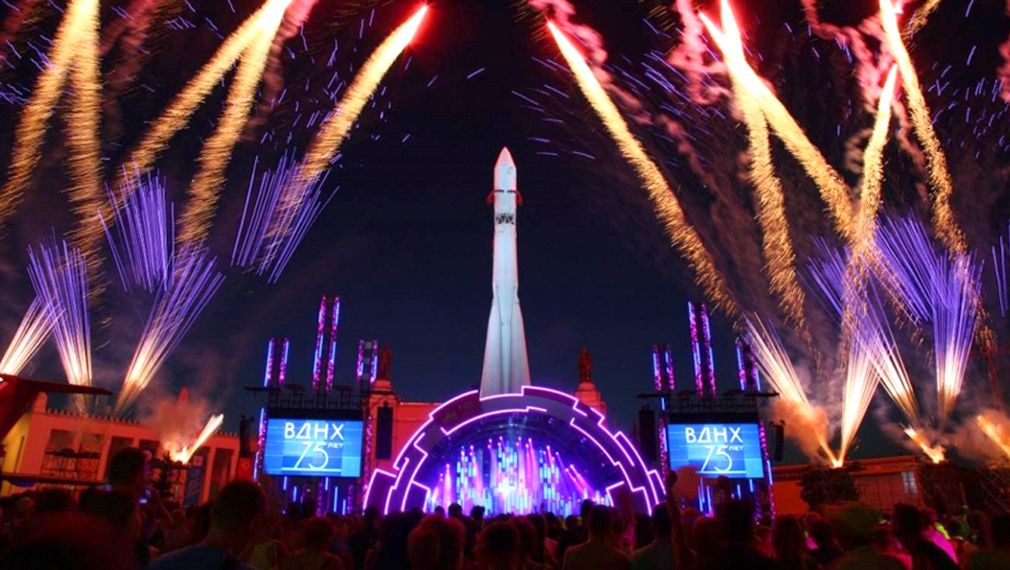
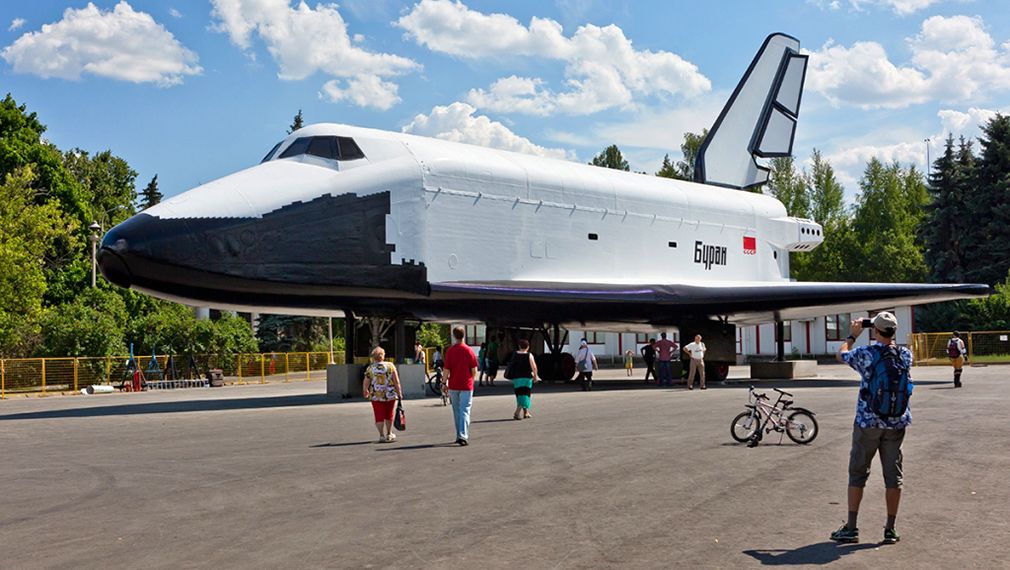
A model of the Vostok launch vehicle, as tall as a 16-storey building, is located on the same square. And a model of the Buran space shuttle can be seen behind nearby Pavilion No. 20 housing the Space Museum. The museum shows a film about the shuttle, and presents the blueprints and real-life components. Visitors can land the Buran at the Baikonur Space Launch Centre in a simulator.
Moskvarium Oceanography and Marine Biology Centre
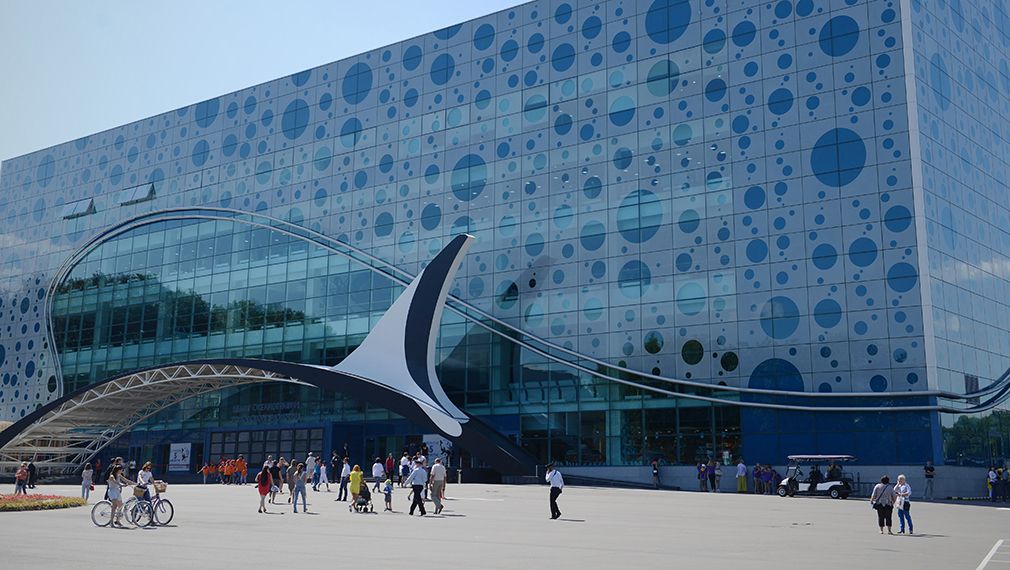
VDNKh boasts the Moskvarium oceanarium, one of Europe’s largest landlocked oceanariums located thousands of kilometres from the ocean. This oceanarium has over 12,000 inhabitants. Visitors can take part in a journey spanning all of the world’s oceans: from Iceland’s fjords to the Great Barrier Reef and from Greenland to Kamchatka. They can see divers feed the only male bowmouth guitarfish (Rhina ancylostoma), also called the shark ray or mud skate, and the only male hawksbill turtle in Russia. Both species are listed in the Red Data Book.And they can also feed tame Japanese carp from small bottles.