Century-old traditions and room for experimentation: Mayakovsky Theater marks 104th anniversary
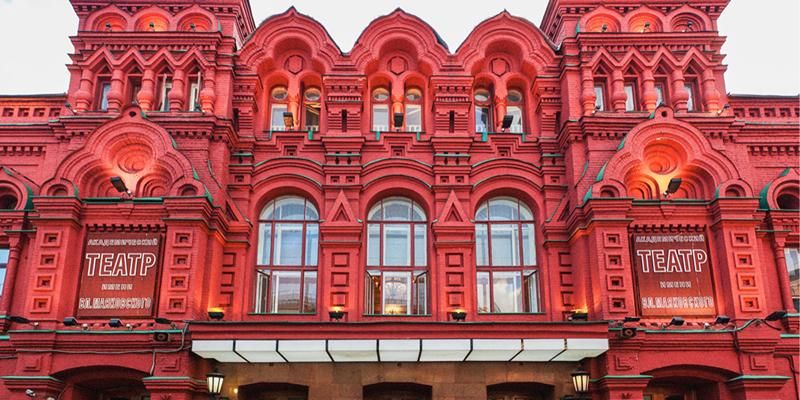
For over a century, the Vladimir Mayakovsky Moscow Academic Theater, commonly known as just the Mayakovsky Theater, has blended the classics with experimentation, discovering new talent and seeking ways to engage their audiences in a dialogue about humans and time. Today, it ranks among Moscow’s top five most-visited theaters supervised by the Moscow Department of Culture. Its 104 th season offers a focus on the works of Leo Tolstoy, Fyodor Dostoevsky, Alexander Ostrovsky, and Anton Chekhov.
A 140-year journey
The story began back in 1886 with the Paradise Theater that was opened on Bolshaya Nikitskaya Street and was named after impresario Georg Paradise, its creator. The building had been reconstructed for his operetta troupe according to Konstantin Tersky’s project, while the Russian Revival façade was made by Fyodor Schechtel.
Soon, the theater grew into a meeting place for European theatrical stars, including Sarah Bernhardt, Eleonora Duse, and Mounet-Sully who performed there. And, no wonder that at the turn of the 19 th and 20 th centuries it was known as the International Theater.
Following the revolution, the building housed the Theater of Revolutionary Satire; in 1922, it was occupied by the Theater of the Revolution led by Vsevolod Meyerhold. On October 29 of that same year, the theater premiered The Night, a play by Marcel Martinet; this date is therefore the official birthday of the modern-day Mayakovsky Theater, also affectionately known as Mayakovka.
Over the years, the theater has been led by Alexei Popov, Nikolai Okhlopkov, Andrei Goncharov, Sergei Artsibashev, and Mindaugas Karbauskis, its stage having hosted many prominent actors such as Maria Babanova, Faina Ranevskaya, Armen Dzhigarkhanyan, and Natalya Gundareva, to name just a few. Today, the traditions are upheld by Svetlana Nemolyayeva, Igor Kostolevsky, Yevgeniya Simonova, Olga Prokofyeva, Anna Ardova, Tatyana Orlova, and many others. Since May 2022, the theater’s artistic director has been Egor Peregudov.
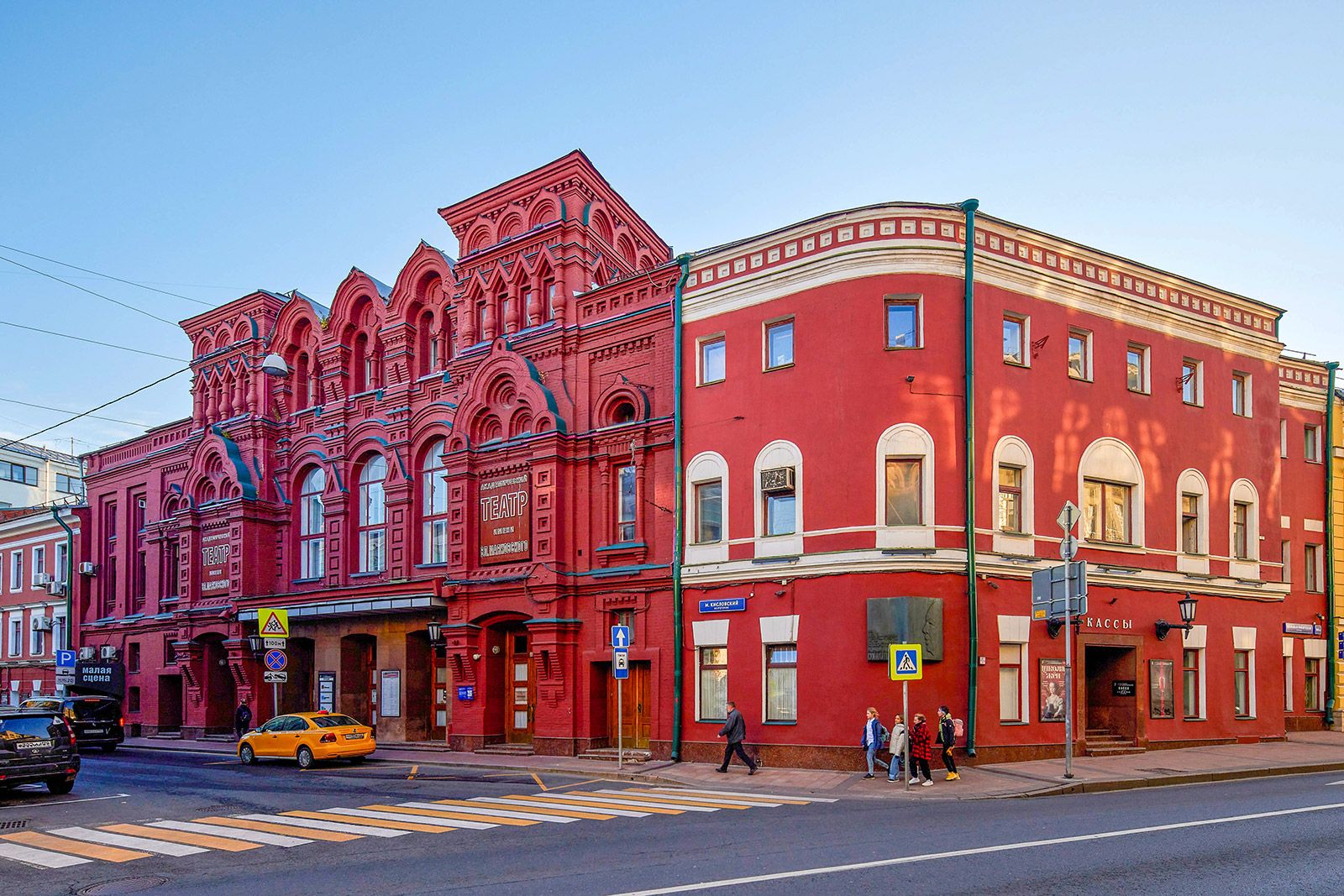
The stage on Sretenka Street: A space for experimentation
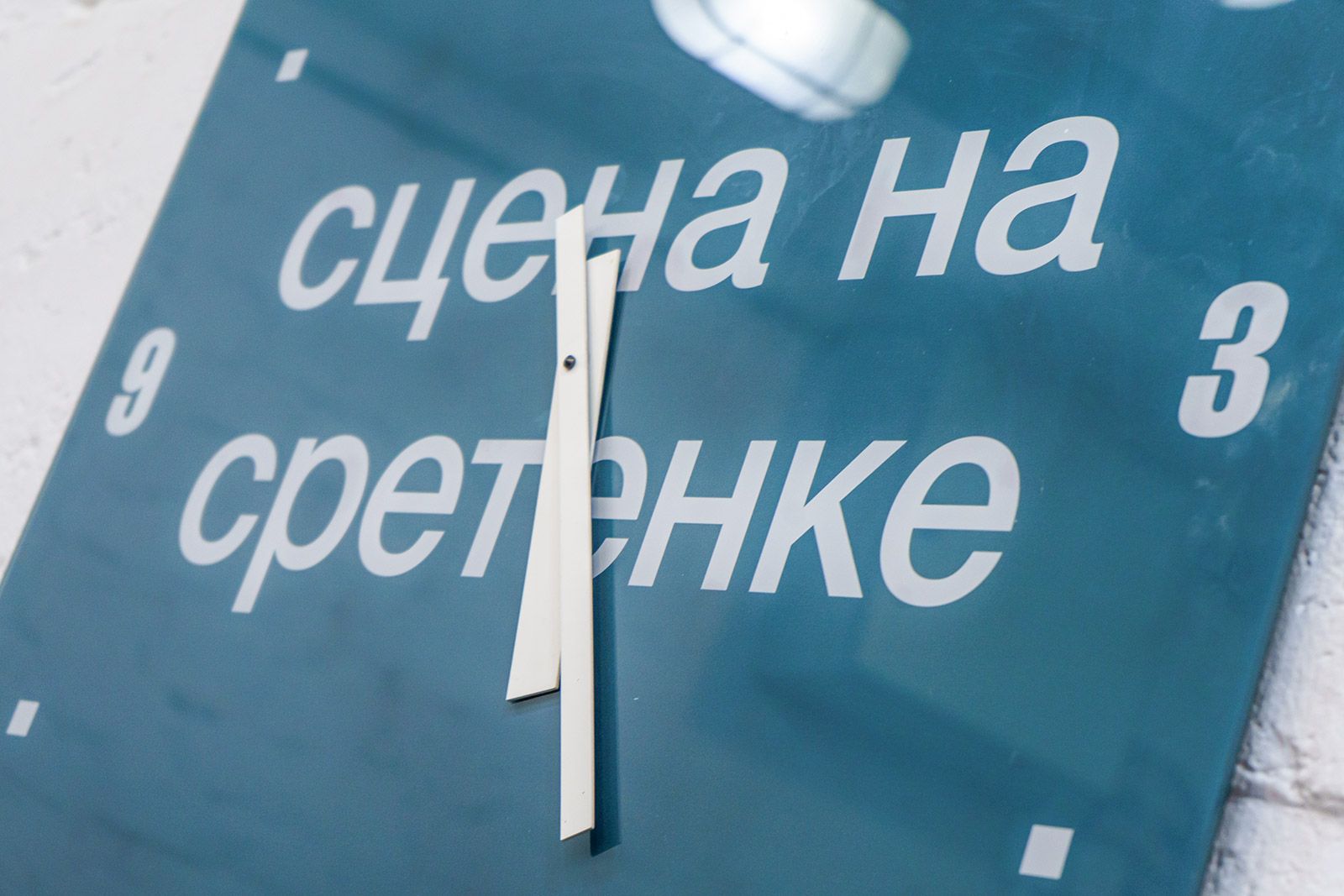
In 1981, Andrei Goncharov, then the chief director of the Mayakovsky Theater, established another stage that was opened on Sretenka Street. It has evolved into a platform for searching new formats, bold directorial solutions and performances that go beyond the usual theatrical language. It was there that Yevgeny Arye’s play Rosencrantz and Guildenstern are Dead was premiered in the USSR; it was also the venue for Yuri Butusov, Leonid Heifetz, Evgeny Kamenkovich, Mindaugas Karbauskis, and other famous directors.
Today, the repertoire played on Sretenka Street includes 19 productions, ranging from classical drama to experimental performances, well-known pieces given fresh interpretations and contemporary plays serving as a springboard for exploring unconventional approaches. The creative space preserves the theater’s traditions while simultaneously opening doors for young directors, enabling bolder form and content experimentations.
In 2026, the stage on Sretenka Street marks its 45 th anniversary, while its home building turns 100. The venue remains a vital part of the Mayakovsky Theater as a space where the company can experiment, placing its trust in bold directors and broadening the understanding of what a contemporary theatrical production can be.
Classics and modernity
The Mayakovsky Theater stages well-known literary works — not to simply repeat, but to uncover new meanings— the classics coming as a starting point for exploration, while age-old stories about love, choice, freedom, and responsibility are given an unexpected, fresh realization on stage.
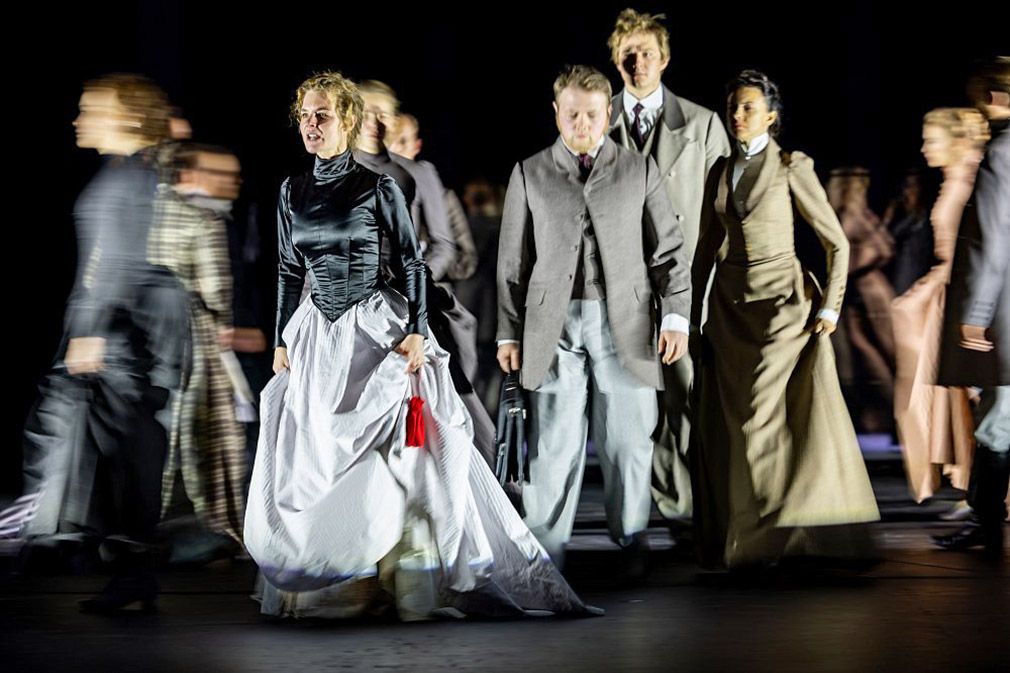
One of the season’s major highlights is Egor Peregudov’s Karenina. Volume Two. The play runs for about five and a half hours, including two intermissions, and begins not with the opening chapters of the novel, but rather after the key turning points, namely, Anna’s confession to Vronsky and her break from her husband. This approach makes it possible for the production to focus on a portion of Tolstoy’s text that is typically left out of stage adaptations, offering a deeper examination of the consequences of the choices the characters have made.
The stage on Sretenka Street also invites to its coming up performances based on Fyodor Dostoevsky’s Crime and Punishment directed by Evgeny Zakirov, and Alexander Ostrovsky’s The Storm directed by Egor Kovalev. The season’s lineup also includes Anton Chekhov’s Three Sisters, a blend of psychological drama and clowning by Argentine director Gabriel Chamé Buendía, and Homer’s The Odyssey, a production by Evgeny Kornyag that incorporates puppets, stage objects, and physical theater.
The repertoire features psychological dramas and comedies alongside clowning and visual experiments. This diversity promotes fresh interpretations of literary classics and supports directors who are eager to develop an idiosyncratic artistic language offering audiences unexpected theatrical solutions.
Artistic forms and intonations evolve, indeed, classic narratives taking on fresh meanings, while the theater opens up doors for experimentation and bold creative approaches. Yet, at the heart of it all remains the human being — with feelings, doubts, and hopes. The Mayakovsky Theater, which has been evolving alongside the times for over one century, invites the audience to still continue the story.