From rodents to bears: How Moscow Zoo’s keepers care for the animals
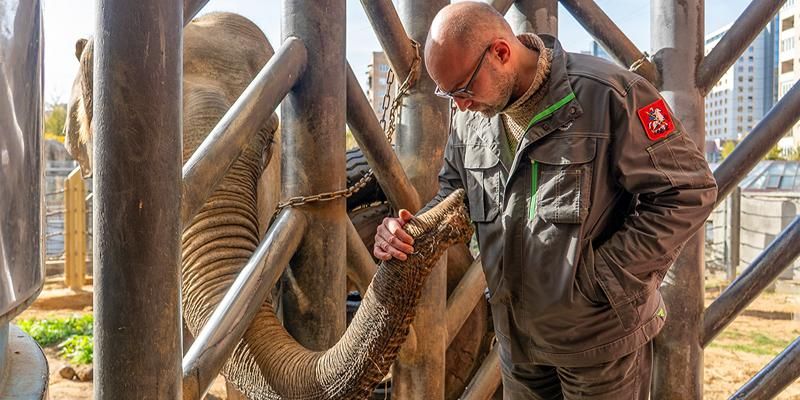
The Moscow Zoo managed by the Moscow Department of Culture would not exist without its animal keepers who monitor the health and condition of the animals, feed them, clean their enclosures, do training sessions, and create comfortable environments for each species. They do not just care for those under their charge. Indeed, they know almost everything about them. They react quickly to any unforeseen situation, can accurately assess risks and are boundlessly tolerable.
“Keepers need iron discipline and incredible patience to precisely repeat complex and often exhausting care routines. Fast responses are vital and there is no such thing as a minor detail since the wrong color of droppings, the way the animal holds its foot are reasons for concern. And it does not matter what kind of animals they are — whether rodents or tigers. In times of crisis, a team of keepers must adapt — much like a school of fish or a flock of starlings when a threat occurs — with everyone acting perfectly in sync,” explains Mikhail Bragin, Manager of the Moscow Zoo’s Mammal Department.
Dedicating the life to the zoo
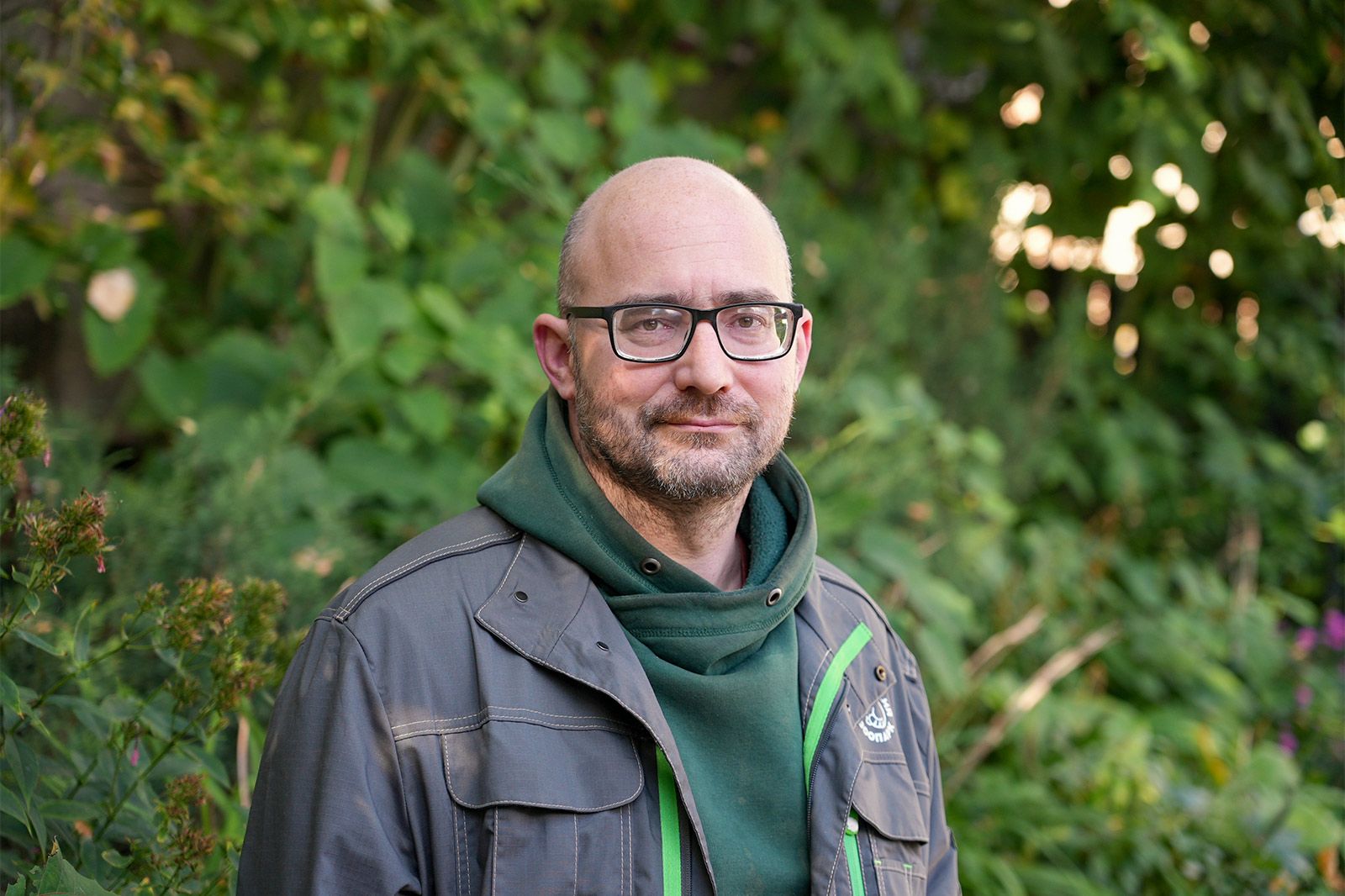
Mikhail Bragin linked his fate with the Moscow Zoo thirty-three years ago. As a teenager, he attended the zoo’s group for young biologists where he gained foundational knowledge, learned how to apply it and discovered how to take responsibility for the consequences of what he does. Over the years, he went from being a young nature enthusiast to a zookeeper to eventually have taken charge of one of the zoo’s most challenging department.
“As a child, I had lots of pets, such as cats, birds, rodents, and reptiles. I guess it was then that I developed a special attitude towards animals — an attitude that eventually made me find myself at the zoo. When someone is constantly living alongside you, you get used to observing them and taking care of them. That is a lifestyle rather than a hobby. At the age of thirteen, I and my group mates were studying bison at the Kostroma Biological Station. The animals were unfenced and were walking about quite freely. For the first time, I realized just how dangerous a wild animal can be — a creature with whom it is impossible to reach an understanding; yet, it might also be in need of human help,” the zoologist says.
Mikhail Bragin had worked extensively in the wild until he sustained a serious injury; after that he chose to devote himself to the Moscow Zoo’s inhabitants. His responsibilities include making daily rounds of the enclosures, overseeing the keepers, handling documents and managing a large-scale facility. He also takes part in training sessions, delivers some nerve-racking procedures, such as animal transportation, and responds to all communications from keepers and zoologists.
“In the wild, you can observe an animal and study it, but you should not interact with it. And you cannot help if it gets unwell. In a zoo, you are fully responsible for an animal; you provide for its living conditions, train it, treat it when it is ill and take care of it. And if something goes wrong, you cannot just blame nature. You must do something about it,” says Mikhail Bragin.
A place where everything makes sense
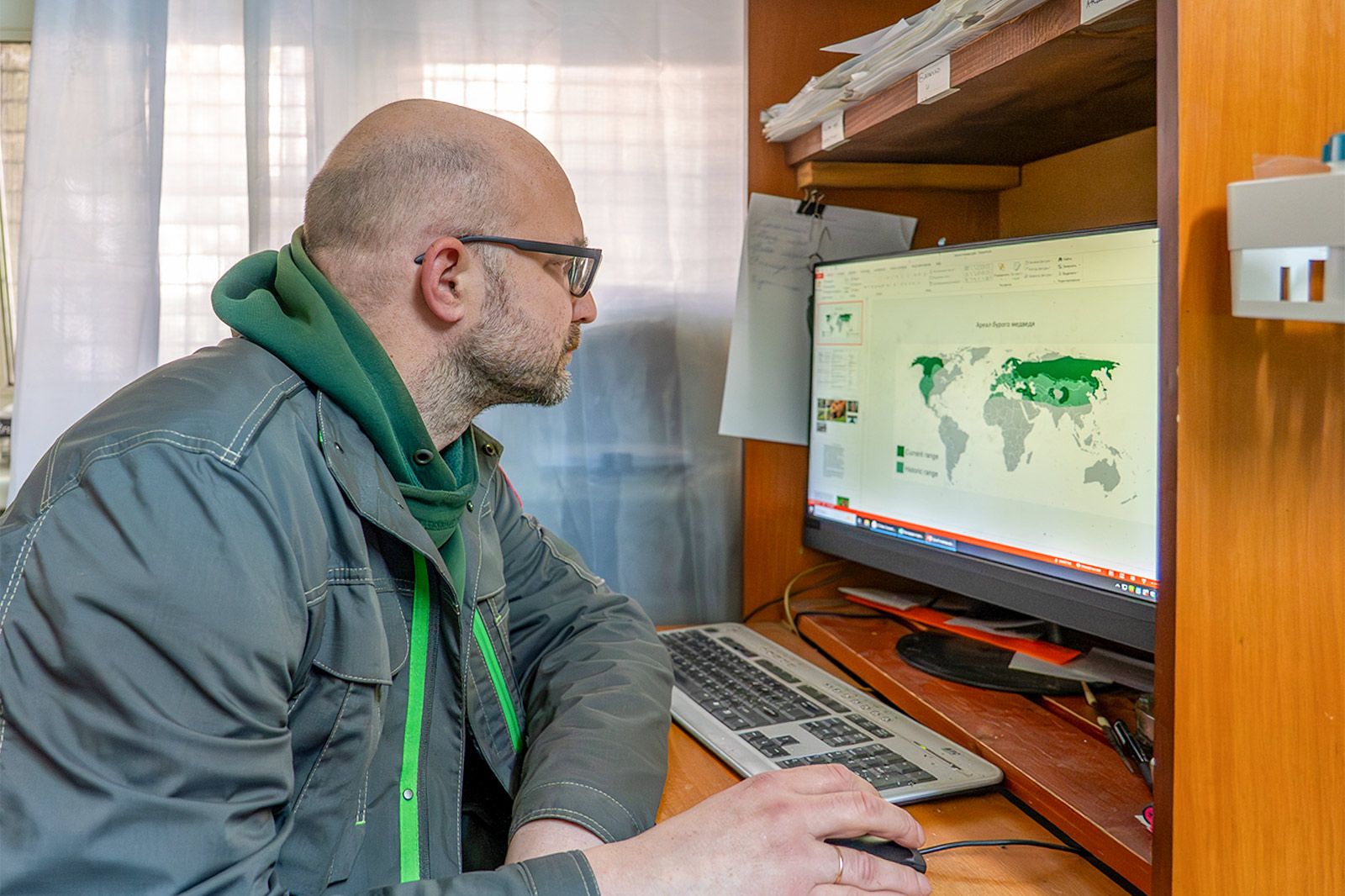
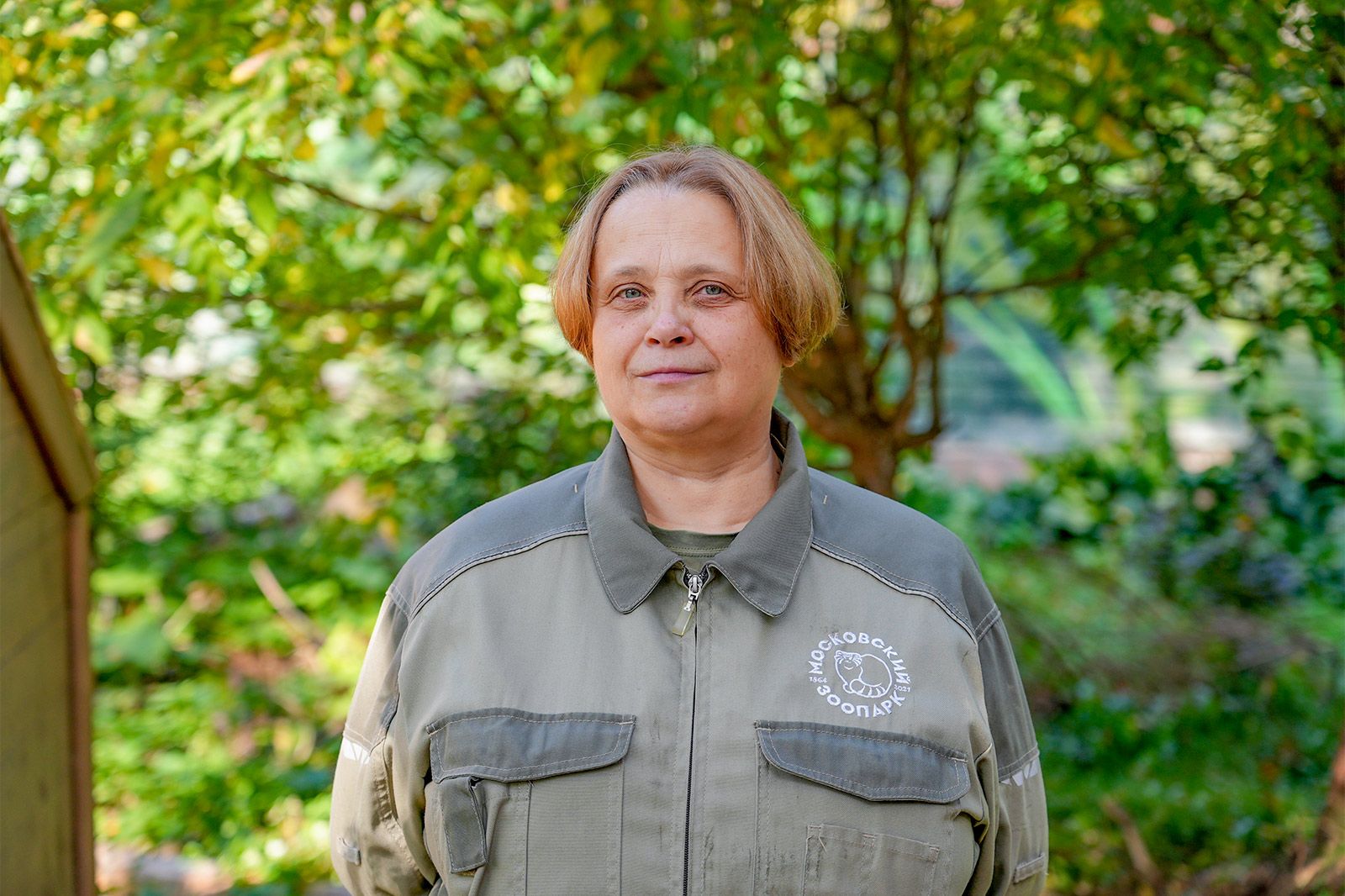
Almost forty years ago, animal husbandry specialist Nina Tuzova began her career at the Moscow Zoo as an animal caretaker. On her very first day, she faced a really big challenge of cleaning the enclosure of Solomon and Solokha, the Malayan sun bears. Dangerous predators first had to be lured into another room, then the area had to be cleaned, and finally they could be let back in. Today, zootechnician Nina Tuzova oversees a wide range of key operations within the department; indeed, she monitors the feed supply, communicates with colleagues to determine a balanced diet for each animal under their care, plans enclosure repairs and future breeding and also addresses day-to-day routines. What is more, she also performs the duties of a keeper if necessary.
Nina loved and cared for animals even back when she was a child. Whenever her relatives went away on vacation or for business, they would leave their pets, such as cats, dogs, and even a turtle, in her care.
“At some point, I realized that I would work with animals. And when I joined the zoo’s team, I understood that it was a place where everything made sense. Here, you are responsible for the animals at a professional level. An animal cannot say where it hurts, nor will it complain that it is feeling unwell. And if you are not careful enough with it, that may have a very tragic outcome. My life is inextricably linked to the Moscow Zoo, and I cannot imagine any other lot for myself,” says Nina Tuzova with conviction.
A training session for a leopard
Zookeeper Roman Makarov joined the Moscow Zoo’s mammal department two years ago. His morning begins with rounds of the enclosures, followed by feeding and cleaning; he is to keep a close watch on the animals throughout the day and deliver scheduled training sessions.
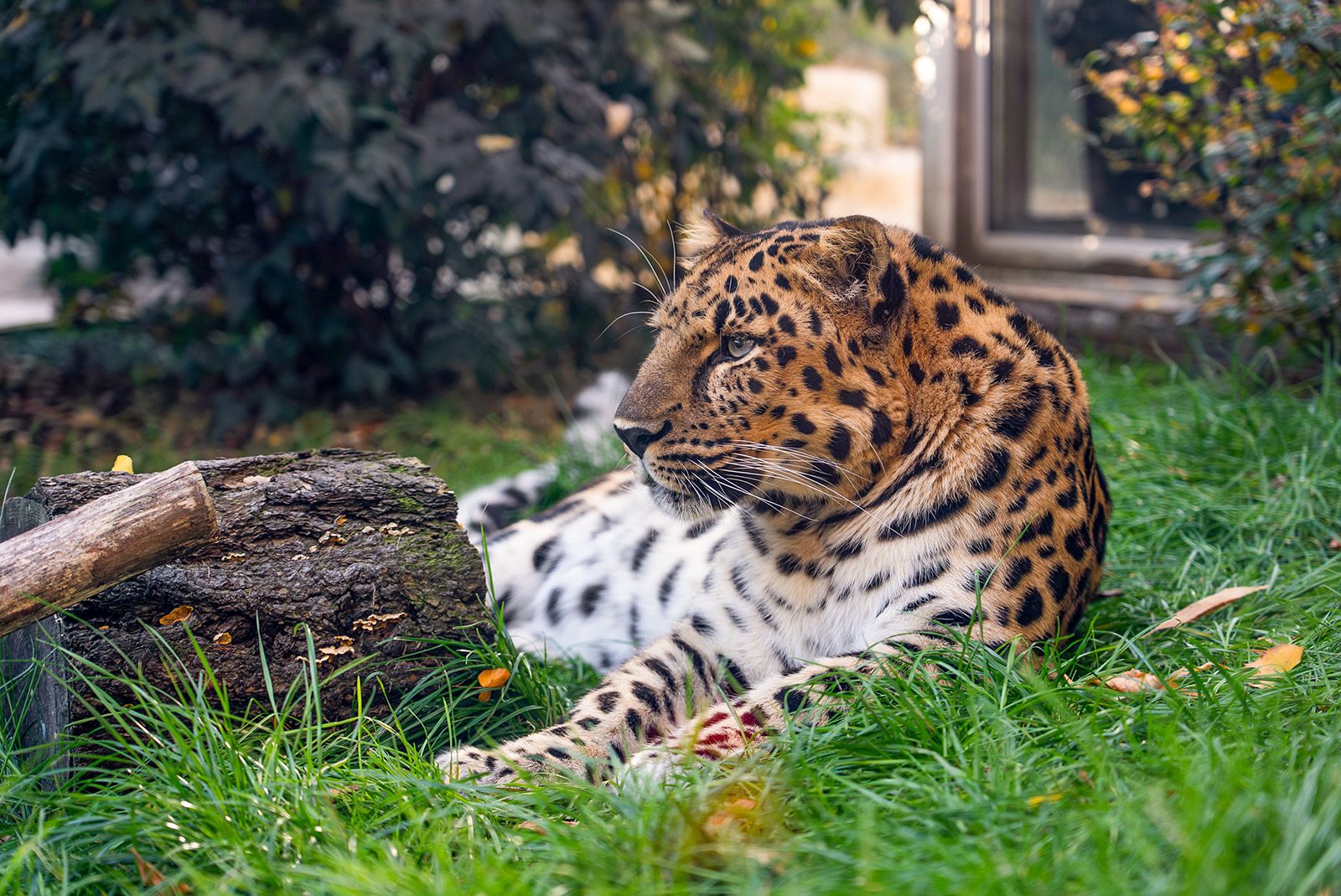
“I keep many animals, including a cougar, a leopard, lynx, bush dogs, brown hyenas, sun bears, Pallas’s cat, dholes, and binturongs. Cougars and leopards are the most dangerous predators I think. But it is with them that things are most exciting. At one time, I was very surprised that Mizer the leopard would calmly walk into a transport cage and allow his claws to be trimmed and blood to be taken from his tail. This is the result of a long-term effort taken by the keepers and zoologists,” says Roman Makarov.
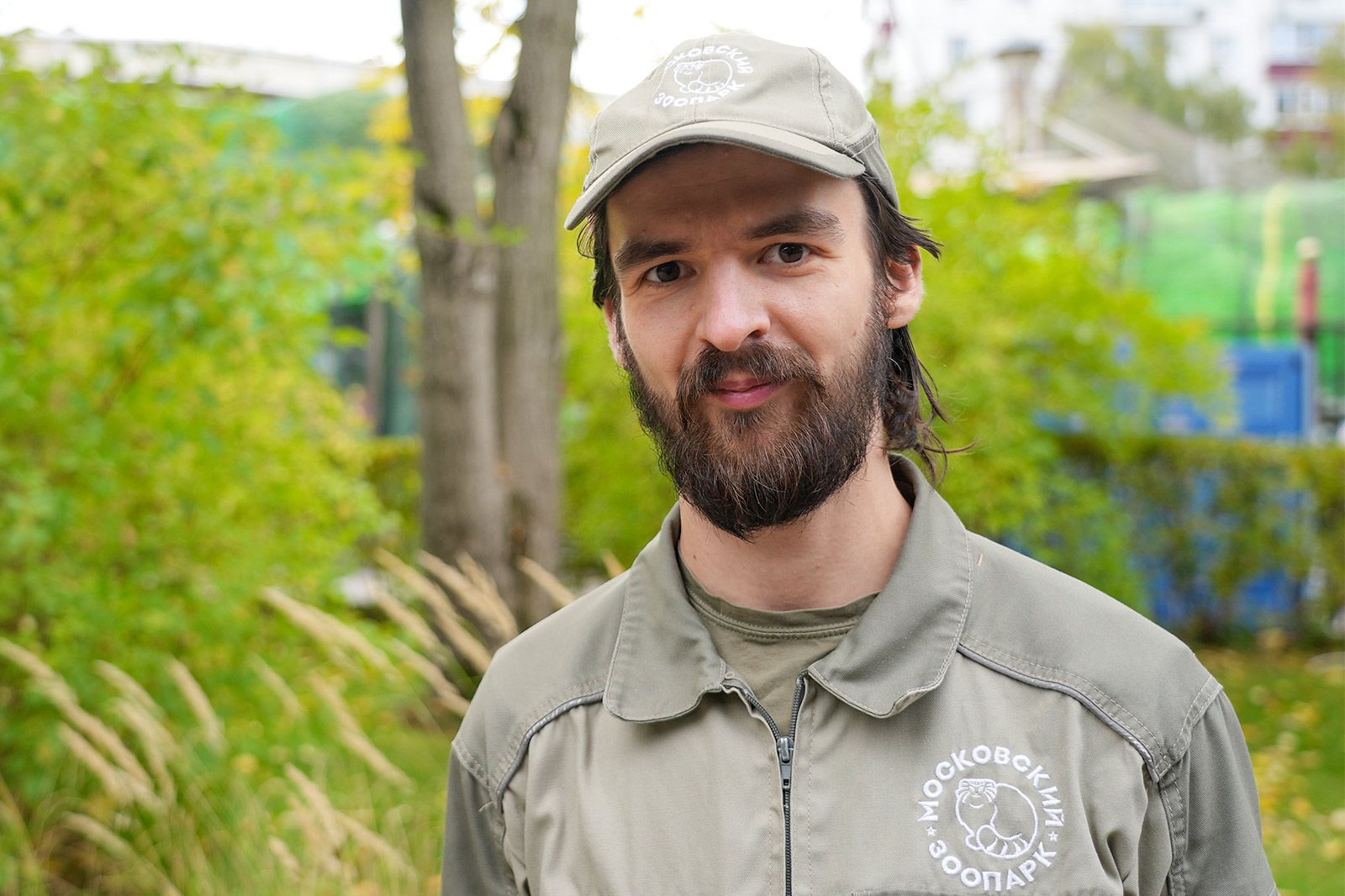
In fact, the young keeper has no favourites. Each of the animals under his care possesses unique traits that are just amazing to observe.
“To build a trusting relationship with an animal, you need to ensure it feels safe. You should speak calmly, avoid sudden movements and reinforce positive signs with treats. When I first approached the bush dogs, I saw twenty-three of them! I was taken aback and could not figure out how to deal with them. They have an established hierarchy, roles, and relationships, and you have to somehow fit into the framework. But as I gained experience, things started to work out. I learned to tell them apart by their temperament and behaviour, and gradually the pack accepted me,” the young keeper shares.
To better understand animals, Roman Makarov is going to study animal psychology. The most exciting job he does are training sessions, he thinks.
“You learn to understand the animal, and it learns to trust you. I have already taken part in training sessions with Mizer the leopard, and that is the most powerful experience of my life,” Roman Makarov says.
Raising Akela
Anastasia Pugacheva’s wish to dedicate herself to animals took root back when she was in school, too. As she watched television shows that gave viewers behind-the-scenes access to zookeepers’ job, it was as if she were transported into another realm. And when she completed an internship at the Moscow Zoo during her university years, she became positive that this was the right place for her. In 2022, she joined the zoo as a zookeeper.
“A few years ago, brown hyenas arrived at the zoo. One of them was very timid as it was afraid to enter the room and would run away at the slightest sound. We were taming the animal step by step. We would announce our approach by voice, walk up quietly and carefully offer it some food. At first, the hyena would linger at the entrance, then it would step inside for a second, and later it came in for a few seconds at a time. And at some point, it remained inside. Yet, it would not eat until the human had left. And I was just sitting and waiting. And that could last for forty minutes. But I did it. We began to trust each other,” Anastasia Pugacheva shares.
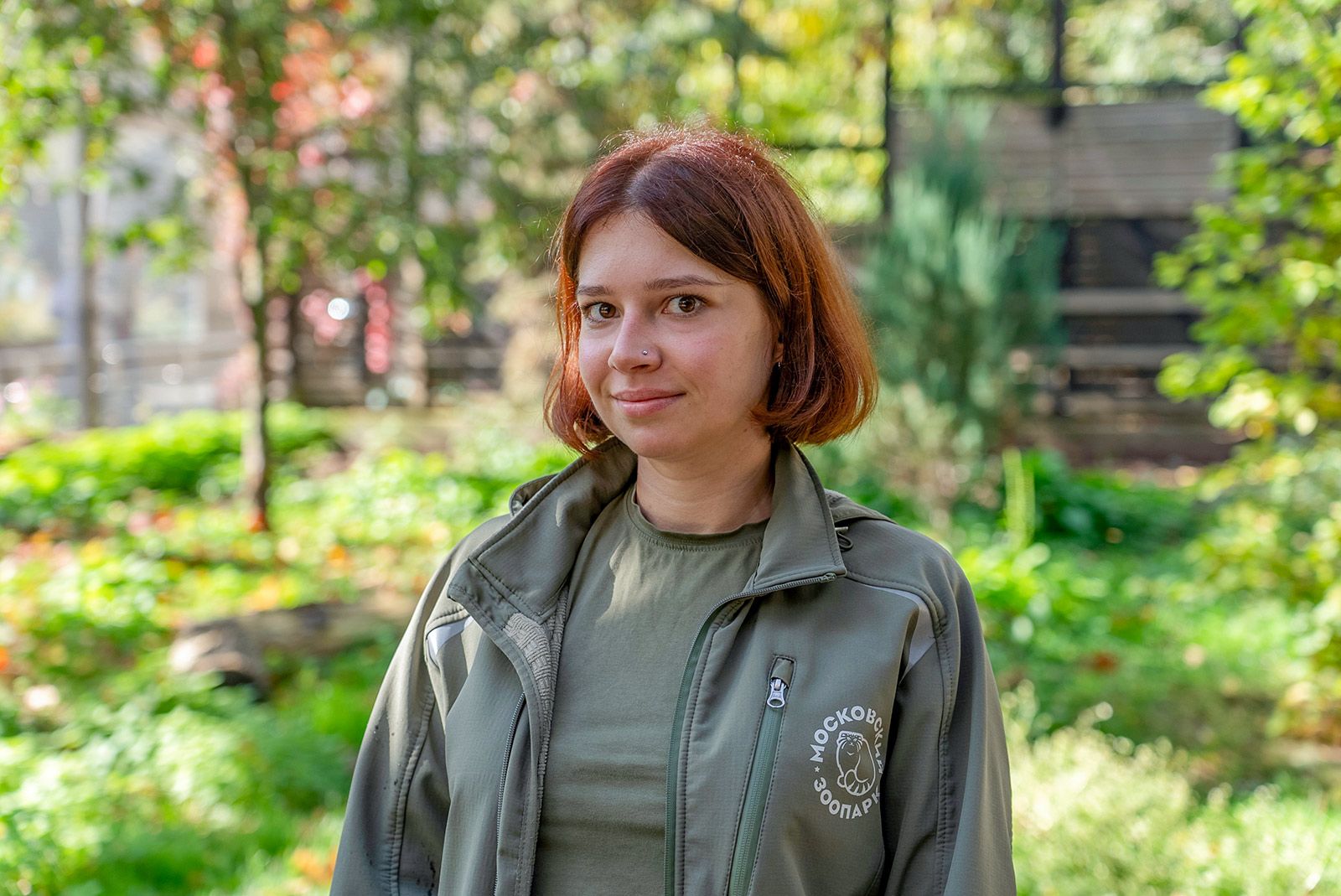
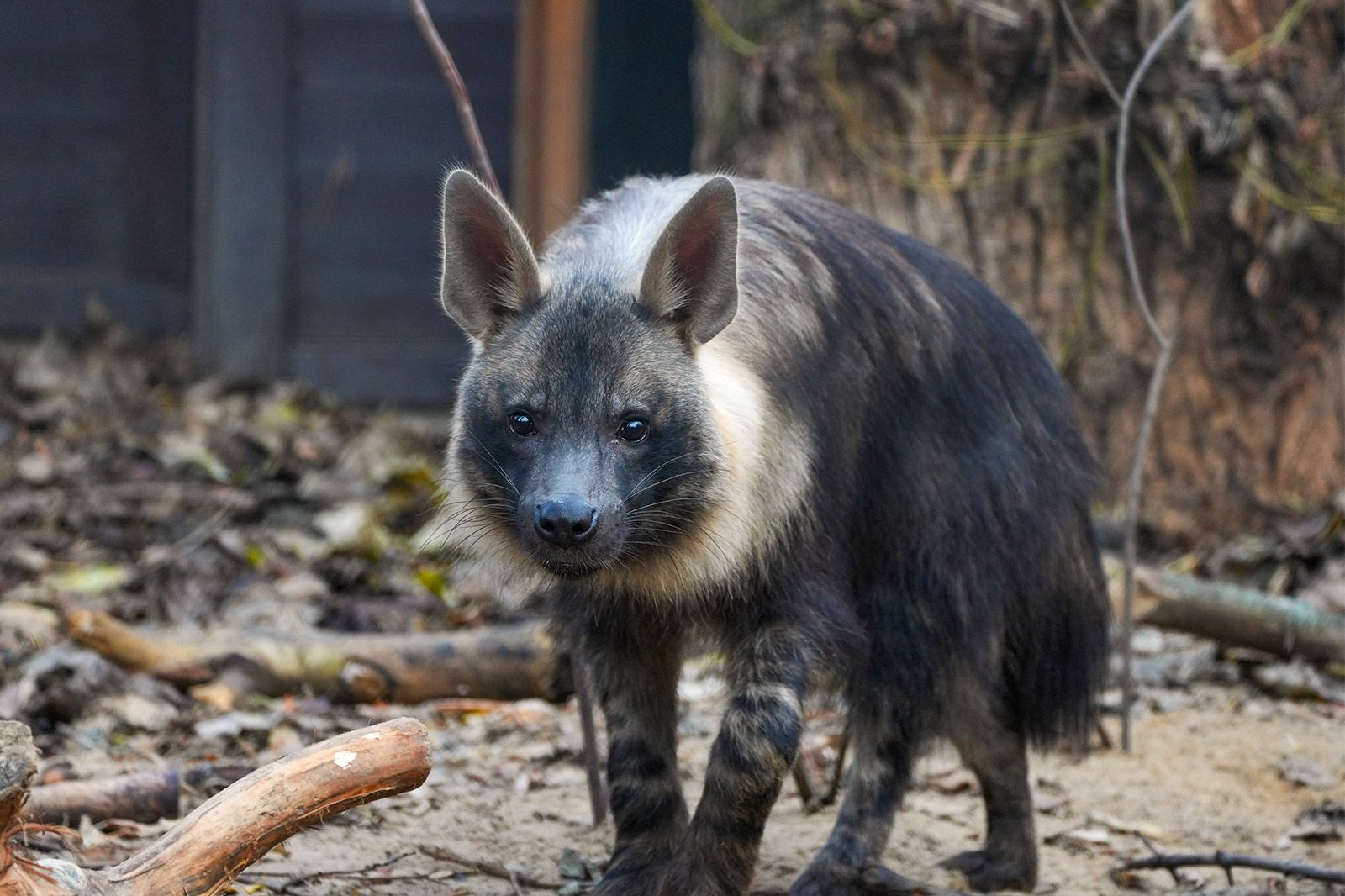
Since then, a special bond has developed between the young keeper and the brown hyenas. These animals possess amazing characteristics, she says; for instance, they hear a keeper approaching from several meters away, come outside and keep an eye out for the keeper. Hyenas can also move around on their elbows, using the skill for hunting in the wild.
“The most touching story from my experience is that of Akela, a famous brown hyena male. His mother died a few days after giving birth. I was working on the day we had to take in the puppy that required artificial feeding. I just remember that feeling of realizing that the life of a tiny creature now depended on me. I have watched Akela grow up since his earliest days. I saw him developing, learning, discovering the world around him and hunting a plush turtle with heart-stirring grace. And I was really happy about his successes,” shares Anastasia Pugacheva.
Today, the two-year-old Akela resides in the old part, near the enclosures for the mountain lion and the domestic yaks. You can watch him and other Moscow Zoo’s inhabitants without leaving your home by tuning in to the daily online broadcasts.
The Moscow Zoo is home to about 15,700 animals, more than half belonging to rare and endangered species. In 2025, for the first time in the zoo’s more than 160-year history, it welcomed giant otters — Vasco, Fidel, and Seville — who got a spacious 300-square-meter enclosure designed to resemble their native Amazon rainforests. Last year, they also set the Sun Bears site — for the first time in many years — displaying Malayan sun bears Masha, Luchik, and Zvezdochka; they can be seen during the daily online broadcasts, too.