A reliable home front: how Moscow residents defended the city during the Great Patriotic War
.jpg)
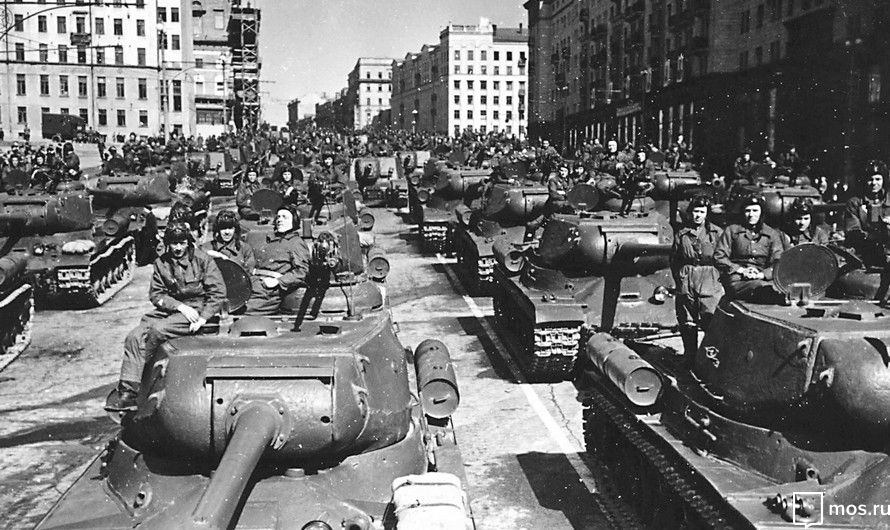
7 November marks the 75th anniversary of the famous military parade on Moscow’s Red Square. The parade took place when the defensive phase of the Battle of Moscow was in full swing. This event helped boost the morale of the army and of the entire nation, and convinced the enemy that Moscow was not going to surrender.
Although German forces reached the outskirts of Moscow in the autumn of 1941, our grandfathers and great-grandfathers managed to push the enemy back and hold the city.
Defending the city
On the eve of the war, Moscow had 475 major enterprises and accounted for 15 percent of the Soviet Union’s total industrial output. The city had a population of over four million, with women accounting for 55 percent. Twenty five percent of all city residents were under the age of 16. In the first days of the war, 350,000 city residents voluntarily enlisted voluntarily in the Red Army. In July 1941, an additional 150,000 city residents joined the People’s Volunteer Corps. In all, Moscow contributed 850,000 service personnel.
Those remaining in the city faced tough ordeals. From July 1941 through June 1942, 8,500 German bombers attacked Moscow, killing over 2,000 people and wounding over 5,500 more. In all, 5,584 residential buildings, 90 military and civilian hospitals, 253 schools and 19 theatres and palaces of culture were destroyed or heavily damaged. However, Germany's plans to wipe out Moscow were thwarted thanks to the city's reliable air-defence system, which included 600 fighters, 1,044 anti-aircraft guns and 336 machine guns, plus 124 barrage balloons. This considerably exceeded the combined air-defence potential of Berlin and London. In 1941–1942, city defenders shot down 1,300 German planes.
The city’s air-defence units comprised 670,000 local residents, with women and young girls accounting for 63 percent of their total number. Enemy warplanes dropped 110,000 incendiary bombs on the city, causing 45,000 fires on the ground. However, air-defence personnel and volunteers quickly extinguished 43,500 fires.
Shortly before the war, the city had enough bomb shelters to accommodate just 400,000 out of its 4.5 million residents. Six months later, local bomb shelters already had enough space for 1.6 million city residents. Starting in October 1941, 22 metro stations and 23 kilometres of metro lines accommodated tens of thousands of women and children. In all, 217 babies were born underground during air raids.
.jpg)
.jpg)
.jpg)
The enemy will not pass
About 600,000 city and Moscow Region residents helped build defensive fortifications, with women accounting for 75 percent of this workforce. The line of defence was subdivided into 36 construction sites. On 16 October 1941, builders started working at the first sites. On 28 October, the Moscow Defence Headquarters approved the final plan for establishing three lines of fortifications.
The advance line of defence passed through Khimki, Mitino, Arkhangelskoye, Rozhdestvenno, Odintsovo, Rasskazovo, Prokshino, Gavrikovo, Bobrovo, Tabalovo, Mikhailovo and Drozdovo.
The main line of defence ran through Korovino, Khimgorodok, Nikolskoye, Serebryany Bor, Kuntsevo, Vorontsovo, Kotlyakovo and Brateyevo.
The rear line of defence passed through Nizhniye Kotly, Cheryomushki, Brick Plant No. 11, Vorobyov, Troitse-Golenishchevo, Kutuzovskaya Sloboda, Shelepikha and Karamyshevo. The flanks of this position merged with the city-level line of defence along the Moscow Belt Railway.
City residents built the following fortifications on the outskirts of Moscow and in the capital itself:
- 676 kilometres of anti-tank ditches;
- 445 kilometres of escarpments and counterscarps;
- 410 kilometres of dragons’ teeth;
- 1,400 kilometres of tree barriers.
They also installed over 1,350 kilometres of barbed-wire obstacles, over 46,000 anti-tank hedgehogs, about 31,000 pillboxes, concrete pillboxes, earth and timber strongpoints and ten kilometres of barricades.
Women, teenagers and pensioners signed up as industry and transport workers and replaced men serving with the Red Army. In 1942, women and teenagers made up over 40 percent of Moscow’s industrial workforce. During the Battle of Moscow alone, they repaired over 1,000 tanks and armoured vehicles. Moscow’s workers also manufactured 87 million artillery shells and mortar rounds, which hit the enemy hard. City plants manufactured 12.5 percent of all Soviet aircraft and 33.3 percent of all submachine guns during the Great Patriotic War.
.jpg)
.jpg)
.jpg)
.jpg)
Nurseries at bomb shelters
When the war began, adults tried hard to shield children from its horrors. From July–October 1941, almost 250,000 children of pre-school age were evacuated from Moscow, with 366,000 of their peers under 12 years old still staying behind by 1 December 1941. Despite cold weather and air strikes, local bomb shelters accommodated 17 kindergartens and nurseries in December 1941. Twelve months after the war began, 13,000 local children were attending 174 kindergartens. Barrage balloons or anti-aircraft batteries were often deployed near these facilities.
In the autumn of 1941, almost 700 local schools were shut down, but consultative offices opened in January 1942 in every city district, with 14,000 high school students attending classes there. In all, 17,000 children manufactured combat gear at school-level production workshops. By late 1942, 176,000 young city residents resumed studies at 295 local schools.
During the war, 200 military hospitals were deployed in Moscow and the Moscow Region, including 69 large hospitals in the city itself. These hospitals employed 200,000 female volunteers, including 13,000 schoolgirls, who nursed back to health over 80 percent of wounded and sick soldiers being treated in the capital.
The price of victory
From 5 August 1943 through 9 May 1945, Moscow hosted 353 fireworks displays honouring the Red Army’s victories. The 354th, and last, fireworks display on 9 May 1945, involving 30 salvos from 1,000 artillery systems, heralded the final Victory in the war. Over 374,000 city residents were killed during the war. In all, 146 Moscow residents became Heroes of the Soviet Union, including 24 who were named posthumously. Over one million people received medals For the Defence of Moscow, and the city itself was awarded two Orders of Lenin and the title of Hero City.
Archive photos and documents courtesy of the Main Archive Directorate.