2 apartments, 5 women and 1 destiny: Taking a tour around Mayakovsky Museum
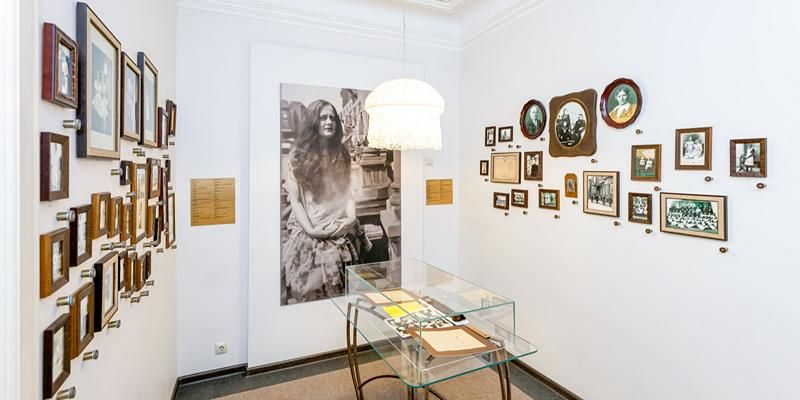
Vladimir Mayakovsky is known as a futurist poet, a loud voice of the era, and the author of poster slogans. Yet, what was he like in everyday life, being among family and friends or surrounded with silence? Two locations in Moscow — Krasnaya Presnya and Studenetsky Pereulok — preserve the memory not only of him, but also of the women who shaped, inspired and loved him dearly. Ekaterina Marton, Culture & Leisure Manager at Mayakovsky Museum, cast light on the poet’s mother, sisters, Muses, and daughter and also talked about those of whom he gave a rare account.
The family: roots that gave freedom
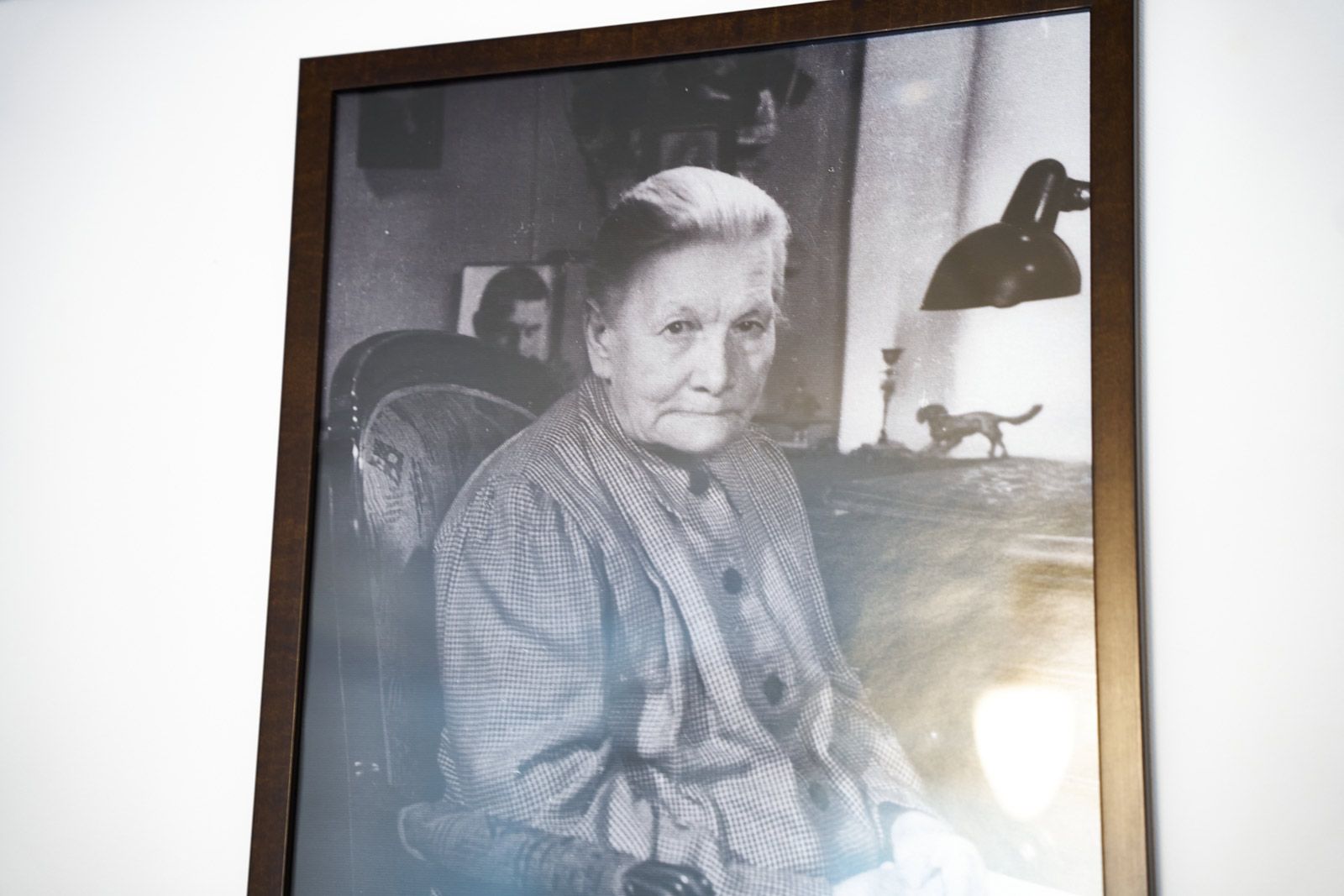
Vladimir Mayakovsky’s mother, Aleksandra Pavlenko, had to quit the gymnasia as a sixth-grader and lost her father quite early. Her empathy and boundless trust in her children was the core moral pillar and the backbone of the family, indeed. She never attempted to make her son change or impose her ideas on him — even when he contravened generally accepted standards. That unconditional acceptance certainly gave the poet some inner freedom.
“His mother was a very sensitive, calm, loving, and understanding woman,” Ekaterina Marton says. “She had a vast mother’s heart. She would go into any adventure with Volodya”.
It was his mother who instilled in the future author of A Cloud in Trousers a taste for literature; indeed, when Volodya as a little boy asked her to read aloud, she would put aside whatever she was doing at that moment and proceeded to reading Krylov’s fables, or poems written by Alexander Pushkin or Nikolai Nekrasov. He memorized the verses and would recite them from time to time, thus developing an inner poet.
In 1908, 15-year-old Mayakovsky joined the Russian Social Democratic Labor Party and took up propaganda; though she was worried, she still understood that so was his path. The same story was with the yellow and black shirt. In fact, Vladimir asked her to sew an outrageous outfit for a performance at Polytechnic University. His mother did hesitate; however, she made it. And eventually, in November 1913, the gesture of maternal ‘yes’ made the shirt a symbol of the Russian avant-garde.
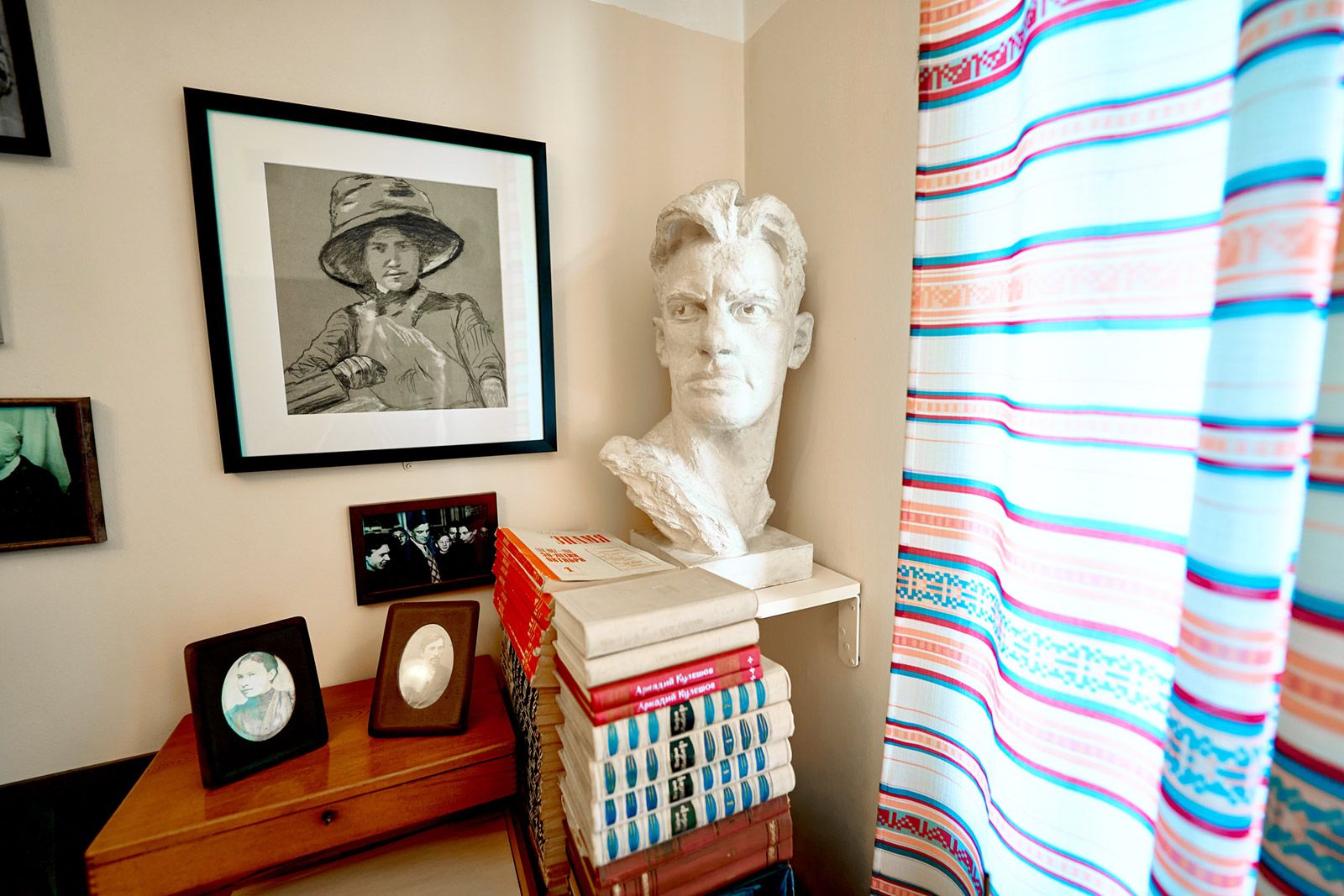
Today, the memorial apartment on Studenetsky Pereulok invites to have a peep into the revived everyday life of Aleksandra Pavlenko and Lyudmila Mayakovskaya through their photographs, books, and family heirlooms, revealing the poet from an unusual perspective — as an alive, vulnerable and loving son and brother.
The sisters: two characters and two life lines
Whereas his mother gave him inner freedom, his sisters were shaping the poet’s memory in their own way.
Lyudmila, the eldest sister, was a Stroganov School graduate and a fabric designer. After their father died, she, a then twenty-year young woman, effectively took over the family, the endeavor having hardened her tough, responsible and uncompromising character.
“Even Mayakovsky’s friends used to say that if Lyuda entered the room, Volodya would straighten and tense up, to be just the ‘good’ brother,” says Ekaterina Marton.
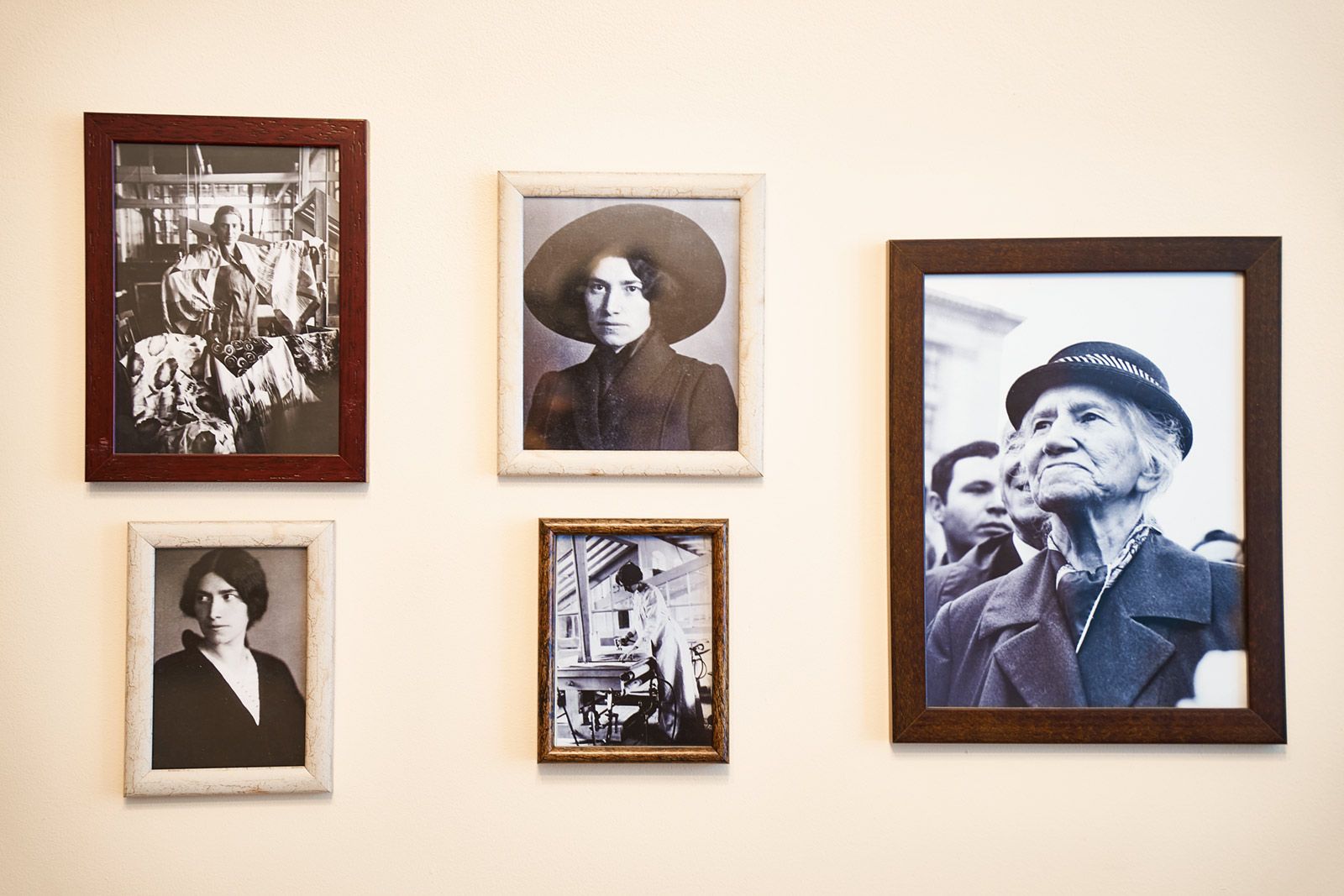
Lyudmila was in fact the principal custodian of her famous brother’s memory, although on her own terms. She did not accept Lilya Brik as she believed that only official relationships were acceptable. While the mother was alive, she would took effort to de-escalate.
Olga was her complete opposite. She spoke Georgian fluently, studied music and French, engaged in painting and wrote poetry. Volodya and she shared a special closeness-a sense of humor and treating life as a game. They were keen on playing tricks on the audience, Mayakovsky standing on stage and Olga reading his poems in the same timbre at the back of the hall; the listeners were perplexed.
“They laughed and they really enjoyed it,” says Ekaterina Marton.
After the poet’s death, it seemed that Olga would not survive — so strong was their mental connection and so great was the harmony that reigned between them.
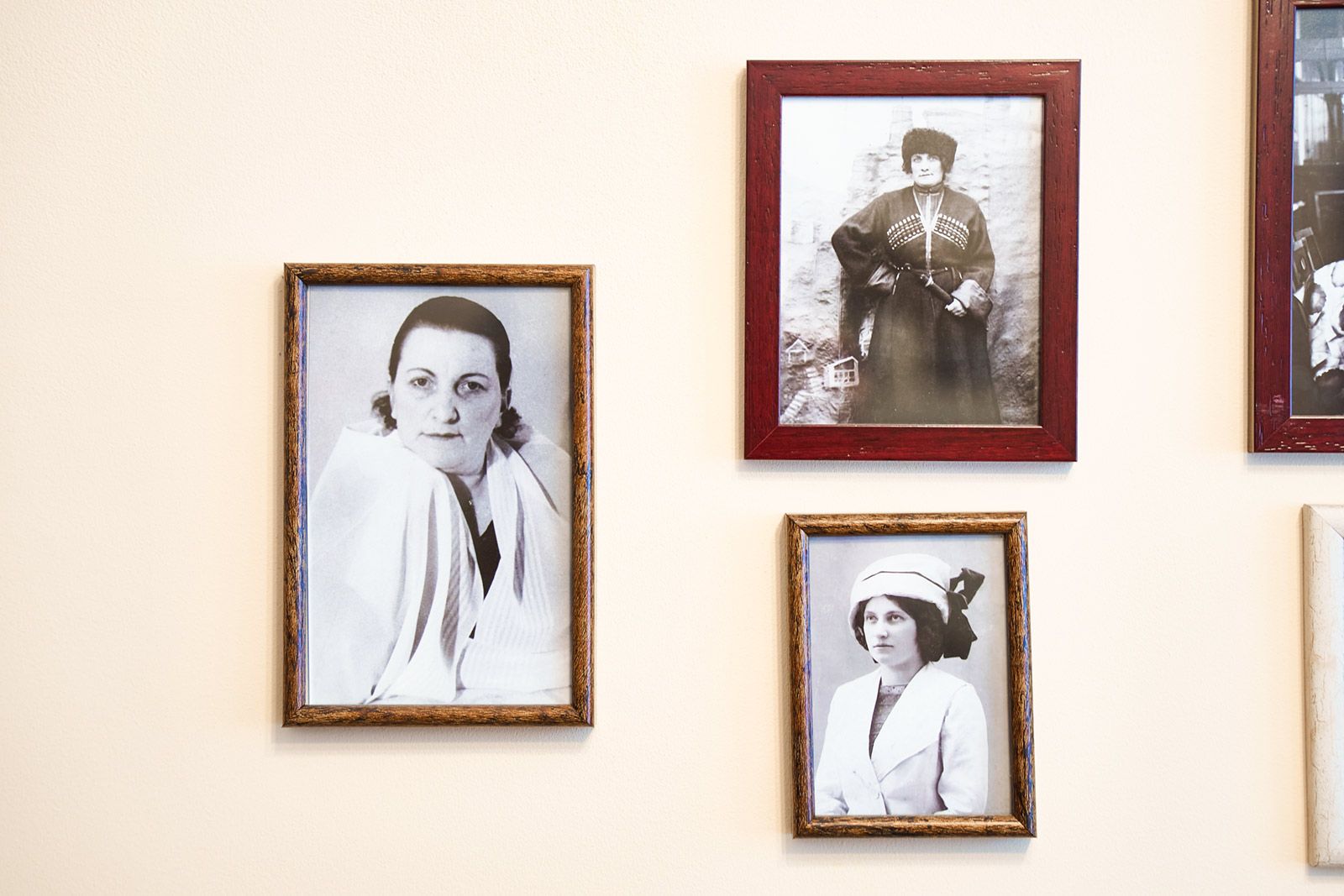
В семье Маяковских уживались два полюса: строгость Людмилы и игра Ольги. И экспозиция квартиры в Студенецком переулке показывает эту многогранность.
The Mayakovsky family was built on the two opposites, namely, Lyudmila’s strict attitudes and Olga’s playful disposition; many sides of the family’s life are perfectly unveiled at the exhibition on Studenetsky Pereulok.
The Muses and rivals: from first love to the greatest pain
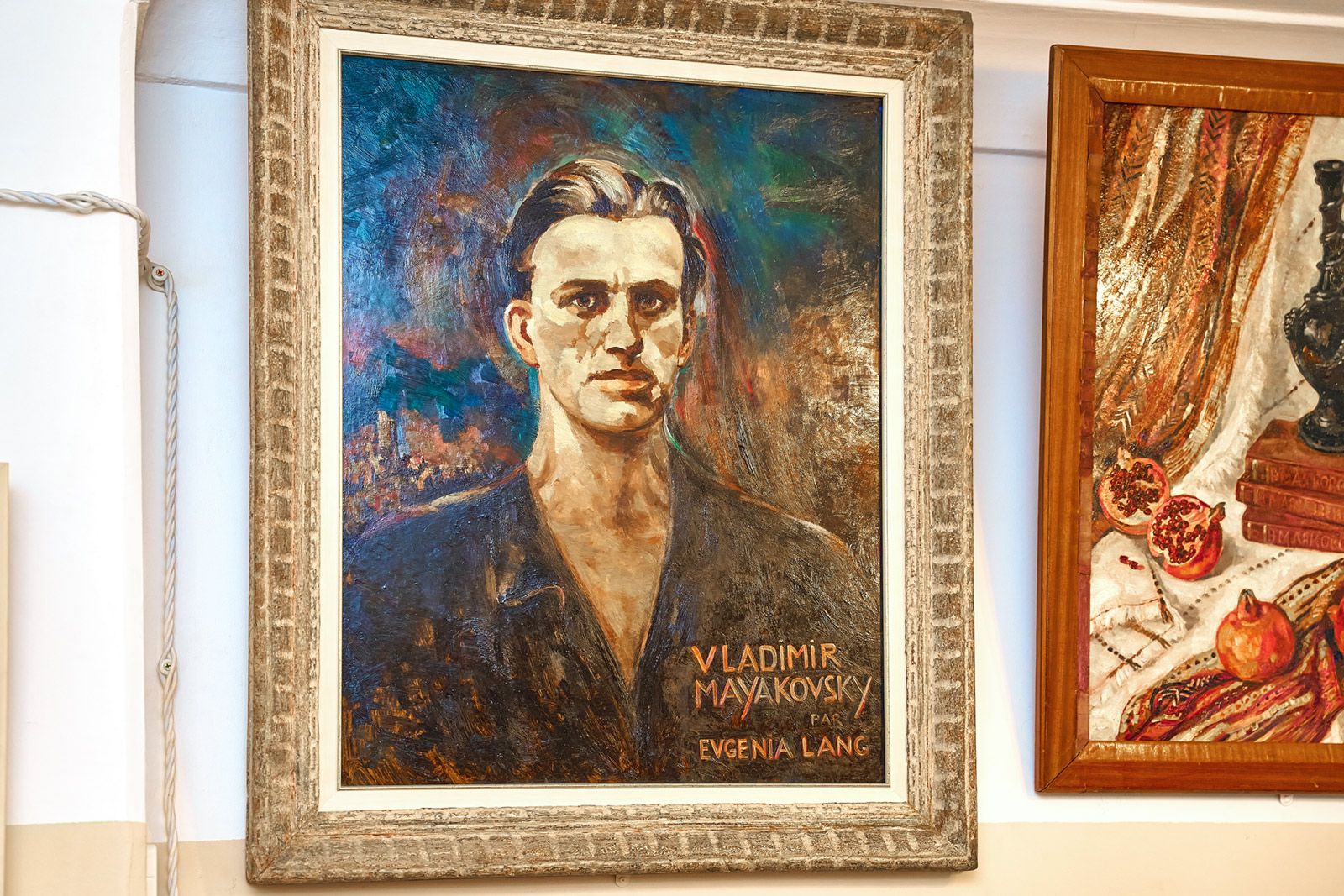
In the winter of 1911, when Mayakovsky had just entered the painting school, he had romantic relations with Evgenia Lang. They would walk around Moscow and visit auctions, and one day the poet bought a Georgian wine jug; he gave it to Lang and uttered: “Take it. It will come in handy for your still life”. The generous and artistic gesture attested him very well as he gave not just an artifact, but a narrative.
Yet, Lang treated Mayakovsky as a boy (she was three years older), and they separated after all. Evgenia got married and emigrated; she took the jug with her. They met again in 1917. Lang, being married, realized that her feelings had not faded, but Mayakovsky was already infatuated with Lilya Brik. Lang could not compete with that love.
In the late 1950s, Lyudmila found Evgenia Lang in Paris and offered her to return to Moscow with a pension, an apartment, and membership in the Union of Artists, but on the condition that she would write about Mayakovsky. So, Lang arrived in Russia. She was living for some time in the apartment on Studenetsky Pereulok — right in that family space — and then got a home of her own. However, she did not support Lyudmila’s idea to erase Brick from the story.
Today, her still life with that very jug and her portrait of Vladimir Mayakovsky are displayed in the museum. The story of Evgenia Lang proves that the memory of the poet has always been a field of debate with intimate feelings clashing with the family realm and ideological attitudes.
Lilya Brik: the Muse who knew how to provoke suffering
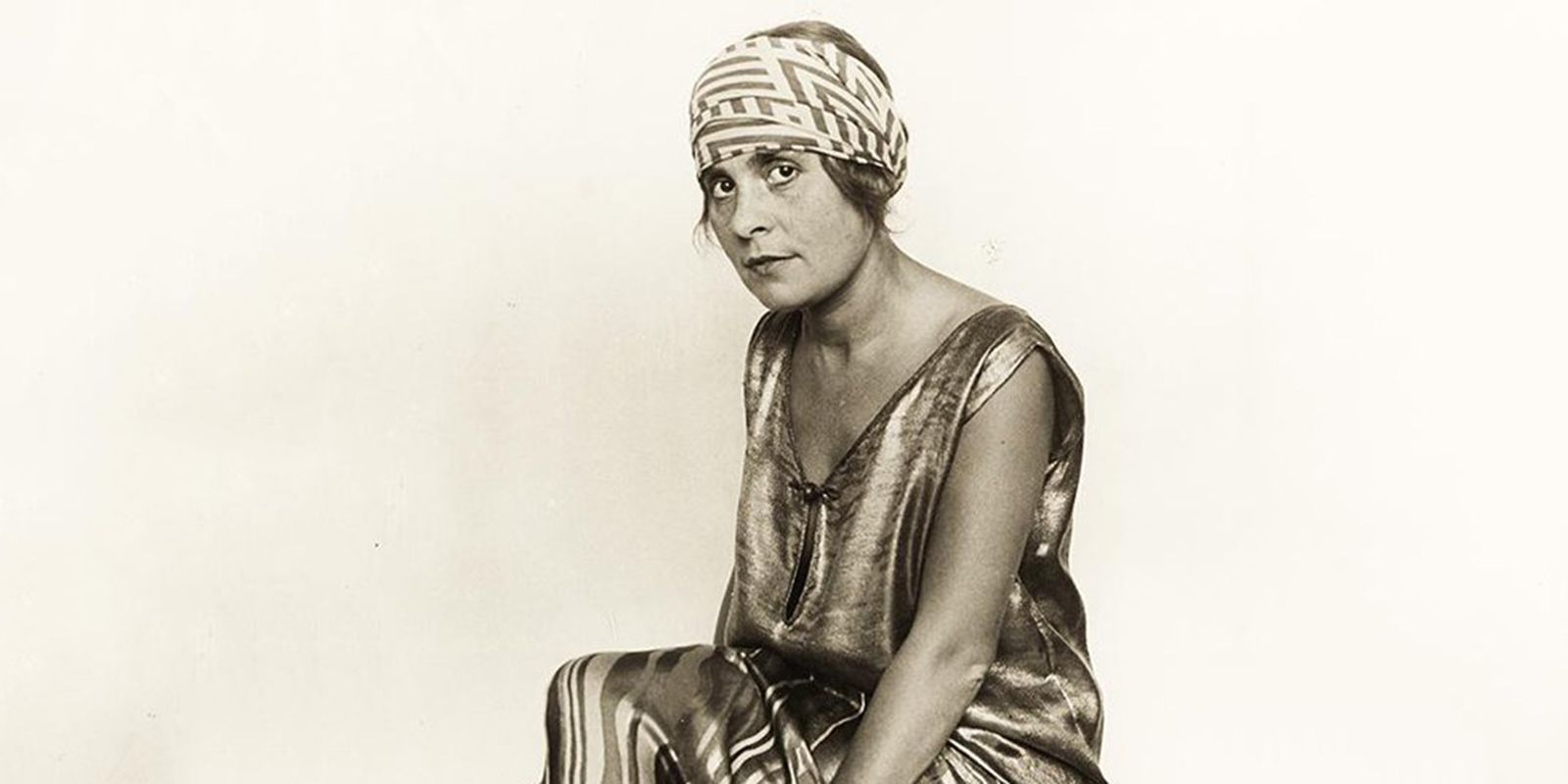
Lilya Brik is the central figure in Mayakovsky’s life and, perhaps, the most controversial persona. They met in Petrograd in 1915, when the poet was courting her sister Elsa. Mayakovsky read his A Cloud in Trousers and amazed everyone. Even so, he sought Lilya’s favor for more than two and a half years.
“It is good for Volodya to have a bit of suffering. He will suffer and write good poems,” said Lilya Brik. She had a genius for provoking this suffering in Mayakovsky, thus fueling his lyricism. The poet knew how to love one hundred and even two hundred per cent, his ardor frightening many women.
Lilya was not just his Muse, but rather a guide in the literary world as she was managing publishing affairs, arranging meetings, and tackling financial issues. In fact, their relationship lasted almost fifteen years, with breaks, quarrels, and reconciliations, and most of Vladimir Mayakovsky’s lyrics are dedicated to her.
It was Lilya Brik who wrote a letter to Joseph Stalin after the poet’s death and thereby achieved the re-publication of his books and the return of his works to the school curriculum; the document can be viewed in the museum. Without this effort, Mayakovsky’s name would perhaps only be known to literary scholars today.
An American mystery: Ellie and the secret daughter
There was another woman, too, although Mayakovsky rarely spoke out loud about her; it is she that comes to be the centerpiece of the exhibition at Krasnaya Presnya.
In 1925, when taking a journey to the United States, the poet met Ellie Jones, a young 20-year-old Russian emigrant who spoke four languages. He was 32 then. She was bold enough to dodge a tricky or uncomfortable question with a smart answer. To his favorite question “Which of my poems do you know?”, people would reply: “One long and one short”, but Ellie said: “I do not know your short poems, except for advertising slogans”. Mayakovsky was astounded.
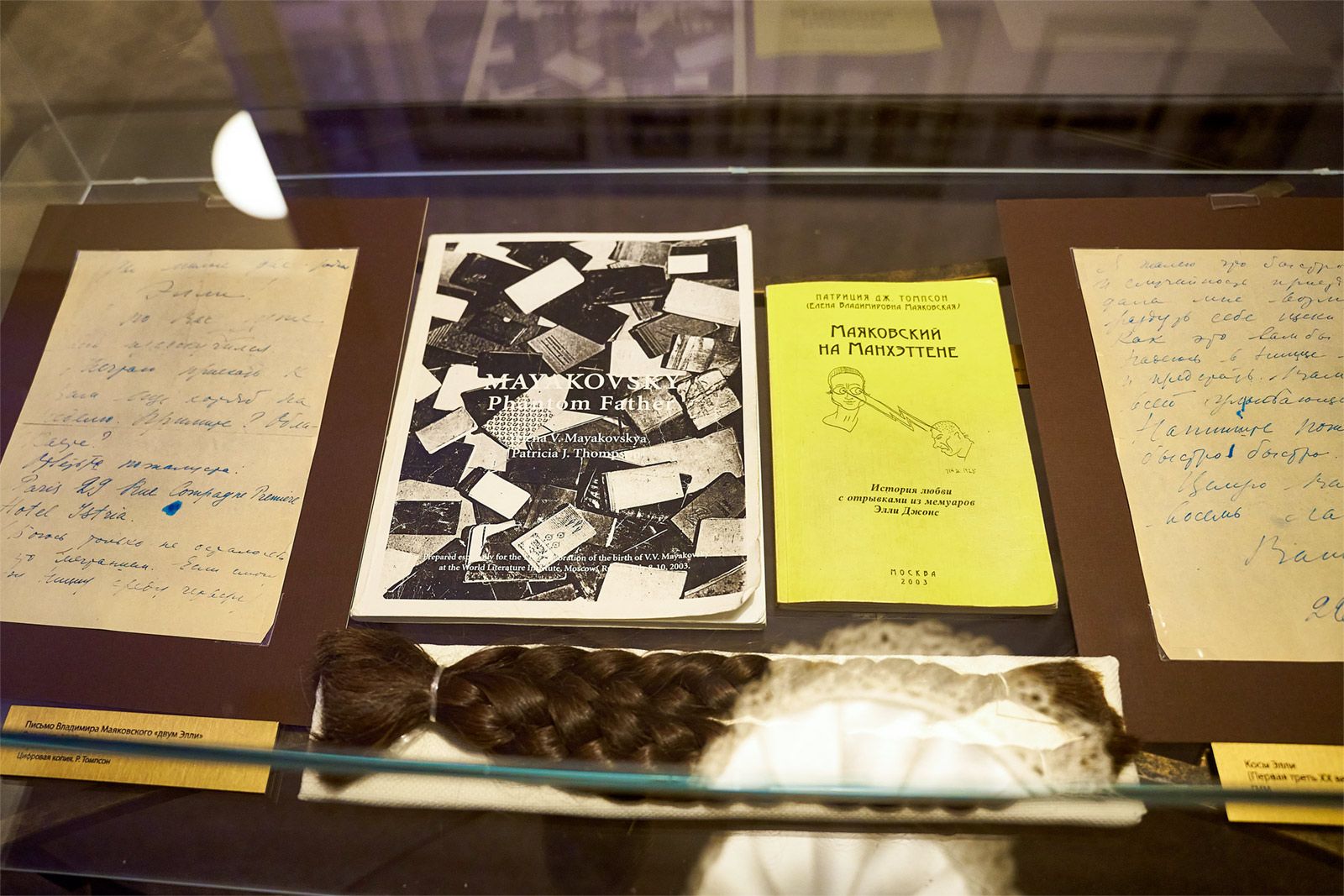
Their affair lasted for several months to result in the birth of Helen Patricia Jones who was born in New York on June 15, 1926. Mayakovsky knew that Ellie had a daughter and sent a letter addressing both her and the baby: “My dear Ellies…”. This only written acknowledgement of paternity is kept in the museum on Krasnaya Presnya in fact.
“He was very upset because he was unable to raise his child,” says Ekaterina Marton. “He said to someone in his close circle: “It is so bad that my child is growing up in America. She will have completely different interests, a different language, a different country”.
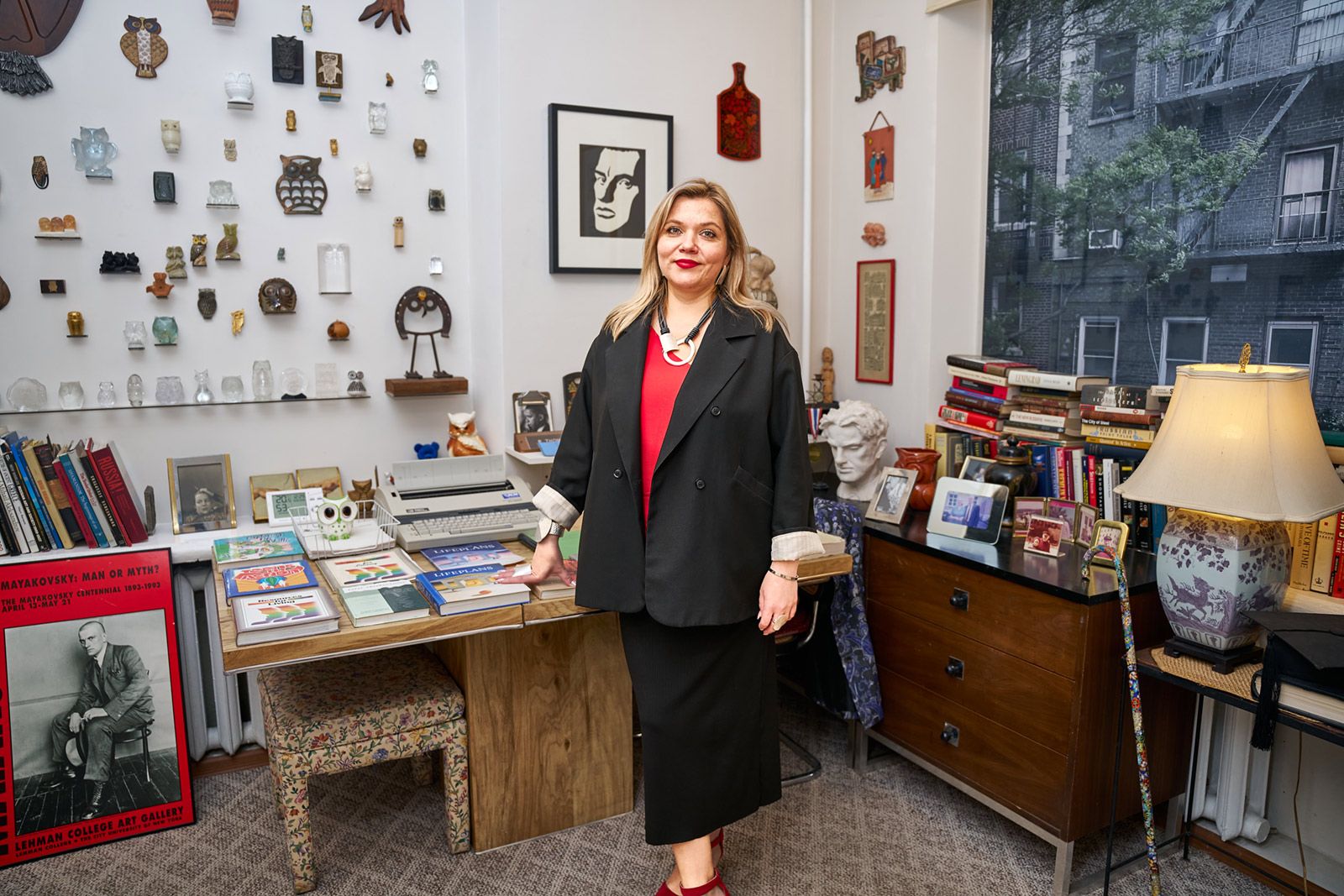
Yet, Patricia felt her father at her side since childhood. She mentions that in her Mayakovsky: Phantom Father whose manuscript can be seen in the exhibition. She wanted to be a costume designer (her family talent for drawing was passed down from the Mayakovskys), but later she wrote: “I understood that a comparison with such a brilliant father would not do me good”. Patricia was Professor of Education and Women’s Studies at Lehman College in New York, N. Y.
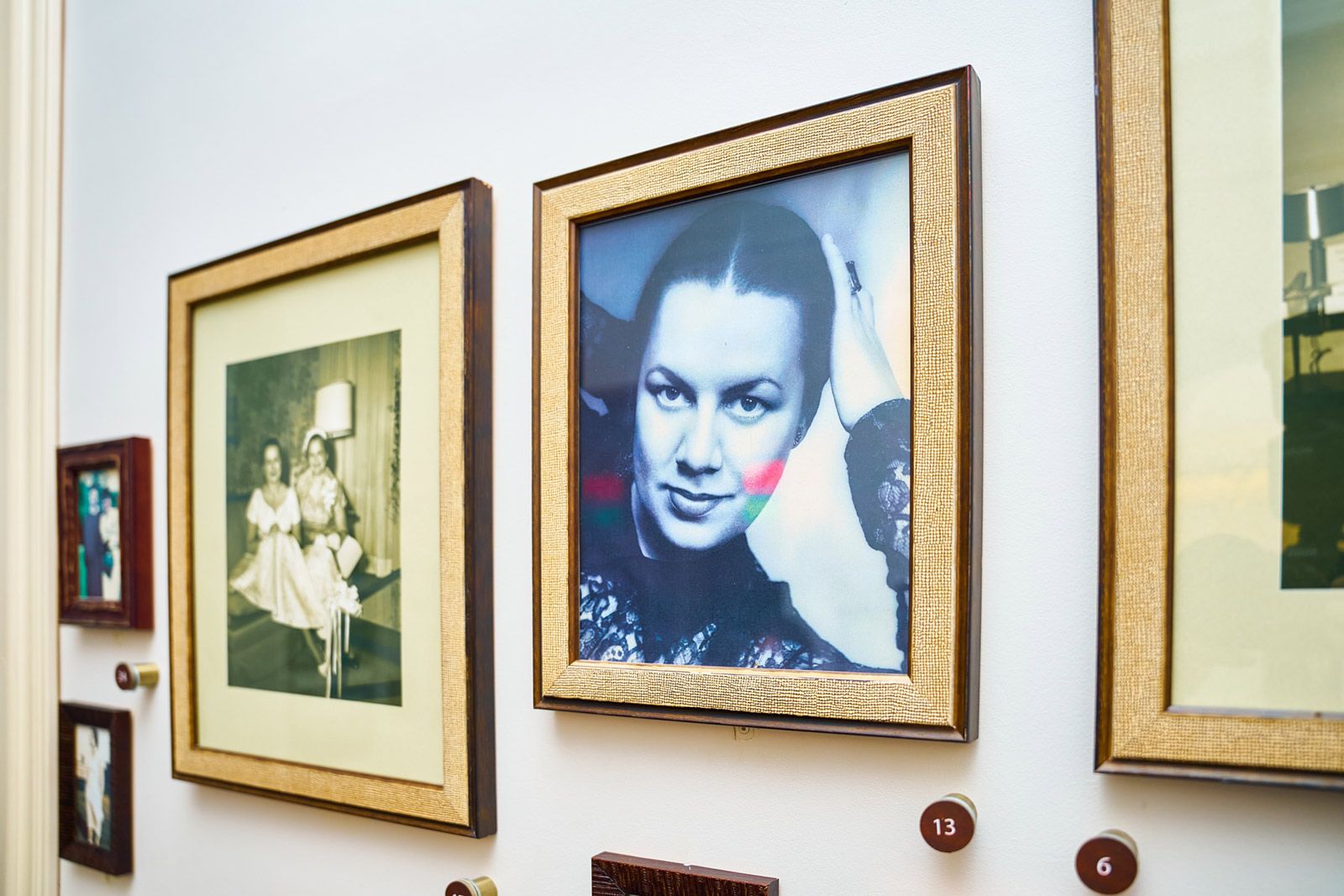
In 1991, she visited Moscow for the first time and began calling herself Yelena Vladimirovna Mayakovskaya. All her life she was collecting information, including articles and photographs, about her famous father. She published Mayakovsky in Manhattan. A Love Story and wrote Mayakovsky: Phantom Father.
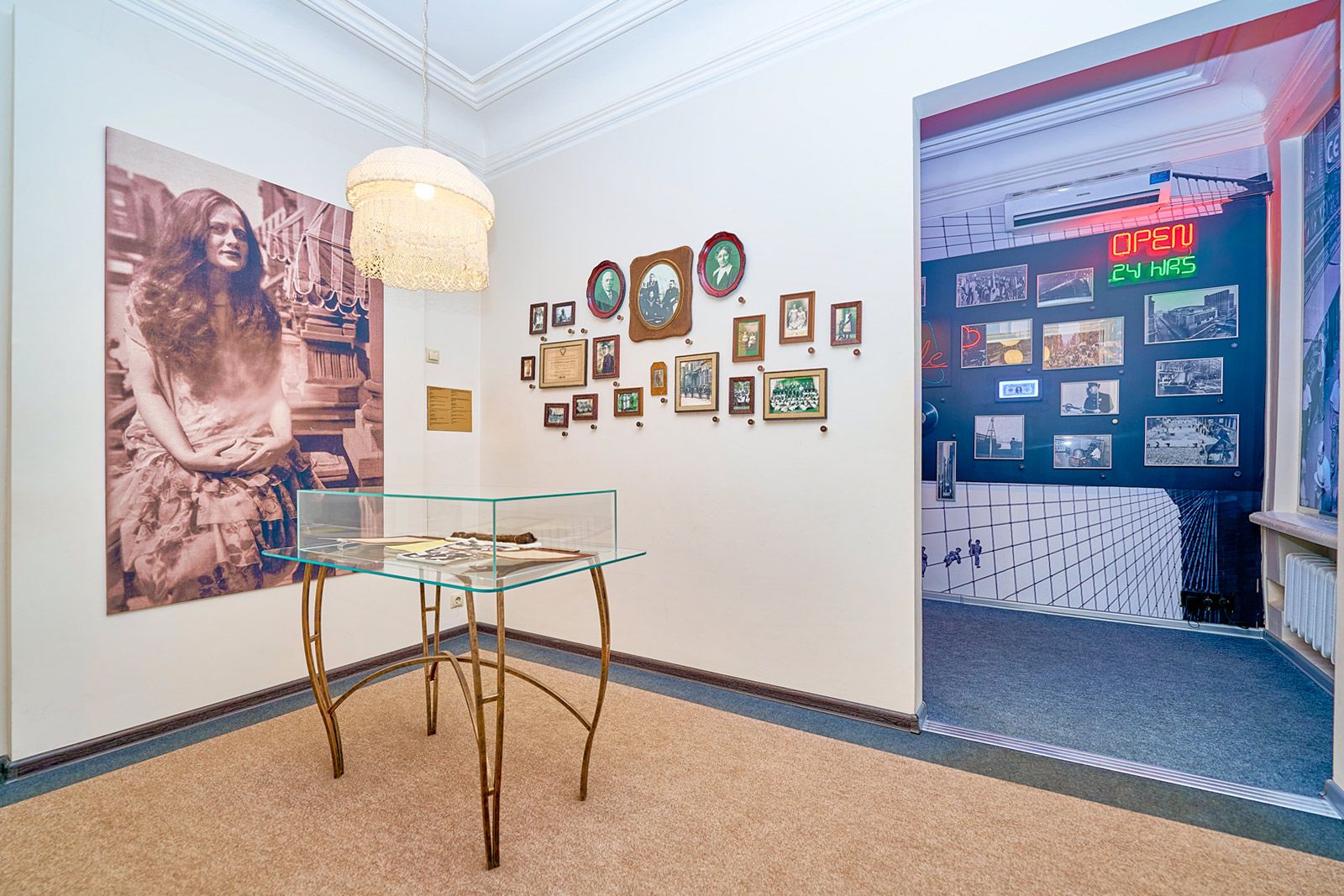
Ironically, The Daughter’s Office exhibition is set right in the memorial apartment associated with the family’s life in Moscow, connecting destinies that were separated both in time and space — Moscow and New York, father and daughter, past and memory.
Myths debunked
Many legends have developed around Mayakovsky, such as the myth about flowers for Tatyana Yakovleva; supposedly, after the poet’s death, couriers came to a Parisian store for twenty years to pick up bouquets for her.
“Yakovleva has a daughter, Françoise, and she confirms that is nonsense,” says Ekaterina Marton. “It is a just clever PR stunt by a flower company”.
Meanwhile, regarding the myth of rude and obscene language in Mayakovsky’s poems, acquaintances were unanimous asserting that in informal settings he was a very polite and well-mannered man. There are obscene words only in three poems, and everything else is just stories or fakes.
The museums separate facts from fiction highlighting the living person behind the textbook persona.
Being not just an agitator but a lyricist
Vladimir Mayakovsky was not only the voice of the revolution, but also the finest lyricist. In 1923–1928, he created almost no lyrics as he “he had to put a lid on his desires”. And he then came back to write two masterpieces such as A Letter to Comrade Kostrov and A Letter to Tatyana Yakovleva. They are the works that are worth rereading for those who would like to rediscover Mayakovsky.
Two views on one poet
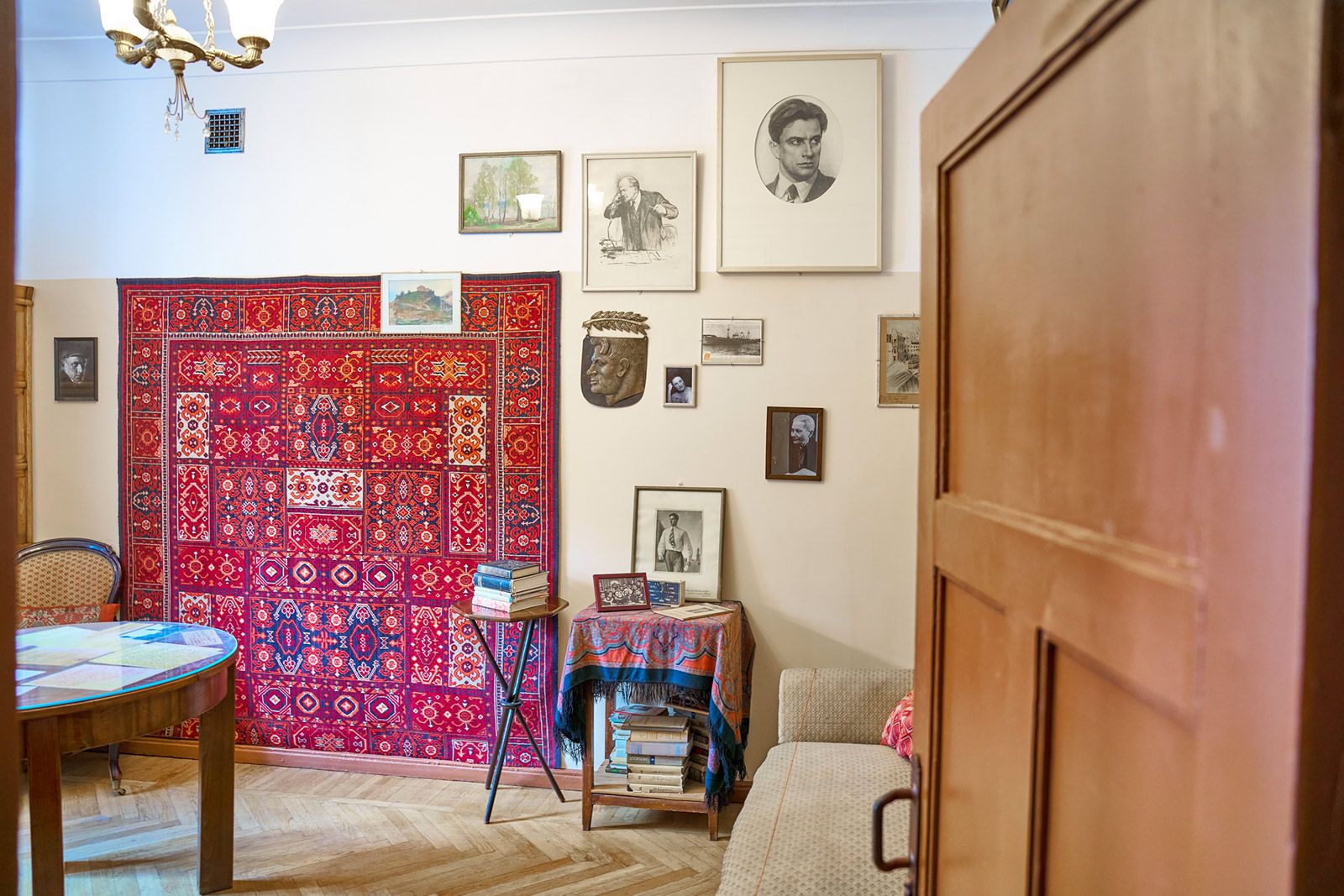
In Studenetsky Pereulok, you will find yourself in the family’s home with the authentic belongings and personal photographs of Mayakovsky’s mother and sisters. It is there that he, a son and a brother, had his roots and spent his everyday life. This is a space where one can see how the poet was building his character and how differently his family preserved his memory.
At Krasnaya Presnya, you will see an exhibition dedicated to his American journey and his daughter, including hand-written letters, Patricia’s archive, and authentic items that belonged to her — this is a story of love and fatherhood that the poet told almost no one.
If you choose to visit both museums, you will meet a multifaceted Vladimir Mayakovsky, quiet rooms, women’s voices, and one fate woven from many personal stories — vaguely seen behind his loud poems.