Manuscripts Do Not Burn: Highlights of Bulgakov Museum on Bolshaya Pirogovskaya Street
Indeed, multiple historic places with literary links in Moscow have grown into genuine landmarks and attractions over time. Mikhail Bulgakov’s apartment on Bolshaya Pirogovskaya Street is a horse of a different color, however. Appearing alive in the recollections of the writer’s contemporaries, it remains vibrant and filled with conversations and day-to-day routine that visitors discuss today. Give a try and experience the atmosphere together with Mosbilet.
It is there that Mikhail Bulgakov spent nearly seven of the most important years of his life — from 1927 to 1934 — initially with his second wife Lyubov Belozerskaya and later with Elena Bulgakova who was definitely his center of the world during his twilight years. It was on Bolshaya Pirogovskaya Street that he began writing The Master and Margarita and partially destroyed the manuscripts. It was there that he experienced a profound crisis, wrote his famous letter to the Soviet government and welcomed guests such as Anna Akhmatova, Yevgeny Zamyatin, Ilya Ilf and Yevgeny Petrov, Yuri Olesha, Valentin Kataev, Sergei Ermolinsky, and other renowned poets and writers.

Yet, one of the most remarkable stories associated with the house is a fire.
The matter is that, at a winter night in 1934, when Mikhail Bulgakov was dictating to Elena the scene of the fire in Berlioz’s apartment (The Master and Margarita), a fire actually broke out in their own home. As Elena Bulgakova writes in her diary, their housekeeper, who was in ill humor that day, dropped a kerosene stove, says Ivan Nazarov, PhD in Philology, Deputy Director of the Mikhail Bulgakov Museum.

The fire was quickly extinguished, but the coincidence was so typical of Bulgakov’s stories that, decades later, it looks like a literary hoax.
In fact, the history of the museum itself resembles a thriller with unexpected twists. The premises were transferred to the Mikhail Bulgakov Museum in 2016. In May, they set a temporary exhibition symbolically called Manuscripts Do Not Burn to mark the writer’s anniversary, visitors exploring the surviving draft fragments from the 1928–1929 version of The Master and Margarita.
There was renovation underway when the team was elaborating the exhibition’s concept, Ivan Nazarov recalls. After that, the museum was closed for several years to re-appear as we know it today only in December 2021. The museum became accessible to the general public after a hiatus in the fall of 2025 to continue to narrate the writer’s life story.

Exploring Bulgakov’s universe
The museum’s permanent exhibition revolves around the time when Mikhail Bulgakov lived on Bolshaya Pirogovskaya Street, when he was writing The Flight, A Cabal of Hypocrites, and Adam and Eve and when he began The Master and Margarita, while enduring personal trials in parallel.
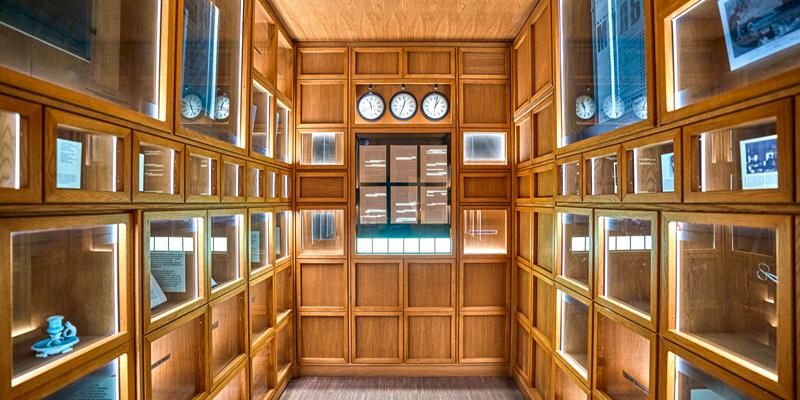
The exhibition is arranged across three parts of the apartment, namely, the hallway, study, and living room, each persuasively immersing visitors in the atmosphere of the era. The hallway is filled with voices — fragments of recollections, diaries, and accounts of the writer’s contemporaries — little by little the scattered remarks forming his multi-dimensional portrait. Next is Bulgakov’s study, the centerpiece of the exhibition. Instead of the usual display cases, there are five interactive tables, each revealing a different facet of Bulgakov’s universe.

One of the tables invites to take a journey along Bolshaya Pirogovskaya Street as it was in the early 1930s, another presenting the writer’s entourage; the memoires communicate who used to visit the house, when the gatherings took place, and what place they hold in memoir literature. Nearby one can spot completely mundane things, such as a corkscrew, a coffee grinder, a spirit lamp, and a coffee pot, along with a small perfume box of his mother that used to sit on the writer’s desk.


The everyday items serve as a reminder of something dear as the house on Bolshaya Pirogovskaya Street was Mikhail Bulgakov’s earliest own home in Moscow. The opportunity to rent a three-room apartment meant not just comfort, but a long-awaited sense of independence and personal space, Nazarov explains.
The exposition transitions smoothly from a narrative about Bulgakov’s everyday life to his creations. The ‘musical’ table offers a chance to listen to music featured in the writer’s works — ranging from folk songs to Giuseppe Verdi’s Aida and Charles Gounod’s Faust. Another table focuses on The Master and Margarita to particularly show with available evidence that the famous novel did not emerge as the whole we have it today. Indeed, visitors can trace how scenes and characters were evolving from one draft to another by literally winding the text-creation process back and forth using the knob.

Nearby they see some soft copies of the surviving notebooks containing the earliest novel draft — a unique opportunity to peek into the writer’s craft to catch the moment of the novel’s birth.
The most unexpected table is definitely the Time Machine, transporting the user across the centuries — from the Judea of Pontius Pilate’s time to the fantastical year 2222 in Bliss (a comedy that would later serve as the basis for the nation-famous Ivan Vasilievich), with a single turn of the control device. The artifice evokes the scale of Bulgakov’s artistic world, with the past, present and future intermingled in an everlasting dialogue.

The final section, in the living room, centers on a single document — a letter from Mikhail Bulgakov to the Soviet government, which was written in March 1930 right there on Bolshaya Pirogovskaya Street.
At that time, the writer was in desperation. In 1929, three of his plays, namely, The Days of the Turbins, Zoyka’s Apartment, and The Crimson Island, were banned from public performance; he fell into financial difficulties, as a result. In the letter, he asked the authorities either to let him emigrate or to give him the opportunity to work in his homeland.
In fact, the document evokes three storylines of Bulgakov as a playwright and of his domestic life with Lyubov Belozerskaya and later with Elena Bulgakova. The exhibition is set to literally illuminate its themes to enable deeper immersive experiences, the lighting shifts introducing more photographs and artifacts before viewers.
Smaller details are of particular importance, however, providing an understanding of the writer’s entourage.
“Take, for example, Mayakovsky’s The Story of Vlas Lazy Loafer designed by Natalia Ushakova. On one of the pages, Bulgakov and Belozerskaya are easily recognizable in the figures of the character’s parents; it is a friendly joke that has survived to the present day. Or the chess set belonging to Nikolay Lyamin with whom the writer regularly played chess,” says Ivan Nazarov.
So, the museum narrates the story of both the great writer and the man with his entourage, family stories and everyday habits.

Bulgakov and Cinema
The theme of cinema in Mikhail Bulgakov’s biography appears paradoxical from the very beginning, as the recollections of his contemporaries contradict each other. The writer’s second wife claimed that he took almost no interest in cinema. Yet, his first wife, Tatiana Lappa, recalled how they would go to movie theaters during the Civil War right under fire. Literary and film scholars, for their part, have long drawn attention to the cinematic quality of his prose, including montage techniques, abrupt shifts in shot scale, and visually expressive episodes, to mention just a few.

Mikhail Bulgakov’s circle suggests that cinema played a great role in his life. In fact, his cousin Nikolay Bulgakov acted in Hollywood films. And the house on Bolshaya Pirogovskaya Street was a place where some amusing stories happened. One of them involves the Bulgakovs’ favorite dog Buton (‘bud’ in English). There were attempts to film it during its spirited play sessions with Flyushka the cat; they did not succeed though.
The couple loved their pet so much that they placed a door sign reading: Mikhail Bulgakov, Lyubov Bulgakova, and Buton Bulgakov. The joke seemed harmless until a financial examiner took an interest in the apartment wishing to find out who the third tenant was.
Unexpectedly, cinema got linked to the life of Elena Bulgakova as well. In the 1920s, the profession of a film star was a symbol of the new era, indeed. She seriously considered becoming an actress and admitted that this path seemed far more appealing to her than an ordinary job. A film career did not materialize, but cinema entered her life in a different way — through the writer and the subsequent history of his works.
The fact is that in the 1930s he extensively collaborated with film studios, writing screenplays after Dead Souls and The Government Inspector. He was also invited to contribute to a wide variety of film projects, from storylines about medical experiments to religiously critical films.
His theatrical career was developing in parallel, too. In 1930, the writer was hired as an assistant director at the Moscow Art Theater to debut with a dramatization of Dead Souls. Premiered in 1932, the production proved to be one of the greatest successes in the theater’s history, even though the final version differed significantly from the author’s original concept. Twenty-eight years later, Leonid Trauberg adapted the stage version for the screen, with Bulgakov’s name appearing in the opening credits.
In 1934, Mikhail Bulgakov signed a contract with the Moscow film studio Soyuzfilm to write a screenplay after Dead Souls.
Having said that, the writer was an ordinary viewer engaged in watching films. Elena Bulgakova writes in her diaries what films he watched during his later years, mentioning in particular A Woman of Paris, Things to Come, and Broadway Melody of 1936, etc.


After the writer’s death, his name all but vanished from the public sphere and it was only in the 1960s that Bulgakov began to return to readers and audiences. His previously unavailable works were published; more editions of his prose and drama were released.
After some time, he also achieved cinematic fame, his name appearing in the credits of Dead Souls, which was based on his stage adaptation, in 1960. It was followed by the television play Alexander Pushkin and a number of films, such as The Flight, The Days of the Turbins, Ivan Vasilievich Changes Profession, and The Heart of a Dog, not to mention the numerous attempts to adapt The Master and Margarita into a film.
And that is not all as the story still goes on. Indeed, the museum exhibition features excerpts from contemporary films alongside one another, from Aleksei Balabanov’s Morphine to some recent projects, such as The Master and Margarita and Bulgakov.
The museum on Bolshaya Pirogovskaya Street not only recounts the past but also demonstrates how a single apartment evolved into a mingling point for literature, theater, and cinema. The space therefore remains a place of living dialogue about Mikhail Bulgakov to this day.
Mosbilet is an official service on mos.ru where users can buy tickets for theaters, museums, concert halls and other institutions managed by the Moscow Department of Culture without any fees or markups. Its page also features announcements of the most anticipated events, season premieres, citywide festivals, exhibitions, performances and musical shows for coming weekends.
Tickets can be bought directly on the website. For events that require personal data in order to buy a ticket, you do not need to enter your last name, first name and patronymic; if you have a standard or complete user account, it is enough to leave the default value (Mos ID) in the document selection field. If you have a simplified user account, you have to fill in the required fields manually. In the event of booking tickets for children, full information is required only for an accompanying adult. For children under 14 years of age, it is enough to provide just the last name, first name, patronymic and date of birth, and you will not need to present your child’s ID when attending the event you have booked.
Authorized users will also be able to open QR codes on My Moscow, My ID and Moscow Public Services mobile apps.