Advice from a digital assistant: how AI technologies have simplified access to city services

Chatbots and various virtual assistants running on artificial intelligence (AI) help Moscow’s teachers plan their lessons, developers write their codes, and patients keep records of their health with electronic medical records and manage their doctor appointments. Over 70 per cent of city residents have interacted with a chatbot or used a voice assistant at least once, reports the Moscow Department of Information Technologies.
“Virtual assistants grant faster and easier access to the capital’s services: citizens can find answers to their questions and perform everyday tasks without relying on a specialist. AI assistants are available at any time of day and in a way that is familiar: through chat messages or voice requests. Thanks to artificial intelligence, digital assistants today are capable of holding conversations and offering individual solutions even in extraordinary situations. We shall continue developing AI and integrating it into the city services,” states the department’s press service.
Taking care of your health and keeping track of transport
With their electronic medical record, patients of Moscow medical institutions can maintain their medical information and check the details of upcoming appointments or cancel them just by asking Alice, the AI assistant. These functions help keep a health journal in a convenient form, avoid missing important medical appointments, and manage visit schedules efficiently. The feature can be activated in the EMIAS INFO mobile app and is available on all Alice-supported devices, from smartphones to smart speakers. Using the AI assistant, patients have submitted over 100 thousand records into their EMRs.

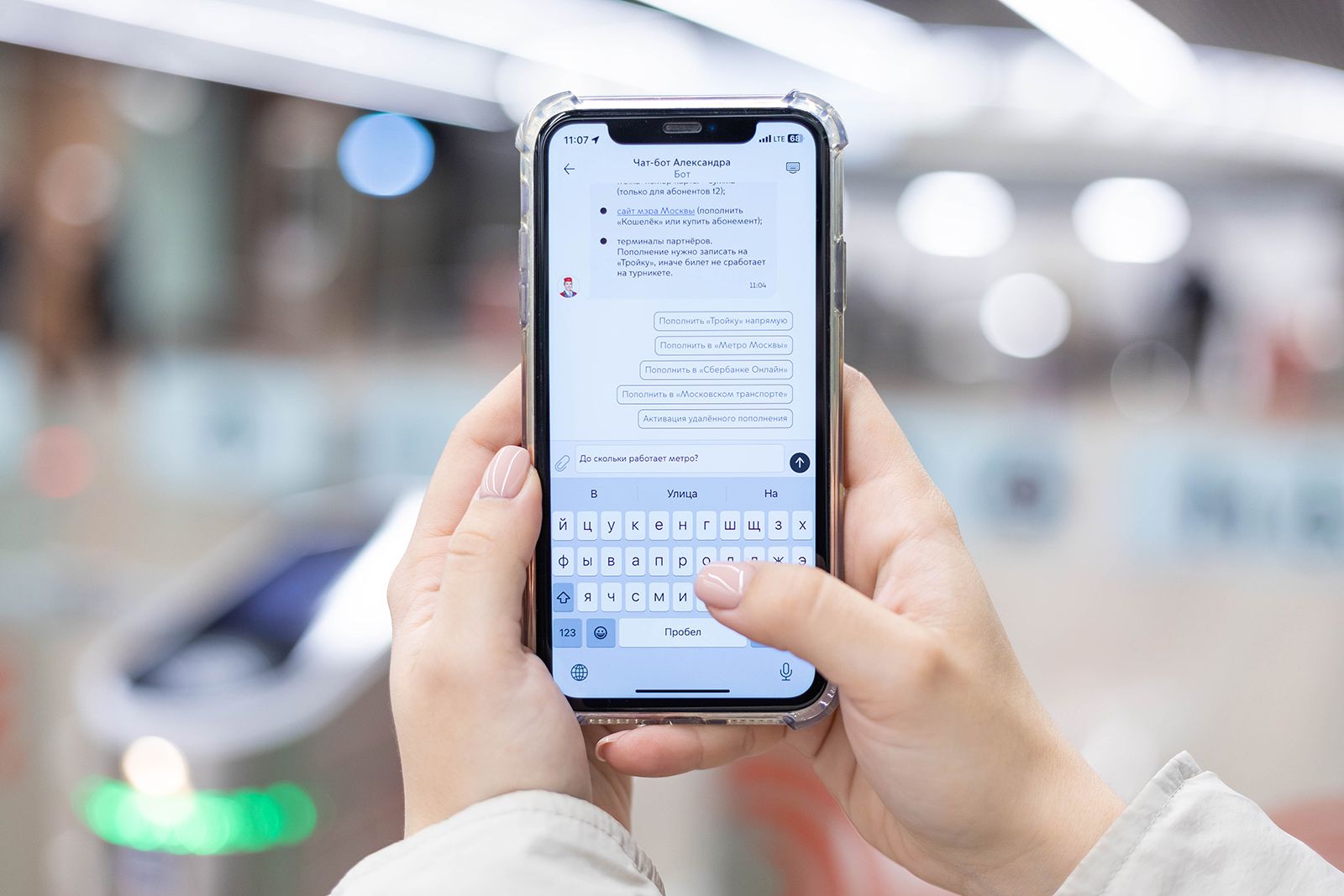
The transport virtual assistant — the chatbot Alexandra — helps passengers, pedestrians, and drivers quickly obtain necessary information at any hour of the day. On average, the chatbot processes more than 585 thousand requests per month. Most often, it answers the questions about fares and payment methods for travel and parking, about lost items, schedules and routes of surface transport, and applications and websites of Moscow transport. In 2025, the assistant started using artificial intelligence, and now the service can process an even greater number of requests of varying complexity, recognize non-standard phrasing, and have full-fledged conversations.
Planning lessons, writing code, and supplying
An AI-powered chatbot at the Moscow Electronic School (MES) assists teachers in lesson planning. The smart AI assistant is integrated with digital textbooks from the MES library and instructions from the Spravki MES section. By analyzing textbook information and reference data, it is capable of providing detailed and high-quality answers in the form of a text to a wide variety of questions, selecting materials for lessons, compiling lesson notes, and even creating tests, which saves the teacher’s time. The chatbot is familiar with all federal educational programs, standards, and regulations. Since the service launched, over 10 thousand users have submitted more than 30 thousand requests.
Virtual assistants are useful for programmers as well: the CodeIT chatbot hosted on the Mos.Hub city cloud platform for developers can answer questions about technologies and programming, independently write a code in popular programming languages, and help users improve their code. Its language pool includes Python, Java, JavaScript, C++, and many others. Questions can be asked in free form — the chatbot effortlessly understands the user’s natural language and provides answers.
And as for the voice assistant of the Moscow Supplier Portal, it has become indispensable for entrepreneurs. It now processes 100 per cent of calls to the portal’s technical support hotline. Most often, the AI-powered virtual assistant has to consult users about registration rules and web portal functions, about participation in quotation sessions, about registration of machine-readable powers of attorney, or about compiling a standard product unit catalogue. Moreover, the electronic assistant optimizes the resource’s support service operation: it independently provides the necessary information, while an operator gets involved to resolve extraordinary issues.

Finding answers to any question
The knowledge base of the voice assistant on 14 lines of the city contact center stores information on nearly one thousand topics. The virtual assistant helps residents all day long to submit service call requests, make doctor appointments, submit water or electricity meter readings, and check if their documents are ready. Another available feature is consulting users about issues in the sphere of public services, housing and utility services, transport, and others. Thanks to AI, the voice assistant finds the demanded option in the knowledge base faster and answers several questions at once. Residents may not even notice that they are talking to a robot.
Artificial intelligence is an integral part of the Smart City concept, implying that infrastructure and services are digitally enabled and closely linked. The Smart City utilizes both traditional artificial intelligence and generative artificial intelligence.
The Moscow Government has incorporated over 130 AI-powered projects in different areas, from landscaping control and transport management to medical diagnostics. In 2025 alone, Moscow enterprises launched more than 20 such projects.