From the Atlantic to Moscow: exploring the only submarine museum in the capital
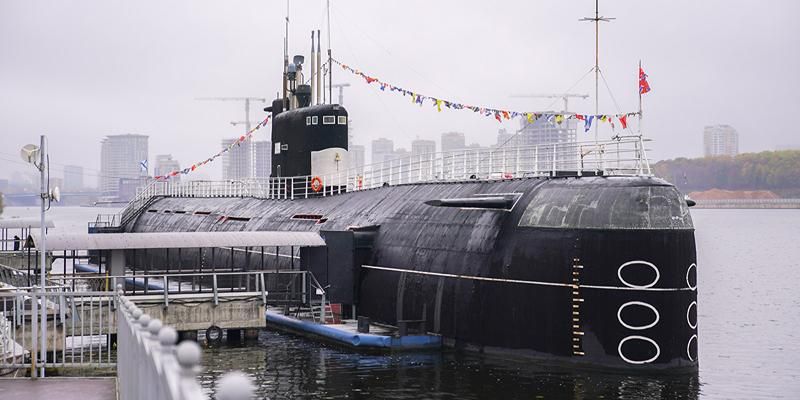
Visitors can tour a real submarine and learn how the submariners lived in Severnoe Tushino Park. The B-396 Novosibirsk Komsomolets, the only submarine museum in Moscow and the central exhibit in the Museum of the History of the Russian Navy, is moored at Khimki
“The B-396 is a unique museum object, the only one of its kind in Moscow. This is not a model, but a real ship that served in the Northern Fleet and has traveled thousands of kilometers in the Black Sea and the Mediterranean, the Atlantic and the Arctic Ocean. After decommissioning, the vessel was refitted at the Sevmash plant, preserving the original instruments, cabins and equipment, and then delivered by inland waterways to the capital. Today, the submarine is the centerpiece of the museum complex, and visitors can see the torpedo room, wardroom, deckhouse, galley and other rooms. We strive to preserve historical authenticity and plan careful reconstructions to make the exhibition more informative,” says Svetlana Andreyanchenkova, Director of Severnoe Tushino Park.
.jpg)
On the eve of the 45 th anniversary of the Novosibirsk Komsomolets, which is celebrated on October 25, mos.ru’s correspondents went down inside the submarine to learn about its structure and how it became part of the Museum of the History of the Russian Navy in a Mosocw park.
From the depths to the capital
The submarine B-396 was built in 1980 at the Krasnoye Sormovo plant in Nizhny Novgorod to a the 641B “Som” design. The vessel became a true underwater giant among the submarines of its generation. It is about 90 meters long and almost nine meters wide. The high-strength steel hull could withstand the water pressure at depths of more than 250 meters. The total displacement of the boat is 3.6 thousand tons.
Inside there are seven compartments: the torpedo, central, diesel, electric motor, and auxiliary mechanisms compatments, and two living areas, which also house the vessel’s batteries. it was home to 78 men, officers, midshipmen and sailors. The submarine was equipped with three powerful diesel engines and electric motors, which enabled her to travel at speeds of up to 17 knots. The outside of the hull was covered with special rubber plates that reduced noise and made the submarine less visible to enemy hydroacoustic systems.
The submarine joined the Northern Fleet on October 24, 1980 and for almost two decades performed combat missions in the Atlantic Ocean, Barents, Norwegian and Mediterranean Seas, and off the western coasts of Africa.
In 1998, the ship was decommissioned. In order to preserve it for future generations, the engineers at Sevmash refitted the vessel, creating safe walkways for visitors, installing lighting, and preserving the instrument panels and interior spaces. In 2003, the submarine was relaunched and sent on its final voyage, from Severodvinsk to Moscow. Having crossed the White Sea and navigated a network of canals and reservoirs, the vessel arrived at the shores of the Khimki Reservoir and docked at the Severnoe Tushino Park, its permanent anchorage.
Today the submarine is part of the Museum and Memorial Complex of the History of the Russian Navy. It can be visited all year round. On board are real instruments, cabins and machinery, and it is home to temporary exhibitions.


Inside a real submarine
A narrow pier leads to the submarine. The steel hull of the vessel extends deep underwater, and above the surface rises the conning tower with its periscopes. We climb up the gangway and find ourselves inside the first compartment. We are met by Yury Korobko, a guide of the Museum of the History of the Russian Navy.
“You have a real submarine in front of you. Everything you see is authentic. The instruments, equipment, mechanisms are all preserved here, even the paint on the bulkheads remains from the times when it was in service. When the submarine became a museum, our task was not just to open it to the public, but to preserve the spirit of the vessel. We try to show the life of the crew as it really was, without embellishments, but with respect for the people who served here for months underwater,” says Yuri Korobko.
.jpg)
The first section is the torpedo bay. Along the sides are the guide tubes for the torpedos and models of the torpedoes themselves. “Six torpedo tubes and 24 torpedoes were placed here,” says the guide. “Each device had its own reloading system, and preparation for a salvo took minutes. In addition to its combat mission, the compartment also serves as an escaspe exit: in case of an accident, the submariners could leave the boat through the torpedo tubes using special equipment”.


We take a look at the officers’ living quarters. It has narrow passageways, metal bulkheads, and double cabins with bunks and lockers. On the right is the wardroom. “Here the submanriners rested, took meals and held service meetings. A long table stood in the center, flanked by armchairs and chairs. In their free time, the officers listened to music, read books, or played chess. Sometimes they also had to provide medical assistance here, and for this purpose shadowless lamps were installed,” explains Yuri Korobko.


Through an aperture that has been specially made for visitors’ convenience, we get to the central command post, the brain of the submarine. Helmets, consoles and torpedo firing control instruments are fixed on the bulkheads. From here, movement and immersion were controlled.
“This is where the helmsman sat, and next to him was the officer of the watch, and behind the bulkhead was the hydroacoustics equipment, the easrs of the submarine. The equipment enabled the operators to tell which ships were approaching from the noise of the propellers. Underfoot, batteries weighing 700 pounds each provided power to the electric motors. When they were charged, hydrogen was released, so in each compartment there were special furnaces to burn off this gas,” explains the guide.
To the left is the tiny cabin of the ship’s doctor, and next to it is the isolation room and galley. Everything has been kept in pristine condition. Then there was the galley, where food was prepared for 78 men.


“The rations were simple: canned food, cereals, tea, but everything was done strictly according to the regulations,” says Yuri Korobko. “In this tiny kitchen they worked non-stop, as the submariners were on duty for months at a time. Nearby you can see a model of the vessel, which shows the structure of the hull: we are inside a solid hull four centimeters thick, and outside there is another, thinner one. Between them are ballast tanks that were filled with water when submerged. On the outside, the hull was covered with special rubber, which absorbed sound waves and thus made the boat invisible to the enemy”.

In the diesel compartment stood three huge engines of 14 tons each. Each one had a capacity of about two thousand horsepower. With these diesel engines the vessel navigateed on the surface, and then switched to the electric motors to navigate underwater.


We are now entering the last compartment. the living quarters, which are also home to the auxiliary machinery. There are three bunk beds, drawers for personal belongings, and a small projection unit. This is where the submariners lived. In their free time, they arranged movie screenings, the screen was a sheet stretched between the bunks. “Despite the cramped quarters, there was room for humor and camaraderie. Everyone understood that the survival of the crew depends on all members being able to work together,” concludes the guide.


Make contact with the history of the Navy
Today, the B-396 submarine is open to anyone interested in the history of the Navy and the history of 20 th century engineering technology. It is regularly visited by tours groups and school groups, and is used for themed programs.
“We see interest in the submarine growing. For us it is not only a museum, but also a monument to the submariners’ engineering skills, courage and professionalism. It is important that each visitor can experience the atmosphere of true service and understand the labor involved in keeping the machinery in working order”, says Svetlana Andreyanchenkova.

On October 25, the park will host a celebration. From 11 a. m. to 3 p. m. interactive events will be held in the square in front of the museum: visitors will be able to learn how to tie nautical knots, mint a commemorative coin, learn about weapons from different historical eras and take part in tactical games.
“Events like this remind us of our maritime traditions and give everyone a chance to come into contact with real Navy history,” concludes the park’s director.
The Novosibirsk Komsomolets submarine is open daily, except Monday, from 10 a. m. to 7 p. m., and the entrance is in Severnoe Tushino Park, closest to the gateon Ulitsa Svobody. Tours are available for individuals and groups. Tickets to the submarine and for excursions can be bought from the Mosbilet service.
