A green oasis in the megapolis: where in Moscow you can relax in nature
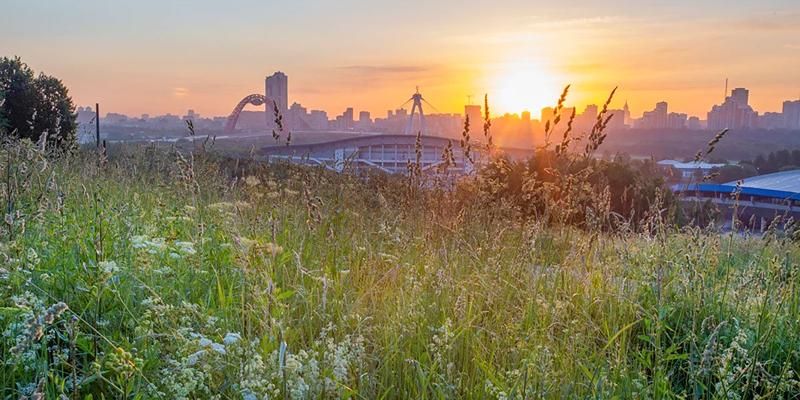
Moscow is one of the greenest megacities in the world. Almost half of its area is occupied by green spaces, and 90 percent of residents have parks and squares very close to their homes. This gives them the opportunity to walk, engage in sports, relax in nature with their children and listen to birdsong.
Moskvoretsky Nature and History Park
The largest natural-historical park in the city is Moskvoretsky Park, with an area of more than three thousand hectares. It is located in the north-west and west of the capital and stretches along the banks of the Moskva River. It combines extensive woodlands, water spaces and green meadows that harmonize with the urban landscape.
In the park coexist natural and human-transformed ecosystems, which are home to many rare birds and animals listed in the Moscow Red Book of Endangered Species. These include the tufted duck, common gull, common kingfisher, Eurasian goshawk, Eurasian sparrowhawk, and also the European hare and common beaver. In addition, Bembix rostrata, a large sand wasp, has been recorded here for the first time, indicating the uniqueness of the local ecosystem. Walking in the park, citizens admire rare plants listed in the Moscow Red Book of Endangered Species, including the China pink and the round-leaved bellflower.


Here, in summer visitors can engage in sports, walk along shady alleys, have a picnic with the whole family and go boating. They can swim on the beaches of the neighboring nature park, Serebryany Bor, an artificial island which was formed as a result of the confluence of the bend of the Moscow River with the Khoroshevskoe straightening canal.
Moskvoretsky Park is located near Strogino metro station, and the entrances to the park are on Ulitsa Isakovskogo and Ulitsa Marshala Katukova.
Setun River Valley Nature Reserve
The Setun is the largest right tributary of the Moskva River. Despite the proximity of residential and industrial areas, its winding 17 kilometers long channel within the city limits has preserved its natural banks and natural surroundings. This makes the Setun unique among Moscow rivers: it forms a green corridor that stretches from the Sparrow Hills to the Meshchersky Nature Park (also known as the Bakovsky Forest Park) in the Moscow suburbs.
Birch, lime and oak trees grow on the slopes of the valley, and along its banks there are thickets of gray alder and willow. The wetland zones in this natural area are home to an impressive variety of rare plants, among which there are the yellow flag, bur-weed and globeflower.
The reserve has become home to many rare birds, such as the tufted duck, common tern and Eurasian goshawk. The wooded areas are inhabited by European hares, and in the floodplain one can find traces of the common muskrat and water shrew. If you are lucky, you can meet a weasel, black polecat or stoat, all of which can be found in areas with populations of voles.
In May, the meadows are filled with the songs of nightingales, and the sound of crows, woodpeckers and redstarts. Marsh warblers and leaf warblers can be heard in the thickets, and mallards, moorhens and sandpipers circle near the water, creating a vivid impression of natural diversity. Among the inhabitants of the open spaces are corncrakes, Eurasian skylarks, yellow wagtails and meadowlark. The banks of the river are a favorite habitat for beavers.


The nature reserve is located near Davydkovo, Slavyansky Boulevard and Minskaya metro station. The entrances to the territory are located on Nezhynskaya and Starovolynskaya Streets.