The Kuskovo estate is 310 years old. From an Count’s residence to a modern city park
The Kuskovo estate is one of the few examples of an 18th century architectural complex and estate to survive in Moscow. This year it turns 310 years old. We tell the story of this amazing place—from the 18th century to the present day.
The heyday: lavish feasts and receptions
The Kuskovo architectural and park ensemble, created for formal receptions, would welcome up to 30,000 guests in its heyday in the 1770s. The program of festivities was diverse: church services, folklore performances, boat rides to the singing of the choir, fireworks, band performances, parades of boats on the lake, as well as balls in the palace and theatrical performances. Under Count Pyotr Borisovich Sheremetev (in whose time the estate first passed into the hands of the family) the serf theater became the pride of the family, and the troupe was admired both in Russia and abroad. During the days of festivities and receptions in Kuskovo, opera and ballet performances were held on the stages of the estate’s open-air and indoor theaters. The holidays were democratic in nature, everyone who wanted to appear was welcome.
.jpg)
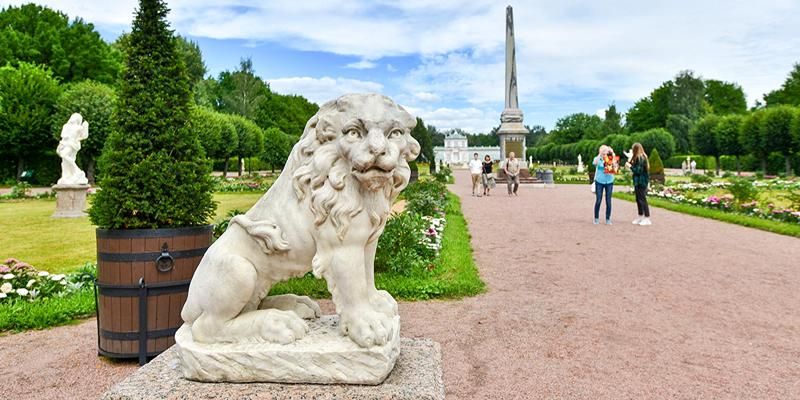
In addition, the estate solemnly received distinguished guests, including, among others, Catherine II, who loved Kuskovo and visited at least five times, Polish King Stanislaw Poniatowski and Austrian Emperor Joseph II. To commemorate the visit of Catherine the Great in 1785 to the palace for the celebrations marking the 10th anniversary of the Treaty of Kuchuk Kainarji with the Turks, in 1786 a marble obelisk was erected in the Kuskovo grounds, which the Empress granted to Pyotr Borisovich.

For almost 40 years, Pyotr Sheremetev gathered a unique collection of sculptures for his estate, mainly works by Italian and Russian masters. Not only did they decorate the park, they also served educational purposes, familiarizing visitors with history and ancient mythology, and introducing them to European art. Now in Kuskovo Park, 55 sculptures are on display—full-length statues and busts representing ancient gods, heroes of the ancient Greek and Roman myths, and historical figures.


Nineteenth century: restoration and dachas
By the 1870s, many of the buildings and the estate park were in need of repair and restoration. Count Sergei Dmitrievich Sheremetev, the owner of Kuskovo at that time, invited Nikolai Sultanov, a civil engineer who had just graduated from the St. Petersburg Civil Engineering School, to make improvements. In a few years he carried out an ambitious program of repairs, restoring the palace, the Dutch and Italian houses, the Hermitage pavilion, and returning the park ensemble to its former glory.
The large-scale restoration was carried out with great care and the estate was significantly transformed. In 1886, Emperor Alexander III, his wife Empress Maria Feodorovna, Tsesarevich Nicholas and other members of the royal family visited Kuskovo. To commemorate this visit, in the western part of the regular park, behind the Dutch House, the Emperor, Empress and Tsesarevich planted three oak trees, which survive to this day.

After the land reforms of 1861, as a result of which landlords began to sell or rent out land for additional income, the development of dachas began. The prerequisites for turning a suburban area into a dacha settlement were picturesque landscapes with water bodies for swimming and fishing, leisure facilities (theaters and entertainers), and the presence of a railway station nearby. The English park of the Kuskovo estate, known as the Gai Park, met all these conditions, and following the restoration the area began to gain popularity as a summer residence in the late 1870s.
In 1880, seven dachas were built, and by 1891 there were about 300 of them in Kuskovo. The dachas, one- and two-story buildings with mezzanines, terraces and balconies, heated by Russian stoves, were designed for people of different incomes. The dachas had separate outbuildings: kitchens, laundries, barns and stables. The terrace served as an essential feature of the building and played a central role in the dacha lifestyle, as the place where the residents drank tea, dined, and received guests.
In the early 1880s, a pleasure garden was created in the western part of the English park, on the site of a former pine forest, and this became one of Kuskovo’s main attractions and continued in existence until the revolution.
By 1904, Kuskovo had gradually become a favorite place for Moscow residents to have dachas, and in the summer some 15,000 people lived on the Sheremetev lands. After the revolution, there were still residential houses here for much of the 20th century.


The 20th century: how the estate became a museum
On October 23, 1918, the summer residence of the Sheremetevs was nationalized, and in 1919 it opened its doors to visitors as a museum.
In 1932, the Museum of Ceramics was moved to Kuskovo. It was created based on the nationalized art collection of the industrialist and collector Alexei Morozov, supplemented with items from the collections of the State Museum Collections of Moscow and Leningrad, the disbanded Proletarian Museum, the Rumyantsev Museum, and the Furniture Museum, including with the collections of, among others, the Princes Yusupov, Dmitry Shchukin, Sergei Bakhrushin, and Mikhail Ryabushinsky. In addition, valuable exhibits were transferred to the museum from the State Hermitage Museum, the Armory of the Moscow Kremlin, the Polytechnical Museum, the museum of the Stroganov College and other collections. In 1937, the Kuskovo Estate and the Ceramics Museum were legally united.

In the area beyond the lake and in the English Park, the late 19th century dachas were preserved, but were gradually converted to permanent housing.
The 1926 census recorded the presence of a dispensary, an elementary grade school, and a postal and telegraph office with a telephone station on the site. In accordance with the spirit of the times, new road names appeared, such as Oktyabrsky Prospekt and Trudovaya Ulitsa, and improvement work was carried out. By the mid-1930s, all homes had electric lights and running water. The Karl Liebknecht Club had a large library, and the summer theater regularly hosted plays and concerts given by performers from Moscow. In 1938, Kuskovo Park became part of the town of Perovo, which became part of Moscow in 1960.
In 1980, the territory around the central part of the former Sheremetev residence acquired its modern boundaries, becoming a forest park, and trees were planted in place of the demolished dachas.

The Kuskovo Estate today
The Kuskovo estate today consists of a landscaped park with an area of more than 26 hectares, preserved since the 18th century, as well as a forest park, with an area of 261.46 hectares, which historically belonged to the estate complex. It includes a specially protected natural area of regional significance, Kuskovo Nature and Historical Park, with an area of 41.99 hectares.
The museum has more than 50,000 items from the main collection of the Counts Sheremetev and subsequent additions, including paintings, drawings and prints, sculptures from the 16th–19th centuries, rare examples of artistic furniture and decorative applied art, books from the family library and a portrait gallery which is unique in terms of its completeness and historical significance. In addition, it houses the largest collection of Russian and Western European porcelain in Moscow, and one of the largest in the country.


There are 18 cultural heritage facilities of federal significance on the territory of the estate. Kuskovo regularly hosts exhibitions, classical music concerts, various programs, master classes, quests and other events for adults and children.