A rich history and modern development. We visit the Kuzminki-Lyublino Museum Reserve
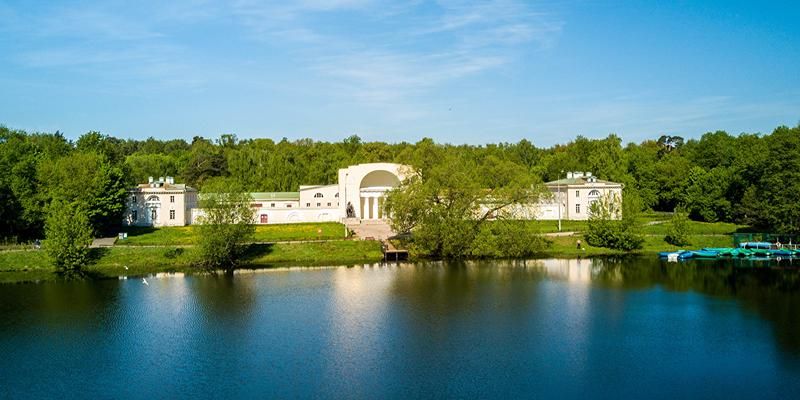
Parks are a symbol of harmony between nature and urban development. The incorporation of this space into urban culture has brought it fresh air in all senses: it is enriched by new formats and enables city residents to relax in nature without leaving the capital.
We go to the Kuzminki-Lyublino Museum Reserve, the largest in Moscow, and tell readers how they can master computer literacy, prepare for school and even discover the folklore of distant countries in this park.
Three estates in one park
On the territory of the Kuzminki-Lyublino natural and historical park there are two estates that gave it its name — Kuzminki and Lyublino, and also the Father Frost Moscow Residency. Kuzminki Park also forms part of the complex.
A rich historical heritage, easy access by public transport, and a diverse cultural program — from excursions to attractions — make the Kuzminki-Lyublino complex a unique place to spend a weekend (and not just one).
Why Kuzminki?
There is no definite answer to the question of where the name comes from. One of the most popular theories is that there was a mill on the Churilikha River owned by one Kuzma, and the place was named Kuzminki after him. Under Peter the Great these lands were given to the Stroganovs, but the estate flourished under the Golitsyns. In the 1830s, architect Domenico Gilardi remodeled the estate in Classical style.
“One of the pearls of the estate was the musical pavilion of the Horse Yard, where an orchestra played to entertain guests,” says Ekaterina Polishchuk, curator of exhibitions at the Kuzminki-Lyublino Museum Reserve.


After the Revolution, the estate escaped redevelopment thanks to the fact that the Institute of Experimental Veterinary Medicine was located here. The main building burned down in 1916, but in 1930s architect Sergey Toropov built a new one on the same site, which blends in with the ensemble so well that it seems to be a part of the original building.
The Lyublino estate: from luxurious balls to country vacations
At the turn of the 19 th century, the land where the Lyublino estate is now located was acquired by retired brigadier Nikolai Durasov, a fabulously rich man with great ambitions and original tastes. He commissioned the architect Rodion Kazakov to create a luxurious estate, and the work was led by the builder Ivan Egotov. The main house, built in the shape of a cross, was remarkable for the richness of its interiors. Under the bachelor Durasov the estate became a center for high society, hosting balls, dinner parties and theatrical performances.


At the end of the 19 th century the estate was acquired by a family of merchants, the Golofteevs. They transformed Lyublino into a prestigious country seat, building wooden cottages for summer vacations (these, unfortunately, have not survived). All the estate buildings were also rented out as summer houses, and one of them was rented by Fyodor Dostoevsky. In 1866, while staying here, he worked on Crime and Punishment and conceived the idea for The Gambler.
After the Revolution, the estate housed various institutions. The palace was closed to the public, and from the 1950s to the end of the 1990s it was home to the P.P. Shirshov Institute of Oceanology of the USSR Academy of Sciences.


.jpg)


Carousels, kvass and ice cream
The forest park has always been a place for walks, and in 1977 it received the status of a park of culture and recreation. It had carousels, a boat station, slides for sledging in winter — all aspects of a truly happy Soviet childhood.
“I used to come here with my parents to ride the carousel when I was a child, too. There were little cars for rent, which the children loved. Ice cream, kvass, balloons — all this left warm memories,” says Ekaterina Polishchuk nostalgically.


Modernity: festivals, workshops and entertainment
The Kuzminki Estate is now closed for restoration, but you can walk in the surrounding area. By the way, Kuzminki has been listed as one of the five best Moscow parks for jogging.
The Lyublino estate hosts excursions, master classes, concerts and festivals.
In the Father Frost Moscow Residency, life does not stop even in summer: snowy decor is replaced by green garlands and the festive fir tree is decorated with strawberries and flowers. In the warm season the good Baba Yaga manages the place. She loves to have fun and celebrate her birthday with dancing, songs and folk festivities. Everyone can visit the renovated terems (old Russian palaces) and walk along the path of fairy tales, where large-scale figures from world folklore are located. Father Frost himself selected which fairy tales would be represented on the trail.


A place to find yourself and discover new opportunities
In summer, the part of the park where, as in Soviet times, there are rides and people can rent boats is particularly popular. But now there are even more opportunities, both to relax and to learn: there is a lecture hall and master classes are held in the gazebos for all those interested, regardless of age.
“We hold free classes: computer classes for the older generation and creative and sports classes for children, including classes to prepare them for school. You can register at mos.ru,” says Maria Omelchenko, scientific secretary of the Kuzminki-Lyublino Museum Reserve.


Art objects: discover yourself as you walk past the painted boats
The painted boats, converted into benches, have become a symbol of the park. During the Art-Jetty festival artists from different cities of Russia created their works right in the open air.
The boats have become art objects, each telling its own story — there is, for example, one with pandas, dedicated to the Moscow Zoo. They are dug into the ground and lead to the Shibaevsky Pond, symbolizing, as explained by the park staff, the path of a person from birth to maturity.


Calendar of Events
Parks are now places where experiences are created, curiosity is awakened, and people are entertained and learn. The spring and summer events in the museum reserve are already planned, and each holiday will be celebrated with an exciting program. In April, for example, there will be concerts dedicated to Cosmonautics Day.
May: “Victory through the eyes of people today”
On May 9 each year, the park hosts one of the largest programs in the city.
“There will be a reenactment of the Victory Waltz, soldiers’ retreats, quests for adults and children, and concerts given by orchestras and entertainment ensembles,” says Maria Omelchenko. The program also includes an exhibition of the Sergei Andriyaka School of Watercolor, in which artists interpret the theme of Victory creatively.

June: Children’s Day and reading in the air
In June, Children’s Day will be celebrated in the park, and it will also host the Bookman book festival, to which representatives of publishing houses, authors and illustrators will be invited. Children will be able to meet the writers and ask them questions. Guests will enjoy interactive readings, giveaways, literary quests and presentations of new publications.


July: Day of Family, Love and Fidelity
On July 8, the park will celebrate the Day of Family, Love and Fidelity. “We hold master classes, games and contests incorporating the symbol of the holiday — the daisy. It is a reminder of the importance of family values,” the organizers tell us. Representatives of the clergy will join the celebration — there is a church on the territory of the museum reserve.

August: Afrofest
In August, a walk in the park will turn into an opportunity for travel. Kuzminki Park is constantly involved in cultural dialogs with other countries: it has hosted Peruvian festivals in the past, and one of the most memorable events of this summer will be the Afrofest.
“We are bringing together artists, designers and musicians from Africa. There will be a fashion show, drumming, the opportunity to taste African dishes and a children’s program with water-based make-up and afro-style hair braiding,” Maria Omelchenko said.


Dancing for everyone
This season a dance floor will be opened, and there will be dance evenings with live music, including dances for participants of the Moscow Longevity project.
History, art, and contemporary recreation activities and self-development opportunities — all this makes Kuzminki another important focal point in the city, and a worthy addition to its cultural map.