New residents, inventions and technologies. What was 2024 like for the Moscow Technopolis SEZ
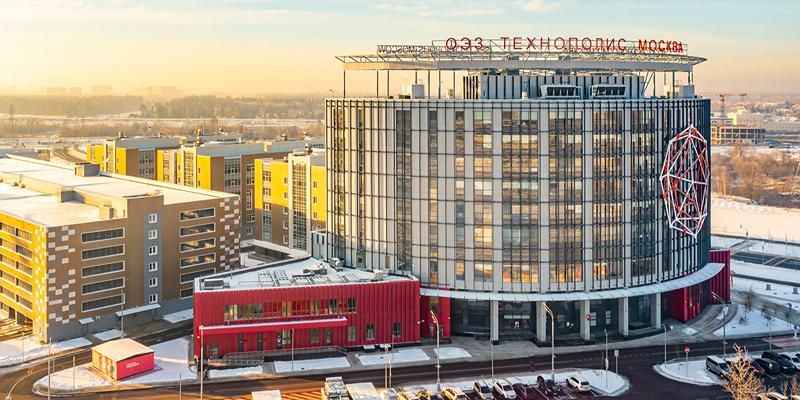
Microelectronics, uninterruptible power supplies, space satellites, drugs for the treatment of rare diseases, laser machines—all this and much more are produced by companies in the Moscow Technopolis Special Economic Zone (SEZ). The 390-hectare territory, which offers a preferential regime for industrial enterprises, is becoming a leader in international and national industry ratings year after year, and more and more companies are receiving resident status and state support, and expanding and increasing their product lines.
What discoveries and technologies were patented in the Moscow Technopolis SEZ in 2024, how many companies received tax benefits and which were able to launch the production of high-tech devices—find out on mos.ru.
Titanium implants, drugs and microelectronics
17 enterprises were granted resident status in the Moscow Technopolis SEZ in 2024. Among them are manufacturers of medical devices, batteries, tomography scanners, unmanned aircraft systems, microelectronics and other goods that are currently in high demand. Resident companies are exempt from paying transportation, property and land taxes, and are subject to a reduced rate of profit tax—only two percent instead of 20 percent. Thanks to such incentives, manufacturers can invest more in the development and production of innovative products and create new jobs. Today, 118 enterprises benefit from the tax and customs preferential regimes in the SEZ, and in the first nine months of last year they saved 3.7 billion rubles on taxes.
Among the companies that received the status of a resident of the Moscow Technopolis SEZ in 2024, seven are located in the Rudnevo Industrial Park. They manufacture drones and their components, as well as electronics, single board computers and peripherals for drones. The companies’ total investment in their projects is estimated at 30 billion rubles.


At the Alabushevo site, resident status was granted to four companies producing medicines and medical devices. One of them will import-substitute titanium implants for use in extra-cortical and intraosseous osteosynthesis procedures. Another company is building a plant to produce biotech drugs to treat cancer, genetic and rare diseases. New residents of the site will invest 22.3 billion rubles in their production facilities.
Four companies were granted resident status at the Pechatniki site. They produce uninterruptible power supplies, high-tech self-service machines and technical elements for use in satellite communications systems. For example, one of the research and production complexes started producing lithium-ion batteries for electric bicycles, scooters and gyroscooters, and another company will start the production of self-service checkouts and charging stations for electric vehicles. The total amount invested in the projects of the new residents exceeded 700 million rubles.


A microelectronics manufacturer has become a resident at the Mikron site. The volume of investments exceeded 16 billion rubles. At the Tolstopaltsevo site, resident status was granted to an enterprise producing large-size housing. The total investment in the project will exceed 12.5 billion rubles, and the number of new high-tech jobs created will be 2,300.
A space microscope and a laser machine
Companies located in the Moscow Technopolis SEZ produce sophisticated electronics and other high-tech products using materials and technologies developed domestically. This allows them not to depend on imported supplies. Thus, in 2024, the enterprise Proton Plant started the production of printed circuit boards for the radio electronics industry. Only Russian reagents and equipment are used in its technological processes. And the world’s only probe space microscope SMM-2000, created by the plant’s specialists and launched into orbit, has already demonstrated the advantages of ultra-clean space (there is no dust at an altitude of about 550 kilometers above sea level).
.jpg)
.jpg)
.jpg)
.jpg)
Mikron has launched two new lines of activity—the assembly of microchips in plastic cases and chip modules. This will allow the company to produce more than 40 different products for use in telecommunications equipment, automotive electronics systems, equipment for the Internet of Things and smart homes, electricity meters, automation and robotics systems, and medical equipment and measuring devices, and to double the production of chip modules for Mir bank cards. The plant has also developed, implemented and tested an RFID solution for monitoring firefighting equipment in industrial plants. In addition, together with another resident, the Soyuz Design Center, the enterprise has created prototypes of a programmable logic integrated circuit that can be used in space equipment and specialist equipment.
.jpg)
.jpg)
.jpg)


Last year, Microbor began the mass production of carbide inserts for metal turning and milling. The new technology significantly increases tool wear resistance, which will increase metalworking productivity and reduce its cost. The company Mesoformula has launched the production of innovative preparations for use in injectable aesthetic medicine and professional cosmetology. And two new products, the KR1878BE1 universal microcontroller made by Angstrem, used in smart communication networks and smart home systems, and a laser cutting machine made by Lassard, have been included in the register of Russian industrial products maintained by the Ministry of Industry and Trade of the Russian Federation.


Multimedia encyclopedia and 3D printer
In 2024, the company Micro-VIS import-substituted the UHF frequency converter, which is used in modern satellite and space communications systems. The Zelenograd Nanotechnology Center is preparing to launch production of an important component of radio-electronic equipment—a microwave transformer chip. This product, which is required for navigation, radio engineering, telecommunications and communications systems, will appear on the market at the beginning of this year and will replace foreign equivalents.
The Molecular Electronics Research Institute has developed and began producing silicon capacitors. These are used in secondary power supplies for communications, navigation and radar equipment modules. The production of biological loading blocks for sewage treatment complexes, which has been launched by the Nanotechnology Composites Center, will make it possible to quickly, cheaply and safely remove contaminants from sewage.


The company Additive Engineering has launched production of a modern 3D printer. It can print large-scale products for the instrumentation, automotive and construction industries, as well as parts for foundries and for use in interior design.
The SEZ resident company Orthomoda has released a line of adaptive clothing made from innovative materials for the rehabilitation of military servicemen. It was created taking into account the age of veterans of the special military operation, their lifestyles, types of injuries and the recommendations of physicians.
The company Scientific Entertainment has developed drone study aids. With their help schoolchildren will learn about the design features, electronics and circuitry, power supply systems, propulsion systems and the actuators, navigation, communications systems and radio control of unmanned aerial devices. In addition, the company has started to produce a multimedia illustrated encyclopedia for young children, Professor Drozdov’s School. The scientific content in the electronic edition is read aloud by professor and public figure Nikolai Drozdov.


Sports center and flight test facility
Along with the development and manufacture of high-tech products and the appearance of new residents, the territory of the Moscow Technopolis Special Economic Zone is expanding. In 2024, the first stage of the Alabushevo Technopark and the second building of the innovation center on the site of the National Research University of Electronic Technology (MIET) entered into operation. It will house the production facilities of the Zelenograd Innovation and Technology Center, the Zelenograd Nanotechnology Center, as well as other enterprises and startups.
In addition, Elta’s new medical equipment plant was authorized for operation last year. Elta is the only Russian manufacturer of blood sugar measurement systems. The company’s flagship product is a smart glucometer, which is able to transmit the measurements via the Internet.


In 2025, a sports complex of almost 17 thousand square meters will be opened in Alabushevo. On the first floor of the building there will be two ice fields, a warm-up zone for figure skaters and a training zone for hockey players, a tennis court and much more. The second floor will be equipped with gyms, presentation areas and meeting rooms. Every day about two thousand people will be able to do sport in the complex.
In the near future, a flight-testing complex of the Federal Center for Unmanned Aerial Systems in the Rudnevo Industrial Park and a plant for the industrial production of automotive electronics will open.