For the first time in 40 years, an American mink has settled in the Moscow Zoo
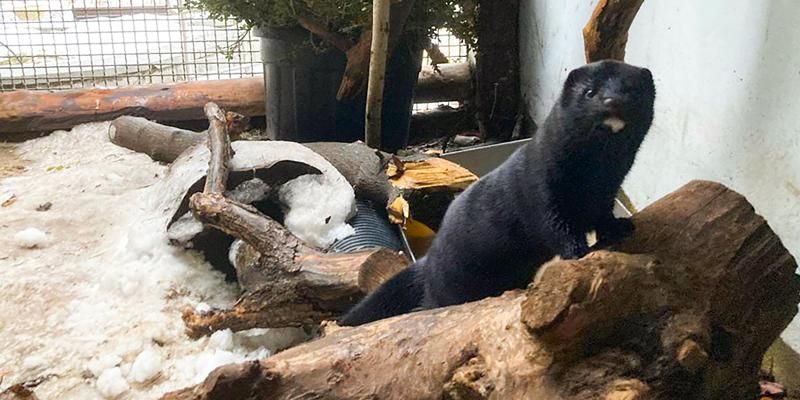
A male American mink named Cheburashka has settled in the “Fauna of Russia” exposition of the Moscow Zoo. He came to the capital from a rural forestry territory.
Cheburashka quickly adapted to his new home, and has had time to get acquainted with the staff and visitors. American minks have not been on display for over 40 years. The new resident has been placed in a private, comfortable enclosure with a pool where he can hunt and swim.
“Cheburashka is fed with fish, including live fish, which are specially introduced into the pool. And often his prey is almost the same size as the hunter himself. The predator is also given pieces of chicken and beef,” said Svetlana Akulova, General Director of the Moscow Zoo.
Cheburashka is a young male with black fur. He is nearly three years old. He weighs 2.2 kilograms. The animal is still living alone in the enclosure. only time will tell if he will have neighbors in the future.
.JPG)
.JPG)
For Russia, the American mink is an invasive, i.e. non-native, species. Today it lives throughout the European part of the country’s territory. These animals are found in both rural and urban areas.
Minks live near water. These animals, which belong to the marten family, feed on fish and small invertebrates. In the wild, they often dig their own burrows, and each dwelling can have up to eight entrances. In addition, these furry predators settle in natural shelters — hollows in fallen trees or piles of rocks.
Minks are quite agile animals that can engage behave in a restless and aggressive manner. They are sociable and make a variety of sounds depending on their mood. When frustrated, the American mink hisses and snorts. When frightened or attacked, it shrieks loudly. A domesticated mink may yap to attract its owner’s attention and cluck when it is in a good mood.
Due to their highly-developed intelligence, wild American minks quite quickly become accustomed to humans. They may even approach fishermen and insistently demand their catch. These animals lend themselves well to domestication, but it is difficult to keep minks as pets because of their highly aggressive nature.
The Moscow Zoo is one of the oldest in Europe. It was opened in 1864. It is home to more than 1,200 animal species, including snow leopards, Pallas’s cats, Malayan bears, Far Eastern leopards, whale eagles and giant anteaters. They have come here from all over the world. Many of the zoo residents are listed in the Red Book of Russia and the International Red List of Threatened Species.
In the zoo visitors can see animals inhabiting all corners of the country and the most diverse landscapes - icy deserts, dry steppes, tundra, taiga, sea coasts and mountain ranges. The Fauna of Russia exposition features enclosures for reed cats, foxes, red foxes, sable, marten, river beavers, wolves and many other mammals, as well as birds. These include short-eared owls, bearded owls, pheasants, jays, magpies and rooks.