Moscow Zoo gets another monk vulture
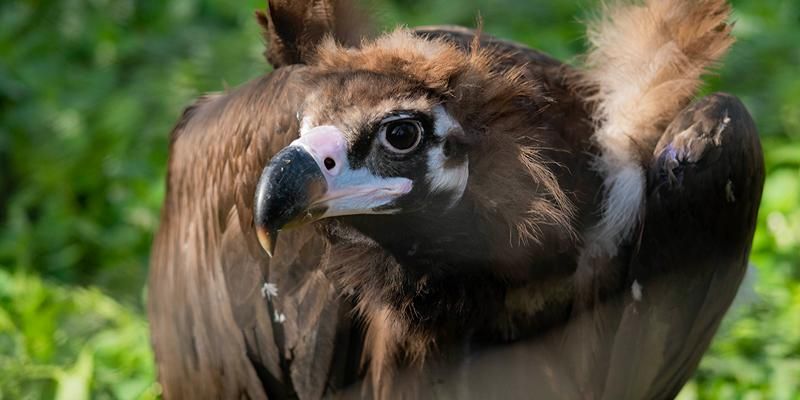
Another black vulture, a young male of approximately one year old, was brought to the Moscow Zoo from Alma-Ata.
“The vulture has moved well. He has been quarantined for a month and now he can be seen in the Birds of Prey Rock aviary in the old zoo part. The neighborhood is home to two female and three male monk vultures, four griffon vultures and a bearded vulture. Later, zoologists will match a couple with the young monk vulture for them to give offspring. They reach sexual maturity at five to seven years of age,” says Svetlana Akulova, Director General of the Moscow Zoo.
A member of the hawk family, the bird is rather large, with the wingspan of 2.5–3 meters, and has a proud posture, its wide feather collar adding a touch of elegance.

Monk vultures have large, alert eyes, and in the wild they are able to look for prey, hovering at a height of one to two kilometers above the ground. In the Moscow Zoo, monk vultures feed on meat, including quail and rats.
They have a fairly wide habitat, living in mountainous regions. In our country, they can be found in the North Caucasus, in the Krasnodar and Stavropol Territories, the Altai Mountains, and Crimea. Outside Russia, they live in Kazakhstan, Kyrgyzstan, Georgia, Azerbaijan, etc.

Today, the population of this species is only about 5,000 birds. So, monk vultures are listed in the Russian Red Data Book. They are also protected in other countries; these birds are under threat of extinction due to poaching and destruction of their habitat.