A touring ride: How Moscow transport provides a better understanding of the city
Transport maturity is a key criterion to understanding how good the urban environment is, as megacity dwellers spend a lot of time traveling. Indeed, Moscow’s public transport is comfortable, fast and safe, boasting a well-thought-out route network and a user-friendly navigation system; it is also an amazing tourist attraction providing a better understanding of the city.
Underground Museum
Originally built as an icon of the capital, the Moscow Metro stations were created by the most prominent architects and artists; for example, Alexey Dushkin was awarded a prize at the World Exhibition in New York (1939) for the Mayakovskaya project, while the mosaic panels decorating the station were designed by the famous Alexander Deineka.
The capital’s metro is indeed a museum with unique exhibits. In fact, one can take a metro tour, and photographs of Ploshchad Revolyutsii sculptures, mosaics of Kievskaya and Komsomolskaya, stained glass windows of Novoslobodskaya, white and blue bas-reliefs of Taganskaya station, and other attractions adorn many Moscow guidebooks.
The stock of underground chefs-d’œuvre is still growing. In particular, the Art Nouveau design of Slavyansky Bulvar station (2008) or Novoperedelkino’s ornamentations (2018) appeal to both Muscovites and tourists. One of the best views of Moscow opens from the metro bridge at Vorobyovy Gory station.
Last year, the authorities launched the 70-kilometer-long Big Circle Line (BCL), the longest metro ring route in the world. Many of the BCL stations are worth visiting just to enjoy them. For example, the walls of Elektrozavodskaya are decorated with a giant panel, The Battle of Heroes, by artist Alexander Rukavishnikov, while at the Nagatinsky Zaton, one can see mosaic fish, and Michurinsky Prospekt is designed in the Chinese style.


Circle of Opportunities
In 2016, the capital was encircled by the Moscow Central Circle (MCC), which was very soon dubbed the above-ground metro.
The MCC has changed the idea of what a city train can be: as its cozy Lastochka trains run at time intervals of just a few minutes. It offers more convenient routes and has relieved congestion at train terminals and underground stations, and it is also a great way to travel around Moscow. You can start with a sightseeing tour — an hour and a half is enough to do the whole circle — without any traffic jams. You can get off and find something amazing nearby at almost any station. Walking enthusiasts choose between big natural parks, such as Tsitsin Main Botanical Garden of the Russian Academy of Sciences or Izmailovsky Park, and trendy parks, like Tyufeleva Roshcha, Krasnaya Presnya, etc. Those who prefer urban landscapes will go to Moscow-City station. For those interested in architectural and historical heritage, the MCC will help get to several Moscow estates, such as Mikhalkovo, Pokrovskoye-Streshnevo, and Likhobory. As for those who enjoy active recreation, an MCC train will take them to the Luzhniki sports complex or to a popular water sports area of Strogino.

Seamless journey
The next stage in the development of the ground metro was the Moscow Central Diameters (MCDs). The abbreviation entered the lives of residents of the capital and the Moscow region in 2019, as the first two diameters were launched; now there are already four of them.
MCDs are direct, seamless routes passing through Moscow and connecting geographically opposite areas of the region. Yet, all of the lines are integrated into Moscow’s transport network as you can transfer to a metro or MCC station or change to other diameters; if paid by the Troika Travel Card, transfers are free of charge. For an agglomeration with high pendulum migration, that is, for an area with lots of people constantly moving between the suburbs to the central city, it is vital, indeed.
And the diameters certainly offered a new opportunity for traveling around Moscow and its environs. The most convenient way to get to many estates, parks and other attractions, such as Lake Kiovo, a natural site in Lobnya, or the children’s railway in Kratovo, is an MCD ride.

Benefits of electrification
Electric buses are said to be the best ground public transport option for a megacity as they are environmentally friendly, like trams, but do not require rails, that is, they are more maneuverable on the road and can easily be put on new routes-a major advantage for a growing city with changing passenger flows.
Moscow was one the first cities in the world to start introducing the new type of transport on a large scale. The capital got electric buses back in 2018. Today, they are gradually replacing conventional buses, The Moscow Government is keeping an eye on latter to be as sustainable as possible, still they are not as good as their electric counterparts. In fact, replacing one conventional bus with an electric bus cuts down carbon dioxide emissions by 60 tons per year. Moreover, innovative transport is quieter, thus reducing the noise levels in the city.

The river is popular again
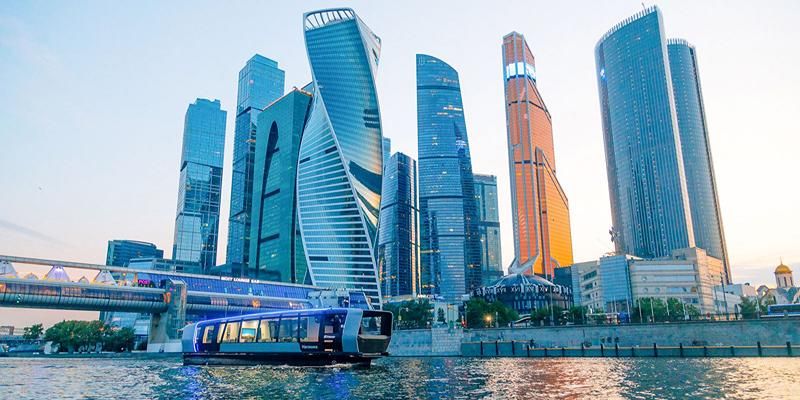
The Moscow River was once one of the main transport arteries and a popular recreation area. Over the decades, at the turn of the 20 th and 21 st centuries, the trend gradually faded away. However, everything has changed in recent years. The local authorities are taking effort to landscape and beautify the embankments, and a river ride along the capital’s longest “street” has become a popular and, perhaps, the most romantic tourist route. Navigation in Moscow is year-round, so you can admire the views of the city even on New Year’s Eve.

The Moscow River is a trendy transport option in the city again; they launched the debut scheduled electric boat route in June 2023. Today, the routes are served by electric boats that are accessible all year round. There is no other city in the world with such an innovative transport solution as the Moscow Government is developing the transport network so that residents can easily reach any point in the city by choosing from several route options. Every year the city grows larger while getting more accessible, and the saying about ‘going to the other end of Moscow’ no longer scares anyone. Moreover, a trip, whether by the metro with its interiors or on board an electric boat with views of the embankments, will no doubt be fun and exciting.
You can learn more about various modes of transport at the large interactive exhibition Manezh Station. Moscow Transport — 2030, until September 8. It presents new products and industry developments that residents and tourists will be able to enjoy as soon as in 2030. The exposition is part of the Territory of the Future. Moscow 2030 and has already become the most visited display in the history of the Manege.