From schools to sports facilities to HSR: how Moscow drives its construction sector
In terms of urban development rates, Moscow is one of the most rapidly growing megacities as there are about 3,000 building sites in the city, with approximately one million people employed in construction and related fields. Moscow builders meet their commitments to erect and launch key facilities in full and on time.
Road framework extension
Since 2011, the city has got 1,372.3 kilometers of new roads and renovated main outbound highways and interchanges on the Moscow Ring Road as well as 437 artificial structures and 314 pedestrian crossings.
“This year, we will complete the first stage of the final MHSD section. It will be connected to the Solntsevo — Butovo — Varshavskoye Motorway road. In 2025–2026, we plan to build another 176.5 kilometers of roads, 40 artificial structures, and 52 pedestrian crossings,” said Vladimir Yefimov, Deputy Moscow Mayor for Urban Planning Policy and Construction.


Also, since 2011, 238 kilometers of metro lines, 114 stations, including those on the Moscow Central Circle (MCC), and 12 train depots have been built or reconstructed in the capital, another 18 kilometers of lines, one depot and eight metro stations, including four Troitskaya metro line stations and Potapovo, the Sokolnicheskaya terminal point, to be ready this year. By 2030, the authorities are going to build another 71.4 kilometers of metro lines, 30 stations and five train depots.


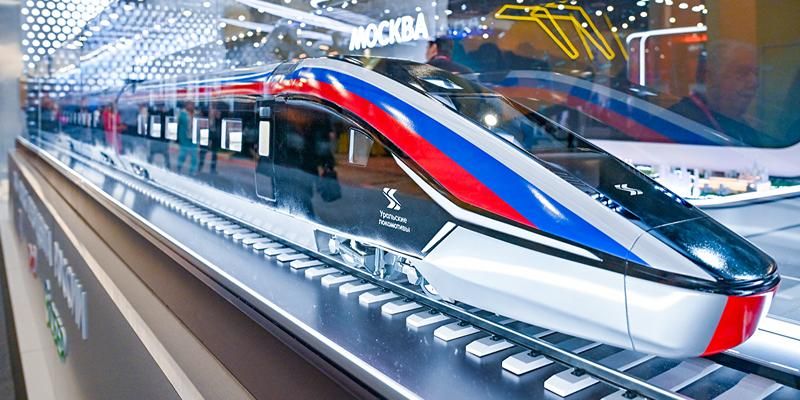
In 2019–2023, traffic was gradually launched along the four Moscow Central Diameters (MCDs). They also continue to improve the rail framework in the capital, the construction of the Moscow-St. Petersburg HSR being a key project.


Renovation program and development projects
The renovation program is expected to cover about a million Muscovites in all, more than 147,000 residents having moved to new homes. The authorities have built 322 residential quarters to date, another 464 buildings being under construction or being designed. To drive further development, they have selected areas (> 13 million square meters) in all administrative districts of Moscow,
with 139.7 million square meters of real estate, including 60.3 million of residential premises, built since 2011. 5.3 million square meters of real estate, including 2.2 million square meters of housing, were commissioned in the seven months of this year alone.


Booming TiNAO
Moscow’s ‘new’ areas, which were annexed to the capital in 2012, are turning into a modern comfortable urban agglomeration, over 30 million square meters of real estate, including over 25 million square meters of housing, introduced in the Troitsky and Novomoskovsky districts (TiNAO) since 2012.


They have also launched 10 metro stations and have built almost 400 kilometers of roads there, with rapidly enhancing social infrastructure as TiNAO has got over 200 new social facilities and about 200,000 new jobs.


Comprehensive development program
The municipality runs a comprehensive development program (CDP) building multifunctional quarters and designing roads, comfortable housing and essential infrastructure to be arranged on former industrial sites or in inefficiently used areas.
Today, as ordered by Sergei Sobyanin, Moscow is running 236 CDP projects, at various stages, these covering a total area of about 3.1 hectares; the municipality and investors will build more than 52 million square meters of real estate, as a result.


For science and technology
In order to drive science and technology, Moscow continues to implement large-scale projects, such as a newly built campus of the Bauman Moscow State Technical University (BMSTU), including 14 buildings with a total area of 170,000 square meters.


Next year, they will complete the National Space Center to embrace major rocket and space agencies.

Schools, hospitals and sports facilities
The city is growing in a comprehensive and balanced manner, indeed, as, along with housing, the municipality is running social infrastructure projects; 1,080 social facilities, including more than 600 schools and kindergartens (23 in 2024) and over 160 medical facilities (8 in 2024), have been built over the past 13 years.


In 2024, they have completed 10 sports facilities, with more than 210 built in Moscow in 13 years. The capital has also got over 80 cultural venues since 2011.


Construction and economy
The city gets more and more comfortable for living, offers more jobs and attracts investment as its infrastructure is expanding further and further. A significant part of Moscow’s budget investment returns through capitalization of the area and growing tax revenues.
The greatest effect of investing in infrastructure is proved to come from key transport projects that increase accessibility and boost the construction of residential, commercial and social real estate. One ruble invested in a transport facility brings three to five rubles of private investment in real estate over 15–20 years from the start of construction, while for some projects the figure is even higher. For example, every ruble invested in the Big Circle Line is estimated to generate about four rubles in tax revenues for the Moscow budget in 2013–2035, plus almost seven rubles of private investment in 2013–2030.
On top of that, if taking into account long-term effects, the construction sector accounts for 20 per cent of GRP.