From image analysis to diagnosis: how neural networks help doctors in Moscow
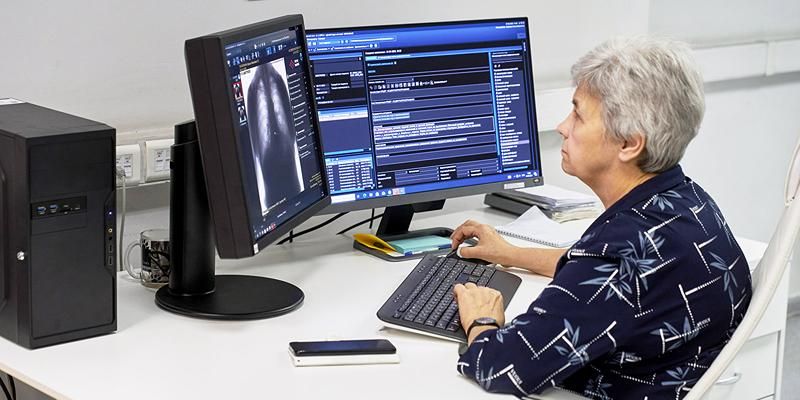
The city has been using computer vision technology for five years. Over the course of time, neural networks have processed more than 12 million images and learned to identify lung and heart diseases and cancer signs. Artificial intelligence (AI) analyzes fluorography images, mammography images, radiography images, MRI and CT scans, finds signs of pathologies and takes the necessary measurements. The Moscow Department of Information Technologies and the Moscow Healthcare Department spoke about how smart algorithms help doctors.
How neural networks work
Computer vision is a type of artificial intelligence that is used for image analysis.
Following the analysis, the digital medical image is loaded into the Unified Medical Information and Analysis System (EMIAS) and is available to the neural network. In a matter of minutes, the service returns analysis results with color markings of areas of possible pathologies, necessary descriptions and measurements. The radiologist sees both the processed image and the original one. This process improves diagnosis accuracy and saves doctor’s time.
When developing neural networks for analyzing radiological tests, experts use the deep learning method to get an accurate diagnosis.
“The neural network learns from big data. During the image analysis process, the model applies different filters and algorithms to highlight key areas and potential abnormalities in the image. After that, the system uses ranking algorithms to estimate the probability of a particular disease. The final decision always rests with the human specialist ensuring doctor’s supervision. The neural network acts as a doctor’s assistant, allowing them to enhance accuracy and speed of diagnosis and reduce the time for describing results,” noted the Department of Information Technologies.
Diseases detected by artificial intelligence
Currently, doctors in Moscow hospitals and clinics have access to more than 50 specialized neural network services. Computer algorithms identify signs of 37 diseases, including lung cancer, spinal osteoporosis, thoracic aortic aneurysm, coronary heart disease, pulmonary hypertension and hydrothorax, pulmonary emphysema, stroke and adrenal tumors.
“The project allows us to create and develop a market for artificial intelligence services in diagnostic radiology. Today, the competitive environment of AI service developers is provided: the maturity matrix of solutions developed by participants in the experiment is open to the public. Our center focuses on the safety of solutions that are being introduced in Moscow healthcare, so the algorithms are carefully selected in the first place, and their operation is constantly monitored by our specialists,” said Yuri Vasilyev, Chief Radiologist of Moscow, Center for Diagnostics and Telemedicine Director, Moscow Healthcare Department.
In addition, computer vision sees signs of lung pathologies using radiography and fluorography, flat feet using foot radiography, arthrosis of the knee joint and scoliosis using radiography of the musculoskeletal system, protrusion and herniation of intervertebral discs and spinal stenosis using magnetic resonance imaging of the lumbosacral spine and breast cancer using mammography.

Thanks to the introduction of smart algorithms into medical practice, doctors can make diagnoses much faster. For example, the time required to describe screening mammography results has been reduced by eight times.
How neural networks help Moscow doctors
The Russian capital is promoting its developments. In February, Moscow opened access to MosMedII, a special platform offering AI-based solutions for healthcare institutions from around the country. Using the platform, doctors will be able to receive results from automatic analysis of radiographic images performed by smart algorithms. Applications for access have already been submitted from more than 25 regions, including the Republic of Bashkortostan, the Republic of Dagestan, St. Petersburg, the Moscow Region, the Penza Region, the Kemerovo Region, the Krasnoyarsk Territory and the Yamalo-Nenets Autonomous Area. Both stand-alone organizations and all healthcare institutions in a region can access the service.
In addition, the Moscow Digital Library has recently got new radiology datasets, including seven open mammography, chest X-ray, fluorography and CT datasets. A total of 68 datasets have been created for estimating and testing neural networks. Any developer can test the ability of a neural network to find signs of pathologies in medical images.
Moscow radiologists also have access to algorithms that detect scoliosis and its severity, signs of sinusitis using radiographs, as well as multiple sclerosis and intracranial tumors using magnetic resonance imaging of the brain.

Last year, we introduced several complex AI services to detect signs of multiple pathologies using a single CT scan.
The city covers image analysis using artificial intelligence under mandatory health insurance (MHI). Moscow was the first Russian city to introduce a special tariff for the analysis of radiological tests using neural networks. Such tests are free for citizens. The innovation will significantly widen the scope of services and support the market for domestic developments.
Artificial intelligence services are integrated into the Unified Radiological Information Service (URIS) of the Unified Medical Information and Analysis System (EMIAS). All radiologists in Moscow healthcare facilities connected to EMIAS can use the innovative technology. The project is run at the Center for Diagnostics and Telemedicine of the Moscow Healthcare Department in liaison with the Department of Information Technologies.