Soviet ideal at VDNKh: how Worker and Kolkhoz Woman monument was created
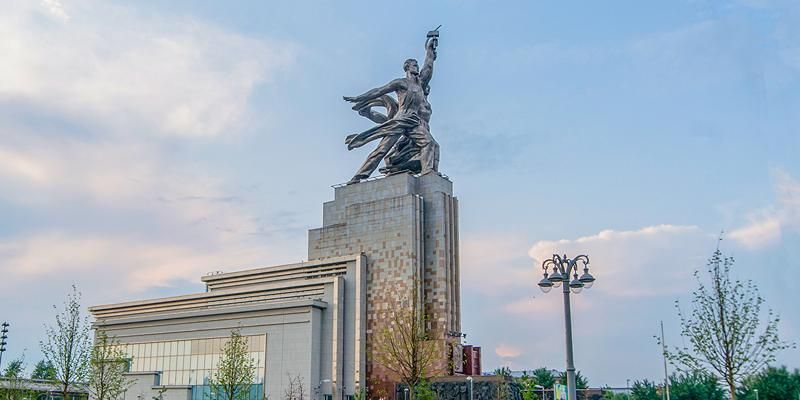
87 years ago, on May 25, 1937, the Worker and Kolkhoz Woman statue was unveiled at the World’s Fair in Paris, causing a real sensation. To mark this special day, VDNKh talks about how the monumental composition by Vera Mukhina was created.
Huge and light
Worker and Kolkhoz Woman is an outstanding piece of monumental art, one of the symbols of VDNKh and the capital, as well as the official emblem of the Mosfilm Studio. The huge and extraordinarily light sculpture was installed on the USSR Pavilion designed by architect Boris Iofan.


The 24.5-meter composition was made from specifically developed thin-sheet corrosion-resistant steel. It was placed on a pedestal serving as a pavilion tower 35 meters high. The sculpture was seen from every corner of the World’s Fair.
The idea and first model was created by architect Boris Iofan, who won the competition. According to some surviving records, the artist was inspired by the image of the ancient sculptural pairing of the tyrannicides depicting Harmodius and Aristogeiton standing next to each other with swords in their hands, as well as the Niké of Samothrace sculpture.
The winner of the monumental composition competition was the project presented by sculptor Vera Mukhina. The Worker and Kolkhoz Woman monument is her magnum opus.


Fruit of joint work
Even before the final approval of the project, the Metal Structures Division of the Department for the Construction of the Palace of the Soviets was tasked with designing the Worker and Kolkhoz Woman sculptural group in October 1936. It was supposed to be assembled from individual sheets of steel with large blocks hung on the main frame weighing almost 50 tons manufactured by the Stalmost factory. The elements of the statue and its complete assembly were carried out by the Central Mechanical Engineering and Metalworking Research Institute (currently Central Mechanical Engineering Research Institute).
In March 1937, assembly of the statue began in the factory yard. Vera Mukhina personally adjusted the final installation of the shell structures on the main frame. The construction of the monument involved 160 people, and the statue was assembled using a 35-meter crane with a reach of 15 meters, with workers engaged in three-shift basis.

The gargantuan task of a close-knit team of sculptors, engineers and workers was crowned with success. The sculptural group, disassembled, was loaded onto 27 railway platforms, and a team of 25 engineers and workers went to France to carry out installation work.
The installation of the sculpture in Paris was also completed in record time-the work took only 11 days. Visitors were fascinated by this colossal monument, which received the highest fair award.
VDNKh jewel
After the fair in Paris, the sculpture was transported back to Moscow. and installed on the alley in front of the main entrance to the All-Union Agricultural Exhibition (currently northern entrance of VDNKh) In 1939.
From 2003 to 2009, the Worker and Kolkhoz Woman composition was under restoration, while its low pedestal was replaced with a multi-story pavilion inspired by the 1937 original design of Boris Iofan. The restored sculpture was installed on its roof in 2009.
