Moscow metro: the beginning. How the Sokolnicheskaya line was designed and built
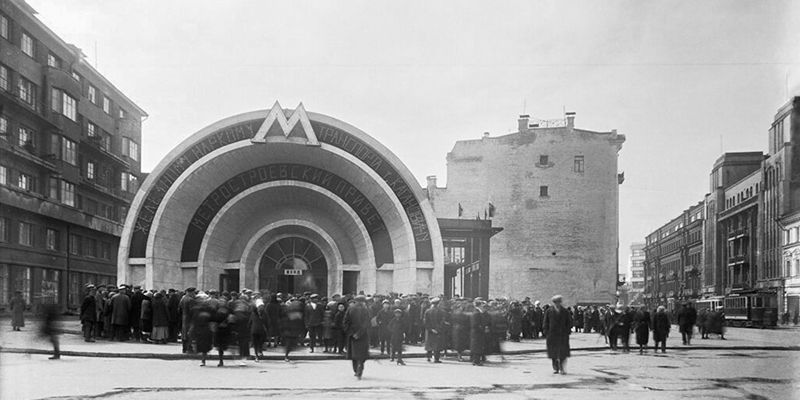
About 300 stations (counting the Moscow Central Circle), paying for your ticket with your smile, the longest underground circle in the world, and high-tech Moskva-2024 trains: the Moscow Metro today has all that, and more. It has long outgrown being just a mode of urban transport: on their route, passengers can have a coffee, attend an exhibition, a guided tour, or a music concert. 89 years ago, metro builders and Muscovites could not even imagine something like that.
The first metro line in Moscow, the red line, opened on May 15, 1935. Trains started running underground from Sokolniki station to Park Kultury station. The line also branched off to Smolenskaya. But that was not the only thing Sokolnicheskaya was the first at. Vorobyovy Gory was the first underground station in the world to be built on a bridge spanning a river. The Sokolnicheskaya line was the first one to reach TiNAO; Potapovo station being built now will be the Moscow Metro’s first above-ground station that has heating.
On the Moscow Metro’s birthday, let us talk about how the Sokolnicheskaya line began and grew.
From the first shovel strike to innovative approaches
The idea to give Moscow an underground train system first appeared in the latter half of the 19 th century. The first designs went through endless adjustments, and remained on paper. The real work only began in the early 1930 s, when street trams stopped being enough for the ever-growing traffic. The design for the first metro construction stage, from Sokolniki station to Park Kultury station, branching off from Okhotny Ryad to Smolenskaya, was approved in November 1931.
After that, construction workers started digging the future span going from Sokolniki to Gavrikova Ulitsa (design name of Krasnoselskaya). They worked with shovels, beginning from 13 Rusakovskaya Street. That first shaft was the start of the great Moscow Metro project. The did not plan on digging tunnels deep underground, but as it turned out, shallow stations were not always possible to build.


.jpg)
That was the first underground railway in the country, so their engineering experience was lacking. Invited foreign experts offered designs similar to Berlin, Paris and London metro systems. None of them were suitable for Moscow: the soils in European cities were more uniform, while in Moscow they were more challenging, highly water-saturated, and carrying dense urban developments. Shallow tunnels were impossible to dig in some areas, while in others, digging deep was out of the question. Ultimately, they decided to mix construction methods: cut-and-cover for shallow stations (digging an open pit, building station structures, then filling the pit back in), and tunnel boring (shield driving) -for deep ones. That was a novel approach 
Quicksands, manpower shortages, and other challenges
Construction workers were in short supply. Moscow soils were full of underground rivers, quicksands, fissures, while the metro builders had only wheelbarrows, picks and shovels to work with. By the summer of 1933, after first miners had arrived to the construction site, they were finally able to reach the required depth and start boring tunnels. But manpower shortages persisted.
“That was when they decided to use workers from Moscow factories. Komsomol members were the driving force behind the metro construction. It has become a school of life for many. Hundreds of workers got new professions after the project had been finished, becoming the metro maintenance force. Others went on to build new underground spans,” says Mikhail Shulga.


As works accelerated, technologies also developed. New driving shields appeared, tunnel boring was being done quicker. To handle quicksands (as happened, for instance, when building the Krasnye Vorota station escalator tunnel), they used the soil freezing method, novel for that time. Ultimately, the middle span, including Krasnye Vorota, Chistye Prudy, Lubyanka, and Okhotny Ryad stations, was laid down deep underground. Sokolniki, Krasnoselskaya, Komsomolskaya, Kropotkinskaya and Biblioteka Imeni Lenina stations, on the other hand, were shallow. The first trial train run took place in 1934, three years after the first shaft had been built.
.jpg)

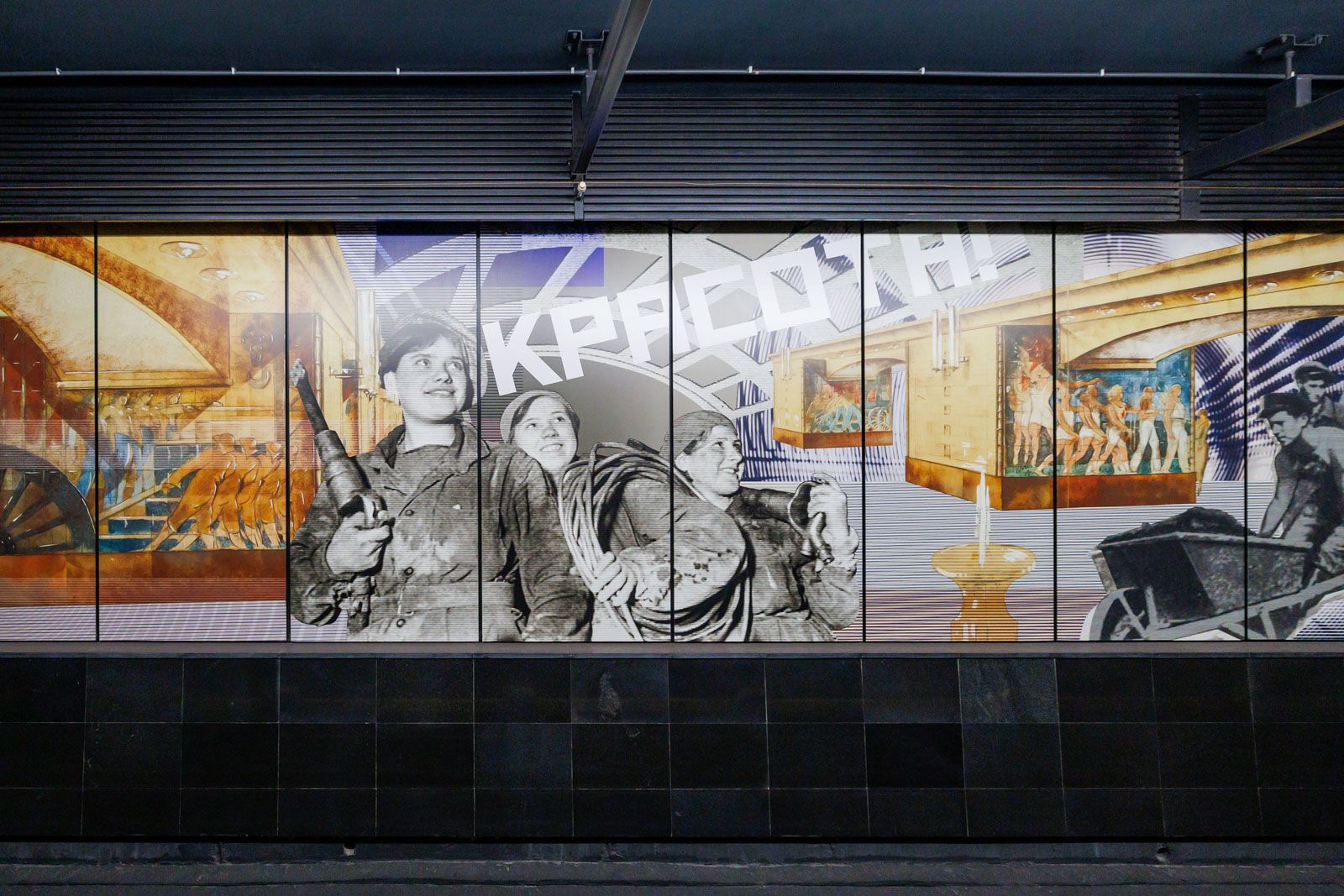
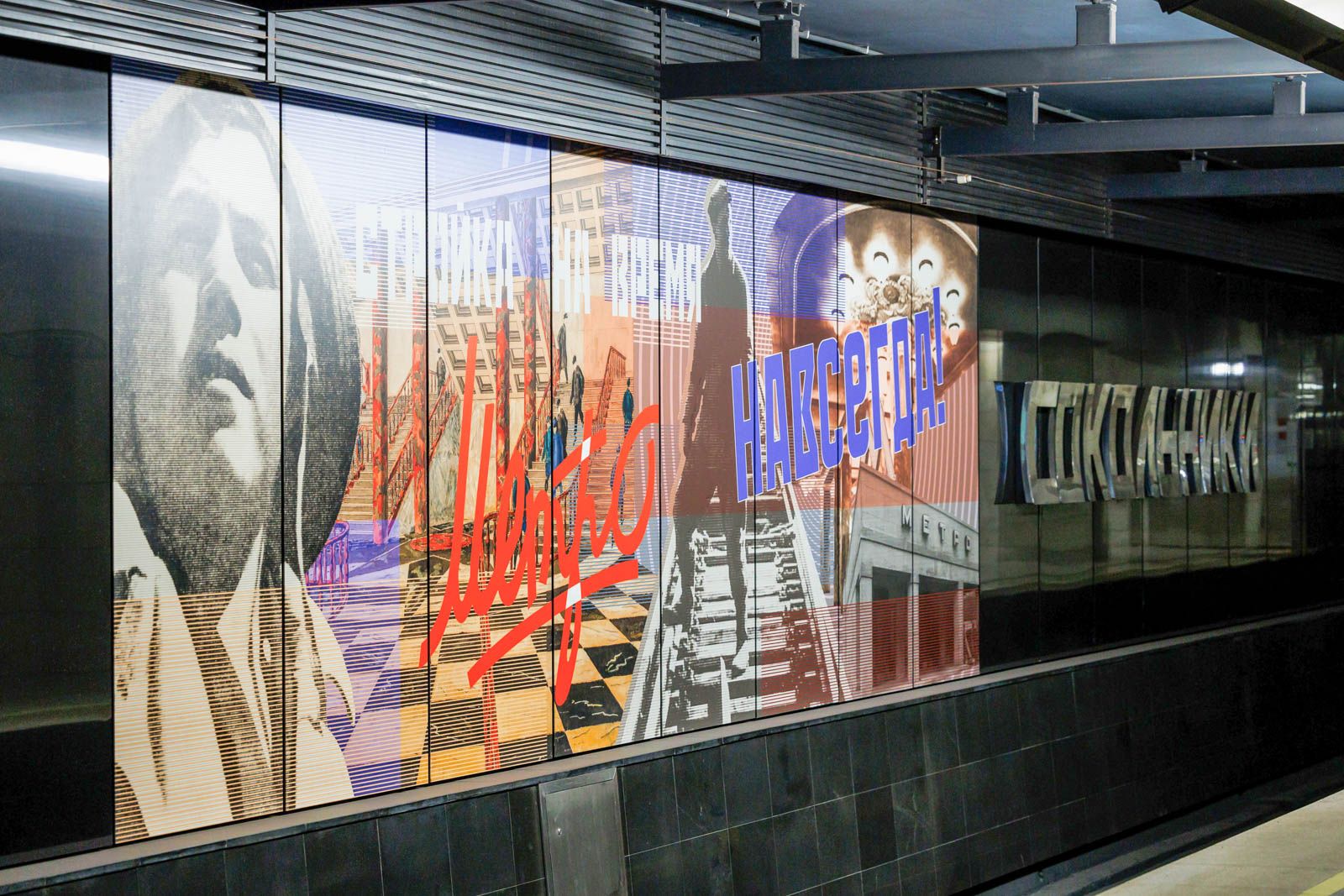
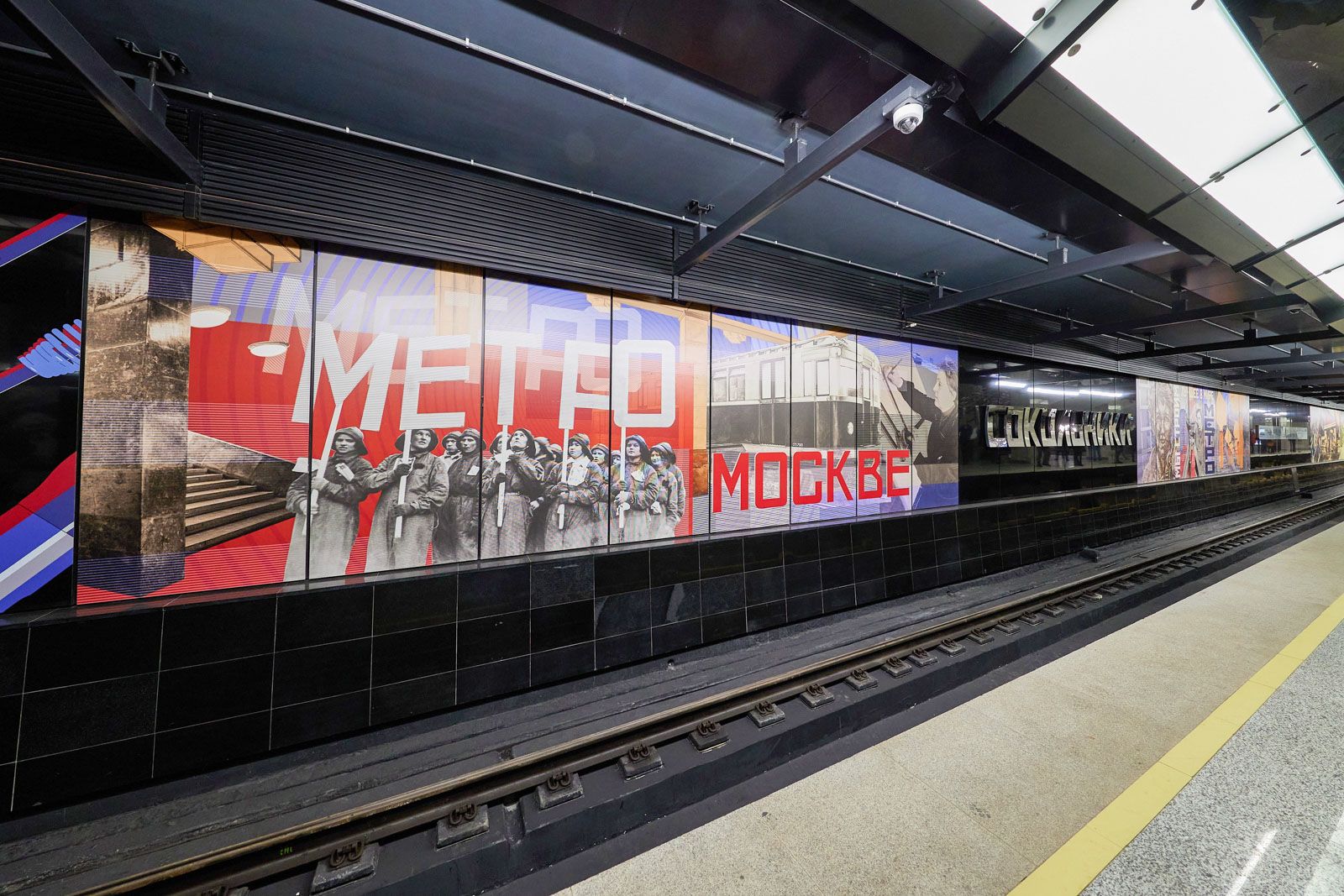
Metro stations were originally designed like underground palaces for people. Platforms and lobbies were lined in marble and granite mined in quarries around Crimea, the Caucasus mountains, Karelia, and the Urals. Each station design has its own theme. Komsomolskaya, for example, has a maiolica panel depicting heroic efforts of young Komsomol members. It was not by chance that the station became a monument to the first metro builders. It was built using the cut-and-cover method under three railway stations and tram tracks. They have to turn the square into a pit without stopping the traffic. The pit was just a couple of meters away from the Kazansky Railway Station’s foundation. Other challenges waited under the surface: communications, the Olkhovka river, quicksands. Modern-day architects also have paid tribute to the first metro builders, by the way. The Big Circle Line Sokolniki station opened in 2023 features portraits of the 1930 s workers and fragments of propaganda posters from that period.




Red to honor achievements of Soviet scientists
On May 15, 1935, 13 metro stations opened their doors for passengers. Sokolniki, Krasnoselskaya, Komsomolskaya, Krasnye Vorota, Kirovskaya (now Chistye Prudy), Dzerzhinskaya (Lubyanka), Okhotny Ryad, Biblioteka Imeni Lenina, Dvorets Sovetov (Kropotkinskaya) and Park Kultury stations were on the Kirovsko-Frunzensky diameter. The Arbatsky radius branched off it at the Okhotny Ryad-Biblioteka Imeni Lenina section. Later, it was integrated into the Filyovskaya line. It included Ulitsa Kominterna (Aleksandrovsky Sad), Arbatskaya and Smolenskaya stations. The first stage of construction covered over 11 kilometers in total. In 1938, the Arbatsky radius got extended to Kurskaya station, and separated from the Frunzensky diameter.

“While the metro was designed and built, Muscovites were not entirely convinced that this dubious project was worth so much effort. An underground railway? Preposterous! But as the construction went on, the public opinion changed. Closer to launch, they started getting curious. Prior to the launch, they were queuing for a ride on the wonder train. The metro construction was perceived as a victory of the Soviet science, another revolutionary achievement. That, among other reasons was why the line was coded red on the metro schematics,” shared Mikhail Shulga.


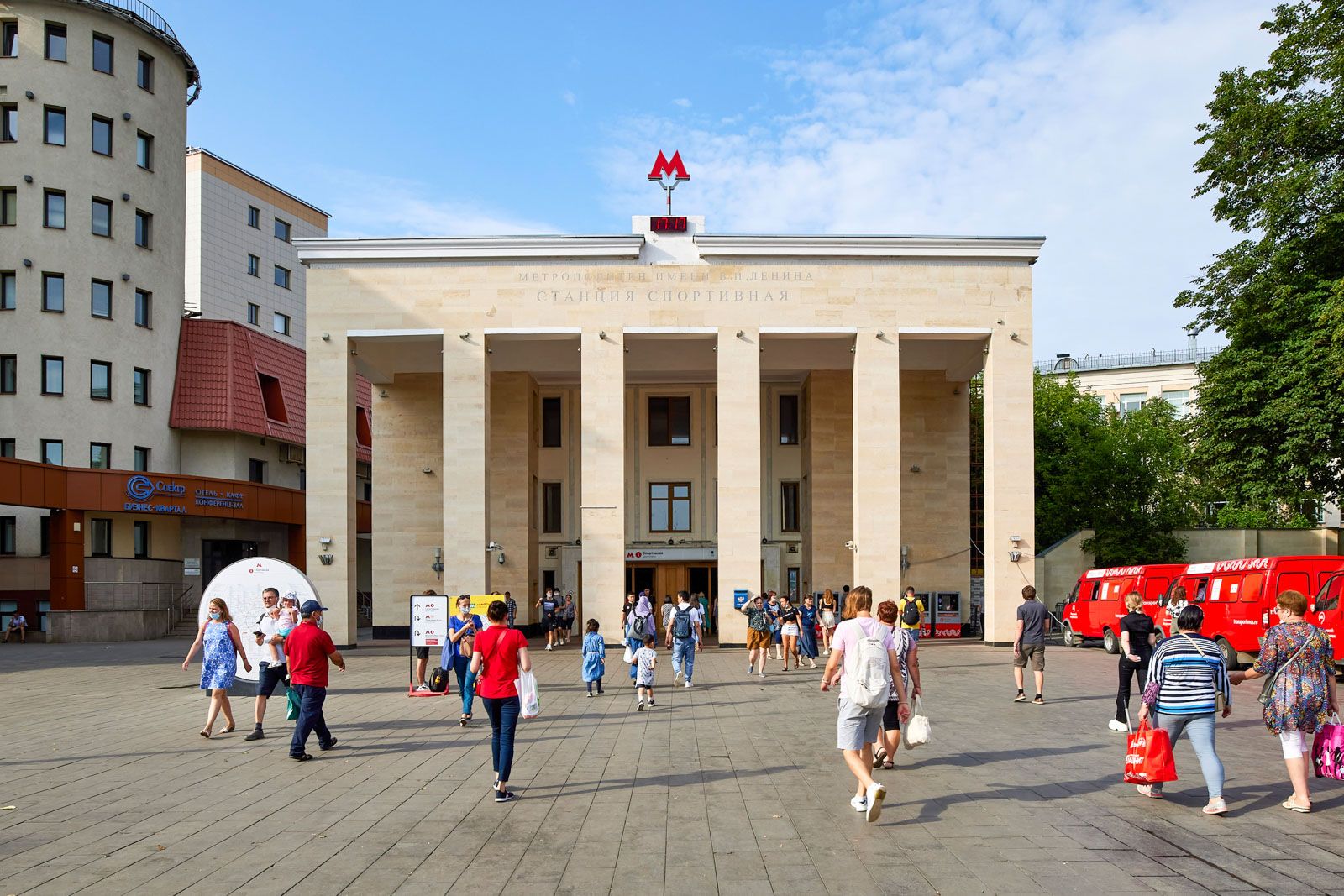
In 1957, the line was extended to Sportivnaya, providing transport accessibility to the Luzhniki Arena. Leninskiye Gory (Vorobyovy Gory) station, the first in the world to be built on a bridge spanning a river, opened two years later, along with Universitet. Prospekt Vernadskogo and Yugo-Zapadnaya stations joined the others in 1963. The latter was a great example of development foresight. The terminal station was located in the open field, next to Troparevo and Nikulino villages. Initially, it was surrounded by cow pastures, but as the neighborhood developed, Yugo-Zapadnaya became one of the busiest metro stations in Moscow. In 1965, the line extended further north, to Preobrazhenskaya Ploshchad station, in 1990-to Cherkizovskaya and Ulitsa Podbelskogo (now Bulvar Rokossovskogo) stations. That was when the line got its modern name, after Sokolniki, the first station built in Moscow.




The new life of the oldest line
The first Moscow metro line went through a construction boom in the last decade. Troparevo station joined it in 2014; in 2016, the Sokolnicheskaya line was extended to TiNAO, ending with Rumyantsevo station. It was the first one in the new administrative districts, and it set the record for being a terminal station for the shortest time in the Moscow Metro history. 28 days later it was replaced by Salaryevo. The latter made history too, as the 200 th Moscow Metro station.
In 2019, the red line was extended further, to Kommunarka. Filatov Lug and Prokshino stations are surface-level. Olkhovaya and Kommunarka are underground. For the first time, a metro line was aligned with a motor road (the Solntsevo — Butovo — Varshavskoye Motorway one). The first joint automotive and metro tunnel in Moscow was built at its intersection with Kaluzhskoye Motorway. In the future, you will be able to transfer from Kommunarka to the Troitskaya line.


Today, the Sokolnicheskaya line is over 40 kilometers long. It connects downtown Moscow to Bogorodskoye and Sokolniki, the Lomonosov Moscow State University on Vorobyovy Gory, Prospekt Vernadskogo, Troparevo-Nikulino and TiNAO.
Potapovo station will open in Sosenskoye settlement in 2024. It is going to be the 27 th station of the Sokolnicheskaya line. The construction is in its final stages, with metal structures assembly and the station façade perforated sheets and glass finish being underway.


Potapovo can also be called innovative: it is going to be the first heated above-ground metro station in Moscow. Heated air will be supplied by special ventilation systems. To keep the temperature inside comfortable, the station walls were insulated, with double glazing installed on track walls. Thanks to the panoramic glazing, the station will have lots of natural light. At night, Potapovo will serve as a “lighthouse” of sorts, thanks to its bright inner and outer lighting.