Sheremetev’s Grotto, Shchukin’s Theater and the Katyushas: Moscow parks preserve historical monuments
With the wooden house of Peter the Great, Grotto, decorated with shells from all over the world and the World War II partisans’ birch trees, the capital’s parks are a kind of archive. Old buildings, sculptures, alleys, ponds and monuments are hidden behind modern fences. They have legends attached to them and reveal reliable facts about the hobbies of famous Muscovites of past centuries, the life of Moscow residents or the exploits of Soviet soldiers. Marking the International Day for Monuments and Sites celebrated on April 18 since 1984, we are covering the most storytelling corners in Moscow that immerse visitors in history and demonstrate rare examples of architecture.


Tsar dachas
Our walk around the capital begins with residency parks that once belonged to Russian tsars. One of them is the Kolomenskoye Museum-Reserve boasting 16 architectural monuments of federal significance.
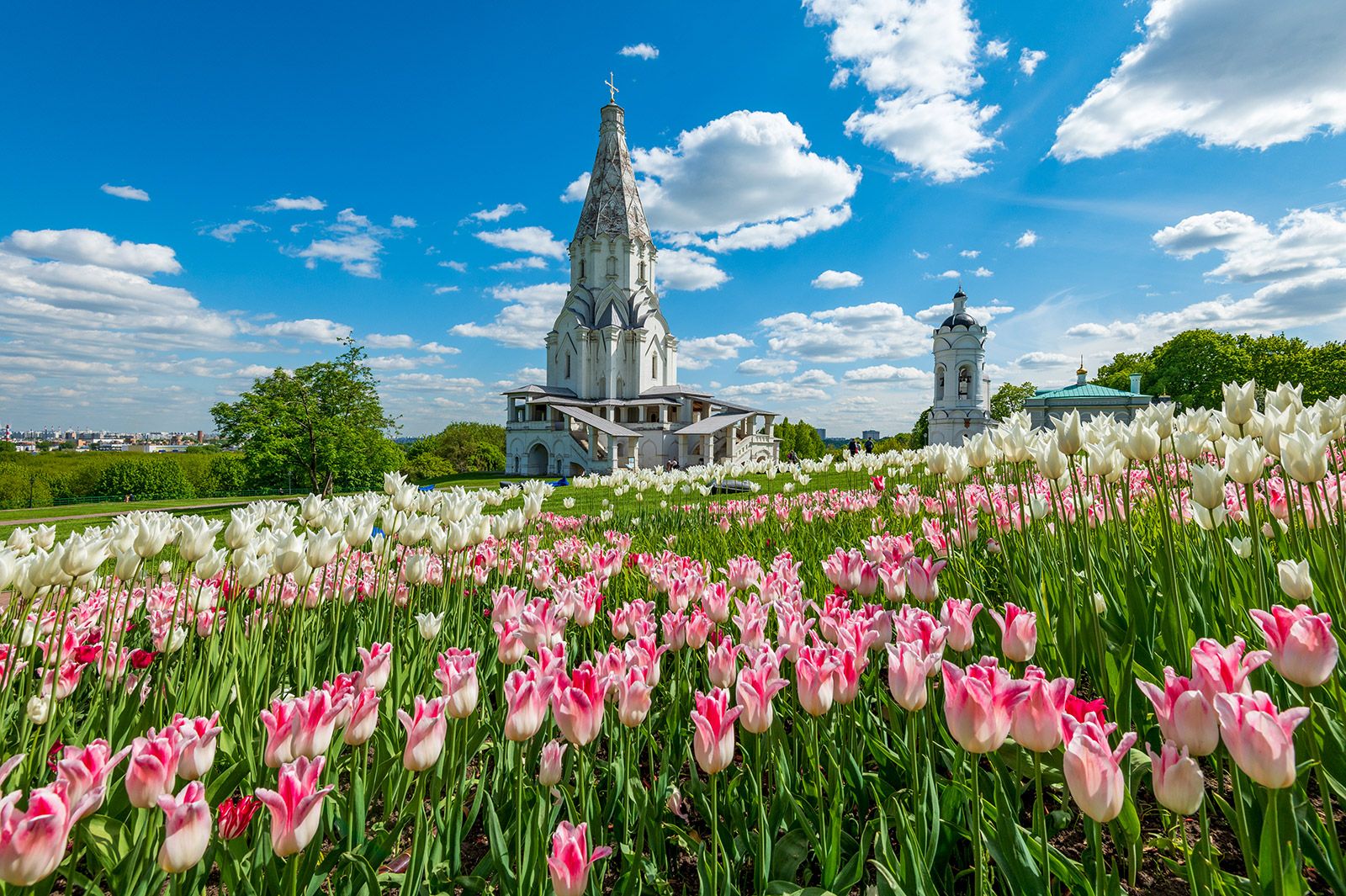
In 1532, Prince Vasili III, in honor of the birth of his son Ivan, who was later called the Terrible, founded the Church of the Ascension in Kolomenskoye. It was the first white-stone steeple church in Rus, which has survived to this day. It marked a new chapter in the history of Kolomenskoye.
About 100 years later, Tsar Alexei Mikhailovich ordered the Gosudarev Dvor (Tsar’s Court) to be built there. Builders erected the Church of the Kazan Icon of the Mother of God with blue domes, the Front and the Savior’s, or Rear, Gates with a barrel-shaped ceiling, the Vodovzvodnaya Tower in a similar architectural style and the golden-domed Cathedral of St. George the Victorious. The tsar fell in love with Kolomenskoye, and his son Peter spent his childhood in this residency. In 1924, the house of Peter the Great which was built for the emperor in 1702 at the mouth of the Northern Dvina was relocated to Kolomenskoye. It is now the only memorial museum focused on the Reformer Tsar in Moscow.


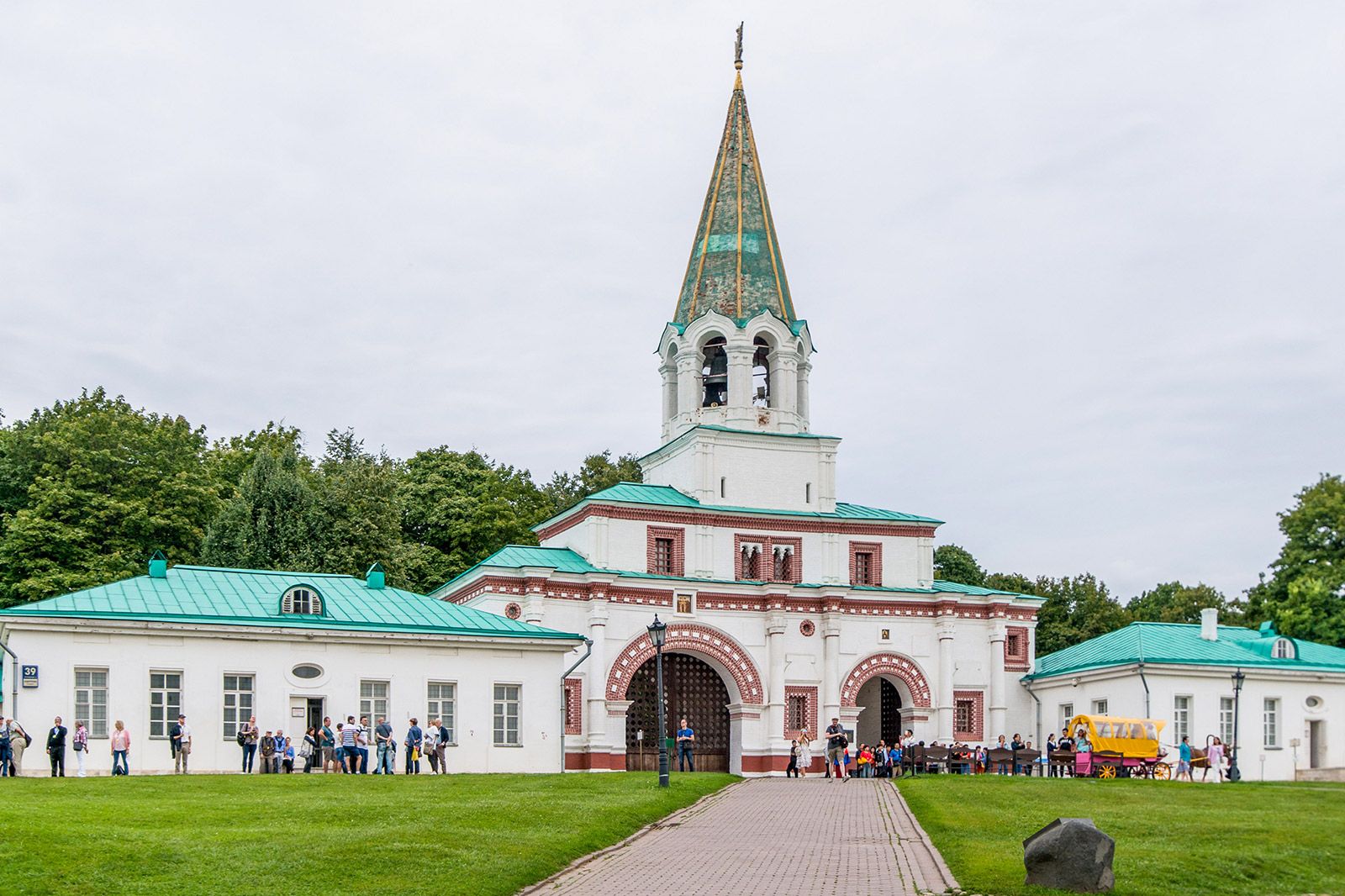
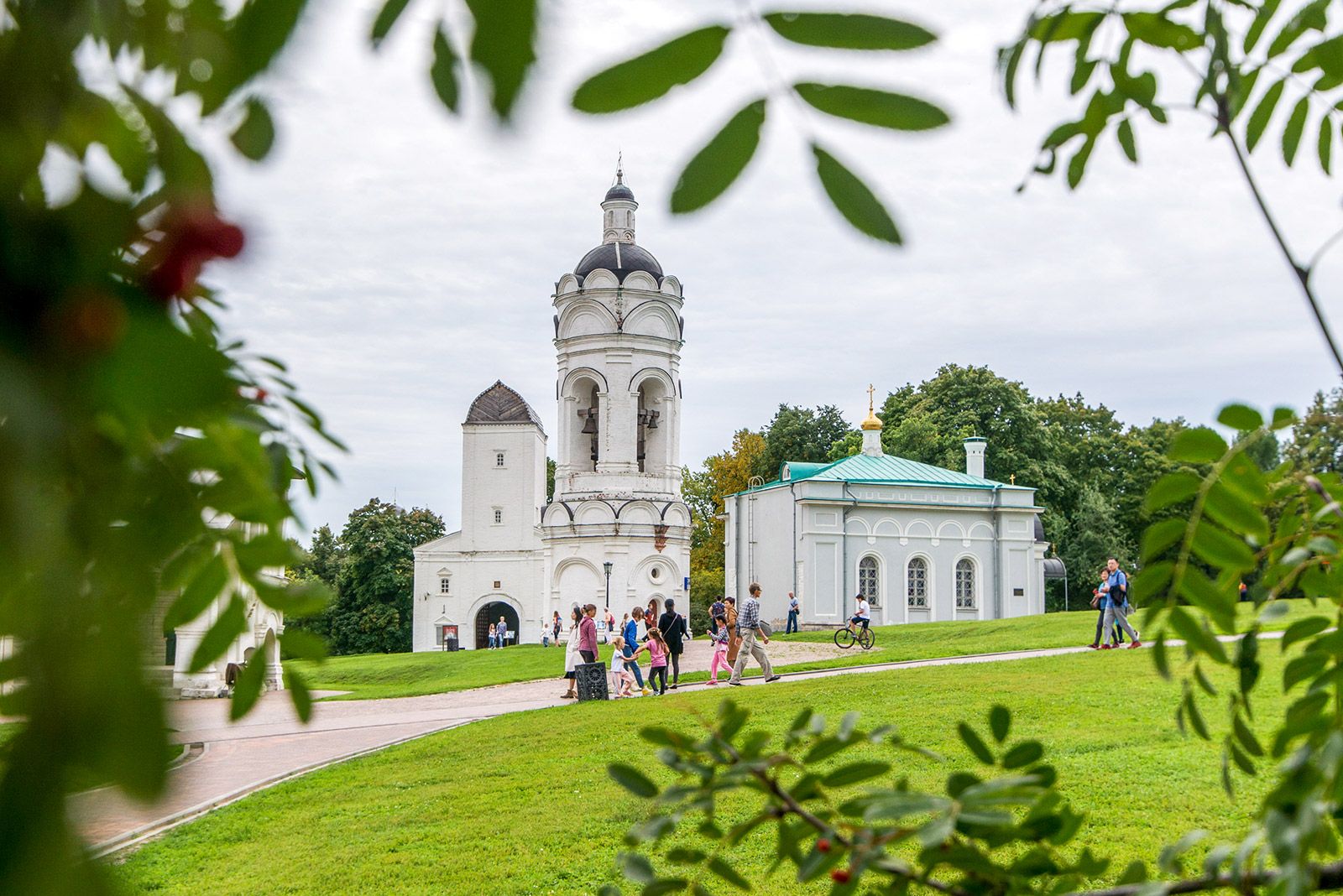

In the 1920s, Pyotr Baranovsky, the first director of the Kolomenskoye Museum-reserve, also an architect and restorer, decided to create an open-air museum of wooden architecture. An old church and towers from different parts of the country were transported to Kolomenskoye to save them from destruction. The idea fitted perfectly into the concept of Kolomenskoye. This Museum-Reserve is one of the kind in Moscow.

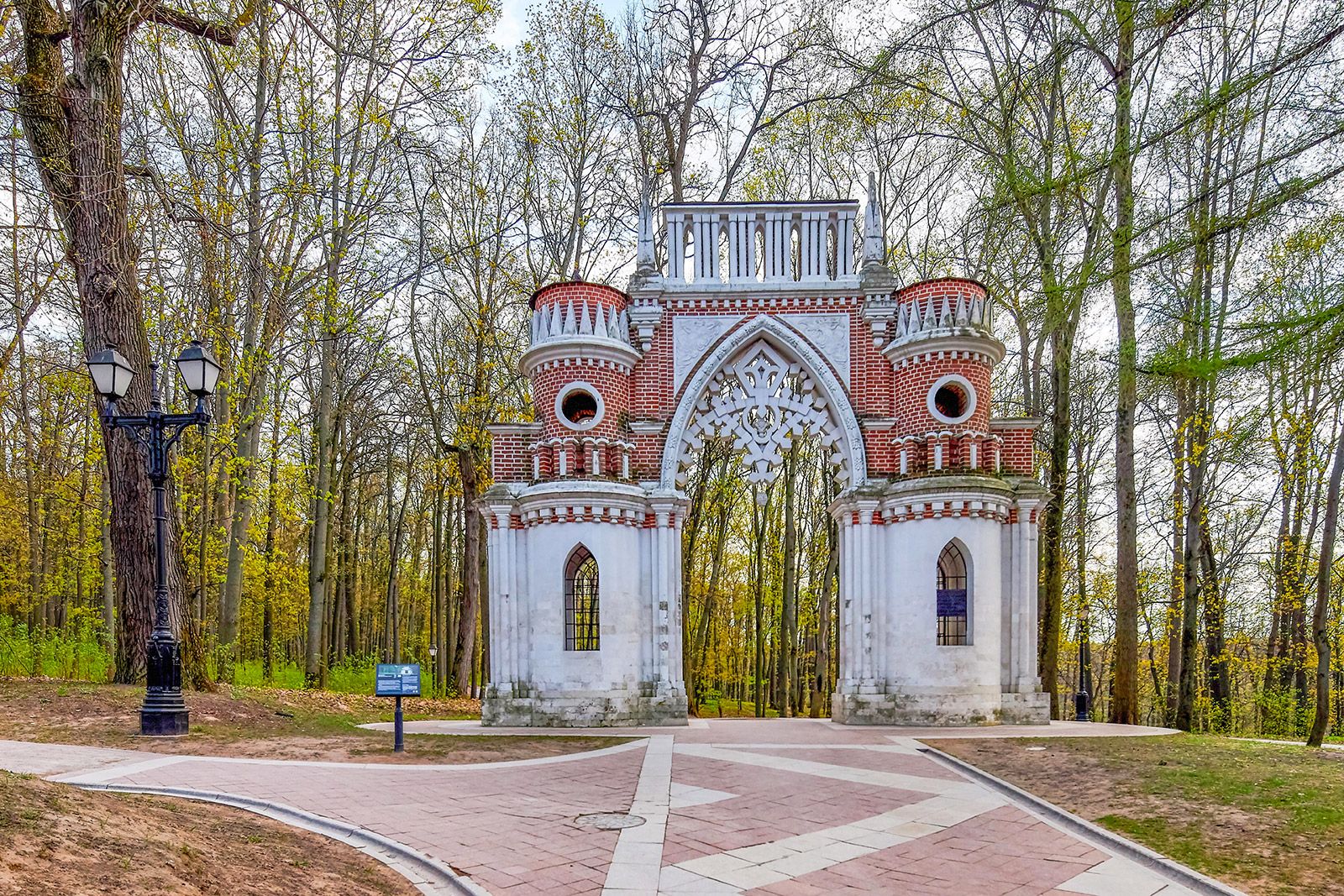
Another estate park is Tsaritsyno. In the 18th century, Catherine the Great chose this location for her future residency near Moscow and hired architect Vasily Bazhenov. He conceived a whole city and even managed to build the square Bread House with rounded corners to house kitchens with high reliefs in the form of loaves, the Ornate (Grape) Gates with round red-brick towers featuring an ornament in the form of grapes and a palace. The Empress approved of all his ideas except the fake gothic palace, which seemed narrow and dark to her. Having ordered to demolish the entire structure, Catherine the Great removed Bazhenov from the court and hired another architect, Matvey Kazakov. It is the classical building designed by him that we can admire today.


The Empress did not live in Tsaritsyno: the construction was stopped shortly before her death. In memory of Catherine the Great, Alexander Opekushin made a plaster sculpture in 1896, which traveled a long way through Armenia and now adorns the Catherine Hall of the Grand Palace. The 2007 bronze composition by Leonid Baranov reminds us of the architects: Bazhenov with the drawings in his hands and Kazakov holding a sword and cocked hat.


Sheremetev’s idea
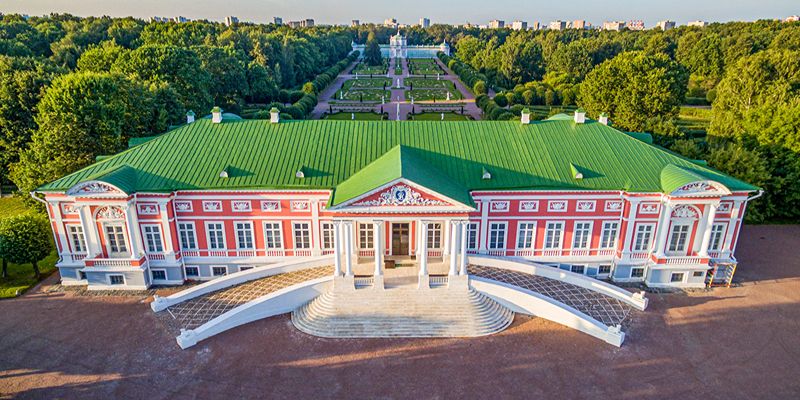
Another palace and park complex is Kuskovo, the former estate of the Sheremetev counts. In the 18th century, Pyotr Sheremetev came into his inheritance and ordered the construction of a complex of stone buildings inspired by the architecture of different countries and an entertainment park.
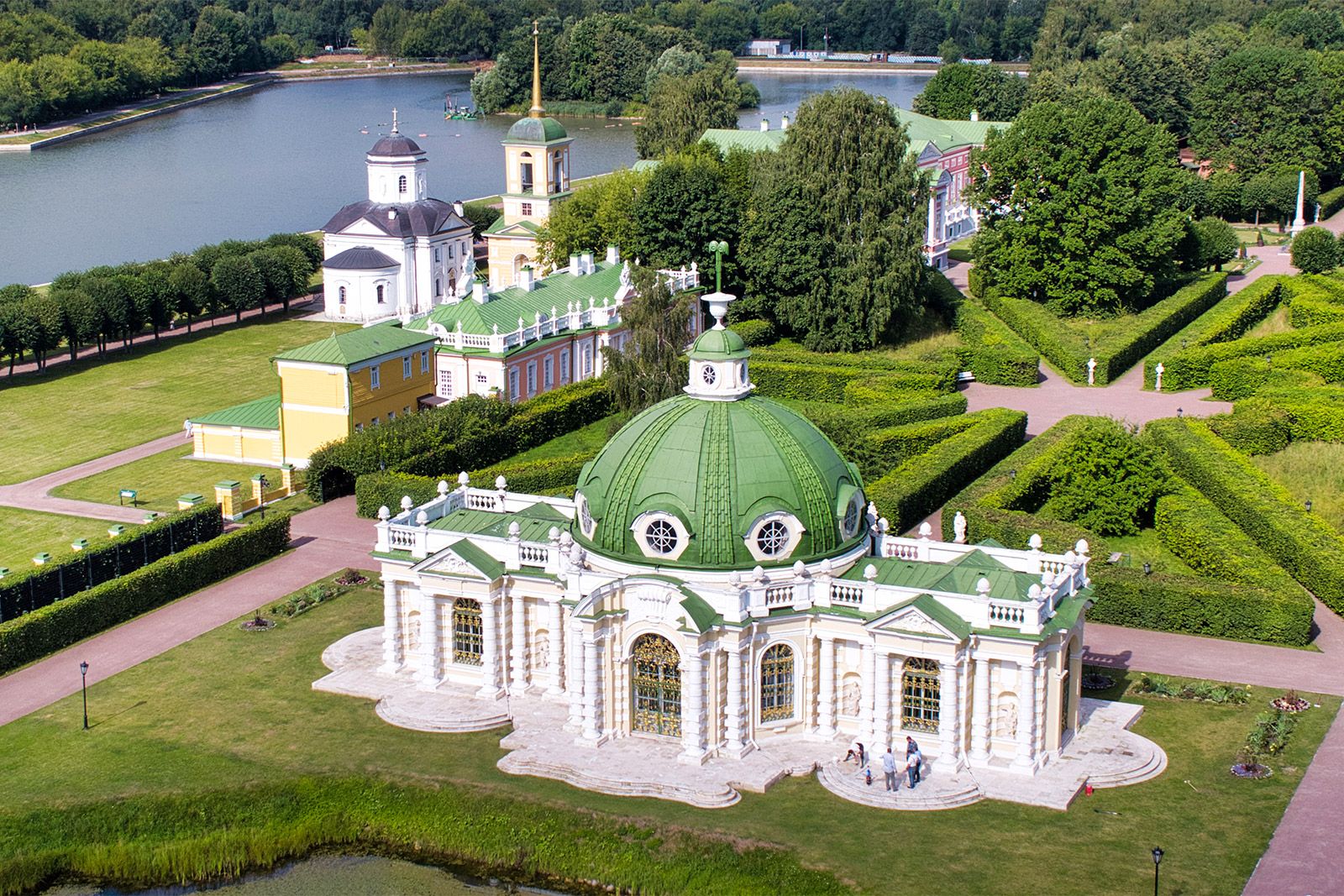
Interestingly, many of the count’s ideas have remained almost in their original form. For example, the classical palace has survived to this day. It is made of wood, but your eyes are deceiving you: the plastered walls look as if made of stone, the interior columns seem to be marble, and the papier-mâché vases resemble bronze. The Grotto Pavilion on the shore of the pond has been preserved. Its dome is crowned with a bowl from which water pours out and congeals on the façade, and the interior walls are decorated with shells from the shores of the Mediterranean Sea, Black Sea, Red Sea and the Sea of Japan.



The Italian House has also survived. Under Sheremetev, the first floor boasted rarities obtained during foreign travels: paintings made of beads and colored marble and antique statues. The second floor was used for small receptions. The purpose of each floor is indicated by the façade bas-reliefs. For example, mascarons in the form of profiles allude to the exhibition of rarities. In addition, the Dutch House, dedicated to Peter the Great and inspired by Western architecture, is intact: a stepped pediment with a copper roof tile, walls painted to resemble red brick and more than 10,000 tiles inside.
Visitors to the Kuskovo Memorial Estate can walk through the formal park resembling Versailles, divided into lawns and alleys and decorated with marble sculptures. The main composition is a column with a statue of Minerva, the goddess of wisdom, with whom Catherine the Great was associated in the 18th century.


Orlov, Lumiere and Golitsyn
The history continues in the capital’s gardens. One of them, the Neskuchny Garden, used to house estates of famous families, for example, the former estate of Prince Nikita Trubetskoy built in the 18th century. The name of the garden means “not boring”. It is believed that the prince came up with this name, as if preparing guests for upcoming entertainment. He prince organized balls and receptions, inviting the most noble and influential people of the city. The garden used to contain greenhouses, a labyrinth, a menagerie and a poultry house, which have not survived. Under Nikita Trubetskoy, the Hunting Lodge, a round red pavilion to watch the wild nature of Andreyevskaya Sloboda, was built. Now it is the shooting location for the TV show What? Where? When? The estate had a few owners, and almost each of them made some changes to its appearance. The Demidovs built the Alexandria Palace; the Orlovs erected the Bath House on the shore of the pond and the Summer House with columns, where, according to legend, Grigory Orlov secretly met with Catherine the Great.
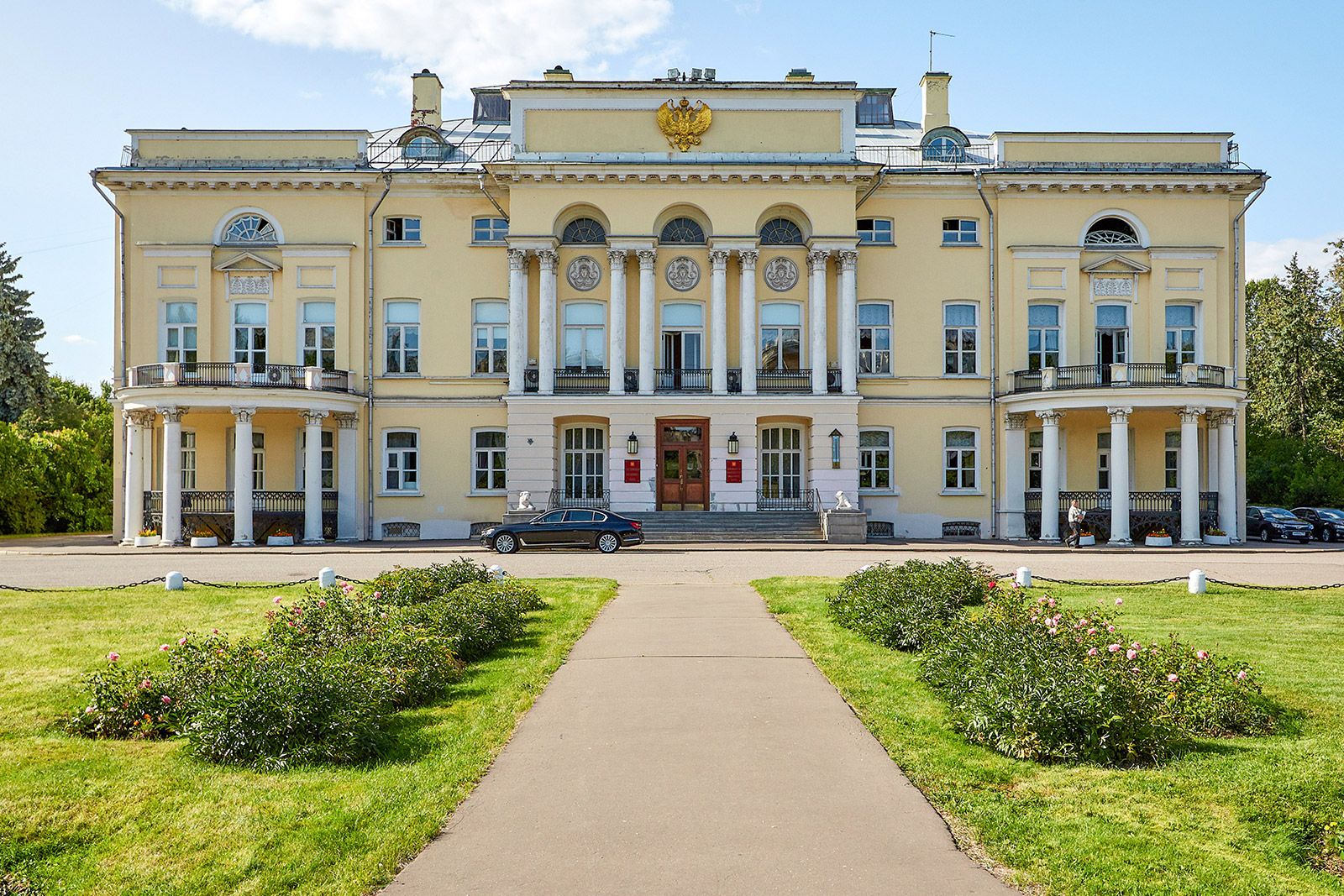


The Hermitage is another Moscow garden. In 2024, it turns 130. In 1894, the garden called the New Hermitage was founded by philanthropist Yakov Shchukin for art lovers. The entrepreneur ordered a theater of the same name to be built and electricity to be installed. The New Hermitage became an iconic location. In 1898, it hosted the premiere of the play Tsar Fyodor Ioannovich by A. K. Tolstoy and later The Seagull and Uncle Vanya by Chekhov. In the early 20th century, the famous illusionist Harry Houdini performed his stunts in the New Hermitage during his tour in Russia. It is also the location where the Lumiere brothers’ silent film The Arrival of a Train was publicly shown for the first time. Today, the Hermitage Garden is a protected garden art monument. It has flower beds and alleys decorated in the English style: the plants are arranged in beautiful geometric shapes and there are garden cottages — openwork gazebos made of cast iron elements.


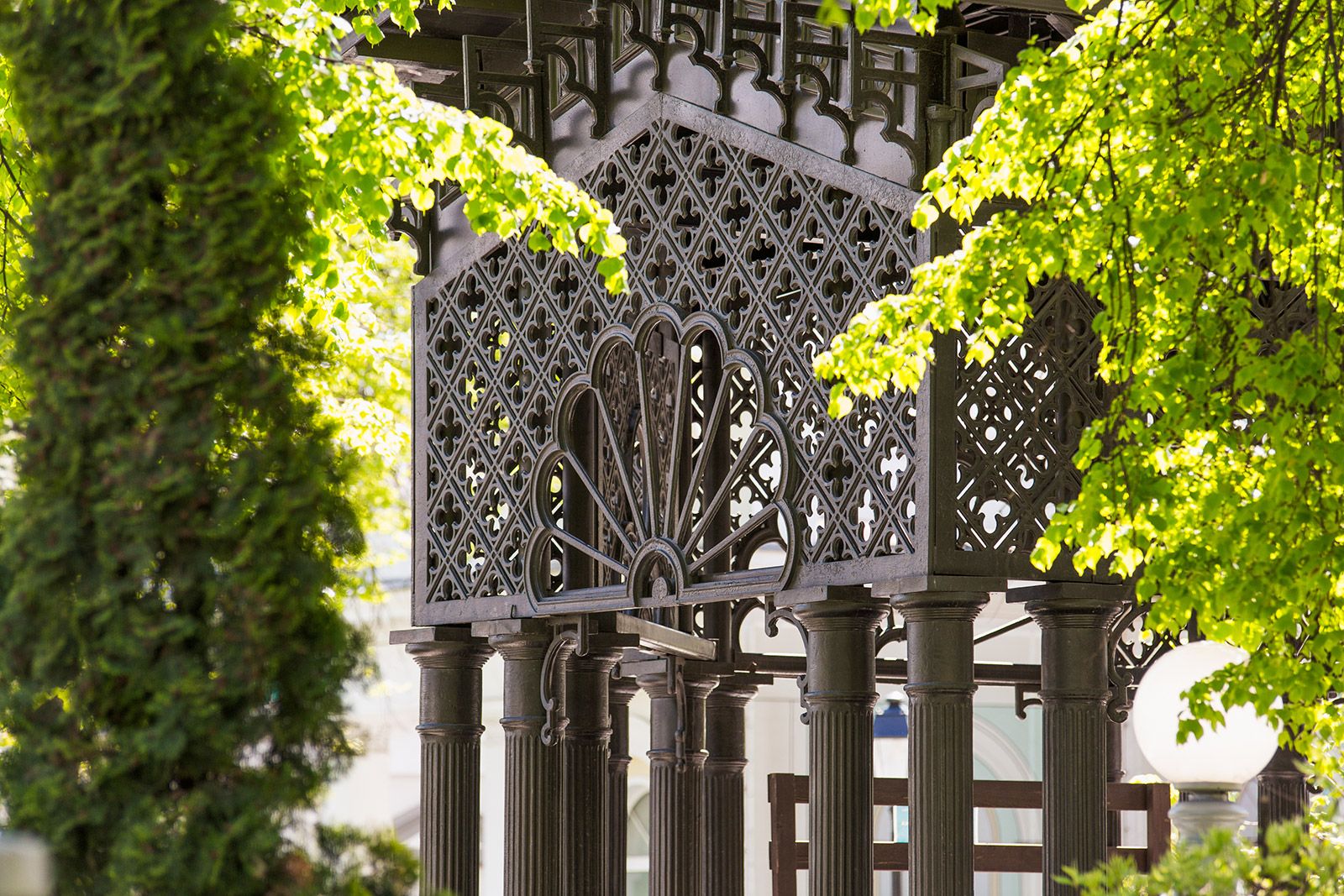
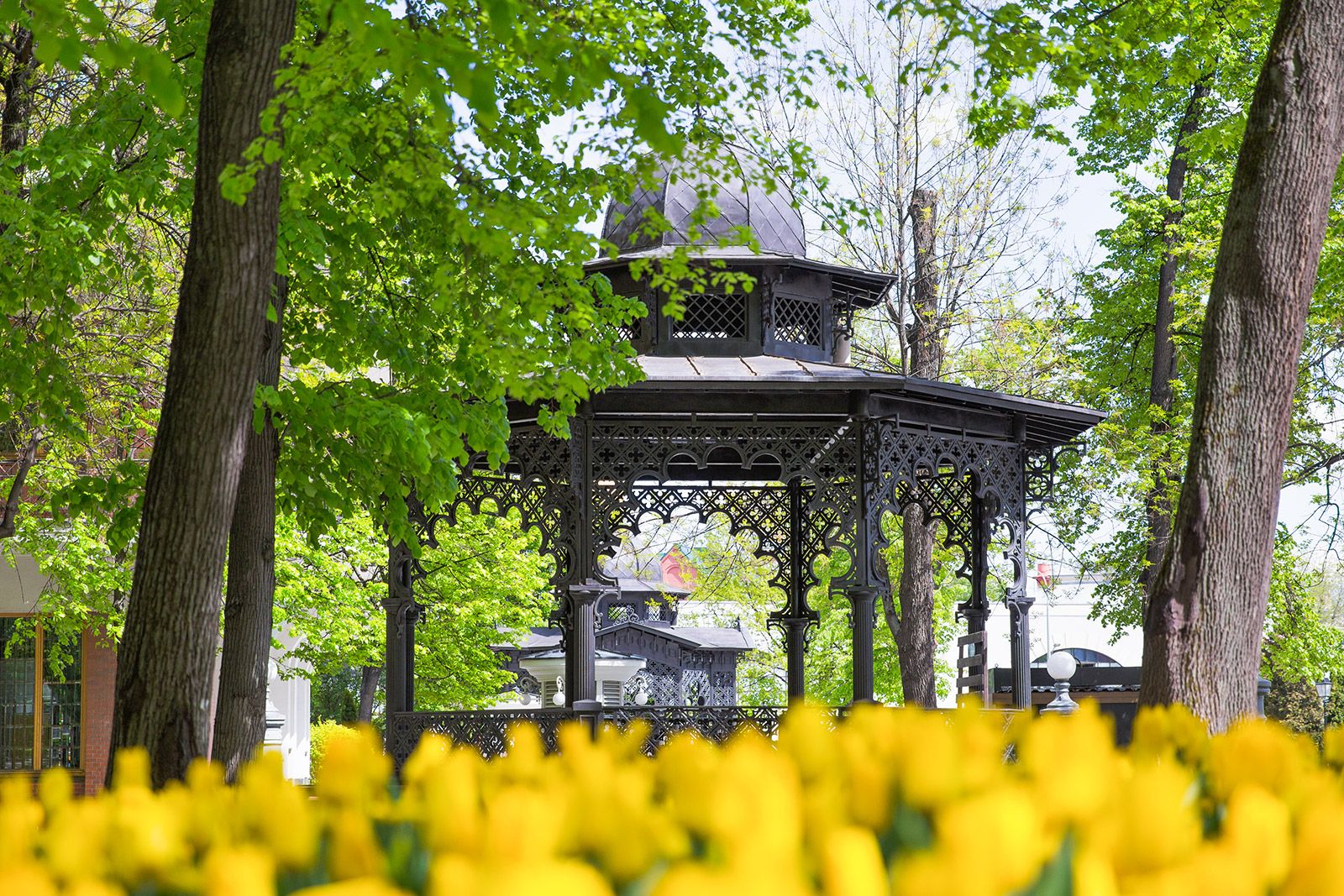
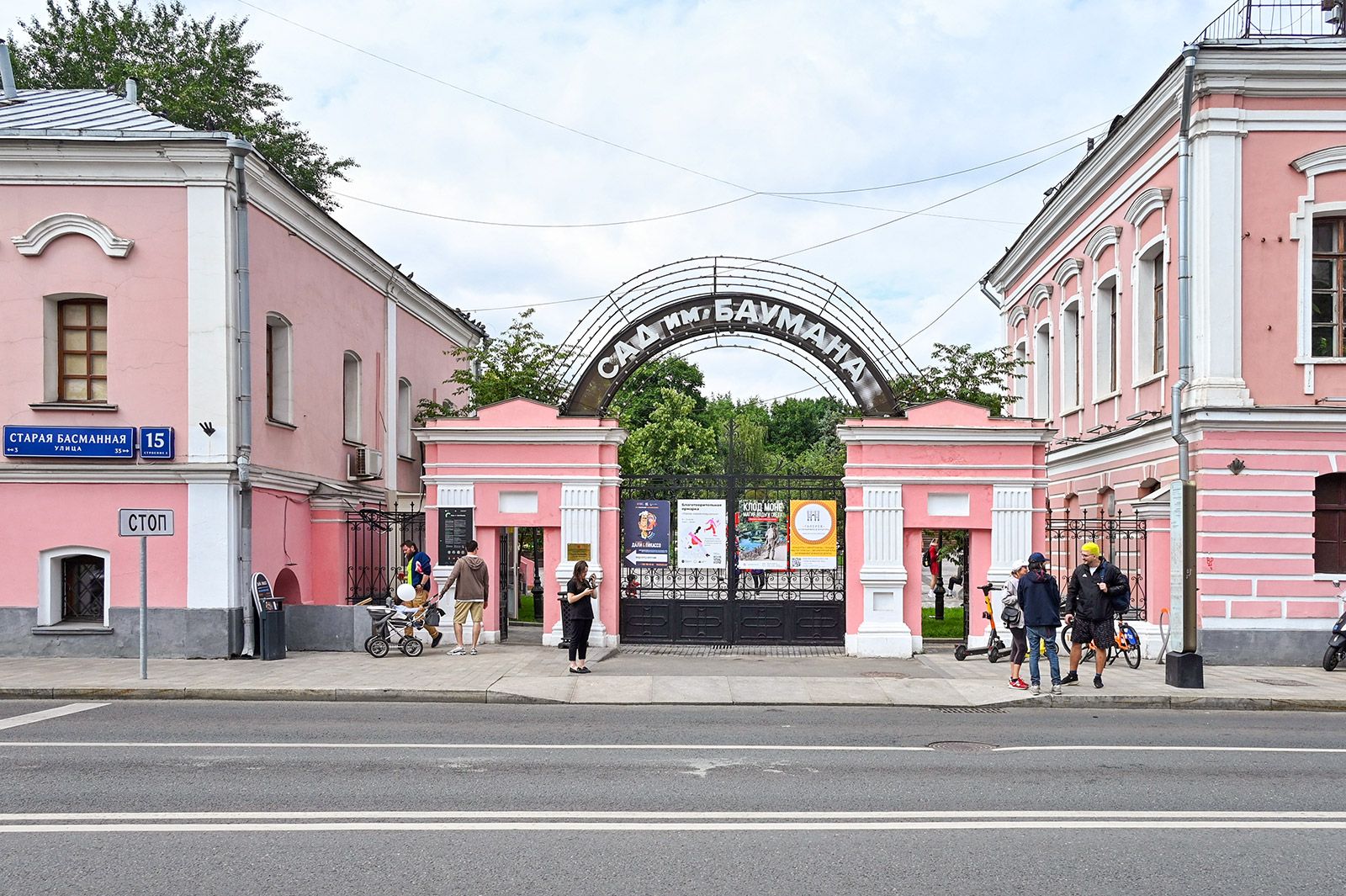
The Bauman Garden is a regional garden art monument. It is named after Nikolay Bauman, a high-rank member of the Bolshevik Party. The garden within its boundaries opened in 1920 following the unification of several estates including those that formerly belonged to Prince Mikhail Golitsyn and merchant Nikolai Stakheev. The historical ensemble includes several buildings: a house with the 16th-17th century chambers, a master house and a fence connecting both them and a service wing in Staraya Basmannaya Street. After its restoration in 2023, the stone service wing regained original plaster moldings and ocher color. The garden includes the Belvedere Grotto of rough nature-like masonry as if it was randomly composed of stones. It was part of Stakheev’s estate. Belvedere opened its doors to visitors after it was restored in 2022.


Military glory sites
Leafing through the pages of history, we reach the Great Patriotic War. In December 1941, Soviet troops launched a counteroffensive near the borders of Moscow to defend the capital. The line of defense passed through the area that would later become the Fili Park. The enemy did not manage to breach the line, but the army was preparing for battle, so long-term and reinforced concrete firing points — round pillboxes —were installed everywhere. Soldiers hid inside them and fired through a narrow opening. These structures can be seen in the park today.
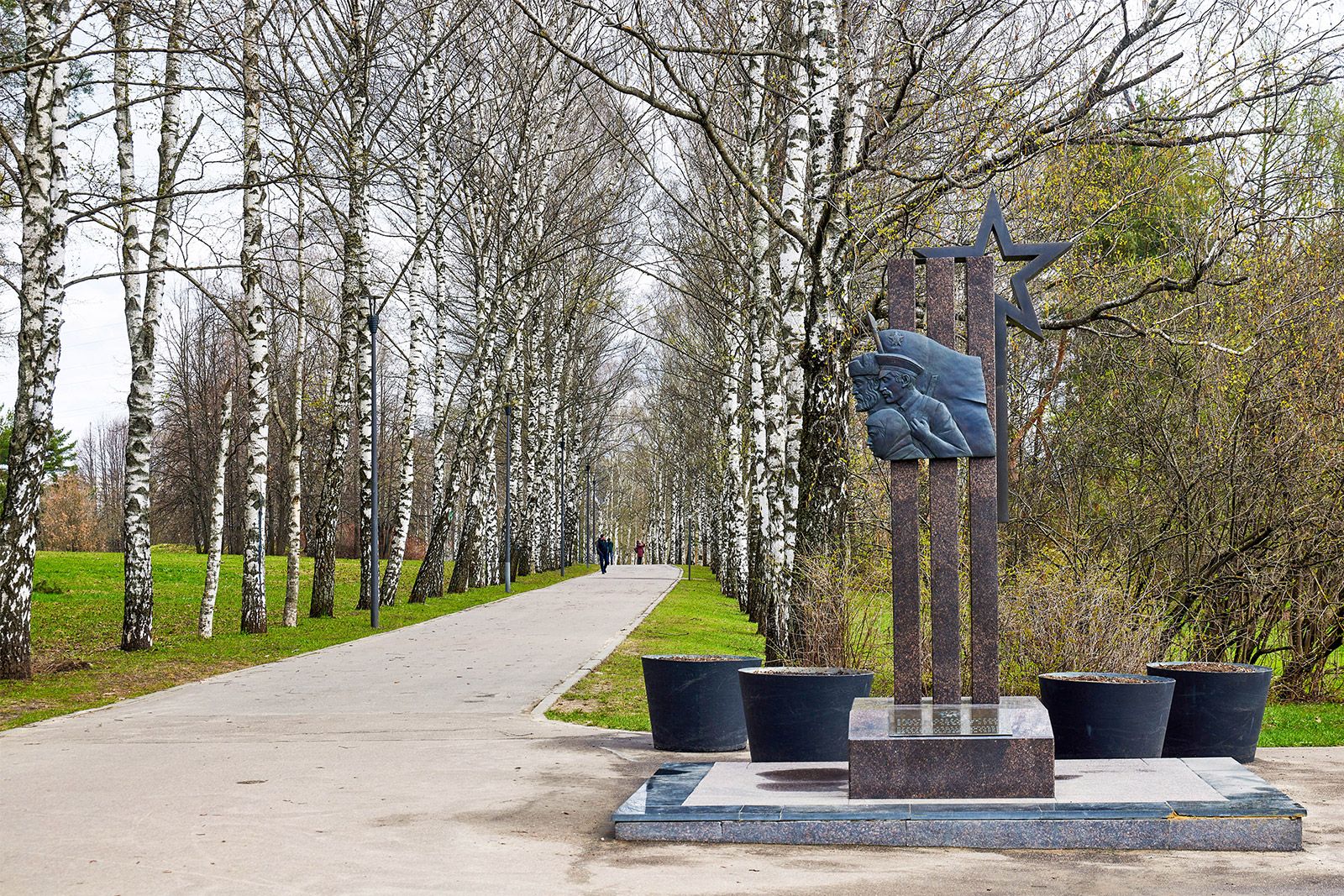
The 50-Letiya Oktyabrya Park in the vicinity of Vernadsky Prospekt includes a military glory monument: it is a birch alley of dedicated to partisans of Moscow Oblast. The trees were planted by veterans in 1967. In 2015, a granite stele with a bronze star at the top and a bas-relief depicting partisans was erected at the entrance to the alley.


The 50-Letiya Oktyabrya Park in the vicinity of Vernadsky Prospekt includes a military glory monument: it is a birch alley of dedicated to partisans of Moscow Oblast. The trees were planted by veterans in 1967. In 2015, a granite stele with a bronze star at the top and a bas-relief depicting partisans was erected at the entrance to the alley.
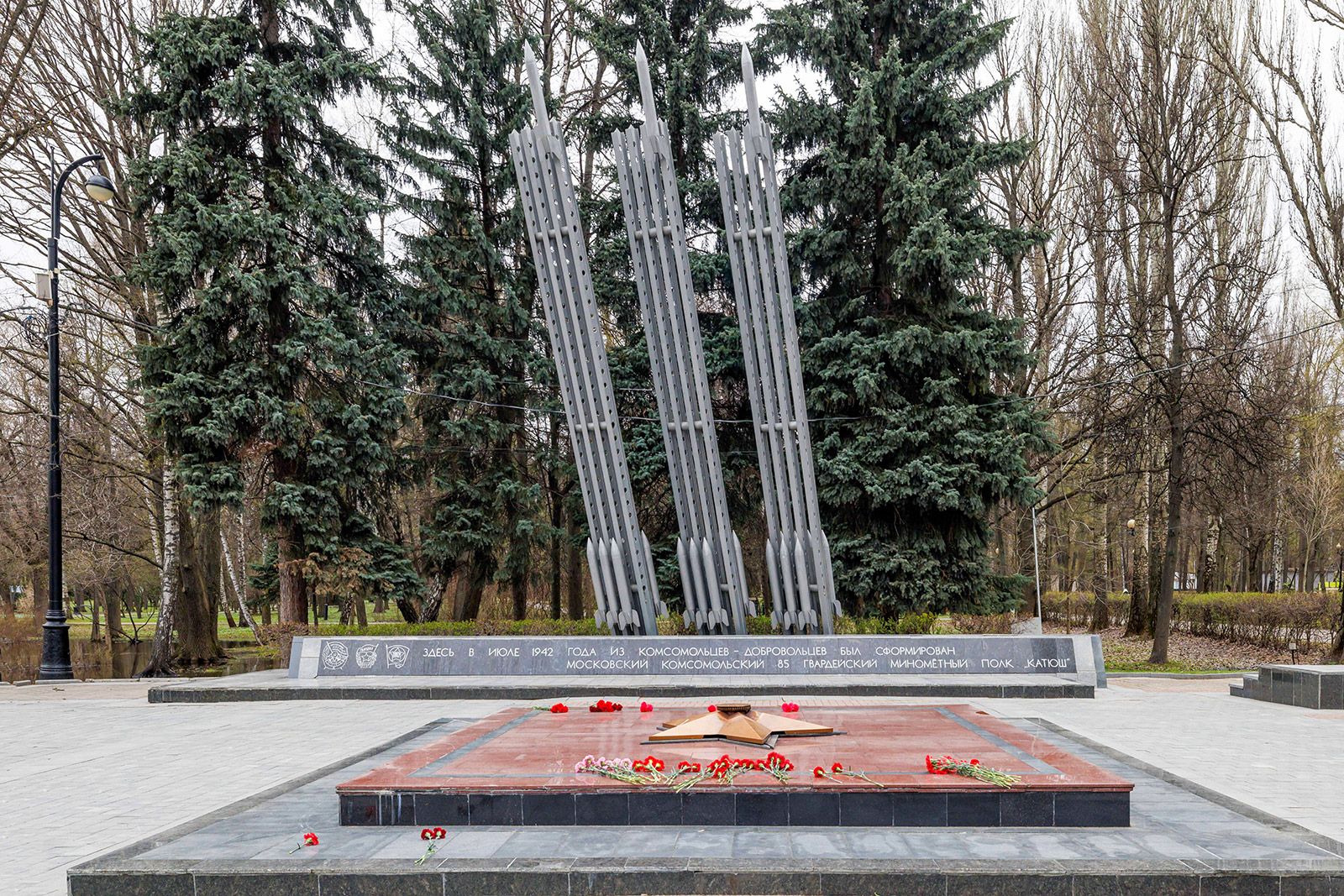
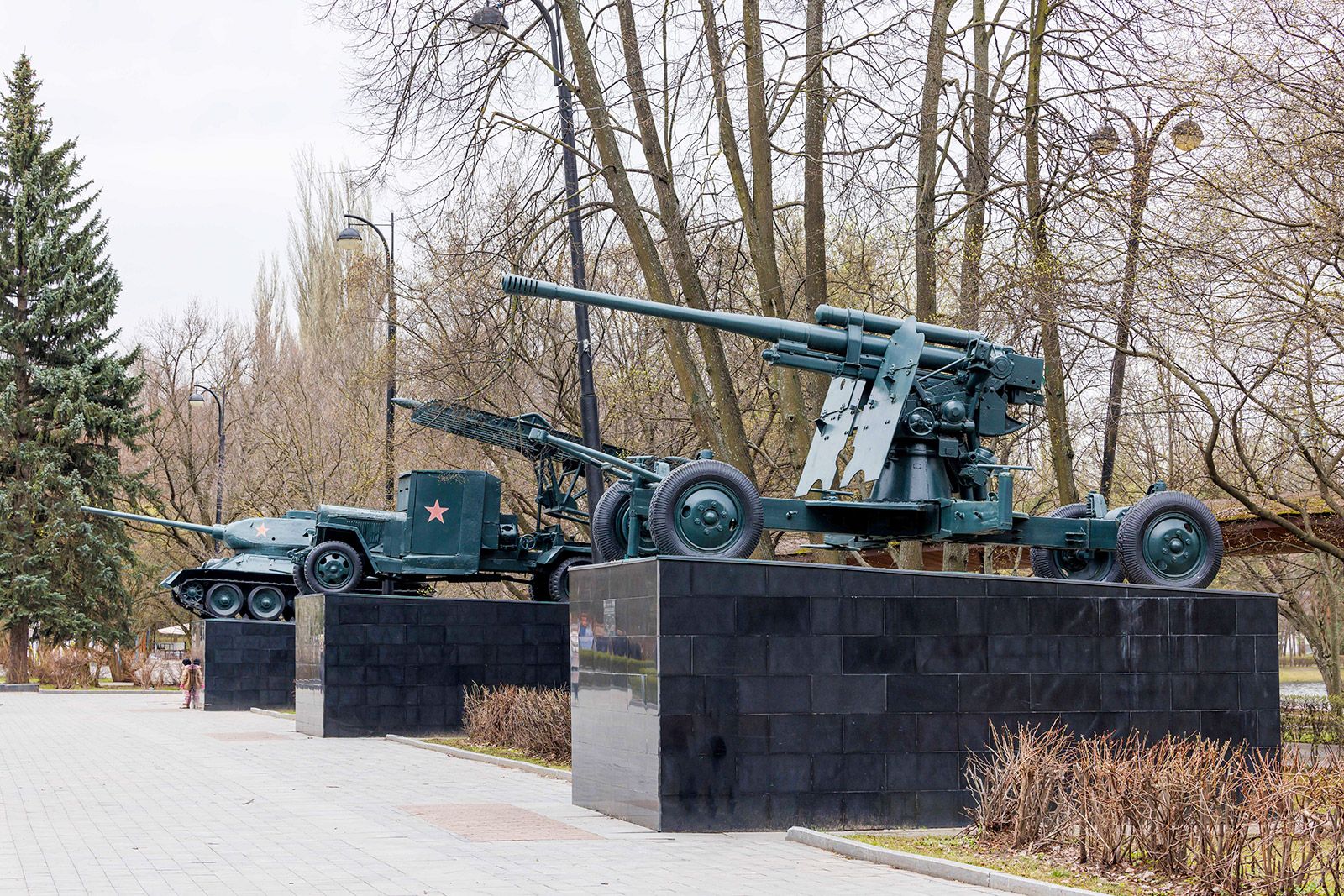
The Izmailovsky Park also brings back memories of Muscovites’ heroism. During the war, it was a place for underground partisan training; in 1942, it located the volunteer 85th Katyusha Guard Mortar Regiment. In 1968, the park got the Courage Square and an open-air museum, the first exhibits of which were a T-34 tank and a granite memorial in honor of the members of the regiment. With time, other items of military equipment, including the Katyushas, and an eternal flame memorial, were added to the exposition.