Galaxy mirrored on the capital’s map. Exploring the most spectacular space museums in Moscow
Interest in stars and other celestial bodies arose among scientists thousands of years ago. In 1609, Galileo Galilei invented telescope, while in 1839 the Moon was photographed for the first time ever. But a real breakthrough occurred in 1961 with a trailblazing man who flew into space. We are getting more and more opportunities for studying the Universe, and every year scientists continue to make discoveries. Today all Muscovites can have a glimpse of the vast space at theme-specific museums, a planetarium and even a public observatory in Moscow.
On the Cosmonautics Day, here is an account of where to meet real space heroes and creators of the national space program, see the lunar soil, take an interactive flight and look at authentic spacecraft.
Spacecraft models and a piece of the Moon
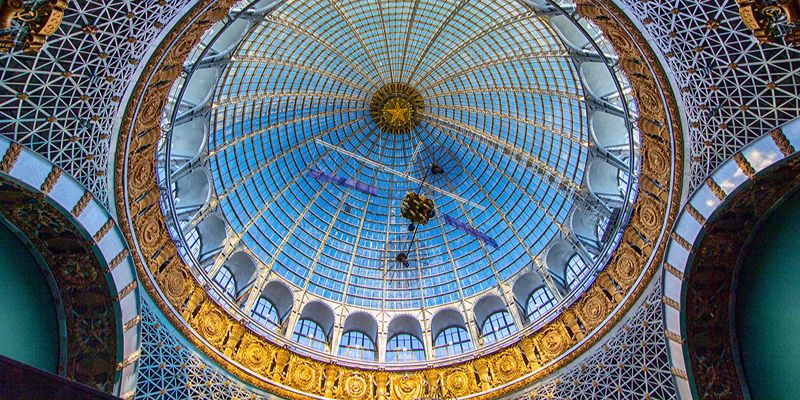
To learn the basics of astronomy and gain insight into how the world outside the planet works, you can take a trip to VDNKh offering the largest space exhibition — the Cosmonautics and Aviation Center. On April 12, it celebrates its anniversary as it was launched six years ago, in 2018, in the restored historical Pavilion No. 34 Cosmos and has been visited by more than 2.8 million people since then.
Quite recognizable with its large glass dome and elongated façade bearing a stucco frieze and bas-reliefs, it was built in 1939 and was restored in 2018 as a cultural heritage site of federal significance. Restoration architects discovered 26 coats of arms of USSR republics under the dome, restored the plaster stucco molding and created a 1-ton chandelier for it.
The pavilion surprises not only with its architecture, but also with its interior. Occupying more than 15,000 square meters, it accommodates over 2,000 exhibits, including full-scale spacecraft models, spacesuits, satellites, rocket engines, a lunar rover, and some remarkable items, such as the authentic descent module of the Soyuz TMA-10M manned transport spacecraft. In 2014, the latter brought Roscosmos cosmonauts Oleg Kotov and Sergei Ryazansky, as well as NASA astronaut Michael Hopkins from the International Space Station (ISS) to Earth.


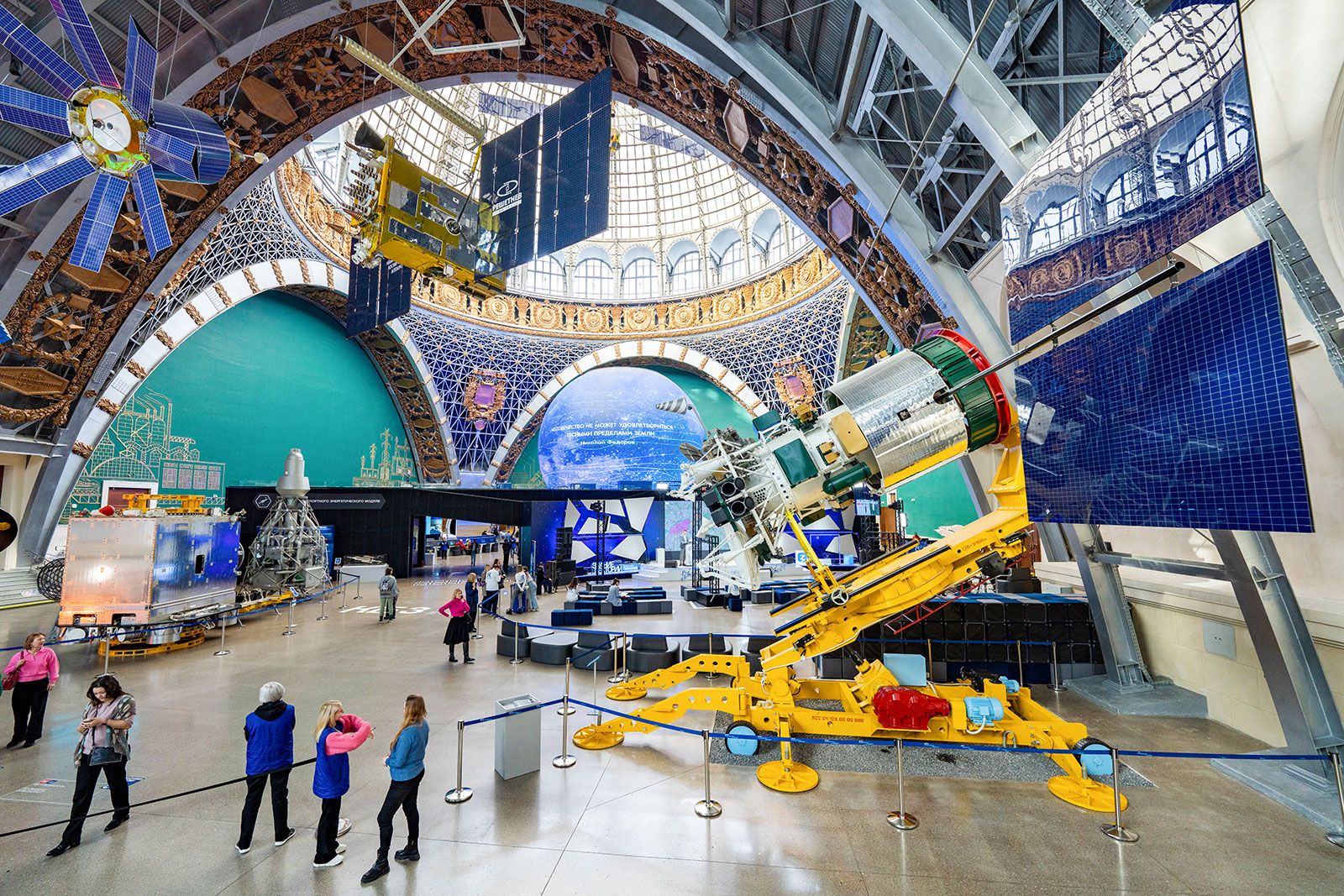


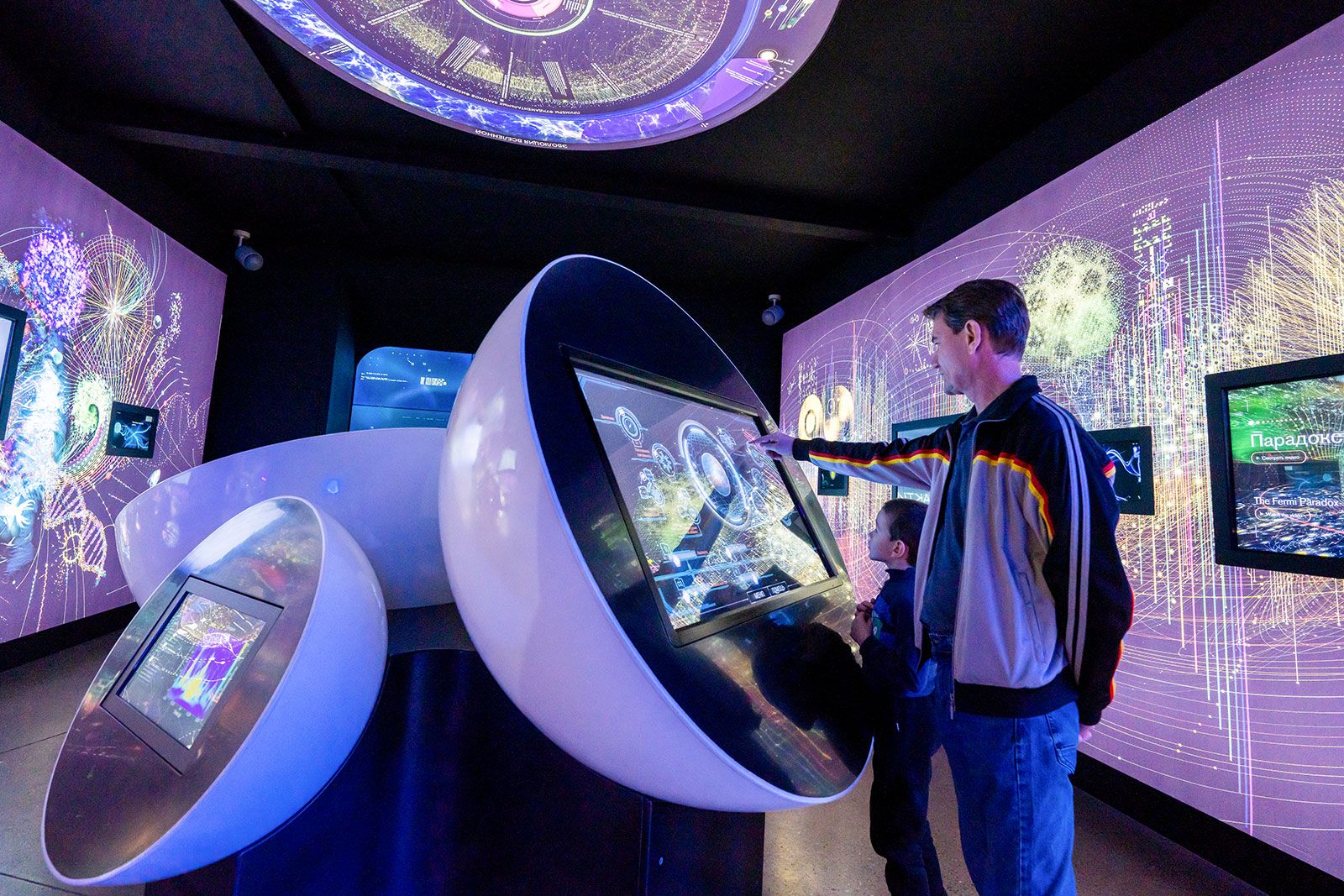


In addition to space-related artifacts, there are aviation samples, for example, models of the world’s largest turboprop aircraft An−22 Antey and amphibious aircraft Be−200 Altair, displayed at the permanent exhibition called Aviation. Dreams of Flight, its visitors to take an interactive flight and even give a try to design an airplane. The Cosmonautics and Aviation Center also displays an authentic piece of the Moon, a sample of regolith soil, which was delivered to Earth by the automatic interplanetary station Luna-20 back in 1972.
The center is open daily (except Mondays) 11:00 a. m. till 10:00 p. m.
Space pioneer
Not far from VDNKh metro station on Cosmonauts Alley, there is the Museum of Cosmonautics located in the stylobate of the 110-meter titanium monument to the Conquerors of Space, which was designed by architects Mikhail Barshch, Alexander Kolchin, engineer Lev Shchipakin and sculptor Andrei Faydysh-Krandievsky. It was opened on April 10, 1981 to mark the 20 th anniversary of Yuri Gagarin’s flight into space, while the monument itself was erected in 1964.
In 2009, the museum was largely renovated and enlarged for visitors to walk through its eight exhibition halls and two sectors, in addition to the cinema and conference rooms. Today it is Russia’s largest scientific and historical museum that holds more than 100,000 artifacts, including viewable and touchable items; for example, one can touch fragments of real meteorites to make a wish.

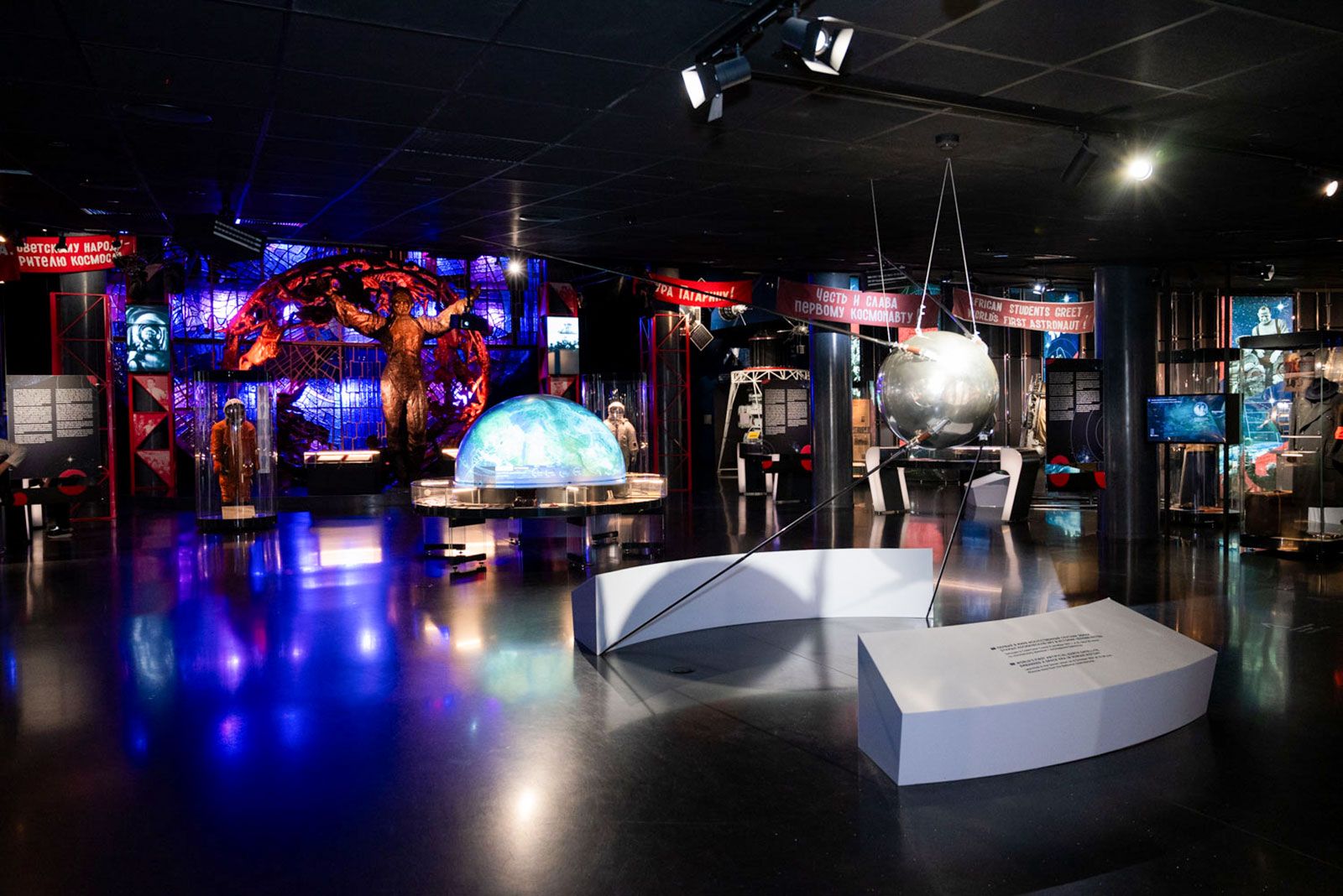


The holdings’ highlights are the technological duplicate (that is, a vehicle capable of launching) of the first artificial Earth satellite, which was sent into orbit on October 4, 1957, and the full-size Soyuz spacecraft. You can also watch stuffed copies of legendary dogs Belka and Strelka, or the original ejection container, which returned them to Earth after the successful flight, the spacecraft bearing traces of a ‘soft’ landing.
The museum also displays four authentic descent modules of Soyuz that returned to Earth from orbit and of the Mir station base unit; visitors can go inside to feel like astronauts. Other artifacts are the SK-1 spacesuit of the first Soviet cosmonaut group and even Yuri Gagarin’s electrocardiogram, taken less than a day before the flight. Muscovites can learn more about cosmonaut number one at the new exhibition called Gagarin. The Path into Space opened on his 90 th anniversary.


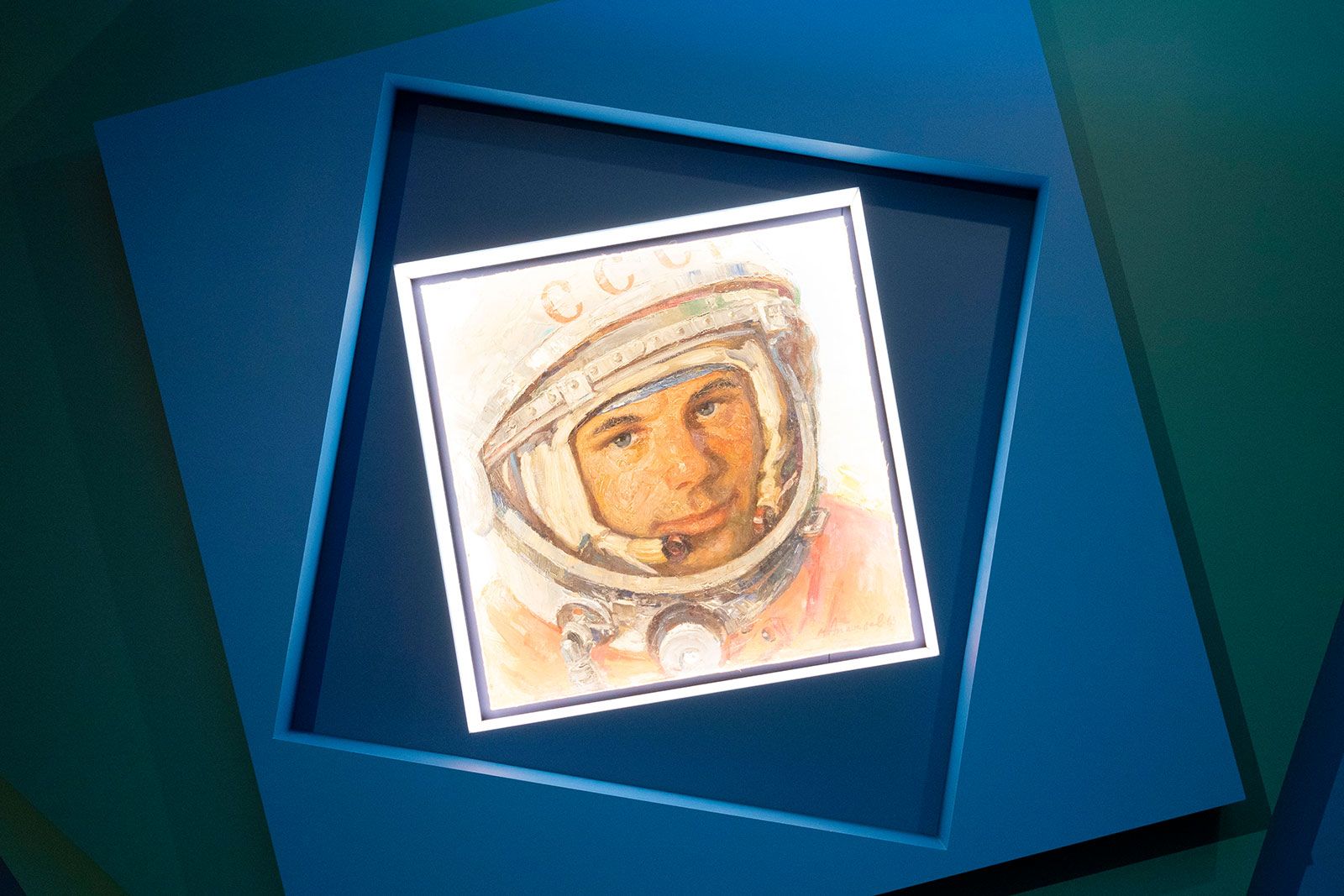
Thanks to novel technology, today every museum visitor can take a virtual space trip, in particular, having a feeling of flying in outer space aboard the Orion spacecraft.
The Museum of Cosmonautics is open daily (except Mondays) 10:00 a. m. until 7:00 p. m., and on Thursdays and Saturdays until 9:00 p. m.
House with space history
A two-story building on 1 st Ostankinskaya Street also preserves valuable history about the space industry. Surrounded by a garden, it is the Korolev Memorial House-Museum, a branch of the Museum of Cosmonautics. Featuring a big terrace and a gabled roof, it was built in 1959 by architect Roman Semerdzhiev and granted to Sergei Korolev by the Soviet government for the creation and successful launch of the world’s first-ever artificial Earth satellite. The academician lived there for the last seven years of his life, from 1959 until 1966. In 1975, it accommodated his memorial museum with original interior.


Visitors can take a tour around the rooms of the outstanding scientist, see his library and the dining room furnishings and look into the office, as the focal point of the building, with photographs, letters and important notes of the nation’s chief spacecraft designer, from neat student notes to diaries mirroring his concerns in the last month of his life.
The museum welcomes visitors Wednesday through Sunday, 10:00 a. m. until 6:00 p. m. on Wednesday, Friday, Saturday and Sunday, and 11:00 a. m. until 9:00 p. m. on Thursday.
Looking up at twinkling stars
Taking a tour along the capital’s astronomical route, a tourist should definitely make a stop in one more place of interest on Sadovaya-Kudrinskaya Street. Not far from Barrikadnaya metro station there is a true star theater — Moscow Planetarium, Russia’s oldest and one of the world’s largest astronomy education centers. Designed by architects Mikhail Barshch and Mikhail Sinyavsky, the remarkable domed building, the pride of Soviet architecture, was erected in 1927–1929, to rank 13 th in the world at that time.

Its visitors can spend time at the Urania Museum, Lunarium, Sky Park with an observatory, a 4D cinema theater, the Smaller and Grand Star Halls to gain insight into laws of nature and learn about distant galaxies, while under the 25-meter domed screen of the Grand Star Hall, the largest one in Europe, one can watch the planets and stars.


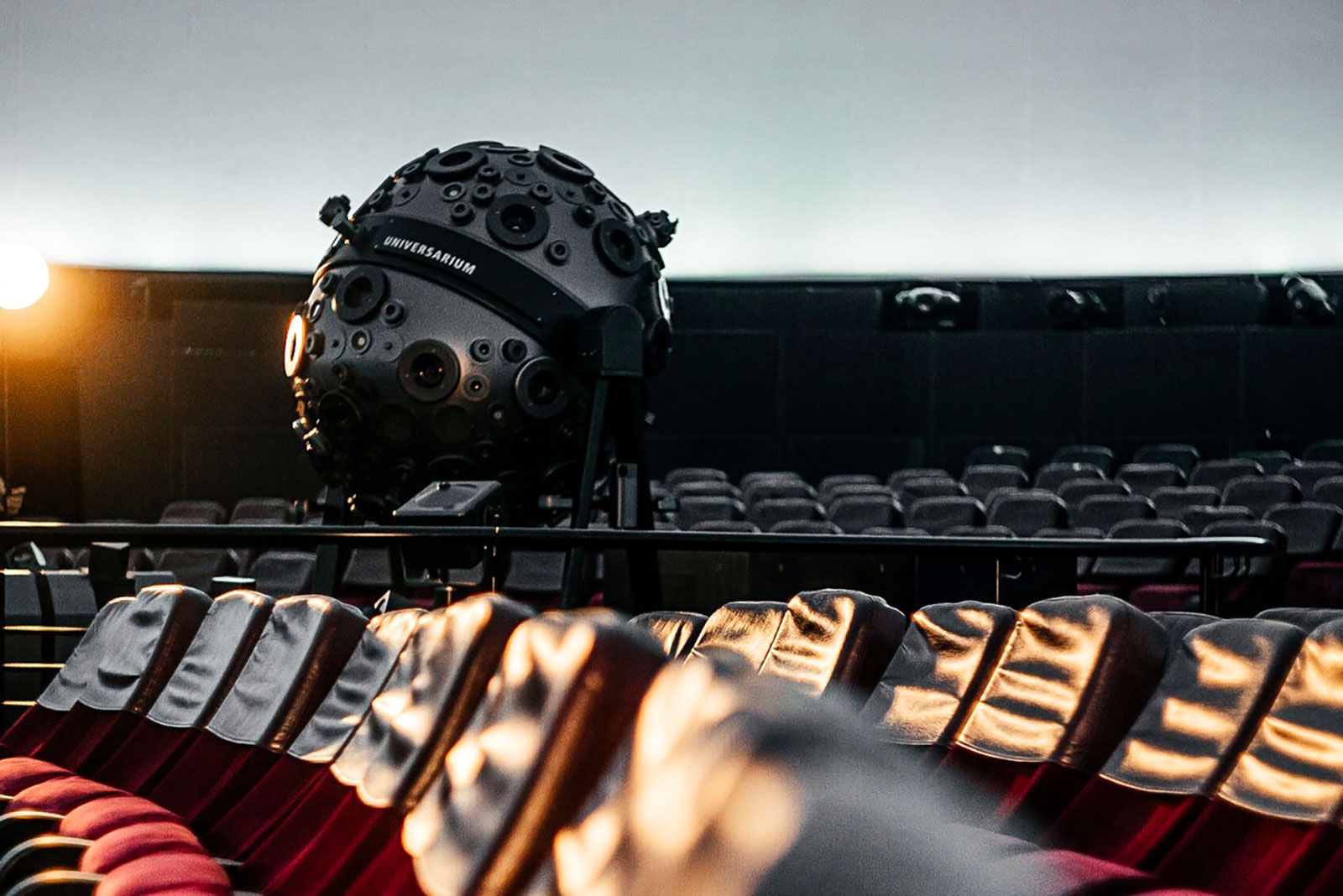
With its next-gen fiber optic projector, visitors can view more than 9,000 twinkling stars, the device projecting the starry sky image as accurately as possible, reproducing astronomical phenomena over a period of 10,000 years.
The Moscow Planetarium is open daily (except Tuesdays) from 10:00 a. m. until 9:00 p. m.
The Moon, Venus and Saturn’s ring
You can also have a look at space, the Moon and stars in Gorky Park where on the alley to the right of the main entrance arch there is the Public Observatory, a declared cultural heritage site. Recognizable with its bright red color, metal dome and porthole windows, it was built in the 1950 s during the post-war reconstruction of the park; in 2021, it got renovated.


Today, the observatory is not just one of the oldest places for observing planets and stars, but also the park’s popular science site with a sliding dome and two powerful telescopes. At night, one of them offers a view of the Solar System, including the Moon, Venus, Mars, Jupiter, the ring of Saturn and even distant Uranus and Neptune, in addition to nebulae, galaxies and star clusters. Another telescope can be used during the day for astronomy lovers to see the Sun’s chromosphere and sunspots.
The observatory was closed for the fall and winter, and it will again welcome visitors on the Cosmonautics Day, April 12.