Almost all zoo visitors come to see panda Katyusha
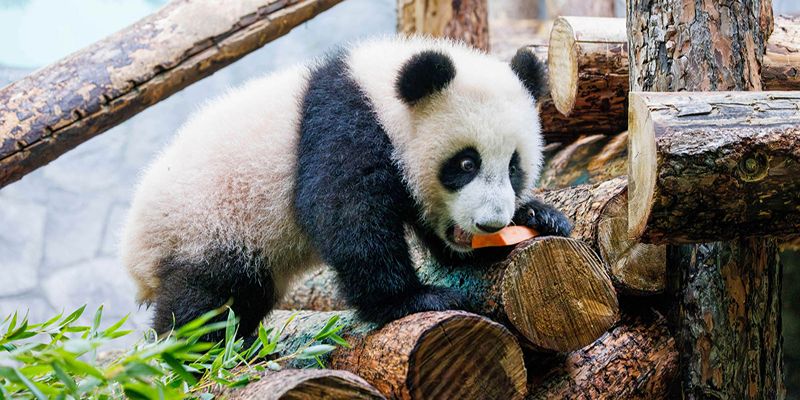
Last weekend, Muscovites and tourists were able to see panda Katyusha in the enclosure for the first time as the Chinese Fauna pavilion was opened to everyone on March 8, said Deputy Moscow Mayor Natalya Sergunina.
Since birth, the little zoo resident, together with the mother Ding, spent time in a non-exhibition room and only recently began to settle into the new site.
“More than 40 thousand people saw Katyusha in the first five days. Now almost all zoo visitors stop by the Chinese Fauna pavilion,” said Natalya Sergunina.
With the onset of spring, the zoo updates its opening hours to welcome visitors by one hour longer — 9:00 a. m. until 6:00 p. m.; ticket offices are open from 9:00 a. m. until 5:00 p. m.
The giant pandas can be seen most of the time. Yet, whereas the male Ru Yi comes out to greet visitors at about the same time (he is fed at 9:00 a. m., 2:00 p. m. and around 4:30 p. m. -5:00 p. m.), little Katyusha’s daily routine is unstable so far. In fact, the cub, who was born to the pandas Ru Yi and Ding in last August, dwells in the indoor enclosure of the Chinese Fauna pavilion and is little by little getting to know the unfamiliar surroundings.


Katyusha is her mama’s girl: life of a giant panda cub in the Moscow Zoo
Keeping such animals is rather painstaking, because they need special conditions to meet all their traits and habits. For example, pandas eat about 40 kilograms of fresh bamboo per day and need daily training and health checks. The animals are looked after by three keepers, a lead zoologist, a lead livestock specialist and the head of the Chinese Fauna department.
Now the Moscow Zoo is largely preparing for the warm season. In the greenhouse, they grow flowers and ornamental plants to soon decorate the flower beds everywhere at the Zoo and in the front garden at the Klyuev House. The displays are in full swing, too, zoologists sowing grass, trimming bushes and inspecting the huts.
As soon as the temperature reaches above zero in the city, Asian elephants will begin to come out into the outdoor enclosures, capybaras, tapirs, gorillas and other heat-loving animals to start showing from May.