The refurbished Polytechnic Museum: an amphitheatre, a transparent roof, and a display in the attic
.jpg)
New interiors and spacious rooms
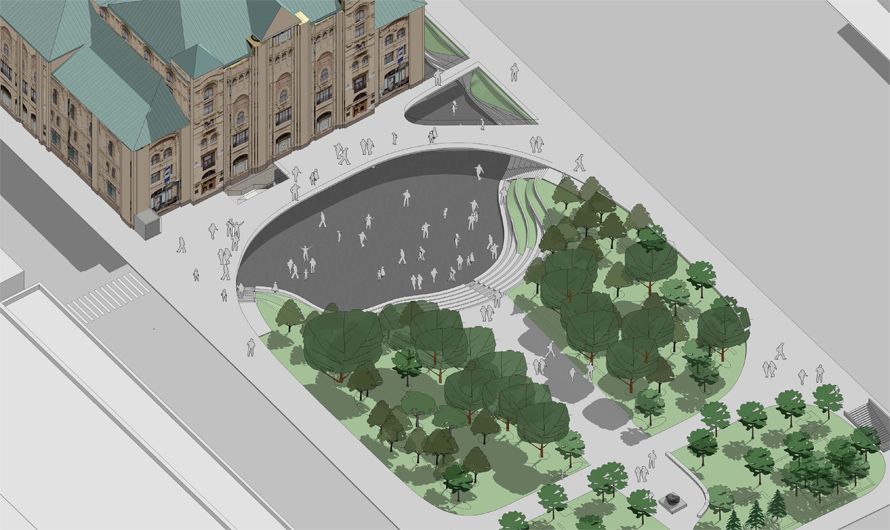
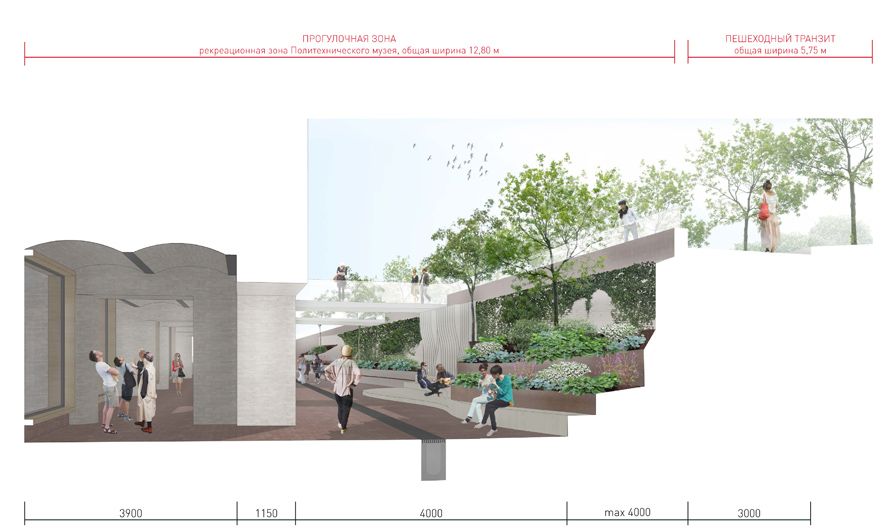
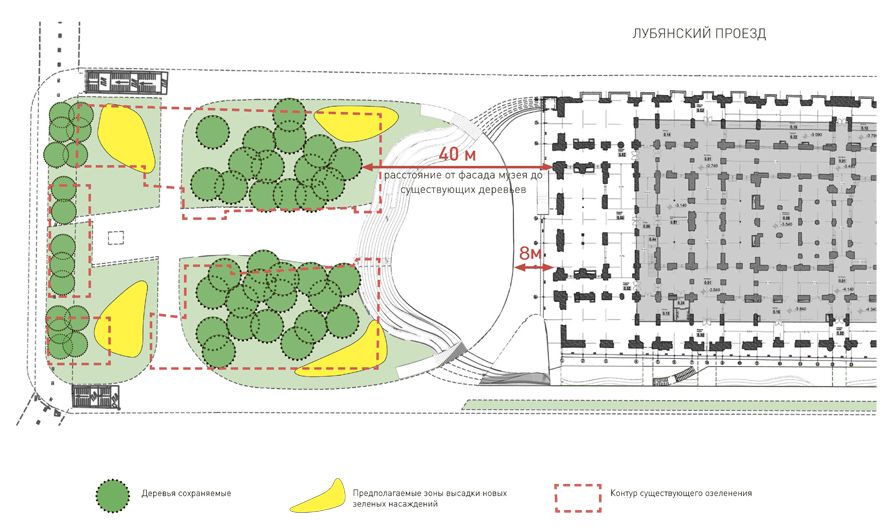
One of the biggest surprises awaiting visitors is a green amphitheatre near the front entrance where lectures and festivals will be held under a hi-tech transparent roof.
The display area will offer almost double the floor space: rooms will be more spacious and it will be easier to get around. New interiors are currently being put in place. Its most difficult stage – the elaboration of a scientific concept – is over. Awaiting visitors is the reopening of the large lecture-hall and the museum’s scientific library, the biggest in Europe.
There will be some novelties as well. For example, the attic, with two tiers of windows, will also house a display. This area wasn’t used before.
Despite the overhaul, the museum continues to offer its programmes at temporary sites.
The Polytechnic Museum: Past and present
The Polytechnic Museum has over 190,000 exhibits and 150 museum collections that are representative of various areas of science and technology.
The museum was opened in a temporary building on Prechistenka Street in 1872. The central part of its present building was erected five years later by Russian architect Hippolytus Monighetti. The southern wing was added in 1883 and the right wing in 1896. Overall, the project took 30 years to complete.
The museum’s large lecture-hall was opened in 1907 and soon acquired the status of the most important public venue in the city, offering lectures, literary recitals, scientific experiments and much else. Its audiences were addressed by poets Alexander Blok, Vladimir Mayakovsky, Yevgeny Yevtushenko and Bulat Okudzhava, Danish physicist Niels Bohr, biologist Ilya Mechnikov, and many others.
The city’s resolution to create a scientific museum based at the Polytechnic Museum was approved in 2010. Fourteen Russian and foreign companies joined the international competition for best project concept, with Britain’s Event Communications exhibition design group winning.
Three years later, the historical building was closed for renovation. The displays and reserve collections have been temporarily moved to Pavilion No. 26 at VDNKh, the ZIL Cultural Center, and other sites.
Old English Yard and Yevgeny Vakhtangov Memorial Flat open after restoration
The Old English Yard, part of the Moscow Museum Association, opened after restoration on Varvarka Street. The facades, windows and white-stone porches have been refurbished; roofing has been replaced and the attic has been insulated; the foundation has been reinforced and the utility systems have been upgraded.
Currently the facility is used for classes on the history and culture of 15th−18th century Russia for children, workshops, historical reenactments and many other uses. There is also a display of genuine old artefacts found by archeologists in the Zaryadye area.
The first guided tours at the Yevgeny Vakhtangov Memorial Flat were held in April. Visitors can see the famous stage director’s personal effects, which were donated by his wife and son.
The museum’s address is 12 Denezhny Pereulok. It was in this flat that Vakhtangov spent the last few years of his life.
There are plans to build a restoration and exhibition centre for The Pushkin State Museum of Fine Arts. The centre will be located on Maly Znamensky Pereulok, with an underpass linking it to the main building.
The main building will be renovated. The exhibits will be relocated to the new centre during the renovation.