Rich history, latest achievements and community spirit: how VDNKh becomes a friendship space
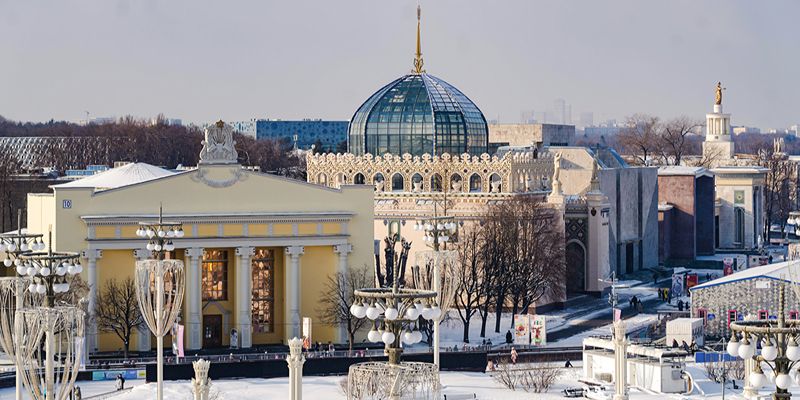
Since it opened on August 1, 1939, the All-Union Agricultural Exhibition was supposed to tell Soviet Union citizens and visitors about the achievements of their young and progressive country. However, over the years, VSKhV (later VDNKh) has become both a place to showcases achievements and a friendship space to unite people.
As ever, VDNKh, large and aesthetic, showcases the cultural traditions of many peoples, tells its visitors about new inventions and developments and also connects people from different cities and countries. Explore VDNKh by visiting the Russia International Exhibition and Forum, https://en.russia.ru/?utm_source=mos.ru&utm_medium=referral&utm_campaign=mos.ru&utm_referrer=mos.ru which runs at VDNKh until April 12, 2024. Admission is free, but some events require pre-registration.


Most precious things to share
Construction of VSKhV began in the second half of 1935. According to the creators’ idea, it was supposed to be an elegant and large showcase of all the Soviet republics.
In July 1938, after the World’s Fair in Paris, Vera Mukhina’s Worker and Kolkhoz Woman statue was installed on the driveway to the main entrance, and on August 1, 1939, the All-Union Agricultural Exhibition was inaugurated.
Walking around the area, visitors made a journey through the Soviet Union, so the republic pavilions had to reflect their economic achievements, national color and folk traditions. Exhibition visitors can find out how people live in the most remote areas of the country, explore the life of the republics, taste ethnic cuisine and listen to folk music.


_.jpg)
_(10).jpg)

_(1).jpg)
_(1).jpg)

_(2).jpg)

In 1954, the exhibition further focused on the republics. At that time, one of its symbols, the famous Friendship of Peoples fountain, was installed. Each pavilion façade has a unique design featuring folk art elements. In the 1960 s, the buildings were reconstructed and repurposed to represent various industries. They got a more modern, industrial look, but lost their inimitable local color.
Experts came up with the idea of restoring the national pavilions, many of which had fallen into disrepair or had been almost destroyed, in the early 2000 s. The money for the restoration was lacking, so they offered to rent the pavilions out to the CIS countries, successors of the Soviet republics, as long as they restore the buildings and use them for national expositions.
The first relevant intergovernmental agreements were signed in 2010–2011. At that time, the Exhibition and Trade Center of the Republic of Armenia occupied Pavilion No. 68 Coal Industry (formerly Siberia Pavilion), the Exhibition and Trade Center of the Republic of Kyrgyzstan-Pavilion No. 4 Biology (formerly Estonian SSR Pavilion), while the Republic of Belarus moved into Pavilion No. 18 Electric Machinery (formerly Belarusian SSR Pavilion).
Restored to its former glory
Scientific restoration of the pavilions began in 2014 as part of the VDNKh Revival program. Specialists started restoring historical buildings as their federal cultural heritage sites status required. Staff of the Moscow Department of Cultural Heritage oversees the operation.
Currently, many national exhibition and trade pavilions of the CIS countries take pride of place at VDNKh and in the cultural agenda of the exhibition. Each of them tells visitors about the history, traditions, economic and tourism potential of their country. The pavilions host a lot of important cultural and economic events, including fairs, festivals, local product tastings and folk art festivals.
Pavilion No. 18 Electric Machinery (formerly Belarusian SSR Pavilion), housing the Exhibition and Trade Center of the Republic of Belarus, also got a new life in 2015. It was designed by architects Zinaida Chernyshova and Grigory Zakharov and built in the early 1950 s. It had housed a national exposition up to 1964, and later was repurposed and renamed to Electric Machinery.


The renovated pavilion is now used to house trade fairs, presentations focused on the Republic of Belarus tourism and industry potential and various celebrations. In addition, there is also a cafe with national dishes on offer.
In 2019, the restoration of Pavilion No. 14 Computer Engineering and Informatics (formerly Azerbaijan SSR Pavilion), housing the exhibition and trade center of the Republic of Azerbaijan, was completed. The pavilion, one of the oldest buildings in the exhibition, was designed by architects Sadikh Dadashev and Mikael Useynov and built in 1939. It turns 85 in 2024. Now the spot has a permanent exhibition focused on Azerbaijan history, culture and development. In addition, there is a space offering art exhibitions, a cafe-tea room, a local food and handicraft store and a library with a reading room. The historical greenhouse hosts different types of music concerts.


-2.jpg)


Opened in 2019 after a major restoration, Pavilion No. 10 Standards (formerly Moldavian SSR Pavilion) is the only national pavilion at VDNKh that is not a cultural heritage site. It houses the exhibition and trade center of the Republic of Moldova with a health products store, a restaurant and a tasting room.


The exhibition and trade center of the Republic of Kazakhstan opened in restored Pavilion No. 11 Metal Production (formerly Kazakh SSR Pavilion) in 2021. Its visitors can explore multimedia exhibitions and learn more about the history, culture, art and achievements of Kazakhstan. The building houses a restaurant and a cafe serving ethnic cuisine, a showroom and a store selling clothes by Kazakh designers, local products and textiles, exhibition and fair areas and a cinema and conference hall.


In October 2023, prior to the Russia International Exhibition and Forum event, the grand opening of Pavilion No. 66 Soviet Culture (formerly Uzbek SSR Pavilion) took place. Now it houses the exhibition, cultural and exposition center of the Republic of Uzbekistan.
The building entrance leads to the Cultural Heritage of Uzbekistan Is the Heritage of All Mankind hall. It features museum exhibits dating from pre-Islamic and later periods; the central painting depicts foremost academic and cultural figures in Uzbekistan. The Applied Arts hall showcases products made using wood carving and metalsmith techniques, national Uzbek ceramics, handmade carpets and gold embroidered fabrics. The Uzbekistan Tourism Potential hall offers its visitors to take a virtual tour of the historical sites of Samarkand, Bukhara, Khiva and Kokand, as well as to learn about the offers of national tour operators.


The New Uzbekistan hall got a modern business space. It will become a platform for studying the legislation and investment potential of the republic. It is used to hold negotiations, presentations, business seminars and masterclasses. Another hall houses an art gallery to hold meetings and discussions with famous artists and writers.
The restoration of Pavilion No. 4 Biology (formerly Estonian SSR Pavilion) is set to be completed in 2024. The exhibition and trade center of the Republic of Kyrgyzstan will open there. After a major renovation, an exhibition and trade center of the Republic of Abkhazia will open in Pavilion No. 6 Chemistry (formerly Lithuanian SSR Pavilion).
The Russia International Exhibition and Forum is following the tradition of showcasing the best achievements of the different USSR areas, telling about the evolution of all the Soviet regions and promoting the interaction between them. It represents all the 89 regions of the country, including 24 republics.