Moscow’s hospitals get assistive robot cats
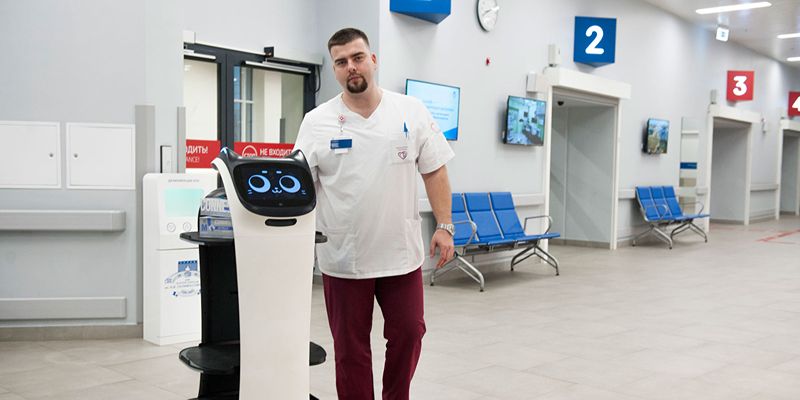
Three metropolitan hospitals are piloting robot couriers to help doctors and patients. Having feline ears and eyes, they are commonly known as robot cats; they can perform a variety of actions, such as delivering food or medicines, welcoming and escorting patients, carrying stuff and giving health life hacks.
“The digital transformation of healthcare has been actively taking place in the city for several years to date. What previously seemed high-tech and futuristic has already become ordinary everyday routine as outpatient clinics are abandoning paperwork, hospitals are becoming digital clinics, doctors and patients are backed with digital solutions and artificial intelligence. Our medical institutions have long used various robots; for example, the most famous of them are DaVinci robots. But they can be more than just surgical. Now Vorokhobov City Clinical Hospital No. 67 , City Clinical Hospital No. 15 named after N.F. Filatov and N.V. Sklifosofsky Research Institute for Emergency Medicine are piloting robot cats to help patients and doctors. They can deliver food and medical supplies, escort patients to an elevator or to a break room, sharing helpful healthy lifestyle tips along the way. The robots relieve employees and help them focus on performing medical duties,” said Anastasia Rakova, Deputy Moscow Mayor for Social Development.
Robot cats are absolutely safe to use; they have embedded video cameras for better navigation, two lower cams scanning the environment 90 times per second, another one focusing on the ceiling. Robots are also equipped with 3D sensors, so they can stop in front of any obstacle and keep a safe distance (even when braking sharply) all the time, and they can be used for one day without recharging.
To turn on a robot, you should touch its display, select the desired menu item and press the Let’s Go! button. After completing the route, it will automatically return to its place in the admissions department in the triage area, where doctors select patients in need of urgent medical care, or to the reception desk.
In Vorokhobov City Clinical Hospital No. 67, a robotic cat, which is used to deliver medical products, baby food and parenteral drugs from the treatment room to the wards, and medications and consumables to ORs, is located on the sixth floor in the neonatal intensive care unit.
At N.V. Sklifosofsky Research Institute for Emergency Medicine flagship center, a robot cat is based on the first floor in the triage area. Equipped with smart induction trays to feel a bag being placed or removed, it brings patients’ and visitors’ stuff to the examination room.


The flagship center of City Clinical Hospital No. 15 named after N.F. Filatov employs two robot cats at once, one locating on the first floor in the triage area, with the other on the second floor in the lounge. The former carries things to the examination room, escorts patients and visitors to the recreation room, rest rooms or elevator, whereas the latter is used to transport biological materials, bedding or medical supplies.
If the pilot project is successful, robot cats will be employed in other hospitals across the city as well.