Learn about life of nomads and see Moscow at height of 337 meters: best MCD-3 attractions
You can now visit the house of an agronomy professor, ride on the highest Ferris wheel in the Moscow Region and see the fallow deer in one day. To do this, just take the train that runs along the third Moscow Central Diameter (MCD-3). With the launch of MCD-3 traffic, even more amazing places have become closer to citizens. There is no need to plan your trip in advance: trains run with an average headway of 5 to 6 minutes during peak hours, and thanks to the new fare system and free transfers to the metro, the cost of travel will be low. During the first month of MCD-3 operation, passengers have already made 11.5 million trips.
We tell you where to go travelling along the third Moscow Central Diameter to take a walk in the park, which the writer Leo Tolstoy visited, see a palace inspired by the Monte Carlo Casino and a marble bridge.
Zelenograd – Kryukovo station: see the fallow deer
The journey begins at the northernmost station - Zelenograd – Kryukovo, where trains depart for the Fallow Deer House. The environmental education center is located in the Savyolki District within Zelenograd. It was opened in 2015, although the fallow deer enclosure in the Kryukovsky Urban Forest has existed since 1968. Now 10 adult fallow deer and three fawns live in the center, and from May to September, rabbits, pheasants, chickens, Muscovy ducks and guinea fowls are also kept there. Visitors can watch animals and birds from the observation deck and attend environmental education events.


After visiting the Fallow Deer House, you can attend a performance based on the Russian and foreign classics, a historical drama, comedy or fairy tale at the Vedogon Theater. It is the only professional legitimate theater in Zelenograd. People who visit it in the morning or afternoon are encouraged to take an unusual tour. They will see and learn how the theater works and a performance is created.

Novopodrezkovo station: for lovers of vintage items and antiques
The next station is Novopodrezkovo. The famous Levsha Fair is located there. The oldest market opened in 1824. A lot of tourists come there right before it opens at 07:00 a.m. It sells antiques, dishes, Soviet toys, 19th-century coins, old books, porcelain and even vintage musical instruments.


Khimki station: a petting zoo and a Ferris wheel
Passengers arrive at the Khimki station after two more stops. They can stroll through the park, which the great Russian writer Leo Tolstoy visited. It used to be a grove that belonged to an engineer who was close to the Tolstoy family, and the writer often visited him to hunt in the surrounding forests. In 1947, the place got a garden square, which was named after the writer.


The park features a petting zoo, which is open in summer, a rope course, two large areas with rides, including the tallest Ferris wheel in the Moscow Region, a festival site and an open-air concert stage. The main alley leads to an observation deck offering a Moscow Canal view. A bicycle path and areas for reading books with a library house and benches have recently appeared there.
Levoberezhnaya station: a recreation area on the shore of the Khimki Reservoir bay
After arriving at the Levoberezhnaya station, you can visit the Levoberezhye recreation area. There is a walking area with observation decks on the shore of the Khimki Reservoir bay. In summer, the place offers to enjoy beach arrangements.


There are three modern children's playgrounds: a central playground, a web complex and a play area with a round bench. Sports fans can visit three workout areas. There is a skate park to enjoy a skateboard, BMX or scooter to the left of the entrance from Pribrezhny Proyezd.
Grachevskaya station: a palace inspired by the Monte Carlo Casino
The next station is Grachevskaya. Grachevsky Park, which has several attractions, is not far from it. One of these attractions is the Grachevka estate named after the last owner Mitrofan Grachev. It has an unusual palace with plaster moldings, sculptures, verandas and balconies designed by the famous architect Lev Kekushev. The eclectic modernism house is inspired by the Monte Carlo Casino.

In the 19th century, this place was one of the cultural centers of Moscow. Writers Alexei Tolstoy and Vladimir Gilyarovsky and composer Pyotr Tchaikovsky visited it, while poet Valery Bryusov got married in the Church of the Icon of the Mother of God of the Sign, located next to the estate.
During the landscaping of Grachevsky Park in 2017, more than 1,200 trees and shrubs were planted, paths were restored, and stairs were fitted with handrails. It features gazebos with benches, wooden benches and antique-style rotundas. In addition, huge oak trees grow in the park, one of which is considered the oldest tree in Moscow - it turned 435 years old in 2023.


An estate, an airfield, a river terminal: Good walks in the Northern Administrative AreaFrom Park of Light to Garden of Future: Eight nice parks in Northeastern Administrative District
Likhobory station: a home of the gentry and the house of an agronomy professor
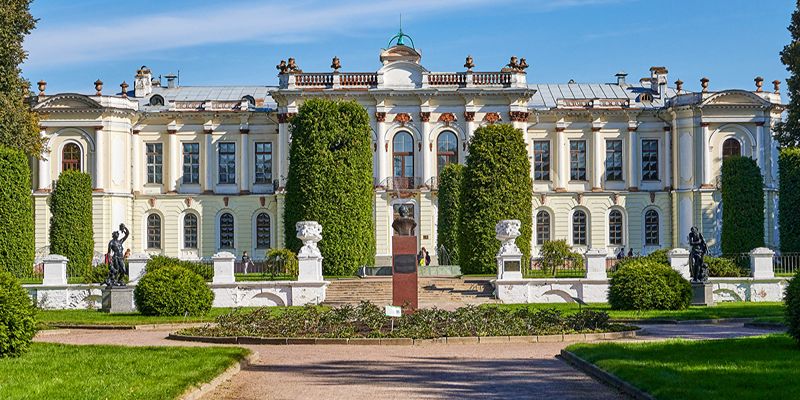
Getting off at the Likhobory station, you can see several curious landmarks. The first of them is the Petrovsko-Razumovskoye estate. At different times it was owned by the Shuiskys, Prozorovskys and Naryshkins. Now it houses the Russian State Agrarian University - Moscow Timiryazev Agricultural Academy. While walking in the estate park, visitors will see the collection of sculptures ‘The Seasons’, a fountain, flowerpots with plaster moldings, a memorial and an old grotto. By the way, this place is associated with the plot of Demons by F. Dostoevsky. The historical park is open on weekends from 08:00 a.m. to 7:00 p.m.


Not far from the estate is Timiryazevsky Park. In winter, visitors can ski there, and in summer, they can see squirrels while walking. There are information kiosks telling about the park and the estate.
By the way, you can get there both from the Likhobory station and the Petrovsko-Razumovskaya station.
Ostankino station: an urban forest and the highest observation deck
The Ostankino station is one stop away. Visitors can see Moscow at a height of 337 meters on the observation deck of the Ostankino Tower. It was designed by Soviet engineer Nikolai Nikitin in 1967. Guests will be invited to see the meteorological laboratory, monitor weather changes, take a high-speed elevator and learn how the TV tower was designed and operates.

There is Ostankino Park nearby, a broadleaved forest close to the capital’s center. It offers many walking areas, including Ostankino, Palace and Linden alleys. Elm, linden, maple, birch, aspen, pine and spruce trees grow in the park. Visitors will see plants listed in the Moscow Red Book. The forest is home to hawks, chickadees, hedgehogs, weasels, squirrels, bank voles and moles. Ostankino also houses the museum-estate of the same name (closed for reconstruction), the Church of the Life-Giving Trinity, the Gates of Victory memorial and a theater sculpture garden. You can go to VDNKh from there.


The cozy Goncharovsky Park is on the other side of the railway. It has a bike path, four modern playgrounds and two sports areas. There is a dance floor to the right of the main entrance and a wooden chess gazebo for playing board games in the center. In summer, a children's electric car rental center is open, and in winter, an ice skating rink is available.


Roofs for walking: Which buildings are best to see the panorama of Moscow from?Möbius Band, green maze and waterway. Exploring new and little-known VDNKh spots
Aviamotornaya station: a Tuareg tent and a Genghis Khan yurt
There is the Museum of Nomadic Culture with more than 20 dwellings on display not far from the Aviamotornaya station. It was founded by traveler and ethnographer Konstantin Kuksin in one of the Moscow schools. The first exhibit was a Mongolian yurt. The museum's collection includes a Nenets tent, a Tuareg tent, a Chukchi yaranga, a South American Indian hut, and even a Genghis Khan yurt. Visitors will learn about the life of nomads, try on their clothes and do archery. Prior registration is required.
.jpg)
.jpg)
.jpg)
.jpg)
.jpg)
Perovo station: a squirrel nesting box and an amusement park
From the Perovo station you can go to Perovsky Park, an example of a garden art. It was built in the middle of the 18th century and was part of the Perovo estate, which belonged to the family of Counts Razumovsky.
The park has walking areas, a large old pond, many playgrounds and sports grounds, cozy gazebos, rides, a squirrel nesting box, a children's club, a concrete skate park, a workout area and a volleyball court, sports equipment rental center, a cafe and two stages.


Veshnyaki station: a palace, greenhouses and an open-air theater
Having arrived at the Veshnyaki station, you can go along Yunosti Street to the Kuskovo Memorial Estate, a cultural heritage site. The Kuskovo architectural and park ensemble was built back in the 1750s–1770s under Count Pyotr Sheremetev. Its heyday came in the 1770s and 1780s, when up to 30,000 people visited the place enjoying its lavish receptions and balls, concerts and performances. By the way, the Sheremetev Serf Theater is considered one of the best theaters in the history of theatrical life of Moscow in the 18th century.


You can see the palace on the shore of Bolshoy Pond, the Italian house for small receptions, the Grotto and Hermitage pavilions, the Dutch and Swiss houses, the Kitchen outbuilding, the American and Large stone greenhouses and the open-air theater. Before visiting, please check their operating hours.
On the other side of Yunosti Street, directly opposite the ticket office of the Kuskovo estate, is the entrance to the modern Raduga (Rainbow) Park. It has an arc-shaped cascade ponds. Walking along Italiansky Pond, you can reach Bolshoy Grafsky Pond with its landscaped embankment. In good weather, it offers a boating station.


Kratovo station: a marble bridge and a children's railway
Kratovo is the last and southernmost station. It boasts the famous dacha village where Mikhail Zoshchenko, Bulat Okudzhava, Sergei Eisenstein and other writers and poets lived. A small lake with a real marble bridge installed instead of a dam is located nearby. The pond is surrounded by an urban pine forest.


There is a children's railway near Kratovo Lake. Schoolchildren aged 12 to 17 drive trains to get some practice. The railway is available only in summer. Children drive a train of six cars to transport passengers from the Pionerskaya station to the Yunost station. The length of the main line is 3.8 kilometers. The passengers have a chance to enter the cab and learn the safety rules, which the train foreman will tell them about.
The building of the Moscow Children's Railway Administration with classrooms and engine and car houses are located nearby.


Read the MCD-1 guide to find out about other places to visit while travelling on the Moscow Central Diameters.
Sergei Sobyanin on revival of Moscow parksUnusual landscapes and fantastic photos: Viewing points in Moscow parks