Disabled-accessible city: how Moscow assists people with disabilities
Moscow is an inclusive city. The Russian capital meets the needs of disabled people and makes sure that they can live comfortably in the city, get education, choose a career and socialize. In the last decade, a barrier-free environment has been actively developing in Moscow, so that visiting a doctor, or going to a theater or a museum is not an unsolvable problem.
Social support at any age
More than a million disabled people live in the Russian capital. The city supports its residents with congenital disabilities and disabilities having occurred later in their lives as a result of an illness or an injury, at all stages. They are paid a disability pension and different benefits, get assistance in finding a job and unlocking their potential.
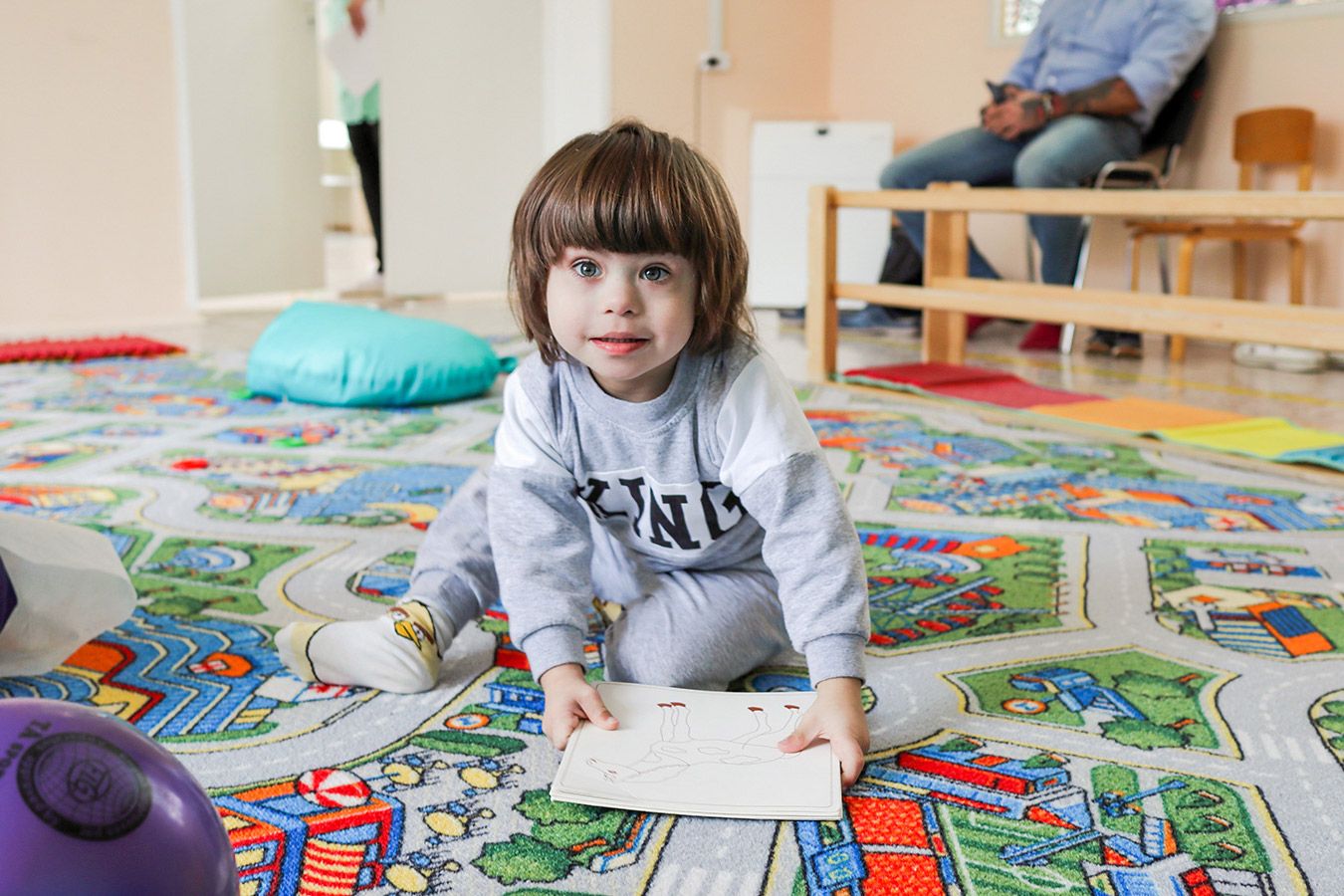
The Early Help service supports parents who have children under 3 with special needs. Specialists have helped more than 900 families get through the most difficult period in their children’s lives. Muscovites raising children with disabilities as well as people who take care of their relatives with disabilities are entitled to monthly payments and free trips to health resorts.
Programs for young people with mental health disorders are being actively developed. An assisted living center, training apartments and social day care services allow disabled people to learn how to live independently or with minimal support. The Russian capital is renovating social housing for older people and geriatric centers for those who need constant care.


Accessible rehabilitation
Moscow rehabilitation centers provide for more than 66.5 thous. comprehensive rehabilitation courses annually. Each disabled person has an individual program. It may include physical therapy and mechanotherapy, remedial gymnastics, massage, craft courses, sociocultural rehabilitation, art classes and other activities aimed at integrating a person into the society.


Eight rehabilitation and educational centers offer a general educational program to children alongside with a comprehensive rehabilitation course. Specialists also help young Muscovites choose their future career. Teachers, doctors, psychologists, rehabilitation specialists, special education teachers, and other specialists work with children.
In-home rehabilitation is also available to the disabled. Mobile teams consisting of neurologists, physiotherapists, remedial gymnastics instructors, massage therapists, psychologists and speech therapists visit them.
Disabled Muscovites are provided with wheelchairs, prostheses and other rehabilitation means. They can get these for free or be compensated for them if such are bought at their own expense. Visually impaired people can use a guide dog with a set of equipment free of charge.

From school to Abilympics and first job
The city aims to make schooling accessible to every child. Today, children with special educational needs are in inclusive classes or attend special schools following an adapted curriculum. Moscow has 12 such schools.
Special assistance to children and their families is provided by qualified teachers: special education teachers, speech therapists, educational psychologists and tutors who constantly improve their skills.

About 700 more children with disabilities attend 20 art schools. They learn to play musical instruments, sing in a choir, study solfeggio, and attend literature, singing and rhythmic gymnastics classes.
Moscow helps residents with disabilities get basic education, as well as choose a career and get a job. For example, the capital’s employment service offers thousands of vacancies for disabled people. People with disabilities are most often employed by companies in the service, IT and wholesale and retail sectors. They can work both in special areas and remotely. Call +7 (495) 705-75-75 or visit the website to get some individual advice on finding a job, selecting the most suitable vacancy and building a successful career scenario.

Specialists of My Work and My Career employment centers organize trainings, webinars, business games, career days, job fairs and public selections, and after successful employment, support candidates throughout the entire probationary period. Special employment programs and free vocational training are available to job seekers with disabilities.

Abilympics, a vocational skills competition specifically designed for people with disabilities, is of great importance. It allows schoolchildren and students to choose a career path and helps adults find a job and receive a bonus. Last year, after the competition, more than 250 participants managed to find a job in Moscow-based companies.


Barrier-free city
Moscow is actively creating a barrier-free environment. Underground tunnels now feature ramps with handrails, and curbs near zebra-stripe crosswalks are flush with the roadway. Tram stops are level with car floors and fitted with convenient descents. Street stairs get ramps for pedestrians with reduced mobility and parents with strollers.


According to the new standard, healthcare institutions also have ramps, contrasting signs, elevators with voice announcements and Braille buttons. Emergency call buttons are installed in special restrooms and fire safety areas. Palliative and other healthcare institutions are equipped in the same way. If necessary, special lifting platforms are installed.


Public services centers, libraries and other public buildings are also being adapted for disabled people. For example, My Documents public services centers allocate areas for people with disabilities and install special equipment, and the centers employees can help blind visitors use necessary services online. Specialists are also installing special restrooms with emergency call buttons, and tactile and contrast signs for blind and visually impaired people. About 89 per cent of social institutions are adapted for people with disabilities.

Residential buildings are also fitted with lifting platforms. New houses meet the needs of residents with reduced mobility, and old houses get special lifting devices installed on the walls along the stairs or in the halls. Since 2011, almost 1,800 of them have been installed.
With no changes in elevation at entrances and paths, recreational areas, retail outlets, pavilions and modular restrooms, Moscow parks are suitable for guests with reduced mobility, creating a barrier-free environment. Young visitors with disabilities can enjoy special playground elements in Lianozovsky Park, Bauman Garden, Fili Park, Khodynskoye Pole Park, Druzhby Park, Lyublino Estate and other recreation areas.


They feature special exercise equipment on sports grounds and areas for group games and gymnastics. There are such areas, for example, at the reconstructed Avangard stadium and in the Kuskovo urban forest, and this year, they have opened near Maryinskiye Ponds.
The city online services are also becoming more convenient for Moscow residents. The mos.ru portal is being adapted to different assistive technologies, including screen readers, speech recognition tools and high contrast mode. These help people with disabilities get online services themselves.
Accessible transport
All new railway stations, bus stops, Moscow Metro stations, Moscow Central Circle and Moscow Central Diameters (MCD) stations are designed with disabled passengers in mind. For wheelchair users, ramps, elevators and lifts are installed, and ticket windows are lowered. Tactile tiles and Braille prompts are available to the visually impaired and blind. Induction loops that transmit the clerk’s voice directly to the hearing aid are installed in ticket offices and waiting rooms.


Buses and electric buses, trams and metro cars are fitted with color and sound warnings and wheelchair areas. Trams and buses are equipped with folding ramps and additional handrails, and the floor is level with the stop. The MCD trains and electric vessels also have special seats for the disabled, expanded gangways and spacious restrooms.


The Passenger Mobility Center staff are always ready to help. They have already assisted more than 1.2 million people. In addition, the Moscow Metro has trained 290 guide dogs.


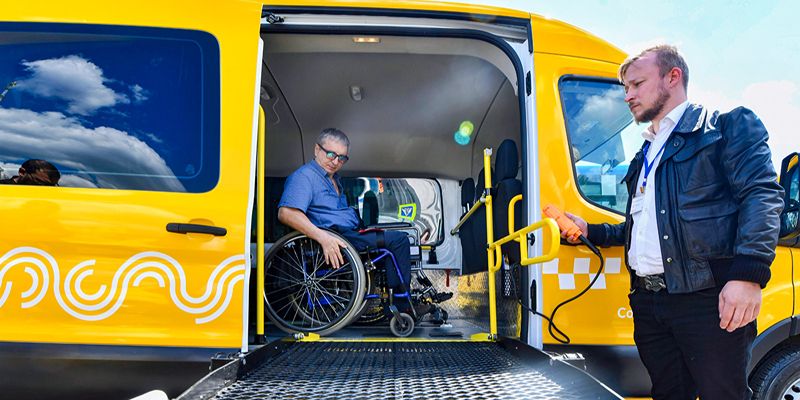
The Social Taxi service has been operating since 2017. It helps people with disabilities get to the city social facilities: hospitals, schools, airports and train stations.
At least 10 per cent of parking spaces on Moscow streets are allocated for people with disabilities and those who transport them. You can park your car for free if it is listed in the Federal Disability Register and has a Disability sticker.
This year, inclusive car sharing service has appeared in Moscow, so cars with manual steering are now available to people with disabilities. An extra drive duplicates gas and brake pedals.


Inclusive culture
Moscow museums, libraries and cultural centers create comfortable conditions and provide benefits for people with disabilities. They adapt their websites for users with disabilities, and also offer special tours, programs, clubs and studios, organize and support inclusive events such as tours narrated in sign language with an audio commentary. Tsaritsyno Museum-Reserve hosts tactile model exhibitions, the Lyublino Estate offers tours for deaf and hard-of-hearing visitors with a sign language interpreter, and the Kuskovo Estate welcomes guests with guide dogs.


Specialists help Muscovites with disabilities during city festivals. Moscow fairs sell souvenirs made by people with physical conditions or mental health problems and donate to charity. Charity events are held to celebrate major holidays such as the City Day and the New Year. As part of the Faith in Music project, Moscow musicians give performances for Muscovites with dementia, Alzheimer’s disease and Down syndrome.
Concerned Muscovites and professional philanthropists
Muscovites with disabilities are supported by the city services, as well as by many charitable foundations and non-profit organizations. Specialists help these people socialize, find hobbies and like-minded people.
Concerned residents can also support people with special needs by making a donation using a charity service that features only verified organizations. Muscovites can select a fund in the service that, for example, helps seriously ill children or adults with mental disorders.