Eco-centers, municipal fleet and wildlife protection: how Moscow takes care of the environment
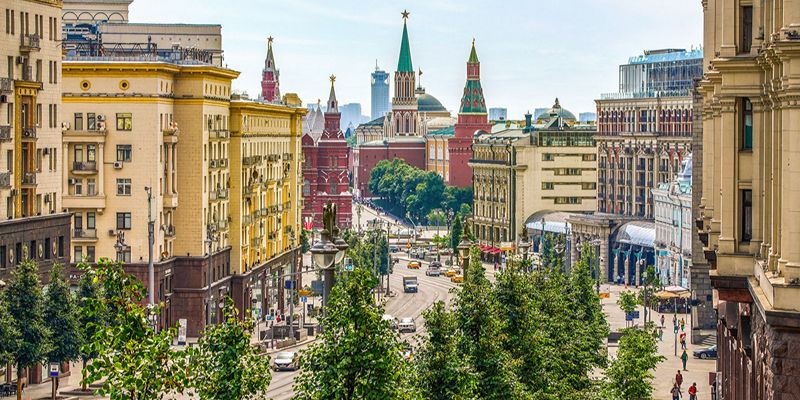
Caring for the environment is a priority for the Moscow Government, as year after year the capital proves by example that economic growth and urbanization can go hand in hand with maintaining wildlife sanctuaries and biodiversity. Moscow is one of the greenest megacities in the world as almost half of its area is occupied by parks, public gardens and protected areas, which are closely monitored; courtyards of residential buildings and streets are landscaped, with hundreds of sports and playgrounds in addition to bike rentals. As a result, residents are increasingly spending free time outdoors, walking and doing physical exercises.


The capital also employs a cutting-edge automated environmental monitoring system for municipal services to monitor air, water, soil, and noise levels, with particular focus placed on animal welfare programs, all these helping maintain a high standard of living in Moscow.
Environmental monitoring
Moscow’s environmental monitoring system includes 78 air pollution data centers scattered across Moscow and the nearest suburbs. The system also includes four specialized weather centers, three mobile environmental laboratories and an analytical laboratory capable of identifying a large number of various pollutants. This is a state-of-the-art complex enabling parallel monitoring of air, water bodies, soil and noise levels.

Particular attention is paid to the quality of tap water, as water supplied to residents meets both Russian and international standards, which is annually proven by over 2,500,000 tests carried out by the Mosvodokanal Water Quality Center and supervisory authorities. Water quality tested for 184 indicators at all stages of its way to users.

Over the past decade, the city has taken great efforts to modernize the fuel and energy sector, utilities and industrial enterprises. Today, all 13 TPPs generating heat and electricity for the capital use natural gas as the most environmentally friendly fuel; utility supplies have become better, too, as there has been no extended outage in Moscow since 2011.
In addition, in recent years, Moscow has completed large-scale reconstruction of Europe’s largest treatment facilities in Kuryanovo and Lyubertsy. This helped eliminate unpleasant odors to significantly improve the quality of life for almost 2,000,000 inhabitants of the southern and southeastern districts.

Cutting-edge transport
A crucial issue of the environmental well-being in a city is caring for its transport system. Moscow became the first Russian region to ban fuel below Euro 5 and one of the first cities in the world to abandon diesel-powered buses. Today, the capital boasts the largest electric bus fleet in Europe, including more than 1,050 e-buses, to serve 79 routes throughout the city.

The electric bus fleet and its environmental compliance is continuously monitored by the Moscow Department of Transport and Road Infrastructure Development. In addition, the city has a special unit (part of SBI Avtomobilnye Dorogi) engaged in taking care of landscaped sites along the roads or highways and at MKAD interchanges; its employees, including environmentalists and entomologists, make regular examinations of lawns, trees and shrubs to identify insect pests that can cause the death of plants.

Municipal watercraft and waste sorting
In Moscow, streets are cleaned and garbage is removed every day, this being a responsibility of municipal utility providers and related management companies. Three years ago, Moscow launched a waste sorting program. So, Muscovites began to be more attentive to environmental issues and are gradually getting used to sorting household waste, separating mixed and recyclable garbage. As a result, the amount of collected recyclables in the capital tripled from 450,000 tons in 2019 up to almost 1,500,000 tons in 2022.


In addition, the city has a remarkable municipal watercraft fleet to monitor the purity of the Moscow River and the shipping part of the Yauza during the navigation period, while special boats remove floating garbage, sand and silt from the bottom. In the navigation season, they collect up to 600 tons of floating debris.


Care for nature and animals
Preservation of Moscow’s wildlife sanctuaries and care for wild animals is a priority for metropolitan environmentalists. The protected areas managed by the Moscow Department of Natural Resources and Environmental Protection (Mospriroda) include unique landmarks, such as the Serebryany Bor (‘silver pinewood’), natural and historical parks of Izmailovo, Kuzminki-Lyublino, Tsaritsyno, etc. Inspectors walk about 10 to 15 kilometers every day to prevent environmental offences. Also, Mospriroda experts keep animal records and install artificial nests or feeders.

If some animal gets injured, it is assisted by vets of the Wildlife Rehabilitation Center, who treat animals and birds, help them recover and return them back to their natural habitat. If this is not possible due to the health status, animals will be taken to zoos or national parks.


Education
Every year, Mospriroda organizes about 15,000 environmental education events for Muscovites, including open lectures, tours, film screenings and projects, for people to learn more about Moscow’s nature, local animal species and reasonable resource consumption methods.
Moscow has 11 environmental education centers, providing, among other things, information about how to properly save water or electricity and how to sort waste. Since 2019, the capital has run the Our Tree project for parents of a newborn child to plant a name tree in one of Moscow’s parks, thus making the city greener; almost 23,000 trees have been planted in 27 parks over four years of the project history.

Local NPOs also contribute to taking care of the local environment, running a range of environmental campaigns. They give things a second life, open collection centers for plastic bottles or batteries and organize forest/park hiking tours.
In 2023, the 3 rd edition of the Red Book of Moscow was published. It was updated with descriptions of 16 animal and plant species, which had been previously claimed extinct, but were re-discovered in Moscow’s protected areas, suggesting a suitable environment for rare species of wild animals.