Time for presents and new experiences: what’s happening in Moscow Zoo in January
Moscow Zoo is getting ready to celebrate its birthday: it turns 159 on February 12. The open-air nature museum was founded in 1864 by the Society for Acclimation of Animals and Plants. Back then, the zoo had just a small number of Russian animal specimens and a few exotic ones. As time passed, however, zookeepers started making strides in keeping and breeding rare mammals, birds and reptiles from all over the world. Now there are over 1,200 species of animals featured there, some of them are on the IUCN Red List.
Moscow Zoo is a beloved recreation place for many Muscovites; thousands have already visited it since the year started. In addition to watching animals, they also had a chance to participate in festive master-classes and other events. Now, after the holiday rush is over, the Zoo is gradually coming back to its usual routine. There are less visitors there now; the animals have a chance to do some exciting activities designed by their keepers.
Nice surprises
Residents of the Zoo were very excited to open their New Year presents. Felines and even birds were happy to get tasty treats in beautifully decorated boxes, bags and packages. All predators, including lynxes: Gaika, Chip and their cubs Tykovka, Goroshinka and James, Stepan the tiger, Roksak the lion, jungle cat Zauri and Miser the leopard, got portions of finest meat. Timofey the Pallas’ cat retired to his den to enjoy a quail and a rat away from prying eyes. Southern ground hornbill also got some nicely wrapped treats.
Great pandas weren’t forgotten either. Ding Ding needed very little time to handle packages of carrots. Keepers made sure to tie one of the bags as tight as possible so that the female panda had something to work on. Ru Yi who lives next to her was less crafty: it took him a long time to sort out his boxes and parcels. Eventually, he carried one of his presents to the door leading to Ding Ding’s enclosure.


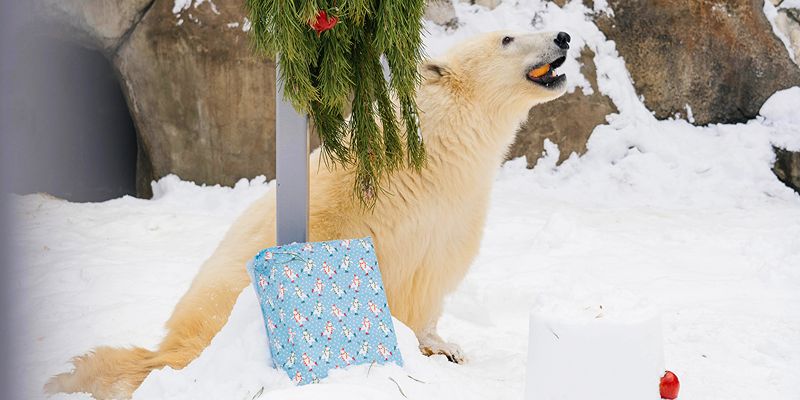
Dixon the polar bear was also lucky enough to get a present. A pine tree decorated with apples was installed in his enclosure; the keepers put a box full of meat, fish oil and herring (Dixon’s favorite treats) under the tree. They also hid pieces of meat inside clumps of snow. Dixon enjoyed hunting for treats. He also loved the tree: sniffed it and tried to chew the needles.
“The choice of pine tree as a decoration wasn’t random: its needles are less stiff than spruce’s, for instance, so they can’t hurt the bear. We put the tree on high ground deliberately, so Dixon had to reach for it and train some muscle groups,” said the Moscow Zoo Press Service.
Multiple other enclosures were decorated with fir branches as well. Lots of spruces, pines, silver fir trees were used. They were donated to the Zoo during the annual drive. Vendors handed over their unsold trees to the Zoo before the New Year - there were about a thousand of them.
Fragrant fir decor means richer environment for animals, more diversity. For some of them, branches double as food: blue sheep, oxen, Makhor goats, Asian elephants and alpacas love chewing on them. Fir needles contain lots of vitamin C, carotene, healthy amino-acids and phytoncides.
For large animals, spruce, pine or silver fir tree trunks make great toys. They kick them around their enclosure or use them as scratching posts. Leopards, tigers, African wildcats and other felines love scratching the bark. Great pandas, bears or elephants, on the other hand, use trees as toys.
Cold weather does not stop communication
Despite biting January frost, the majority of animals in the Zoo remained active. Some of them, like polar bears, had great time outside and even enjoyed bathing in cold water. She-bear Tompa and her mate Dixon both had fun swimming.
Residents of the Pinnipeds pavilion: walruses, seals, sea lions and other aquatic animals are fine with any weather: they swim a lot every day and are always happy to communicate with the visitors.
A family of wolves also were not put off by a rapid temperature drop. The canines enjoyed frosty air and snowdrifts, howling occasionally to the public’s delight. Mizer the leopard enjoyed long open-air naps, curled on his cozy bed made of hay.
Timofey the Pallas’ cat, on the other hand, decided that cold weather was not too good for him and retired inside. Great pandas Ru Yi and Ding Ding followed his example.
Moscow Zoo is open for visitors every day 9:00 a.m. to 5:00 p.m. The Zoo area closes for entry at 4:00 p.m. In addition to open-air enclosures, you can watch the animals in heated pavilions. Everyone is welcome to pay a visit to great apes, pandas or elephants; amphibians, reptiles or butterflies.