“There are no outskirts in Moscow.” Anna Trapkova, Museum of Moscow Director, talks about walking and new exhibitions
(10).JPG)
The Museum of Moscow today is not just exhibitions. Fans of modern theater art go there to watch plays presented by famous directors; those who wish to know Moscow better go on walks with local historians, starting from the municipal tourist office. They submerge themselves into history of Moscow and Russia while sharing personal stories.
Anna Trapkova, the Museum Director, talked to mos.ru about the project they’re working on together with Muscovites, shared plans for the upcoming exhibition season and explained why the Museum is just like an orchestra for her.
“The most far-flung areas are no less interesting than the downtown”
“Ms. Trapkova, what is the Museum of Moscow today? Is it something that safeguards history, or is it looking into the now?”
“The Museum of Moscow cannot function as a historical museum only. It should reflect all the diversity of the city life, and the relationship between its people and history, their personal memories. Our objective is to talk about Moscow in every way possible in order to expand our audience all the time. Our main goal, I think, is to make it so that everyone who wants to learn something new about Moscow, would know they should come here.”
“Is it hard to combine contemporary art, festivals, local history, guided tours, etc. in one museum space?”
“I often hear that the Museum of Moscow is interesting, cool and very modern. It makes me happy. People follow our Museum regardless of what’s happening there at the moment: a kids’ festival, a fair or a vernissage. That’s how urban life should be: a fun adventure every time. During my tenure as Director, I have become even more attuned and mindful of the streets I walk, paying attention to things I used to not notice before, like memorial plaques, inscriptions, QR codes that tell the houses’ history.”
“What’s your favorite place for walking?”
“I love walking from the Museum to the Arbat, over Denezhny and Plotnikov pereuloks. It’s the heart of Moscow. Another fave is the route from Bolshoi Theater to the Museum. I also enjoy walking over Perovo, the place of my birth; there are a lot of non-obvious landmarks there. I like discovering new, unusual places, and it’s great that you can do that using our tour office. In 2022, it started operating on request: lots of people want to take a walk over their areas and learn something new. We think that there are no outskirts in Moscow; its most far-flung areas are no less interesting than the downtown.

“Every person living in Moscow is important”
“Your Moscow without End project is focused on careful studies of various districts and creating exhibitions dedicated to them. You have already examined Tagansky district, Preobrazhenskoye and Kapotnya. What’s next?”
“It’s very important for us to cover districts in various parts of the city. That’s why next up is the Arbat: the central, legendary district and the essence of Moscow. There’s a museum in every other house, each building has its own unique history! If we follow them, they always lead us to some Muscovite’s personal history.
For example, the Taganka exhibition had a pair of kids’ sandals brought in by one of the local residents. Under them was a text detailing the man’s memories: how he used to wear them when he was little, jumping over puddles of rainwater. That’s personal history that makes your heart clench. You feel goosebumps when you think about the city of your childhood that lives forever in your memories.
The Moscow without End project shows the importance of every person living in our city. We invite the district locals to work with us through our website, social network, district libraries and culture centers.”
.jpg)
.jpg)
.jpg)
.jpg)
.jpg)
“Are they willing to contact you?”
“They are. For example, about 50 locals helped us set up the Preobrazhenka exhibition. People like to explore their family history, love reminiscing, and it’s very important for them to share those memories. When we started our project, we knew you only could describe an area by using related fiction works, personal stories and items from the Museum.
.jpg)
.jpg)
.jpg)
.jpg)
.jpg)
Those exhibitions have no entry fees; they operate from the smallest room in the Museum, it’s just 100 square meters large. But each of them has an impressive collection of stories. The research team includes curator Alisa Savitskaya, curator and social scientist Polina Zhurakovskaya, anthropologist Maria Sakirko, and manager of our branch, the Sadovoye Koltso Museum, and the municipal tourist office, Moscow historian Andrey Klyuev.”
“The Sadovoye Koltso Museum has joined the Museum of Moscow recently. Which prospects does that open?”
“Our plans for the nearest future include opening a new cohort of our Moskvagid education program for tour guides there. Sadovoye Koltso is a very convenient hub for guided tours. We’re also working on several new projects. One of them is focused on the Sukhareva Tower we want to make a permanent exposition about.”
“It’s never late to discover your talent”
“What does the Museum collection include today?”
“Right now, we have 800,000 items in storage. Those are archeology finds, documents, personal archives of various famous Muscovites and merchant dynasties. There are also paintings, line art, posters, postcards, photographs. We have some pictures made by famous photographers like Boris Kosarev, Boris and Olga Ignatovichs, etc. Few are aware that there are paintings by Ivan Aivazovsky and Robert Falk in our collection. It’s like a treasure trove: you really can find some interesting, valuable items if you explore it.


We have a unique piece of cloth from the grave of Ivan the Terrible’s son, Prince Ivan. Archeologists found it in the Kremlin during an excavation in the 1960s. It’s now being restored at the All-Russian Art Research and Restoration Center named after Academician I.E. Grabar. Later, we plan to display it from time to time in our permanent exposition.
.jpeg)
We get the bulk of our items from Muscovites: this is very important. Recently, widow of Nikolai Rakhmanov, a photographer who used to capture the Soviet Moscow in the 1970s, donated her late husband’s photographs and negatives to us: over 20,000 in total.
“What does your Museum have in store for the new season? What should we expect?”
“The key event of the year is the exhibition called House of Models. Image Industry. It’s slated to open in December. Its focus will be on the key fashion institutions in the 20th-century Moscow: the fashion shop, the House of Models on Sretenka and the All-Union House of Models on Kuznetsky Bridge. Curator Ksenia Guseva is studying archives right now. The exposition will feature documents, photographs, sketches, sewing patterns and, of course, costumes from our and multiple other museums’ collections, both municipal and federal. I find this subject area very topical, because there’s a lot of focus in Moscow on developing creative industries and interacting with fashion designers and personalities.
MiG exhibition that we’ve organized together with the Kaskad project school for teenagers, one of our Museum’s permanent residents, opened on September 7. For the third year in a row, guided by curators and artists, its participants work in the museum and present their personal projects. The Blazar young contemporary art fair is opening on September 14. It will offer us a chance to see the difference between the approaches used by established professional artists and those used by beginners, with our own eyes.
.jpg)
.jpg)
.jpg)
.jpg)
.jpg)
.jpg)
.jpg)
This year, we’re expanding our partnership with Kaskad. On Moscow Day at VDNKh, we invited the first group of students for our media and public art course. The teenagers are going to master project thinking and 3D modeling. The course’s objective is to open the museum to the most delicate and easily hurt part of the audience and show them it can become their second home.”
“Young people are not the only ones you’re working with. This year, an artistic workshop has opened in the Gilyarovsky Center. It gives the Moscow Longevity project participants a chance to get creative guided by famous Russian artists. Is this going to continue?”
“We have been working with Moscow Longevity for a long time, and now we’re waiting impatiently for their final exhibition. We have come to compartmentalize in a way: like, these are children, those are teenagers, and those one over there are seniors. We have to make our Museum a space where people of all ages could find fulfillment. No matter how old you are: it’s never too late to discover your talent. Maybe next year we’ll think of something to mix teenagers with “silver age” people.”
Praktika as a perfect partner
“Exhibitions are not the only feature of the Museum of Moscow. Some time ago, they started to associate it with modern theater art as well. How did your partnership with Praktika theater start?”
“That project has become a natural extension of our collaborations with well-known stage directors. After we’ve learned that the Praktika building is closing down for repairs, I phoned Marina Brusnikina, the theater’s art director, right away and invited her here. The move wasn’t easy: after all, a permanent theater stage has some advantages compared to a museum. But I have to say that Praktika turned out to be a perfect partner for us: a young theater, agile and focused on urban subjects, with an audience to match.”
“Are you going to keep cooperating after they go back?”
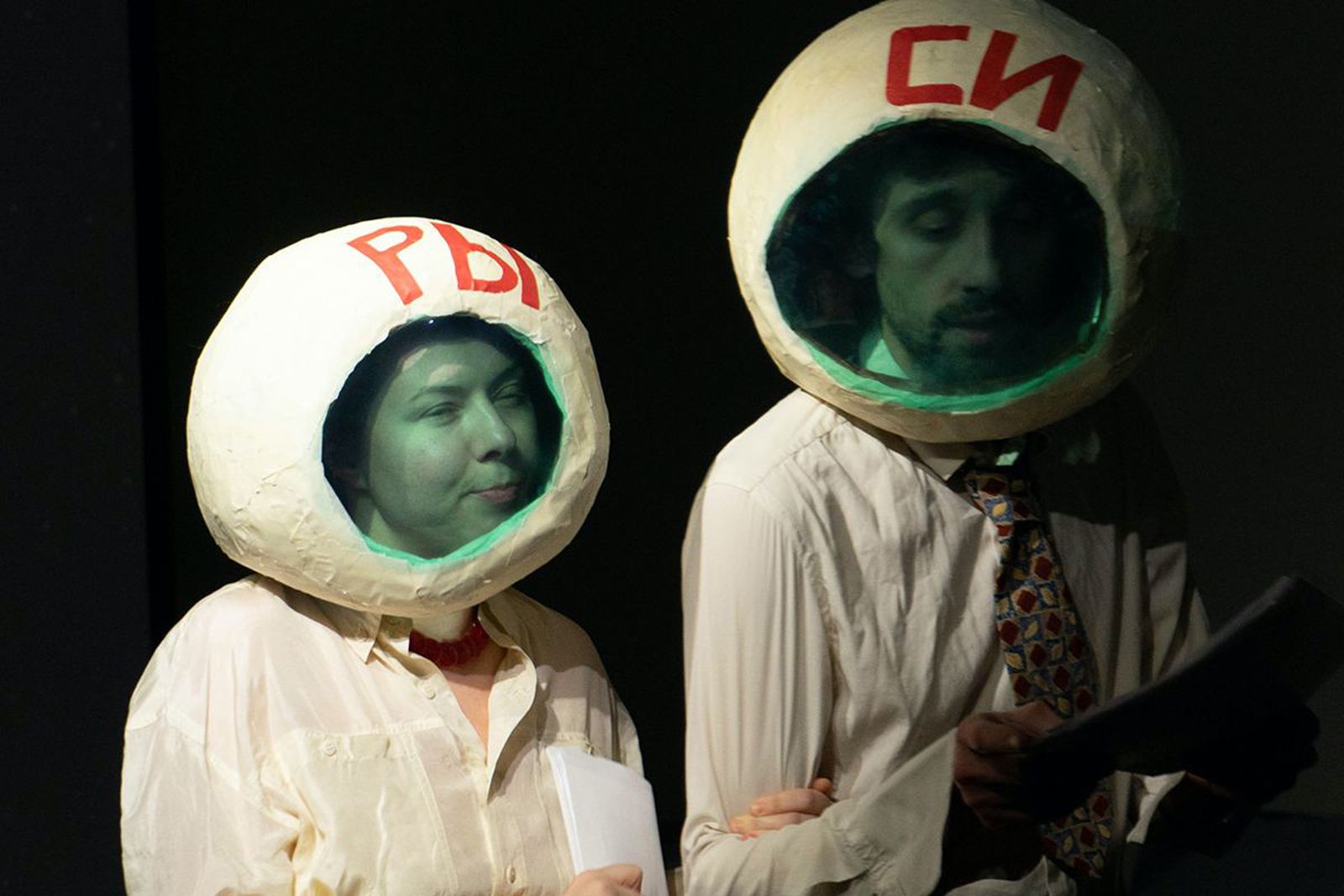
“Absolutely. But Praktika is not the only feature of our theater work. We’re still expanding the number of our residents. It’s very important for us to keep the new creative teams coming to our Museum, so we’re going to keep working in that direction. Voznesensky Center, for example, offered to transfer two of their stage plays, Lynxes and Loading Dock, to our venue. In October, the Museum of Moscow is going to host one of the performances from the Context International Contemporary Dance Festival, premiering Reality by Anna Shchekleina, a choreographer who’s won the Context Symphony project. Kudryashov’s Workshop is going to be another resident with performances such as Constellations, YouTube / At the Police, Over There, Half-Opened Microphone, Rain in Neukölln and That’s All You Have to Know about Music Conducting.”
“The Museum of Moscow has several branches, and there’s something happening there all the time, like exhibitions, presentations or theater performances. How do you manage a huge system like that?”
“We have nearly 300 people on staff now. Our Museum turns 126 this year; it’s existed all that time not because of directors, but thanks to the people that come here to work fresh out of the university and stay for a long time, if not forever. We have such valuable people, working here for decades. Our archeologists and restoration artists are brilliant professionals. I can say the same about housekeeping and security. I would compare the Museum of Moscow to a great orchestra. To set a tone for it, to be the conductor is a director’s job.”
