Cape Chelyuskin, polar bears and midnight sun. Young Muscovites talk about participating in the Great Arctic Expedition
(29).jpg)
14 young Muscovites welcomed the first day of summer north of the Arctic Circle, playing snowballs. It wasn’t by chance they found themselves so far away from home: in late May, they joined the Great Arctic Expedition to commemorate 280 years of Cape Chelyuskin discovery. Following great explorers, school and university students with their instructors went to the Arctic Ocean. They spent a whole week there, helping weather observers and exploring the Arctic.
The teenagers have recently came back to Moscow and told mos.ru about their unforgettable days up North.
Matvey Shparo, explorer of the Arctic, holder of Orders of Courage and Friendship, two Guinness records holder and the first man to reach the North Pole on skis during polar night, has been the main driver behind the Great Arctic Expeditions for over a decade.
“It all started in 2008, when me and my partner Boris Smolin were skiing over a thousand kilometers to the North Pole during polar night,” Mr. Shparo reminisces. “That’s when I had an idea to show kids what the Arctic is. We want them to start believing in themselves and their achievements on that trip and, after coming back, pass that belief on to those around them. This is a story of dreaming and of dreams coming true.”
.jpg)
Pass the test and believe in yourself
Before heading for the Arctic, the teenagers had to pass some serious tests. School and university students aged 16 and 17 were invited to try their luck. First the contestants had to choose the field they liked more (science or sports) and submit an application. Then they tested their knowledge in the Arctic dictation and shared their thoughts in an essay.
The second round took place in a training camp. 80 teenagers participated (40 from either field). Young athletes went to a ski trip to the Karelian woods while future researchers trained at the Rubicon team exercise facility in Ruza (Greater Moscow) and in the Moscow Youth Center for the Environment, Local Studies and Tourism. There, they worked on their research projects and honed their teamwork skills. Just seven people were selected for either team after the tests.
.jpg)
.jpg)
.jpg)
.jpg)
.jpg)
Realizing they really have to go on a really challenging trip, they were very serious about their training: packed all they would need, learned how to perform first aid and how to act in an emergency, i.e. what to do if ice cracks under their feet or if a polar bear comes to visit them in their tent.
They flew to Krasnoyarsk from Moscow and further to Khatanga village. From there, a helicopter flew them to the E. Fyodorov Joint Weather Station at Cape Chelyuskin. Athletes, in turn, went to Komsomolskaya Pravda islands and from there, started on a tier one skiing trip. Over the frozen Arctic Ocean, the teenagers went from Bolshoi Island to Cape Chelyuskin, to be welcomed there by the research team. They hiked for a little over 100 kilometers. Seasoned instructors were with them all the time.
“That trip got the teenagers believing that even their wildest dreams could come true. They went to their goal, overcoming obstacles and demonstrating their best qualities. The research team was running tests while the athletic team went over the same places where Semyon Chelyuskin was making his first drafts and which Ivan Papanin, Mikhail Shcherbinin, along with other polar explorers used for stopovers,” said Alexei Seleznyov, Great Arctic Expedition Deputy Manager.
.jpg)
Make a weather forecast and become a scientist
The science team members tell that discipline is the most important thing. In the Arctic, they used to wake up at 08:30 a.m. sharp every morning, because there were new and interesting things to do. Young researchers lived at the weather station, so they had to help the staff every day. For example, they had to gauge the snow level and launch weather balloons with polystyrene containers attached, to track the wind rate and direction. Those are all data required for the weather station to function. In their free time, teenagers were taking water and soil samples to deliver to research labs of the Moscow State University.
They also implemented some of their own projects while on the trip. For example, in order to check if a person can survive in the Arctic alone, the teenagers built a cave and were checking the air temperature inside every day. Turned out, the structure could indeed keep the air warm, and, if needed, become a nice shelter for a tourist.
.jpg)
.jpg)
.jpg)
.jpg)
.jpg)
On top of that, they designed a cardboard buoy that can measure the wind rate. The chief engineer was Maria Pilenieks, a 10th grader from school No. 1788. She noticed that the weather observers used polystyrene buoys, very nearly non-recyclable. The idea came to her at once. She made a cardboard module with all the sensors inside and launched it a few days later. The first launch was a success: the device is now in operation along with its polystyrene counterpart.
The expedition was the first time Maria went on a trip alone. She’s never hiked before, but a trip to the Arctic Ocean was her biggest dream.
“I was so happy when I learned that I’m going, I couldn’t believe that. It was so fascinating to look at the North with an explorer’s eyes, and to test myself. I was unbelievably surprised to see how diverse the Arctic is. I rode a sled for the first time: the snow into your face and bright sun, and an amazing feeling of being airborne. The only difficulty was the sleep cycle, because during polar day the sun is in the sky round the clock. That’s why the week was like one endless sunny day,” Maria told us.
.jpg)
The Muscovite says the trip got her new friends and a newfound love for hiking. This summer, she’s planning to join a geologist party to go to Kola Peninsula.
In explorers’ footsteps
Dmitry Chernozubov, P. Vostrukhin Communications College No.54 student and a member of the athletic team, told us about how the young skiers used to spend their time in the Arctic.
The young man was the “chronicler” of their trip, logging the distances, the break times and the most interesting things happening along the way in his notebook. Although it wasn’t his first long trip (he used to go hiking with his father often when he was a boy), this time around everything seemed completely different. There were snowy plains instead of mountains and sleds instead of packs on their backs. The teenagers also had skis, sleeping bags and special clothes: puffy boots called Buffs after their producers, water-resistant pants, down coats and windbreakers, warm jumpers and thermal underwear, warm socks and several pairs of gloves each. All that was provided by the trip organizers.
.jpg)
.jpg)
.jpg)
.jpg)
.jpg)
They skied for almost a week, sleeping in tents and getting to know the Arctic in all its glory. They visited Cape Papanin and saw the humble hut the famous Soviet explorer stayed in. It was buried in snow. A similar hut was also at Cape Shcherbinin. The hikers were able to get inside that one. There, young Muscovites found a double bunk bed made of logs, a small table and a potbelly stove.
Mapping their route precisely made the skiers able to re-track Semyon Chelyuskin’s team’s footsteps, but the Arctic also held other discoveries for them. The teenagers have met cormorants and even a real polar bear on their trip. The very young bear was playing in the snow a good way away from the team.
“It was incredible to see a polar bear! We had found some footprints every now and then, and always dreamed we would be lucky enough to see it. And that’s what happened. But even that was not as exciting as to realize you were really at the end of the world. You looked at the map and it was just dawning on you how few people had been there and how far away you were from home. But the Arctic was the only place you could forget about your troubles and the city hustle. There were only your friends and the boundless expanses of snow,” Dmitry said.
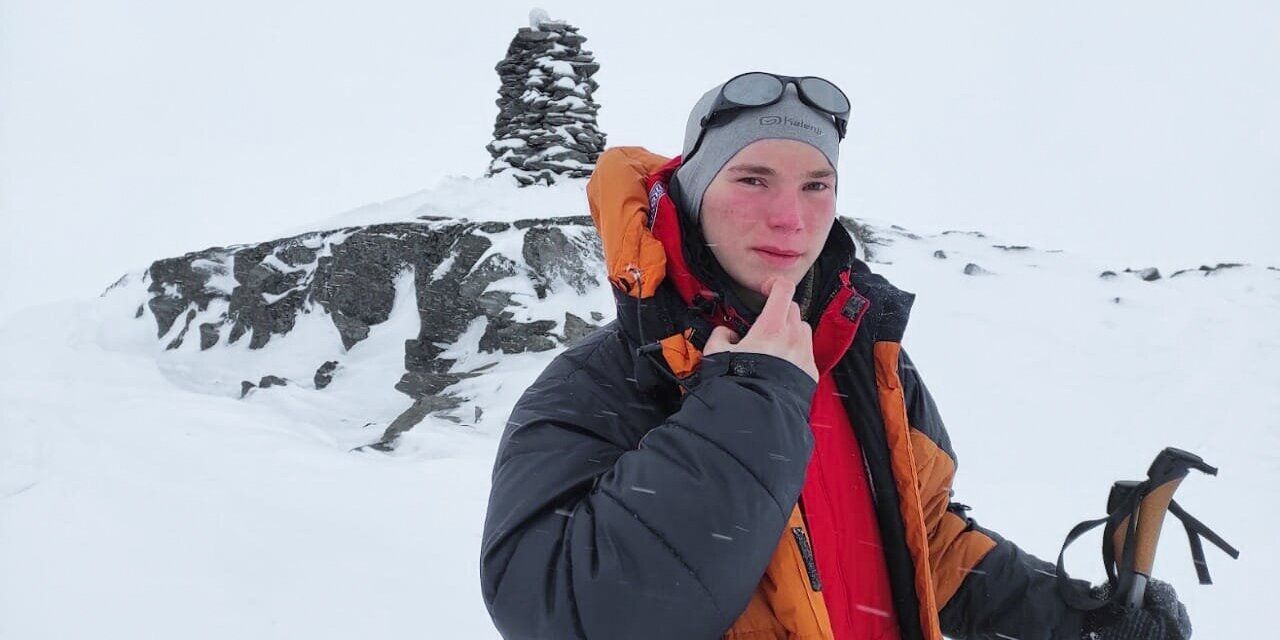
The young man believes the exhibition was the high point of his life so far. He got to know the Arctic and brought back lots of vivid memories he’s going to share with his family and friends, and eventually, with his children.