The Cheshire Cat at Prechistenka and Lev Rudnev’s work of art. Historians of Moscow talk about their favorite buildings
(11).jpg)
There are lots of historically rich buildings in Moscow. Historians, scholars of local lore and architecture know lots of interesting tidbits about each of them. Some of the buildings, however, bring them special pleasure to talk about. Those are ones their personal memories are connected to.
On the International Day for Monuments and Sites, well-known historians of Moscow working in the Museum of Moscow: Denis Romodin, Larisa Skrypnik and Andrey Klyuyev, showed mos.ru the buildings they want to enjoy over and over, and explained why.
Denis Romodin about Rusakov Workers' Club
Historian of local architecture, senior researcher of the Museum of Moscow
.jpg)
I was born in Sokolniki, and that was where I’ve spent all my childhood: around the block limited by Korolenko, Stromynka and Kolodeznaya streets. We lived in between two Metro stations, but it was more convenient to go to Sokolniki down Stromynka on foot. My route went along the row of stylish fences that surrounded former charities and rest houses. Back then, I just thought those were nice buildings, but they didn’t arouse much interest in me. The Rusakov Workers' Club that was also on my way was another story entirely. Built in a minimalist and austere constructivism style in the late 1920s, following the design by Konstantin Melnikov, this building has always made me slow down my steps.
The audience stands inside the sectors pushed outside and hanging over the pavement reminded me of building blocks. They really so look impressive: it’s a one-of-a-kind thing for the global architecture. The club was supposed to be a multi-purpose facility, a Lego house of sorts, where you could rearrange various rooms for specific purposes.
For me, it was also the place where I have attended a modeling club for a short while. We used to make tram models there. I loved doing that, because I grew up next to a tram depot, and my Grandpa used to work at Sokolniki Railcar Repair and Construction Factory. I also remember very well how I used to wait for the festive lights to go up on November 7, the October Revolution Day. On that day, the building was illuminated by scores of lightbulbs and looked even more futuristic.


Unfortunately, in the 1990s and 2000s, it acquired an appendage that served as a restaurant, but even in that state, the club remained the district’s dominant architectural feature. Of course, after the recent restoration it came close to its original appearance. I got used to it, and I’m happy I now can visit it more often, as a spectator of Roman Viktyuk Theatre performing there.
Larisa Skrypnik about the Okhotnikovs Mansion
Historian, history teacher, writer, senior researcher of the Museum of Moscow

Of all the luxury estates at Prechistenka that have survived to our times, I love the Okhotnikovs mansion the most. It’s notable feature is that its service facilities have also been preserved in addition to the main building standing along the “Red Line” of the street. That’s extremely rare for Moscow.
The Talyzins’ house used to stand in that place in the late 18th - early 19th century. It didn’t survive the fire of 1812. The new owner, Guard Cornet Pavel Okhotnikov, built an Empire-style stone mansion. We don’t know for sure who designed the main building. Maybe it was Fyodor Sokolov who was in charge of the city’s development around the Prechistenka area.


Its owners and architectural features are not the only thing the mansion is known for. The main point it was famous for was that in 1882-1923 it housed Lev Polivanov’s private high school, or, as they used to call it, the Tsarskoye Selo Lyceum of the Silver Age. Among its graduates were: Andrey Bely, Sergey Solovyov, Valery Bryusov, Maximilian Voloshin. The students used to spend the breaks between classes in the school courtyard. If you use your imagination, you might hear their voices there.
The semi-circular courtyard is formed by two wings that used to house the carriage shed, horse stables, granaries and storage rooms. Now they are occupied by sculptors’ and artists’ workshops. Thanks to them, the courtyard has its own, distinctive appearance. Instead of paving tiles, it’s paved with historical cobblestones. The space is filled with flowerbeds, swings and tree stumps. On Moscow Day and Museum Night they host open workshops, charity fairs and music shows.
.jpg)
.jpg)
.jpg)
.jpg)
.jpg)
.jpg)
One day I came here with a group of tourists, but the courtyard was closed off for some renovations. But we decided to try our luck and went in. Seeing us, the construction foreman shouted something. “They’re booting us out,” I thought. But then, there was total silence: no pneumatic hammers, no talk. The construction workers waited for me to finish my tour of this amazing place. Every time I come to this courtyard, I feel grateful to them.

Also, there’s a cat who come there every afternoon. There’s a gate arm at the courtyard entrance that casts a shadow on the nearby wall. One of the local artists added a wavy line to it making it into a sort of Prechistenka Cheshire Cat who vanishes at dawn leaving only its tail behind.
Andrey Klyuyev about the MSU main building
Tour guide, historian of Moscow, head of the City Tour Bureau of the Museum of Moscow
.jpg)
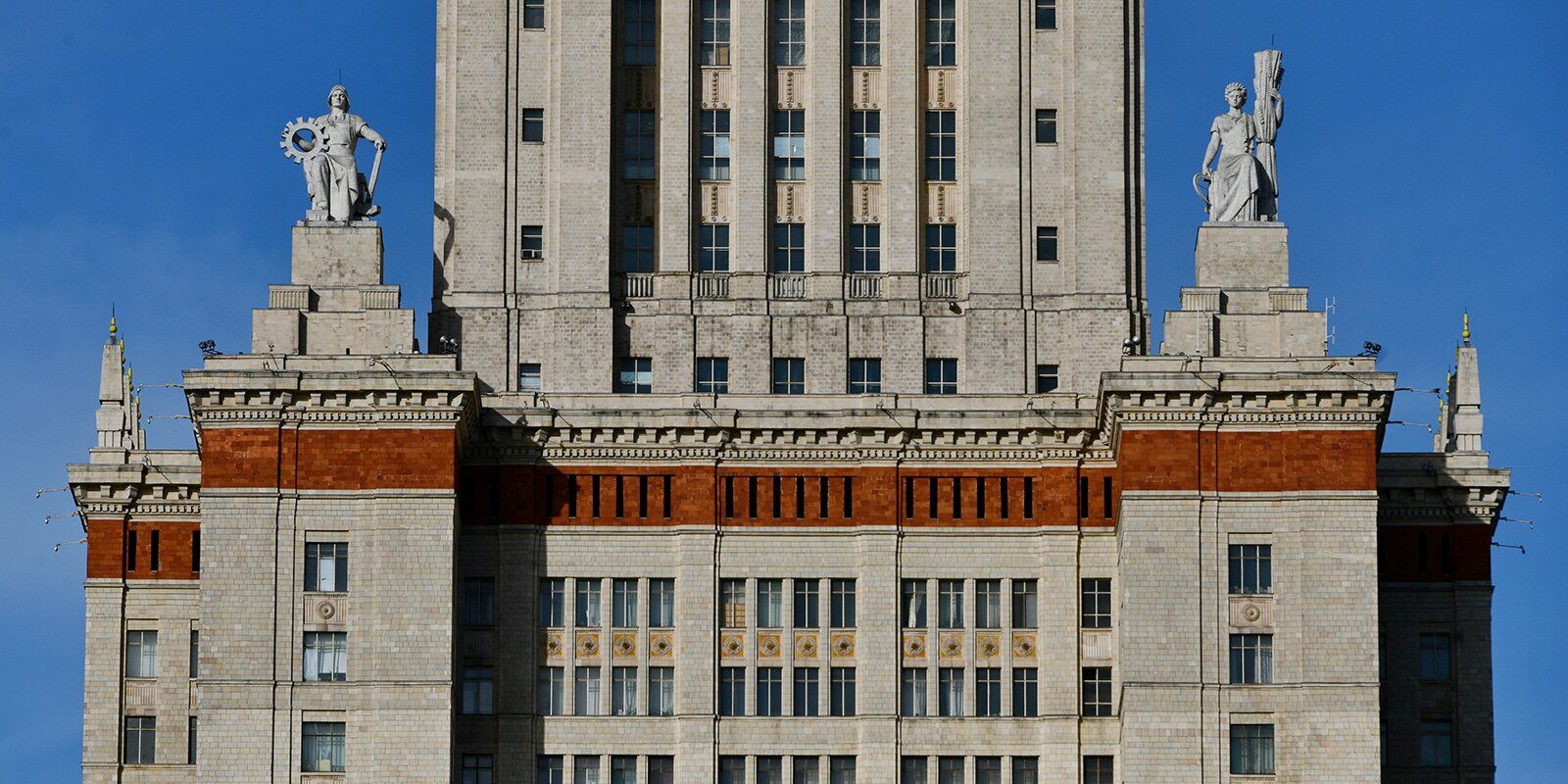
The Moscow State University main building at Vorobyovy Gory is a special place for me. That’s where I’ve spent my youth at the uni, that’s where I used to make plans and feel like a wonderful life was just starting. Like many MSU students, I was proud of my alma mater location and appearance.
It was created by Lev Rudnev (who inherited the project from Boris Iofan after the latter had retired), and became the peak of the grand Soviet style of the late 1940s - early 1950s. It combines neo-Classicist and Art Nouveau trends, like endless bas-reliefs, rustication and statues.
On the one hand, you would be hard-pressed to call it cozy: the building itself and the grounds that surround it are simply enormous. But that tends to change if you have some personal memories related to it. I do. There’s a short way to the Metro station going along an alley lined with beautiful lampposts. There I used to get lost in my own thoughts when going home after all my classes were over. I loved to look at the interior furnishings. You could say they went too hard on the marble in the grand halls of the first and the second floor. But it’s not just marble, it’s wonderful scenery that used to surround me whenever I was walking to class, to listen to my conversations with my classmates, witness the unbearable torture of waiting to be invited to take an exam.
I know for sure: the MSU main building makes people fall in love with it so much that some graduates start looking for jobs there, just to be able to keep coming to that building every day. It keeps surprising you even when you think you know it well. For example, a couple of weeks before graduating, I found a stairway leading to the labs on multiple floors. I had no idea it existed.