Metro control room: how the Joint Operations Center of the Moscow Metro works
.jpg)
Moscow Metro carries 7.4 million people on average on a weekday. That’s a lot of people, so the key objective here is to make it so that the Metro runs smooth and its passengers feel comfortable. There are dozens of staff making sure of that from the Joint Operations Center (JOC) round the clock. Mos.ru explains why they have all been brought there, how they coordinate all the services and what advantages passengers get out of that.
Metro heart and mind
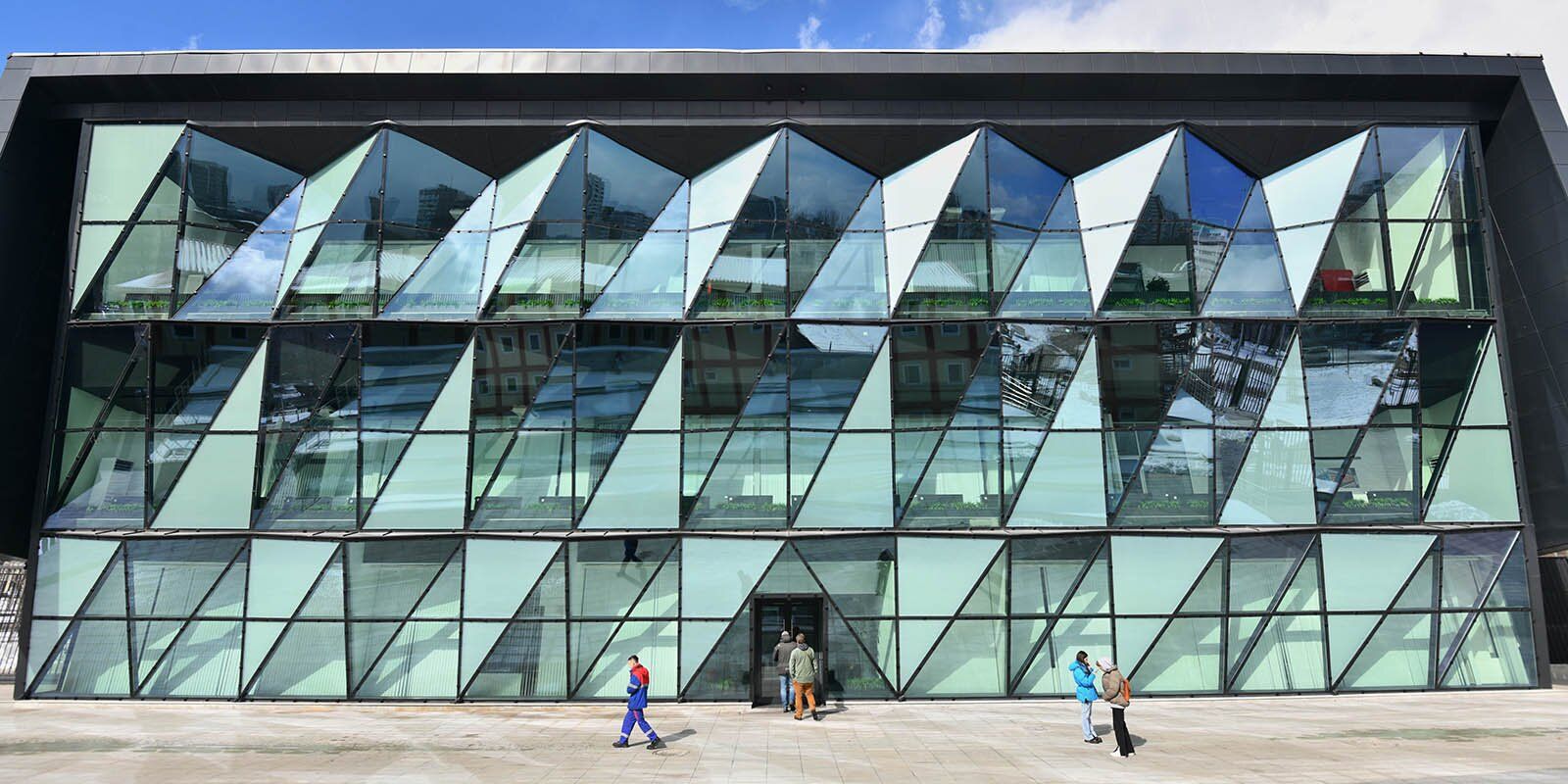
The Joint Operations Center was launched in the former Yerevan cinema building at Dmitrovskoye Motorway. The Gifts of Armenia mosaic panel (1970) was preserved inside. Other than that though, it’s a modern work space bringing together about 230 people that previously had to work in various areas of the city.


The main hall display wall on the 3rd floor has 36 monitors. The staff track updates for the train schedule, passenger flow data, the number of trains on the line, other operations data, train traffic change announcements, surveillance video feed in real time.
“Previously, we used to mainly communicate via phones, but now all the main services are concentrated inside this single information space. If there’s a failure or an incident, the Metro operator on duty will announce it via loudspeakers. The appointed staff members relay that information to the specialized team at once, so they can fix the problem on the spot,” says Andrey Zhabin, JOC First Deputy Manager, Head Dispatcher of the Metro.

The single space brings together the staff that handles literally everything that happens inside the Metro, every area of its operations. The first row is occupied by a PR employee tracking every Metro-related messages on social networks and media, and a representative of the Moscow Central Ring and Moscow Central Diameters; further back are the fire safety staff, the rolling stock, traffic, tracks, power supply and other department representatives. Even the cash desks and ticket vending machines are controlled from that center.
The connecting link is the Metro officer on duty who occupies the red chair in the middle. That is the key person of the shift: he or she gets all the information about the Metro operation and liaises with the Traffic Control Center, police and emergency response services. The officer on duty controls the handling procedure for every incident. “That’s a lot of responsibility. What needed there is stress resilience, knowledge of the Metro technologies and operation specifics,” shares her experience Svetlana Shitova, the Metro officer on duty.

A decision-making support system was developed to help JOC operators. It has over 130 scenarios it’s able to suggest the best operational procedures for. On top of that, the Center also controls the tram network that was handed over to them early in 2021. The walls are lined top to bottom with large displays showing data on tram traffic and stops’ status.
Underground circles
The staff occupying the second floor track the specific Metro lines’ operation. Each line has its own dispatch circle: a separate space for a group of professionals responsible for its infrastructure and train traffic.
“The circle for the Troitskaya line currently under construction is already there. So far, it’s used by tram traffic operators. Sixteen dispatch circles in total were created to handle current and future Metro lines,” Mr. Zhabin clarified.


The circle operators monitor trains’ flow, make sure they come on schedule, control ventilation and power supply systems along with the escalators. The middle of the circle is a place for traffic controllers who have direct links to train drivers (all they have to do is to depress a pedal) and station managers.
“Our main job is to monitor train traffic, make sure they are on time and ensure prompt response. If something happens, we have to direct traffic, send repair teams, and so forth. Our main responsibility is to the passengers. Millions of Muscovites board our trains every day, and we’re responsible for every one of them,” says Nikita Savin, a train traffic operator for the Bolshaya Koltsevaya line.

Each operator has the train schedule in front of them, showing both planned and actual departure times. They make comments in it on any instructions issued to the train drivers (i.e. delay departure for a few seconds). In the future, they plan to transfer those schedules to interactive tablets sending data to train drivers directly.
“Most often, trains go off-schedule at rush hours, when passengers prevent car doors from closing. People think they’re helping others, but in reality, everyone suffers, because you want to help one person save a bit of time. The trains that follow that one have to adjust to that delay, and that means further delays for 1,300 people per train (about 1,500 in new Moskva-2020 trains),” Mr. Zhabin tells us.
Each Metro line has its own features. For example, Maria Amelina, a train traffic operator for the Solntsevskaya line, tells us that the staff servicing the line are mostly young people. “It’s exciting to be a train operator. You have to study the regulations and follow them to the letter. We try to stay on good terms with the other staff servicing the line, because they share responsibility for their stations. It’s important for them to feel the train traffic operator’s support, to always be able to rely on each other. We have to remain calm and focused, confident in our job, that’s the key to passenger transport services,” she explains.

Working for the passengers
The Joint Operations Center was established first of all to ensure the Metro passengers’ comfort. If people crowd the entrances or the cash desks, operators can switch the turnstiles to the reverse mode (letting people both in and out), turn on an extra escalator, or provide an extra train. In anticipation of mass events – football matches or music shows – the JOC establishes a special headquarters to monitor the stations experiencing the highest workload. However, unusual situations may arise.
“Once a toy dog ran away from one of the passengers. We noticed that and warned the train drivers approaching the station to go slower and be on alert because the animal could have jumped down onto the tracks. Eventually, the dog reunited with its owner, and everything turned out all right,” Andrey Zhabin says.


The JOC enables the Metro staff to handle the issues that arise quicker and easier. In the two years after its inception, they were able to save Muscovites over 200 hours of their time thanks to a faster response to any possible issues. Digitalization does not only make the underground staff’s work easier; it makes Muscovites able to make it to work in comfort every day, and to not be late for meetings.