Sergei Sobyanin: The restoration of Yelokhovo's Epiphany Cathedral façades is complete
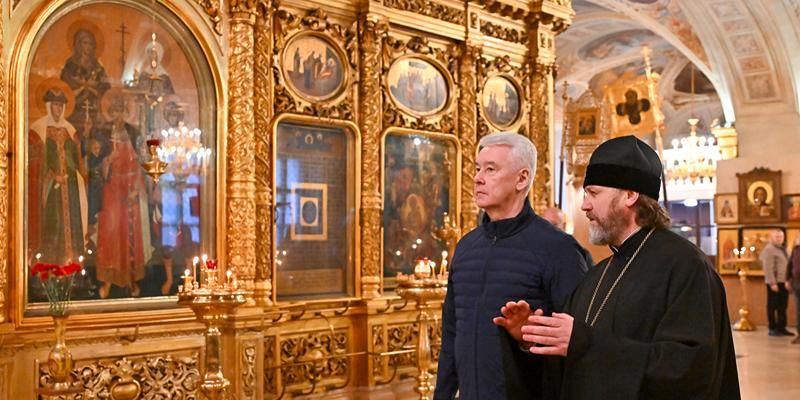
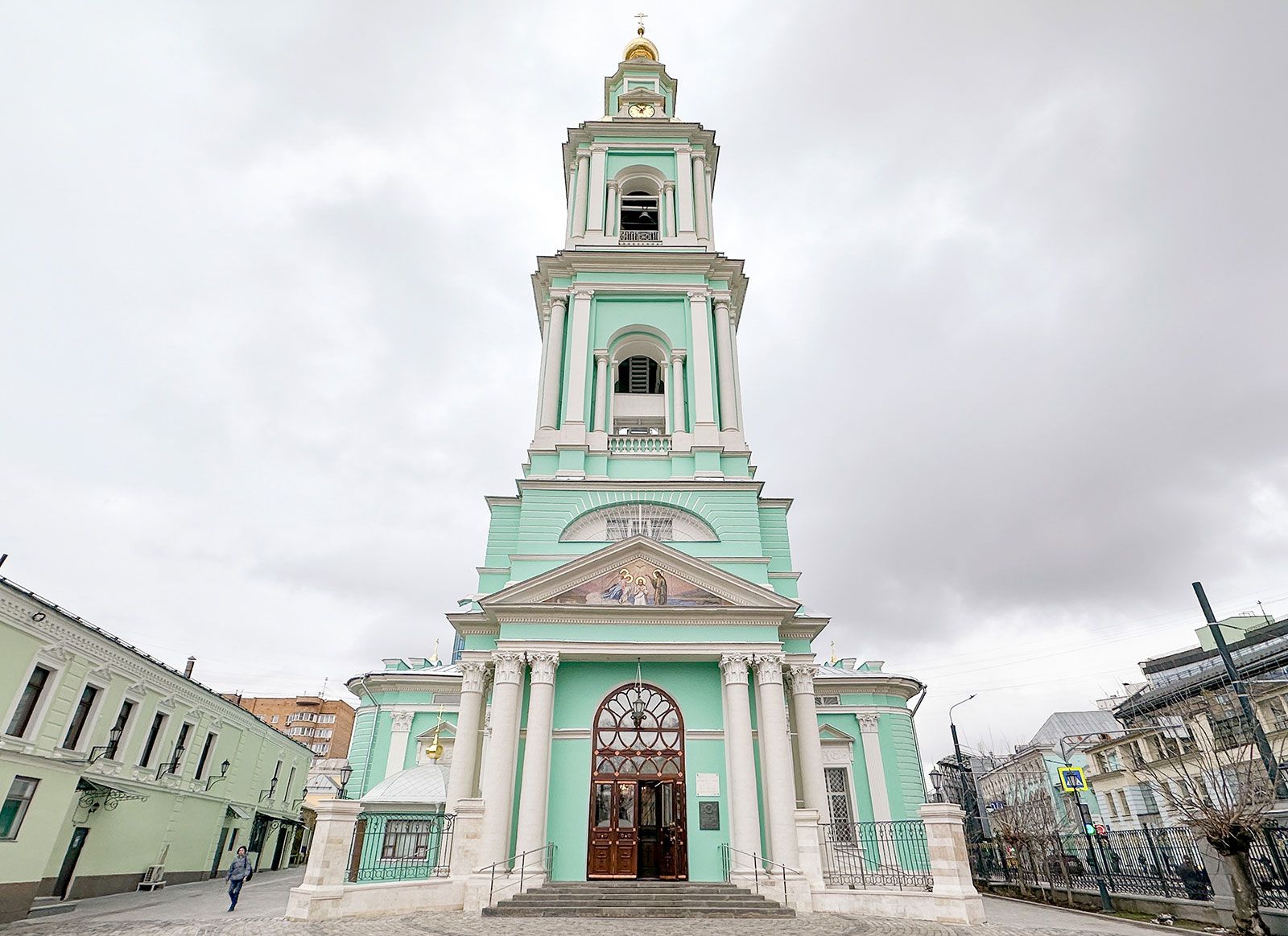
Sergei Sobyanin inspected the results of façade restoration at the Epiphany Cathedral in Yelokhovo (15 Spartakovskaya Street).
"Our Patriarch is celebrating his 80th birthday today. He is the Patriarch of Moscow, not only of all Rus', and the cathedral is his principal place of service. At the same time, we have finished restoring the Church of Christ the Savior, Russia's main temple, making it a present of sorts to our Patriarch. May God grant him long and active life in the service of our country and Moscow," Sergei Sobyanin says.
A cultural heritage site of federal significance, the Epiphany Cathedral in Yelokhovo designed by Yevgraf Tyurin and built in 1845 is one of the oldest and largest active churches in Russia. In the Soviet times, it became the Patriarch Cathedral of the Russian Orthodox Church (ROC); the status of the metropolitan church of Moscow was granted to it in 1991.
This has been the first ever full, research based restoration of the church façades that took about two years. The previous project in the 1980s was mostly focused on maintenance and repairs, Sergei Sobyanin reveals on his Max channel.
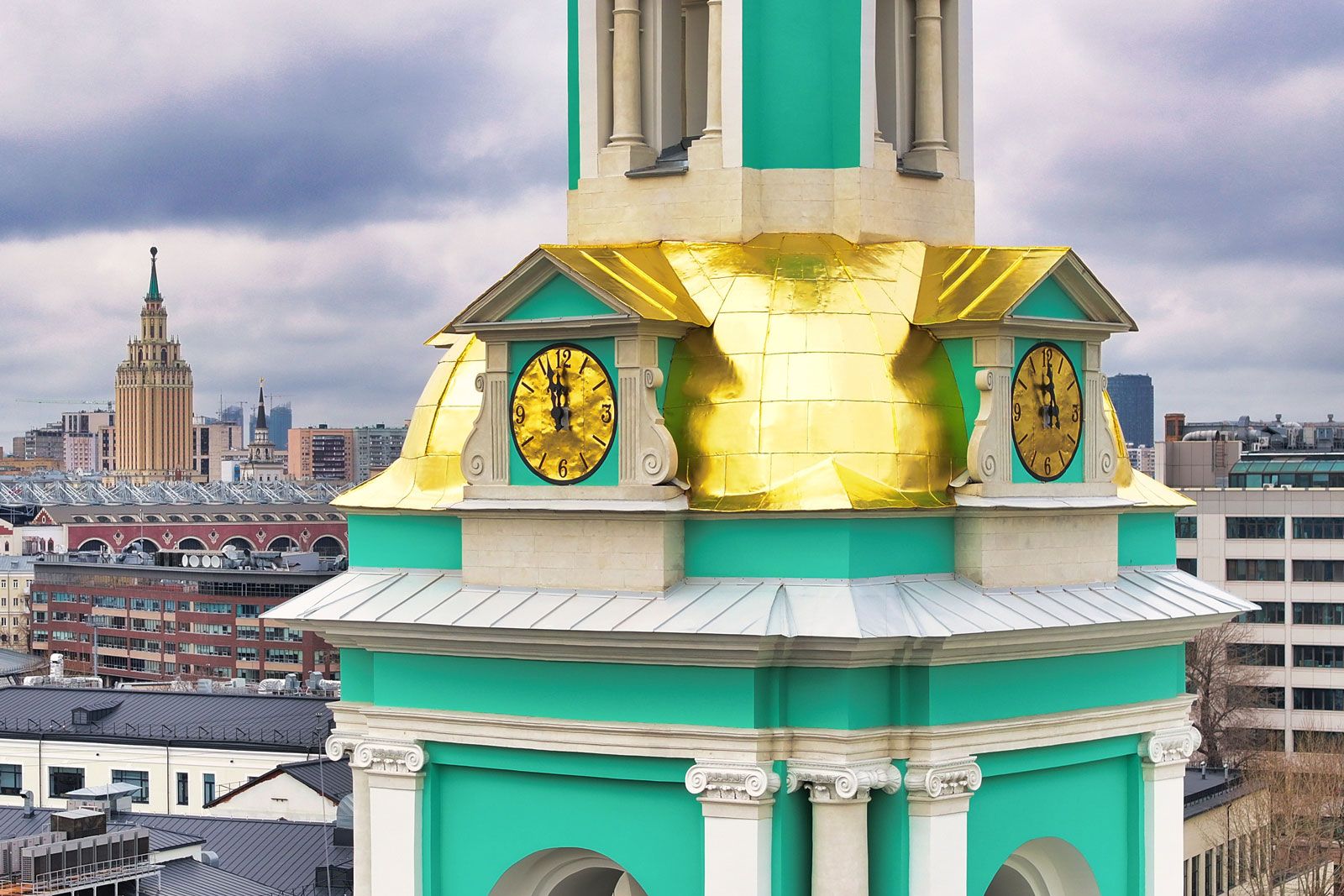
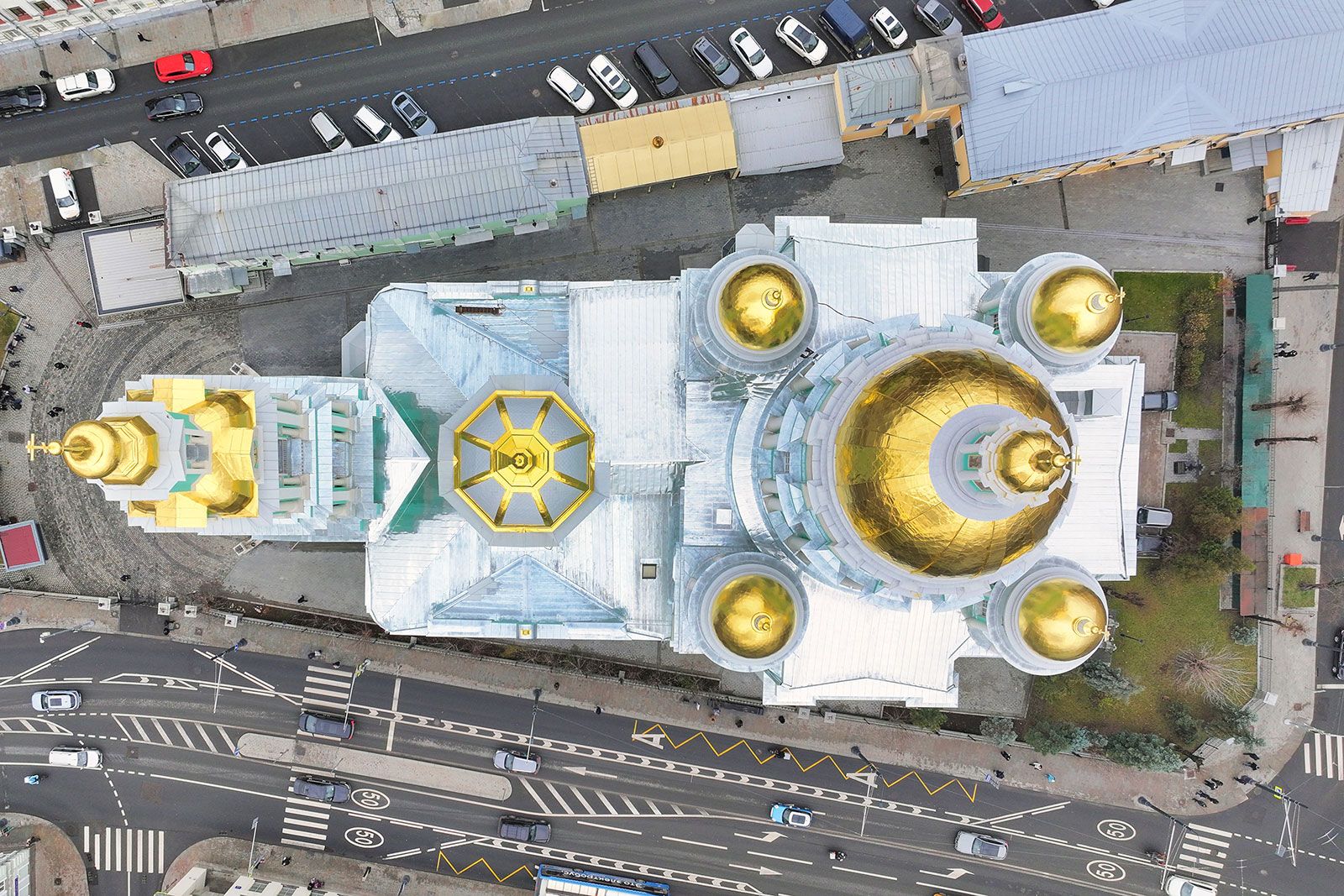
"All the cathedral domes have been returned to their historical appearance. Only the main one was made of gilded copper before the restoration; the rest were faux-gilded. This time around, our experts used plating made of small rectangular copper plates, which they covered with gold leaf," Moscow Mayor shares.
Source: Sergei Sobyanin’s Max channel
About 850 square meters of gilt were applied in total. Wooden frames were renovated in smaller domes.
In 2025–2026, experts re-plastered about 7,000 square meters of the church façades, removed decades-old deposits of dust, soot, and mold, restored the damaged brickwork, and replaced its lost fragments.
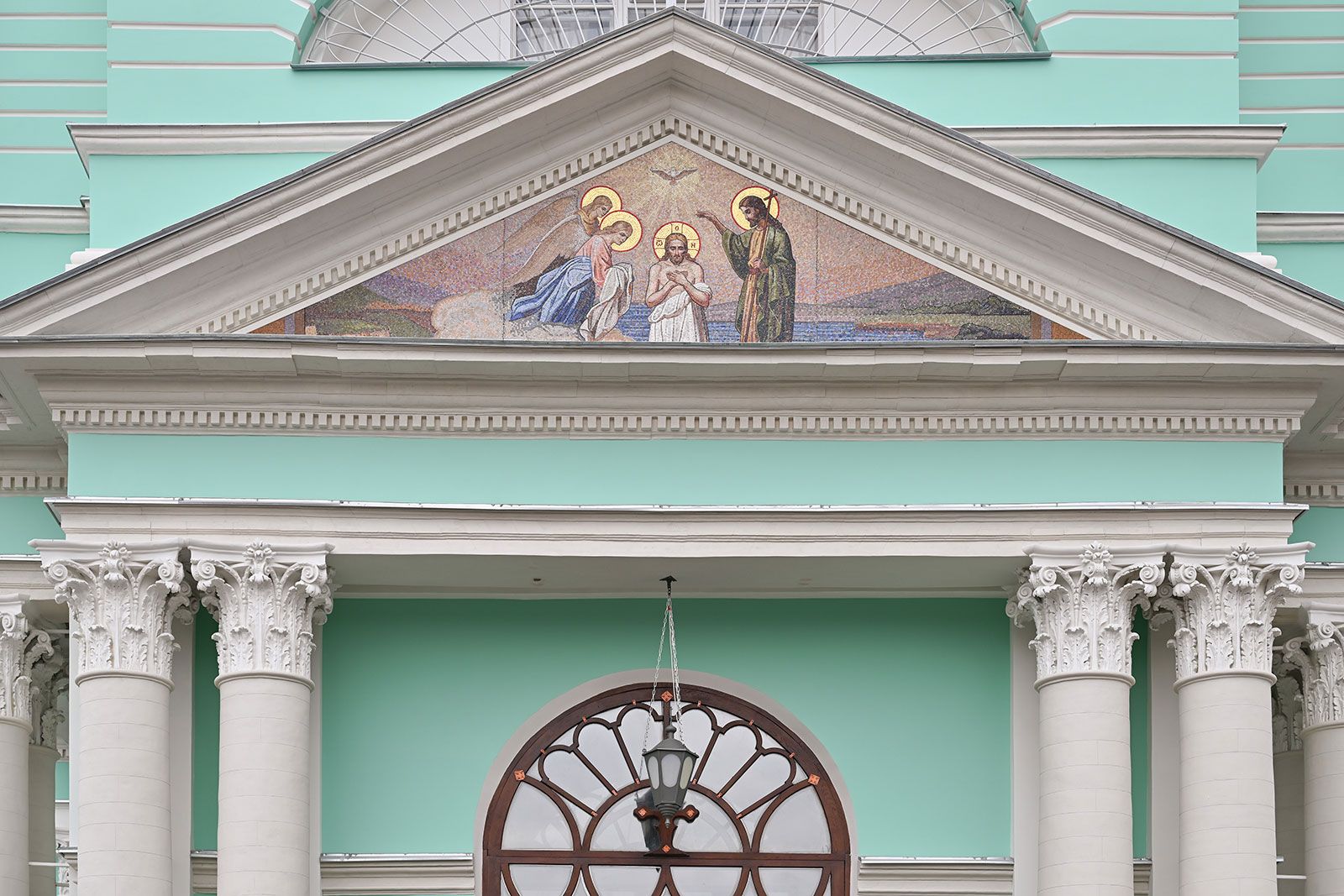
The Yelokhovo church is lavishly decorated with white stone elements. Restoration workers carefully cleared all of them of plaster layers, which were up to two centimeters thick in places, and restored massive white stone pillars, the foundation, the cornices, platbands, and plaster mouldings: medallions, column caps, panels, and corbels.
Panel mosaics depicting archangels and saints are another well-known element of the Yelokhovo church's façade ornaments. Icons of the Holy Virgin, St. Alexis, and St. Nicholas are central to them, with painted scenes from the Bible being no less prominent. Restoration workers carefully cleared them of years-old grime and treated them for preservation.
The wooden doors with stained glass panes were restored in away workshops: they renovated the stained glass, cleaned the wood from later coating layers, stained, and lacquered it. Window frames and grates were repainted.
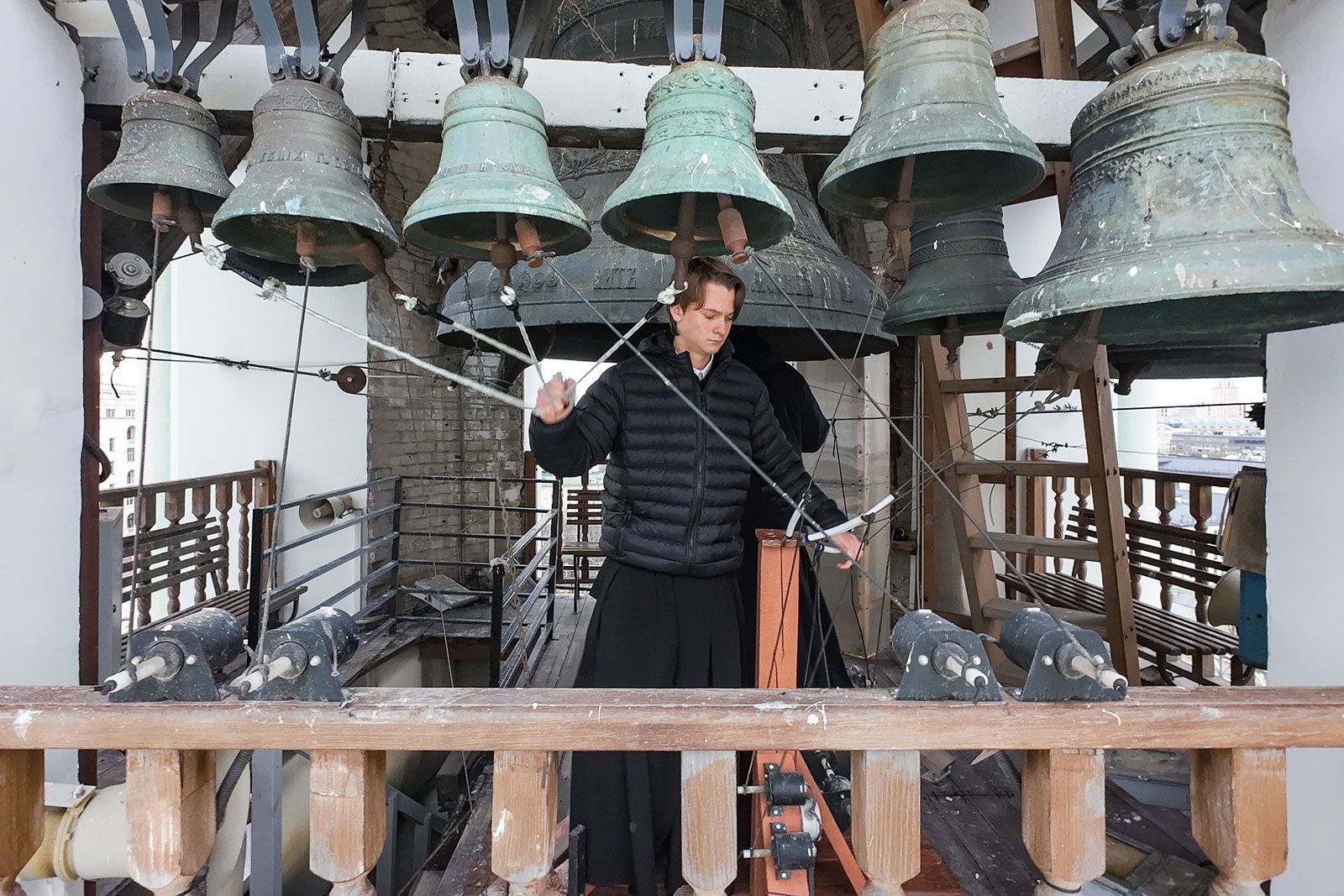
The bell tower's main decoration, the gilded clock oriented to the compass points, was also restored.
The church's roof was covered with steel plates, its beam system reinforced, and lathing replaced. About 1,600 square meters of roof surface were renovated in total. On top of that, the restoration effort covered granite steps and platforms, as well as white stone pillars and their plinths framing the church entrance.
"We are deeply grateful for the help provided to the Epiphany Cathedral. Thank God, all the works that have been planned are now complete to the highest quality standard, the highest level," says Father Thomas, Archbishop of Odintsovo and Krasnaya Gora, vicar of the Holy Patriarch of Moscow and all Rus'.
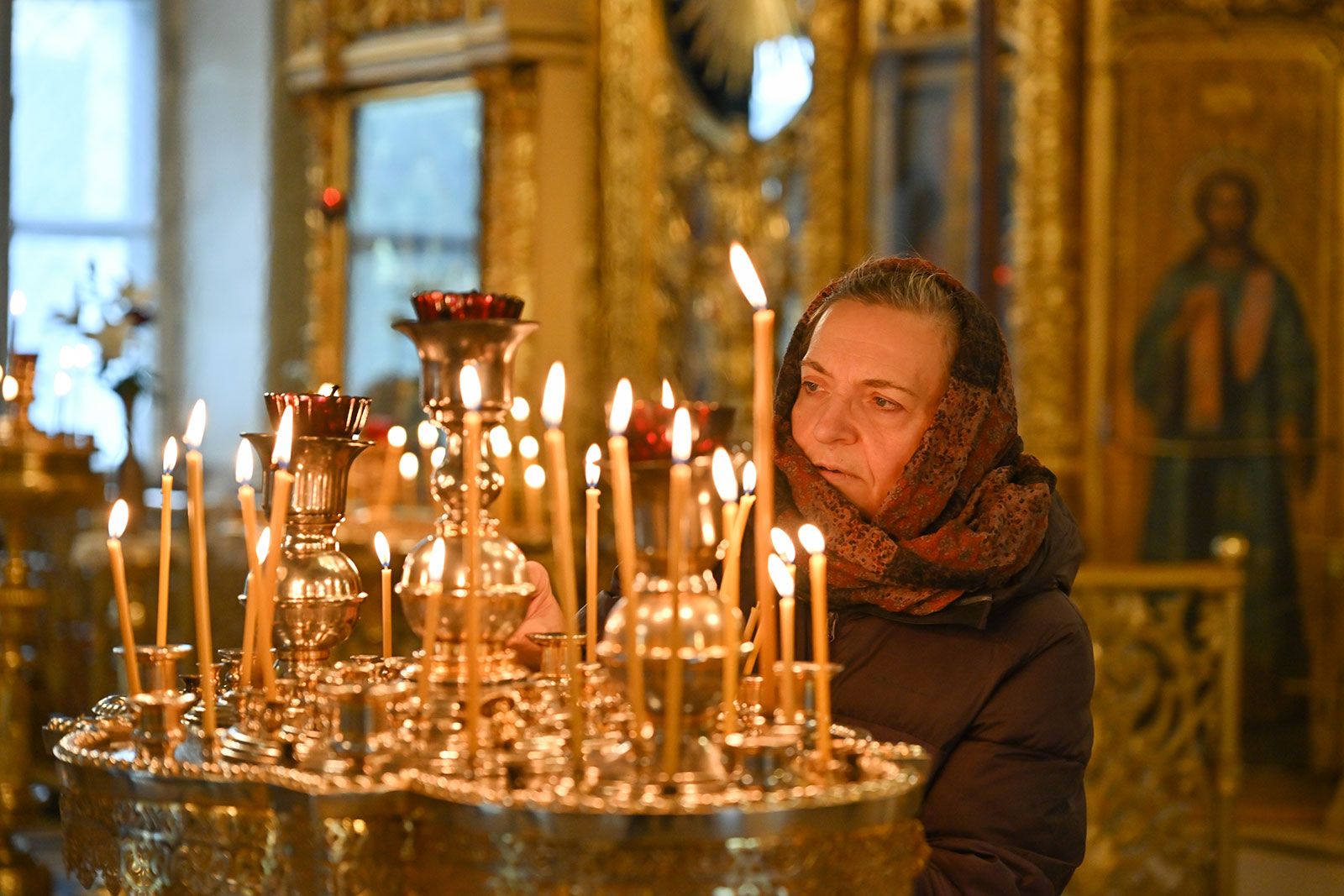
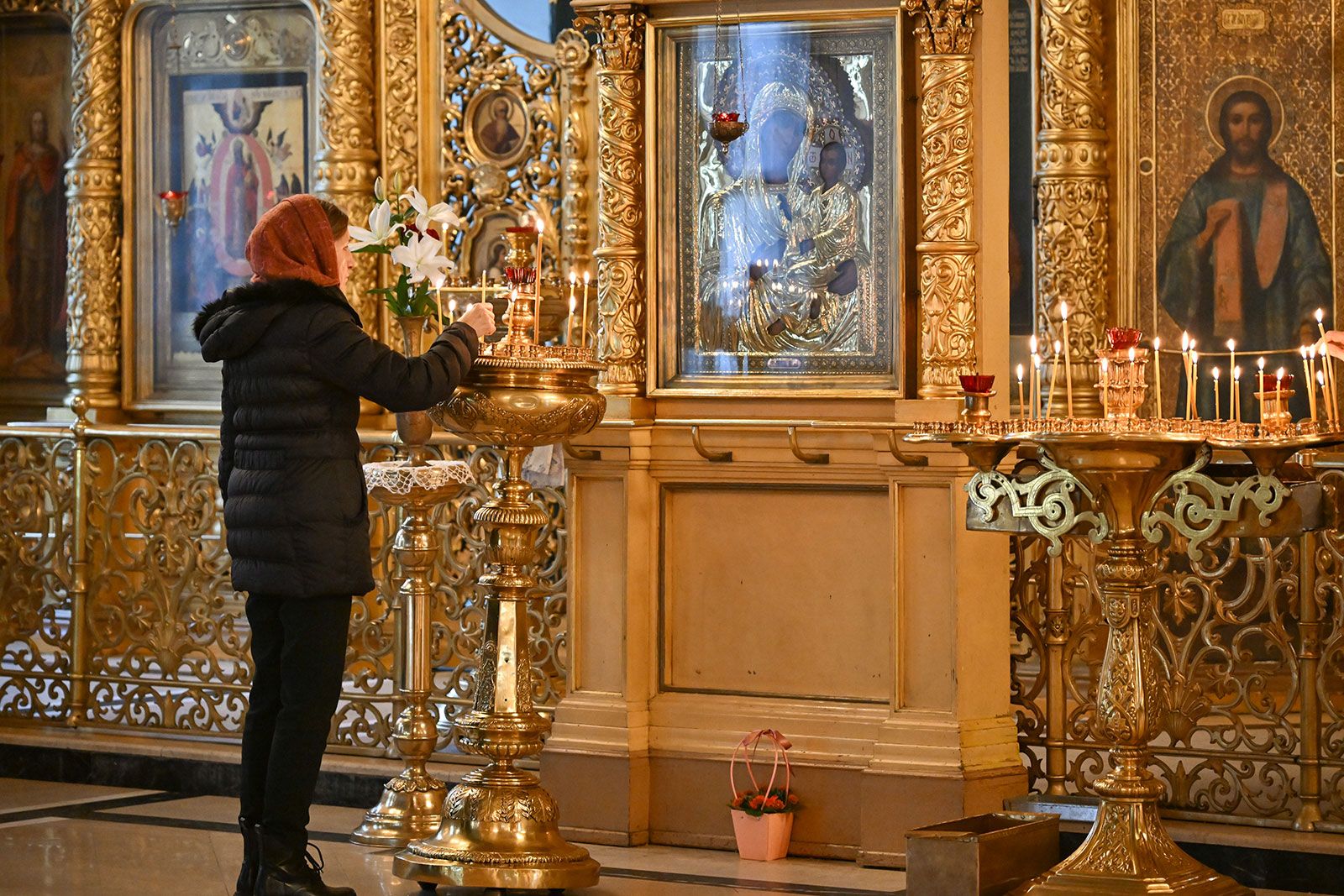
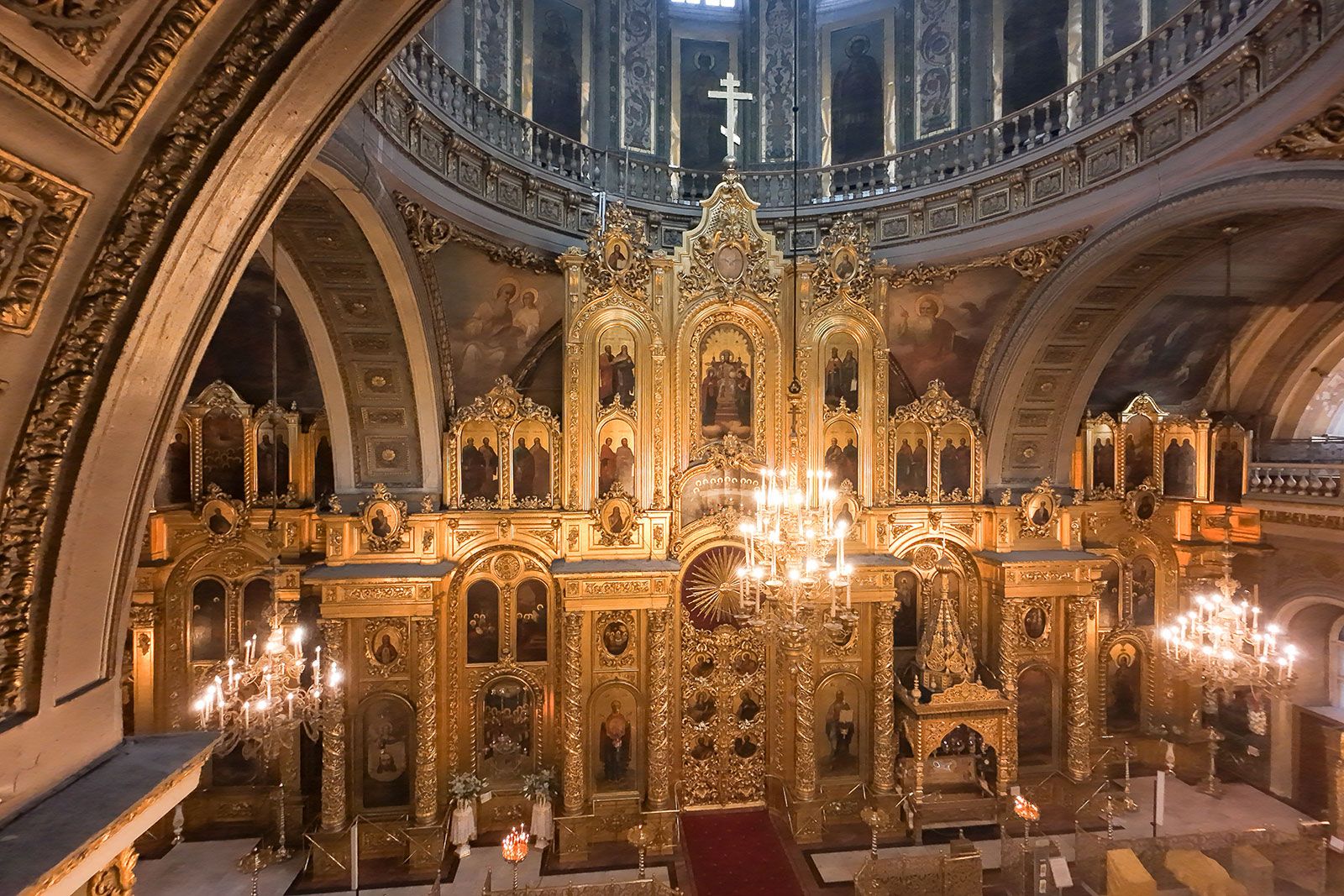
One of the oldest churches in Moscow
The history of the Yelokhovo Cathedral is four and a half centuries long. A wooden church first appeared in Yelokhovo village (Basmannaya Quarter) in the late 16th century, and has been mentioned in writing since 1694. Yelokhovo is believed to be the birthplace of St. Basil, a venerated Russian miracle worker. In the 1720s, Peter the Great ordered a stone church built to replace the decrepit wooden one. A decade later, the construction, financed by Peter's niece, Grand Duchess Praskovya Ioannovna, was complete.
"Together with the Moscow Patriarchate, we are undertaking a great, in-depth restoration effort. 130 churches have been saved and restored in the recent years, and that effort is still ongoing. Today, we have completed the restoration of Moscow's principal church: the Epiphany Cathedral in Yelokhovo, where Alexander Pushkin was baptized in his day. It is, indeed, one of the most well-known churches in Moscow yet it has not seen a single research-based restoration in the last century, so we had to undertake a huge project to save that architectural landmark, that sacred place," Sergei Sobyanin reveals.
The church was located next to the German Quarter, where people of other faiths had settled initially. However, in a short time, the number of Orthodox parishioners grew dramatically, and the church had to expand.
An ambitious construction project started in the late 18th century, adding a spacious refectory with two chapels: one consecrated to the Holy Epiphany and another to St. Nicholas, as well as a bell tower in the Moscow Classicist style. Great Russian poet Alexander Pushkin, whose parents used to live in the German Quarter, was baptized there in June 1799, the fact immortalized by a memorial plaque on the church's façade. Grand Duke Sergei Alexandrovich, General Governor of Moscow, and Grand Duchess Elizabeth Feodorovna attended the service held in the cathedral on the centennial anniversary of the poet's death.
By the mid-19th century, the cathedral and the bell tower have been reconstructed once more, 'for larger size and better architecture,' this time following a design by Yevgraf Tyurin. The modest single-dome church was replaced by a majestic five-dome cathedral. Its main dome was reminiscent of the dome of St.Peter Cathedral in Rome. The church and the bell tower were 56 meters tall, cementing their position as a dominant landmark of Moscow's Basmannaya area.
As the anti-religion campaign was in full swing, the Soviet authorities repeatedly tried to close the church down. Despite the persecution, thousands of believers were still flocking to the church in the 1920s, to attend services conducted by St. Patriarch Tikhon. Icons and other items from the surrounding churches that had been closed down were handed over to the cathedral in 1930; its congregation grew to 25,000 Muscovites. The plans to demolish the church to make way for metro construction or to convert it into a cinema have never been implemented.
In 1935, after the closure of the Kazan Cathedral on Red Square, the Yelokhovo Cathedral received the venerated copy of the Kazan Icon of the Holy Virgin. The patriarchal locum tenens, Metropolitan Sergius, who later went on to become Patriarch, used to pray to that icon for victory at the time of the Great Patriotic War.
Thousands of believers were coming to the cathedral at wartime to attend services asking God to grant victory to the Russian host. An air defense station was located in the bell tower during the defense of Moscow, helping to protect the city from air raids. As a strategically important facility, the cathedral was mined in preparation for the possible surrender of the city. Priests and congregation members were running army fundraising drives; in four years, they contributed 835,200 rubles to the war effort and donated 535,100 rubles to purchase gifts for the Red Army soldiers. After the war had ended in victory, the cathedral was granted the Patriarch status. Patriarchs Sergius, Alexis I, Pimen, and Alexis II were enthroned there. It has also served as the burial site for Patriarch Sergius who passed in 1944.
The relics of St. Alexis, Metropolitan of Moscow, kept in Moscow Kremlin since 1930, were handed over to the cathedral in 1947. The shrine containing the relics was delivered to Yelokhovo Cathedral and has been standing by the main icon stand's holy gates ever since. Patriarch Alexis II was buried inside the cathedral in 2008, next to the relics of his heavenly patron.
The cathedral is now a metropolitan church, where the Holy Patriarch of Moscow and all Rus' often conducts holiday services personally. It also runs spiritual awareness campaigns, operates a Sunday and choir schools, along with a youth club, organizes pilgrimages and offers catechesis courses for those who wish to study the basics of the Orthodox Christian faith.
The Orthodox Moscow
Moscow is the metropolitan city of the Holy Patriarch of Moscow and all Rus' and one of the largest cities in the world with a predominantly Orthodox population.
As of January 1, 1915, 563 standalone churches were operating within Moscow's city limits, including 102 churches in 25 monasteries and convents. In the time where state atheism was the prevailing ideology, their number decreased ten-fold, despite the city's limits expanding over and over.
Starting from 1988 and the celebrations dedicated to 1,000 years of the Russian Christendom, the majority of surviving churches have been returned to the Russian Orthodox Church. They all are, however, predominantly located in downtown Moscow; many residential areas outside the Third Transport Ring had no access to active churches.
To rectify that, the Russian Orthodox Church together with the Moscow Government, has been building new churches in Moscow since 2010. Private individuals, public associations, entrepreneurs and philanthropists join that program by donating to the Moscow Church Construction Support Foundation. The city provides land plots to religious organizations free of rent, for religious or charity facilities to be placed there.
The Moscow Government supports the Russian Orthodox Church when it comes to designing the required urban planning documents, connecting newly built churches to utilities networks, landscaping their grounds, and solving other technical issues.
157 churches have been built and opened their doors in the 17 years the program has been in effect. Another 122 are planned, with 41 already under construction, 10 in preliminary stages, and 71 in development.
The city has handed 279 land plots over to the church for construction, including 69 in Troitsky and Novomoskovsky Administrative Districts.
The Russian Orthodox Church operates over 1,200 churches and chapels in Moscow, including 582 standalone churches and temporary chapels that offer services and 15 monasteries and convents.
Restoration of religious landmarks
The Moscow Government is very mindful of preserving religious landmarks. 137 churches have been restored since 2011 under city-funded programs, including subsidies to religious organizations.
"Restorations are underway in 30 churches currently. Our plans for 2027 include 12 facilities owned by the Russian Orthodox Church," Sergei Sobyanin shares on his Max channel.
Source: Sergei Sobyanin’s Max channel
The renovated iconic buildings include: the Church of Elijah the Prophet at Novgorod Metochion on Ilyinka, the Church of Assumption of the Blessed Virgin Mary in Veshnyaki (Yunosti Street), the Church of the Resurrection of the Word in Uspensky Vrazhek (Bryusov Pereulok), the Church of St. Peter and Paul on Novaya Basmannaya Street, the Novospassky Monastery's Transfiguration of the Savior Cathedral, the St. Nicholas Church on Three Hills (Novoye Vagankovo), the Vagankovo Cemetery church, the Trinity Church on Karamyshevskaya Embankment, the Church of the Assumption in Sviblovo Estate, and the Ascension Church in Kolomenskoye.
30 religious heritage sites are being restored in 2026, including the Trinity Church on Karamyshevskaya Embankment, the Bell Tower of St. Nicholas Church in Podkopai, the All Saints Church on Kulishki, etc.
Plans for 2027 include restoring 12 ROC churches, including the Church of St. Martyr Irina (the Life-Giving Trinity) in Pokrovskoye, the Vysokopetrovsky Monastery's St Sergius Refectory, the Church of John the Baptist under Bor, the Intercession Church in Rubtsovo, the Church of the Resurrection of the Word by Sokolnicheskaya Zastava. The last project will involve restoration of the roof, the foundation, the interiors, and landscaping on the church grounds. For the Church of St. Peter and Paul on Novaya Basmannaya Street, plans include recreating the lower church icon stand; for the Alexeevsky Convent Church of All Saints — finishing production operations; for the Church of St. George in Gruziny — restoring façades and the roof.
Restoration of the Cathedral of Christ the Savior
The repair and restoration project at the Cathedral of Christ the Savior, Russia’s largest and most important Orthodox church, was completed in 2026.
For three years, it was the worksite for over 500 professionals, including stonemasons, roofers, carpenters, restorers of bronze and gilding, artists, high-altitude workers, mountaineers, structural engineers, and many others. Students from the College of Architecture, Design, and Re-Engineering No. 26 were working alongside seasoned artisans.
The outcome was fully the renovated church exterior. Its façades were the place the major effort went to. Expert checked nearly every marble panel out of 64,000, closing any cracks, eliminating chips or other defects, replaced some lost elements with new ones, made to order.
The façades were also inspected for hidden hollows that might be found behind the cladding panels. The injection technology was used where any such hollows had been discovered, with over 29,000 holes drilled and filled under pressure with special compounds in order to ensure the structural integrity of the walls for years to come.
All the bell chambers' interiors were re-plastered and painted in a shade of white that matches the historical original. The metal elements, such as railings, staircases, and ceiling structures, were cleaned of dirt and traces of corrosion, treated with protective compounds, and painted black.
The bell chambers' roofs were a point of special attention. They fully restored the domes’ metal lathing, replaced damaged components, and treated the entire structure with hydrophobic and anti-corrosion coatings. After that, the domes were plated with stainless steel coated in titanium nitride, giving the surface a striking golden hue. That technology ensures the color will not fade with time. New finials were also made for the domes.
The cathedral’s four observation decks, visited annually by thousands of Muscovites and tourists, were also refurbished. In order to ensure the safety and comfort for visitors, a new, durable base layer with waterproofing and added cutting-edge insulation was applied and the paving restored.
The gate bell tower was a point of particular focus for the restoration experts. Its famous high-relief sculptures — those depicting the Holy Mandylion, Hieromartyr Alexander, Holy Patriarch Tikhon, and Great Martyr Elizabeth — as well as the bronze high-reliefs above the entrance, which feature the face of the Savior and the Transfiguration of the Lord, were meticulously cleaned and polished. The old gate bell tower dome cladding was replaced by a new one, made of stainless steel with a titanium nitride coating. The original finial was removed and replaced with a new one, while the bell tower’s cross was gilded with gold leaf.
In addition, they completely renovated the cathedral’s roof and zakomar, which involved setting a temporary roofing workshop on the abutment. There, they cut about 14,000 unique roof elements by hand.
The main dome, nearly 30 meters in diameter and 27 meters tall, was the most challenging and demanding part of the project. They constructed a 35-tier reinforced scaffolding structure around it to support heavy decorations and make sure the work continues in any weather. Restoration professionals removed the old cladding in small sections, crafted replacement pieces in the on-site workshop and then fitted them to the exact required dimensions. For the main dome, they used stainless steel with a titanium nitride coating, too: the total weight of the new cladding is about 15 tons.
Church courtyard improvements
In 2014—2026, the Moscow Government landscaped courtyards for 363 churches and other ROC facilities.
Improvements were carried out at the grounds surrounding 86 churches: over 90 hectares in total. 157 new churches were connected to engineering networks. For that purpose, they laid 27.5 kilometers of cable (with 24.2 mW of electricity supplied), over 13 kilometers of heating pipes (over 50 Gcal/hour of heat), and 15.2 kilometers of water supply and sewage pipes (65.5 cubic meters of water supplied per hour).
Architectural lighting systems were installed on 51 churches, while 69 got extra lighting, with 568 new lampposts and 835 lighting fixtures.
Joint project by the Russian Orthodox Church and the Moscow Government
In 2026, the Russian Orthodox Church and the Moscow Government hosted some joint events. On January 25—29, for instance, the International Christmas Reading Session took place, focused on "Awareness and Spirituality: the Formation of Person and the Challenges of Time." About 70,000 people took part in the project. The Moscow Sunday school choir festival was held on March 15. The Moscow Synod Choir hosted music shows on May 14 and October 14, donating the proceeds to charities.
Events focused on the Day of Slavic Writing and Culture took place on May 24. The Church of Christ the Savior Council Hall hosted a show by renowned performers and the laying of flowers at the monument to St. Cyril and Methodius on Slavyanskaya Square.
Events commemorated the Christianization of Rus' were hosted in Moscow on July 28, including a cross procession carrying a relic and an icon of St. Prince Vladimir, the baptizer of Rus', equal to apostles, after a holy liturgy in the Dormition Cathedral of the Moscow Kremlin and a prayer service on Borovitskaya Square led by Kirill, the Holy Patriarch of Moscow and all Rus'.
The Elijah Day took place on Ilyinka on August 2, celebrating the memory of Elijah the Prophet and the Paratrooper Day in Russia.
On top of that, the city helps ROC organize photography exhibitions focused on life and social activities in new Orthodox parishes created via Moscow's orthodox church construction program, supports the Macarius, Metropolitan of Moscow and Kolomna, Commemorative Award Foundation (awards for new research or scientific conferences) and the Orthodox Encyclopedia Church Research Center operations (purchasing the Encyclopedia volumes for schools and libraries in the city), as well as assists with the hosting of Orthodox Rus' for the National Unity Day church and public exhibition and forum.
Every year, blessed by Kirill, the Holy Patriarch of Moscow and all Rus', Moscow hosts the Easter Gift, a charity festival especially beloved by Muscovites.
Russian Orthodox Church mass events in 2026
Every year, the relevant departments of the Moscow Government, along with municipal services, provide security assistance for Christmas, Epiphany, and Easter celebrations.
On August 27—September 4, 2026, for instance, security, healthcare and sanitary services were provided for the bringing of the icon of Holy Theotokos of Tikhvin to the Cathedral of Christ the Savior.
On September 6, every possible assistance was ensured for the Moscow-wide cross procession from the Cathedral of Christ the Savior to the Novodevichy Convent, with about 100,000 participants. Security and law enforcement, sanitary and healthcare assistance, street closure and information support were provided for the event, with video streaming platforms set up by the cathedral and the convent for broadcasting purposes. Sergei Sobyanin supported Patriarch Kirill's idea to make Moscow-wide cross processions annual events.
On September 15—20, Moscow's executive authorities provided support setting up access to the relics of Saint Prince Dmirty Donskoy and the right arm of St. Spyridon of Tremithus displayed in the Cathedral of Christ the Savior, for crowds of believers. About 300,000 came to venerate the holy relics.