Moscow inaugurates high-tech MUV manufacturing plant — Sergei Sobyanin
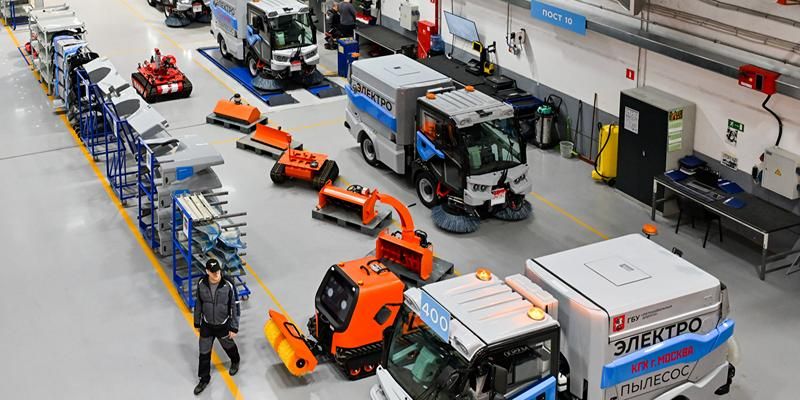
Russia has launched its first-ever vertically integrated, locally arranged facility to manufacture electric municipal vehicles at the Technopolis Moscow Special Economic Zone (SEZ), as announced by Moscow Mayor Sergei Sobyanin on his Max channel.
“By order of the Russian President, we continue to run projects aimed at strengthening the nation’s technological sovereignty. Today, we are inaugurating a state-of-the-art plant at the Technopolis Moscow SEZ to develop and mass-produce next-gen electric municipal utility vehicles,” the Moscow Mayor shares.
Source: Moscow Mayor’s Max channel
Virtually every stage of development, from conceptualization to finished vehicles, is localised in Russia, with the resulting products specifically adapted to Moscow’s operating conditions. Demand is guaranteed under an investment contract signed by the Moscow Government and the manufacturer, committing the municipality to purchasing approximately 1,600 MUVs by 2031.
The project involved major industry players, including KAMAZ PJSC, with the total investment amounting to RUB 1 billion, to have created more than 200 high-tech jobs. The company is also enjoying support from the Moscow Fund for Industry and Entrepreneurship Support.
Innovative special-purpose machinery plant
Established in 2024, the Innovative Special-Purpose Machinery Plant (ZIS) produced its first vehicle, a pre-production prototype, the same year. In 2025, it was granted the resident status at the Technopolis Moscow SEZ. In July 2025, they launched a 3,800-square-meter assembly workshop to engage in component preparation, kitting, installation of mechanical and electrical systems, final assembly and inspection of finished vehicles. Most components used in final assembly were supplied by partner companies and contractors.
In 2026, the company added a 4,200-square-meter fabrication workshop to move to full-cycle manufacturing and to expand its in-house component production capabilities. Today, the plant with a total footprint of 10,800 square meters boasts a designed production capacity of more than 300 MUVs per annum.
The plant is equipped with advanced, high-tech machinery, while its production processes include laser cutting systems for sheet metal and tubular stock, press brakes with robotic workpiece feeding, robotic welding cells, CNC turning and milling machines, along with a closed-loop paint shop. Internal logistics are handled by automated guided vehicles (AGVs) transporting assembly kits, automated storage systems and a centralized management system. Noteworthy, more than 80 per cent of the plant’s operations are automated.
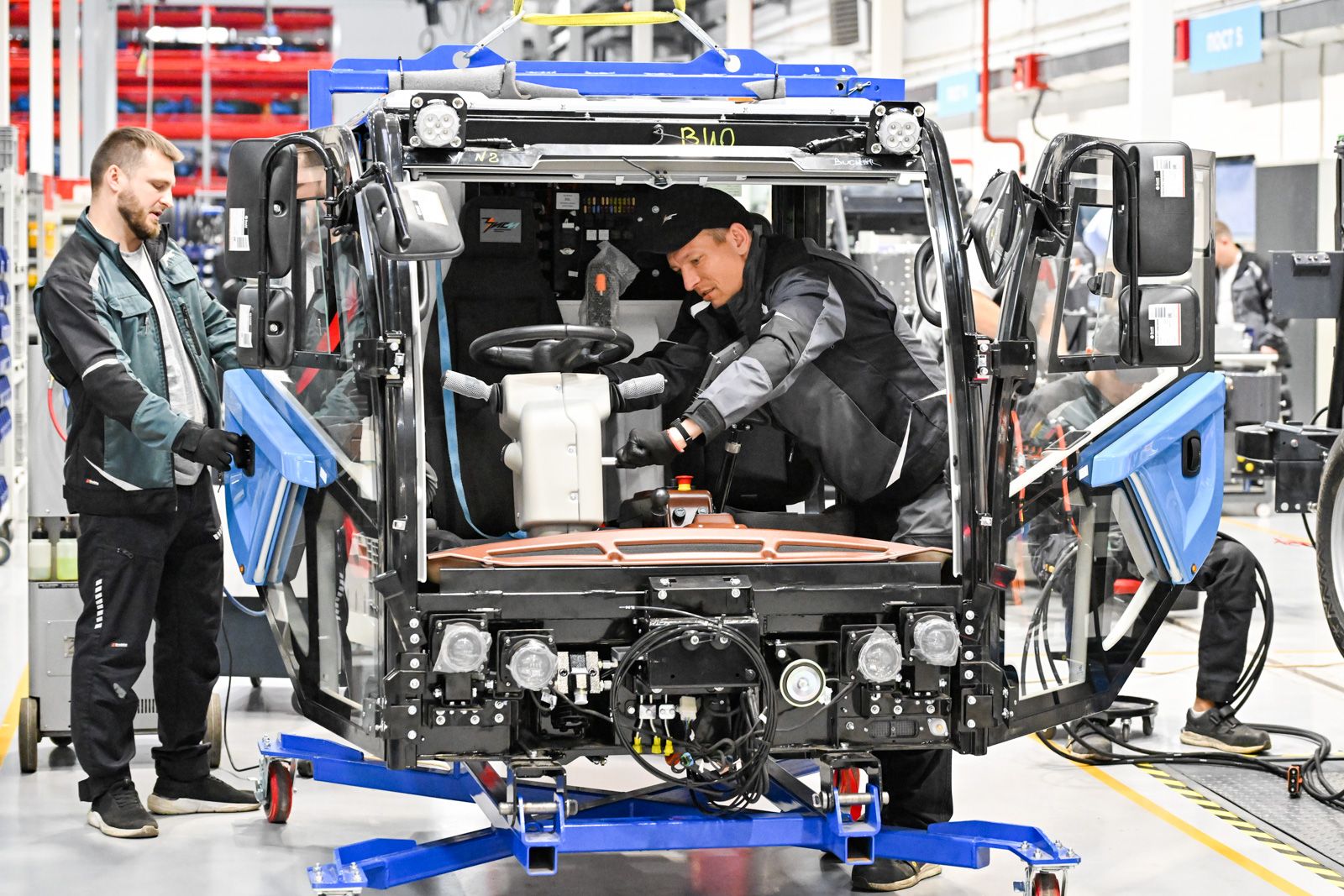
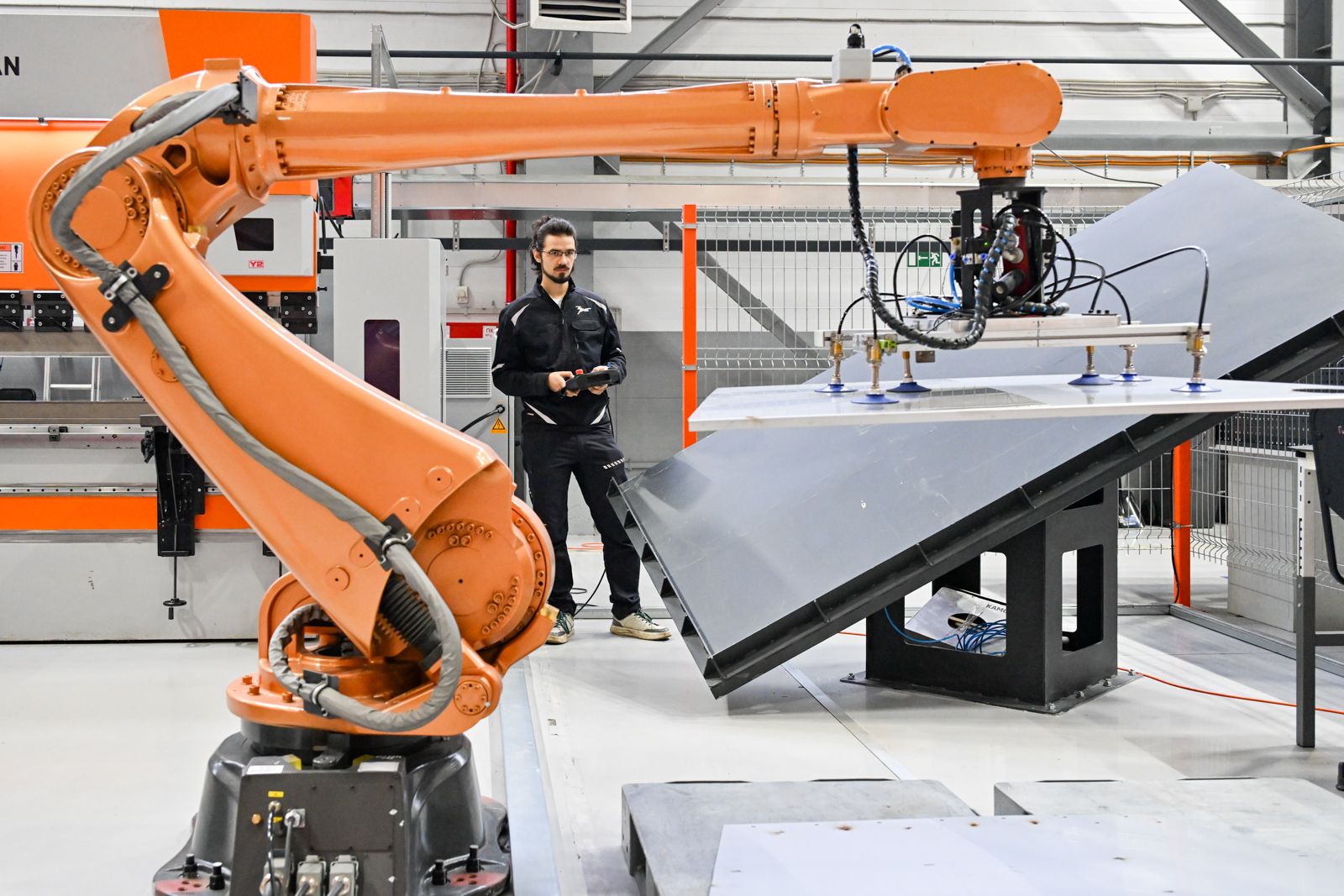
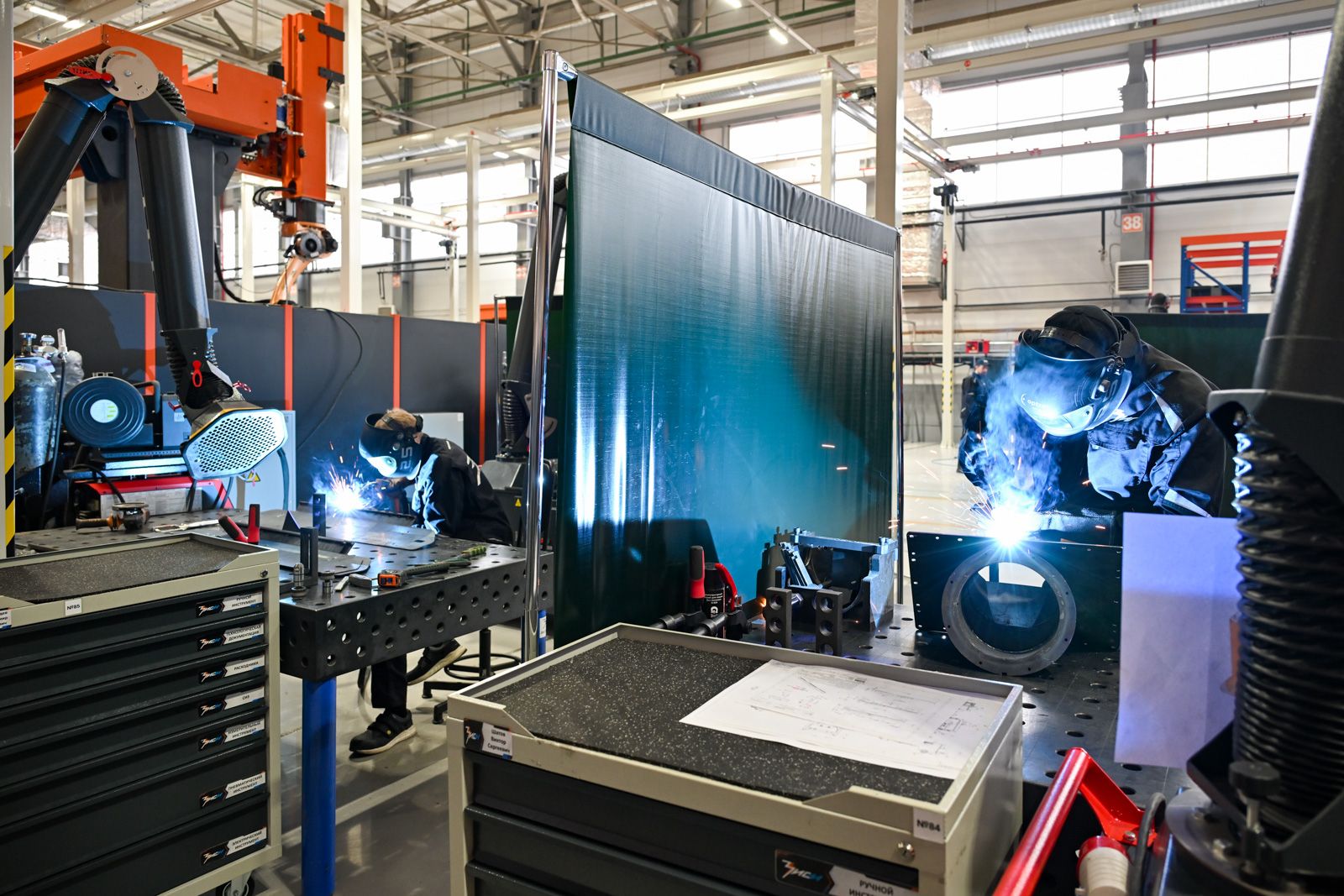
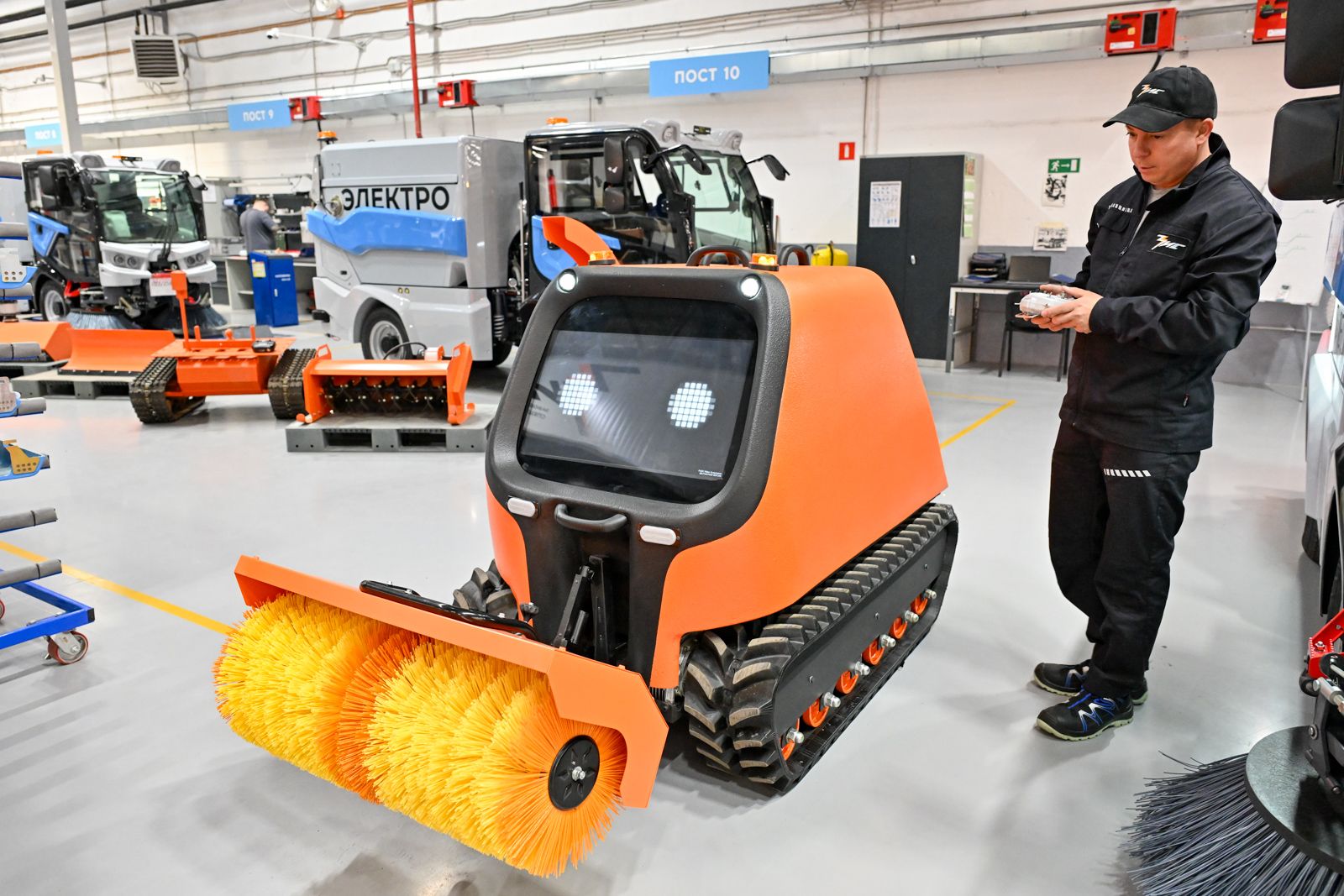
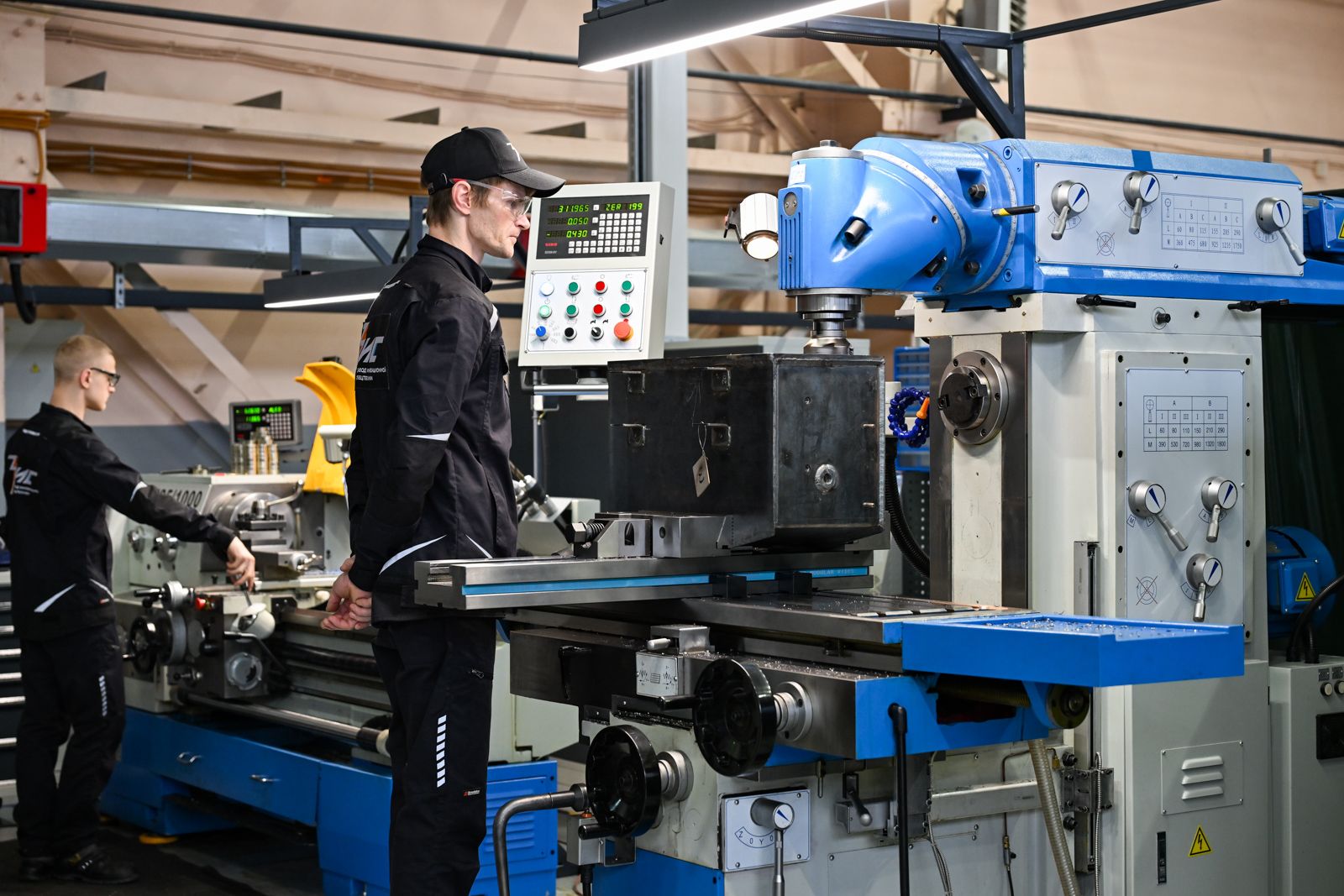
Moreover, its domestically manufactured feedstock accounts for more than 90 per cent as virtually all key assemblies and units are manufactured in Russia, thus reducing dependence on external suppliers and ensuring production continuity. The figure will rise further once traction batteries manufactured by the Moscow Electric Battery Cluster are incorporated into the MUVs. A prototype traction battery developed by RENERA LLC is currently undergoing testing.
On top of that, the plant operates a dedicated training centre for service technicians and production staff. Equipped to simulate real manufacturing processes and equipment malfunctions, it offers opportunities for employees to develop and upgrade their hard skills.
VKM 2024E electric road sweeper
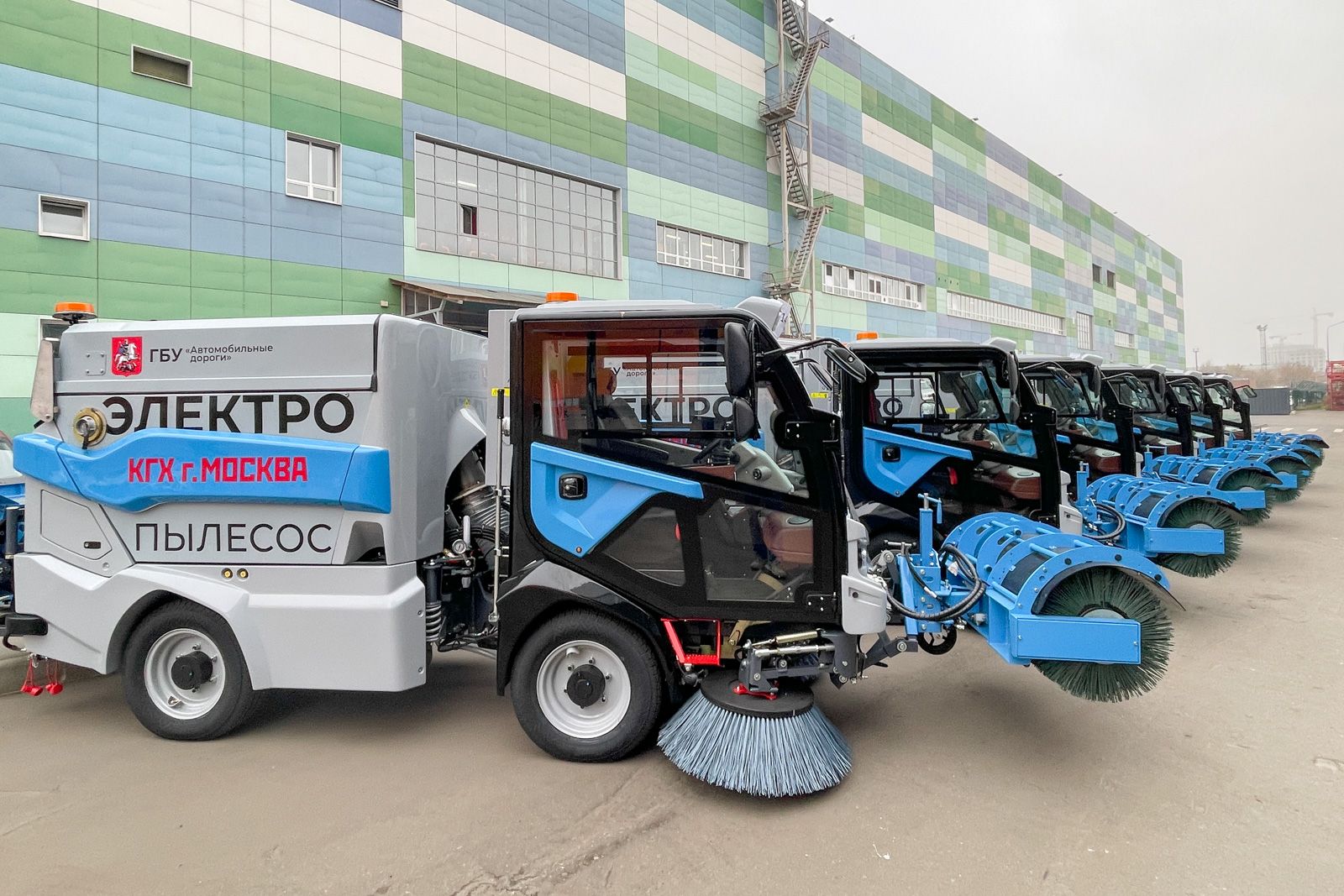
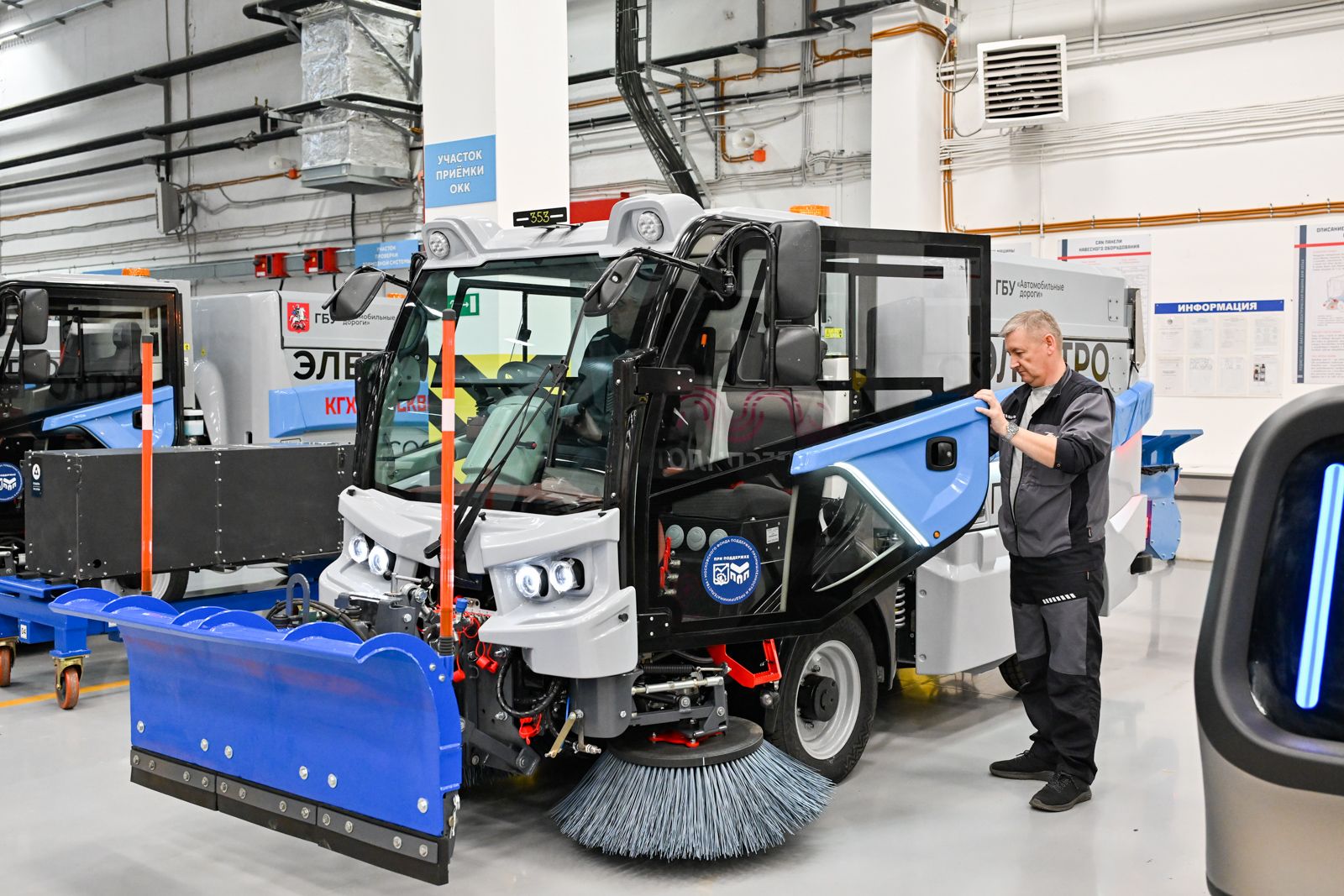
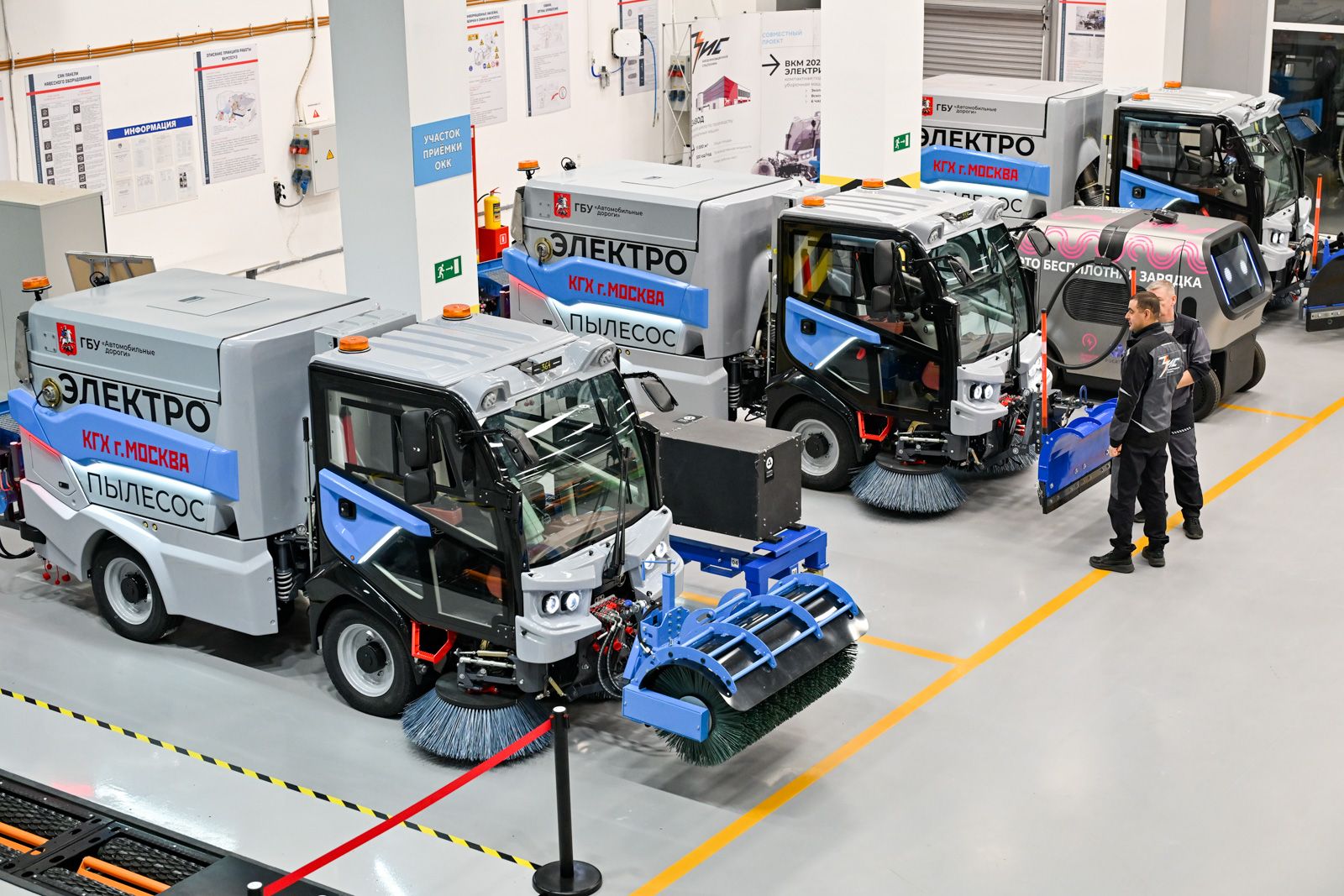
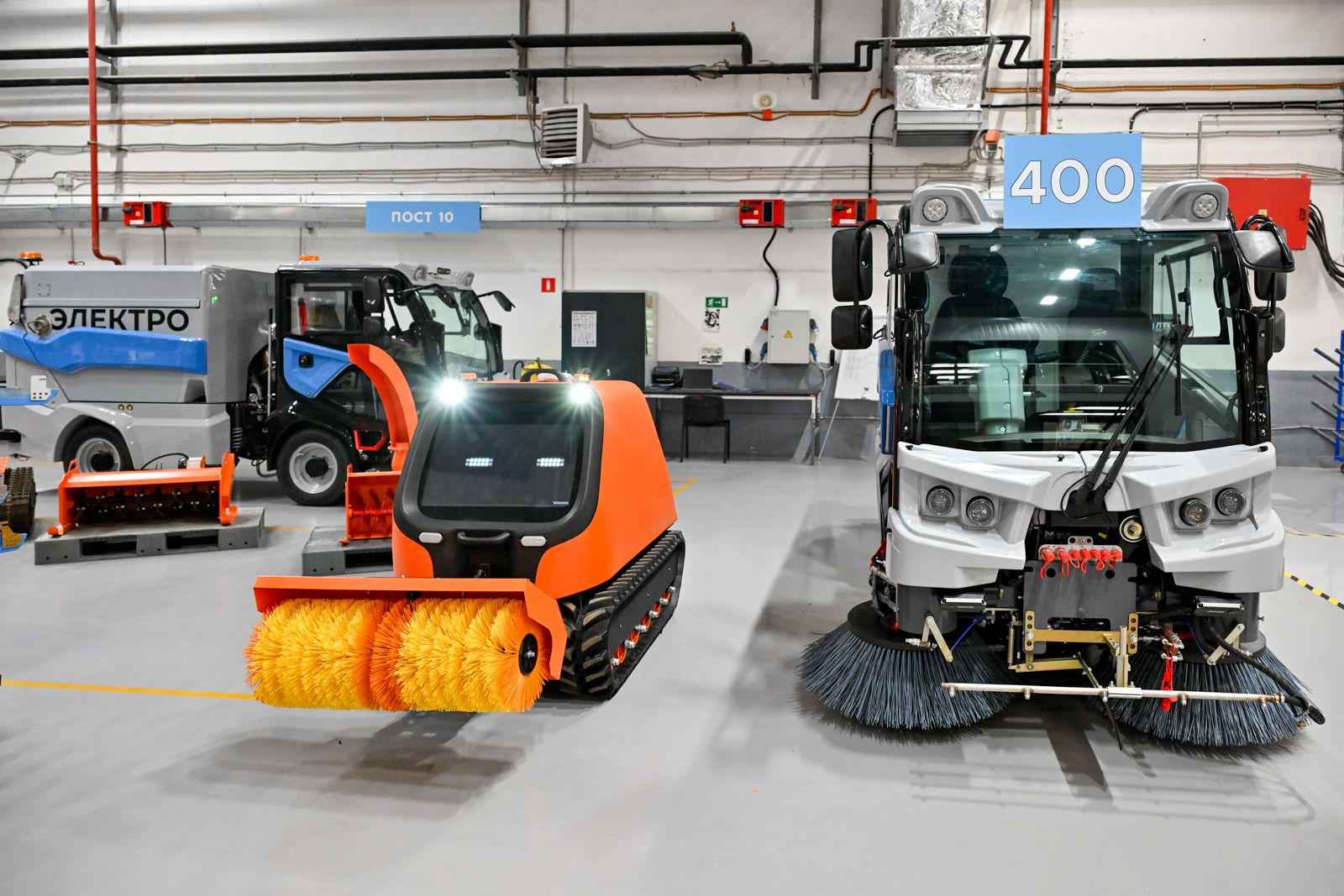
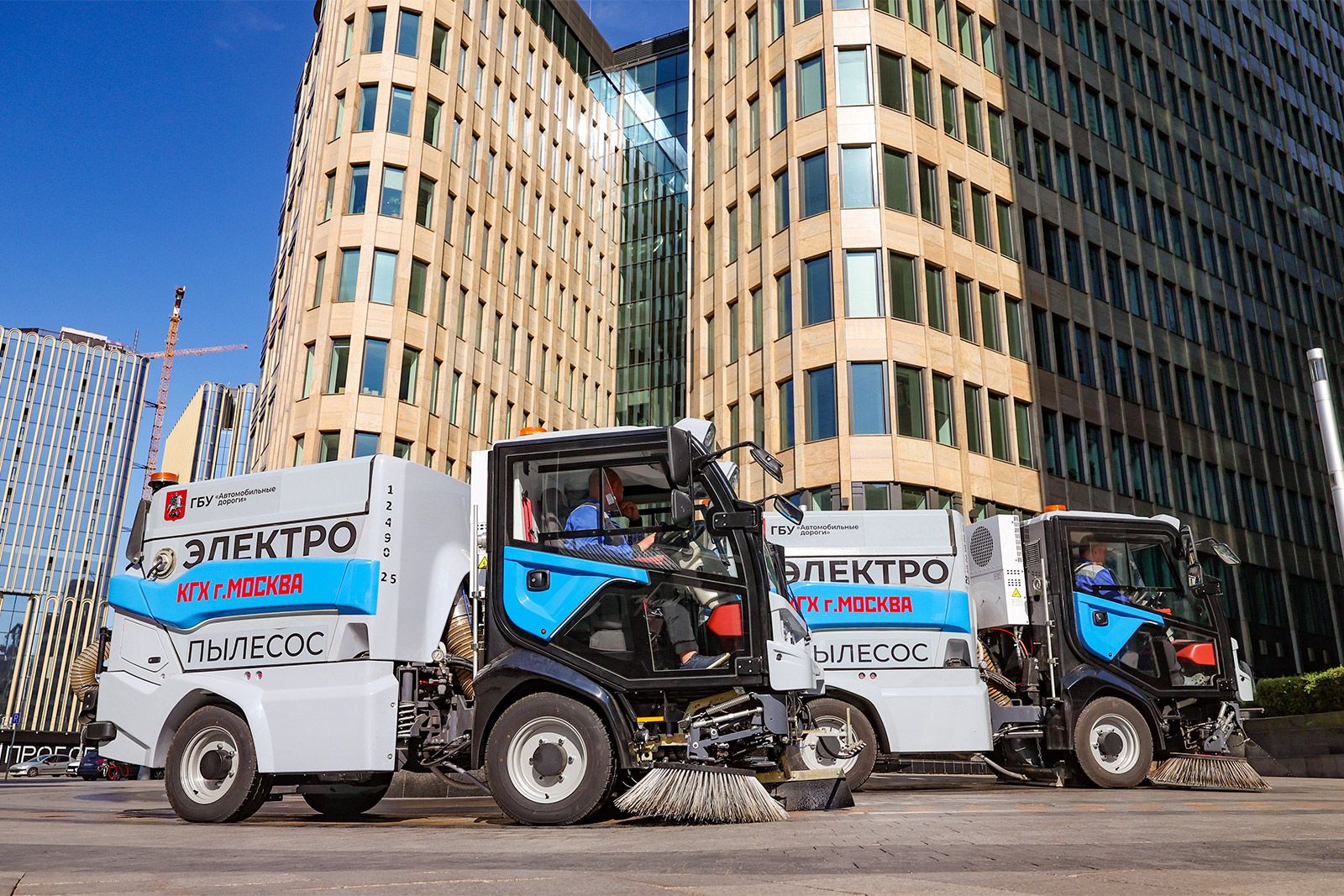
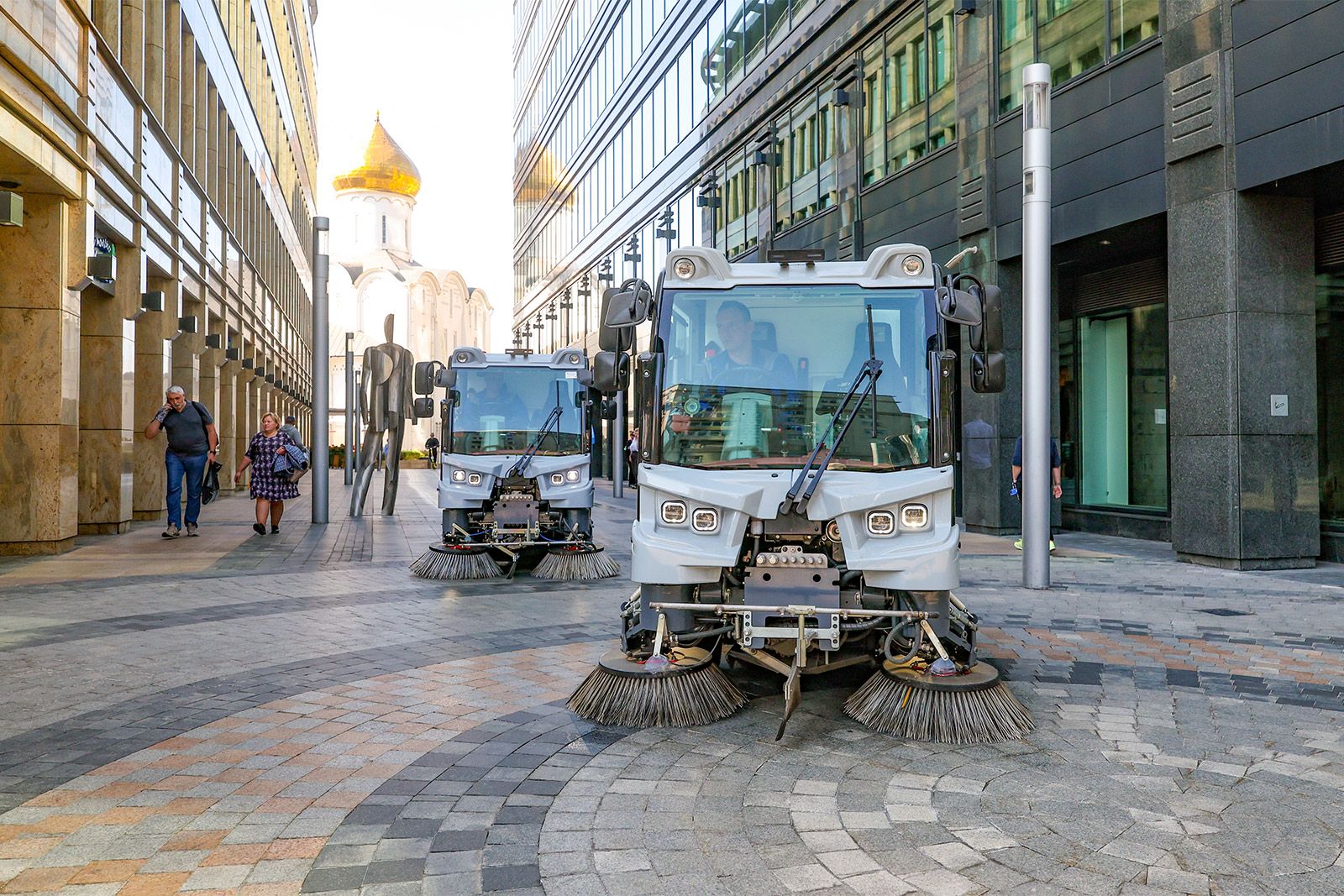
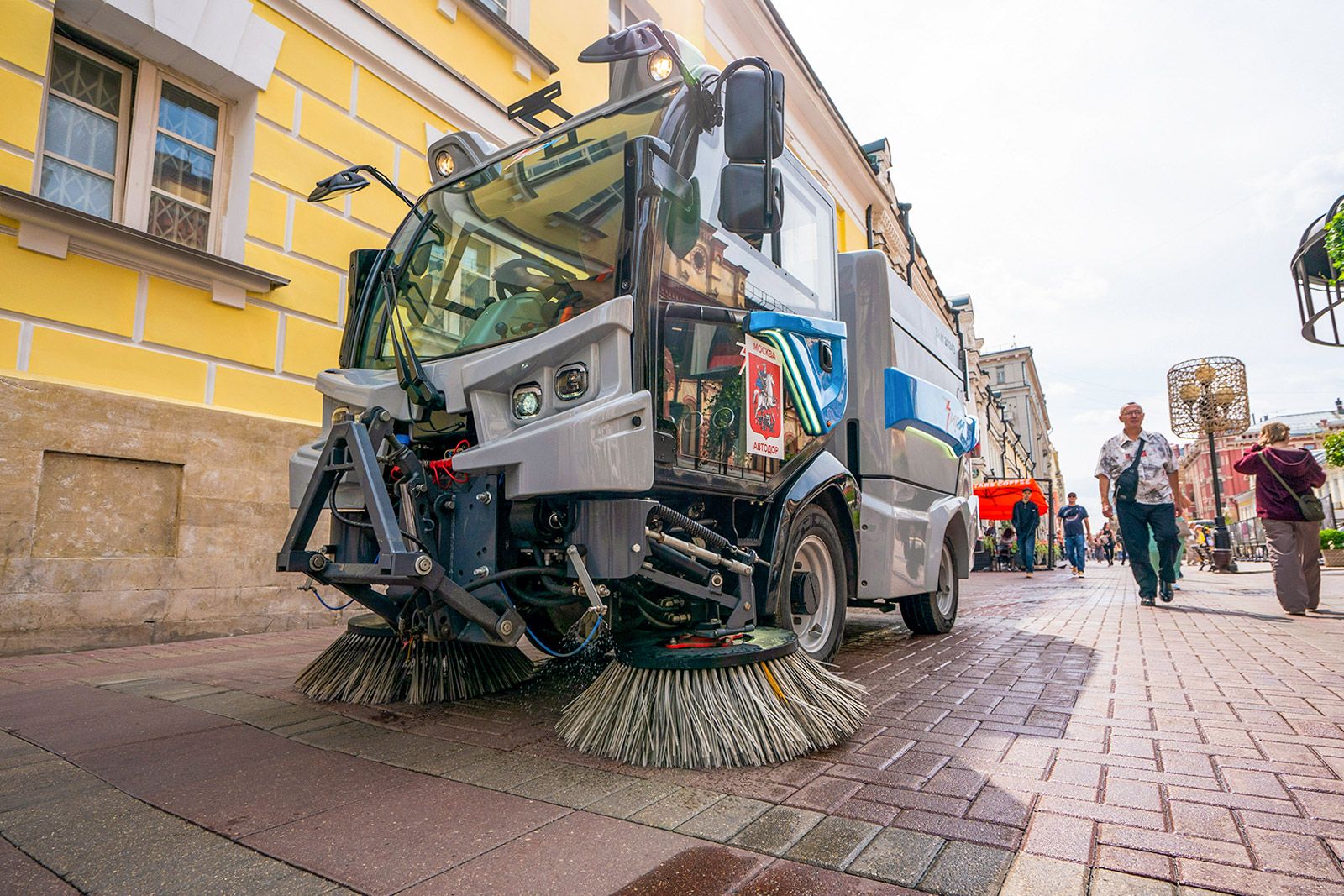
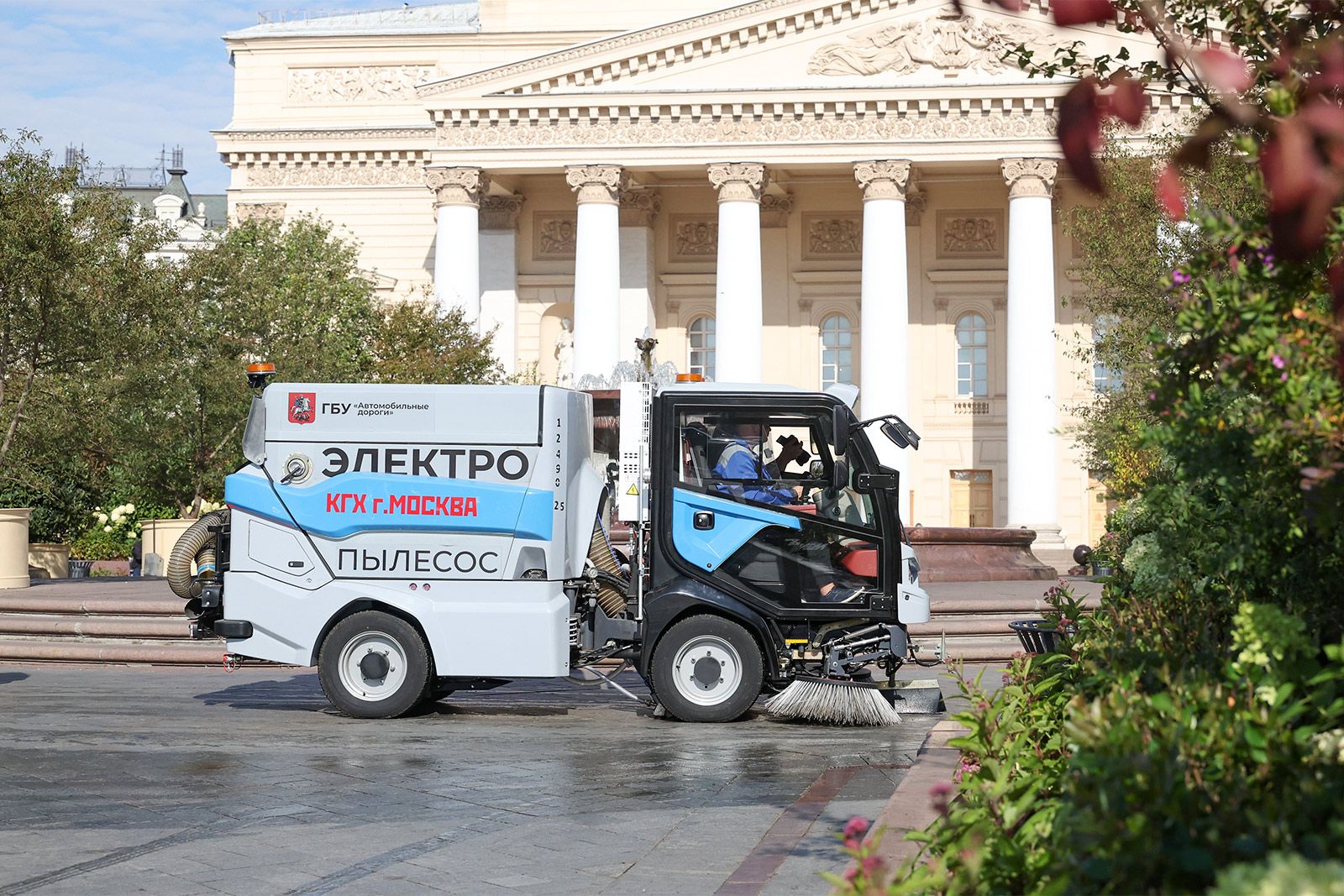
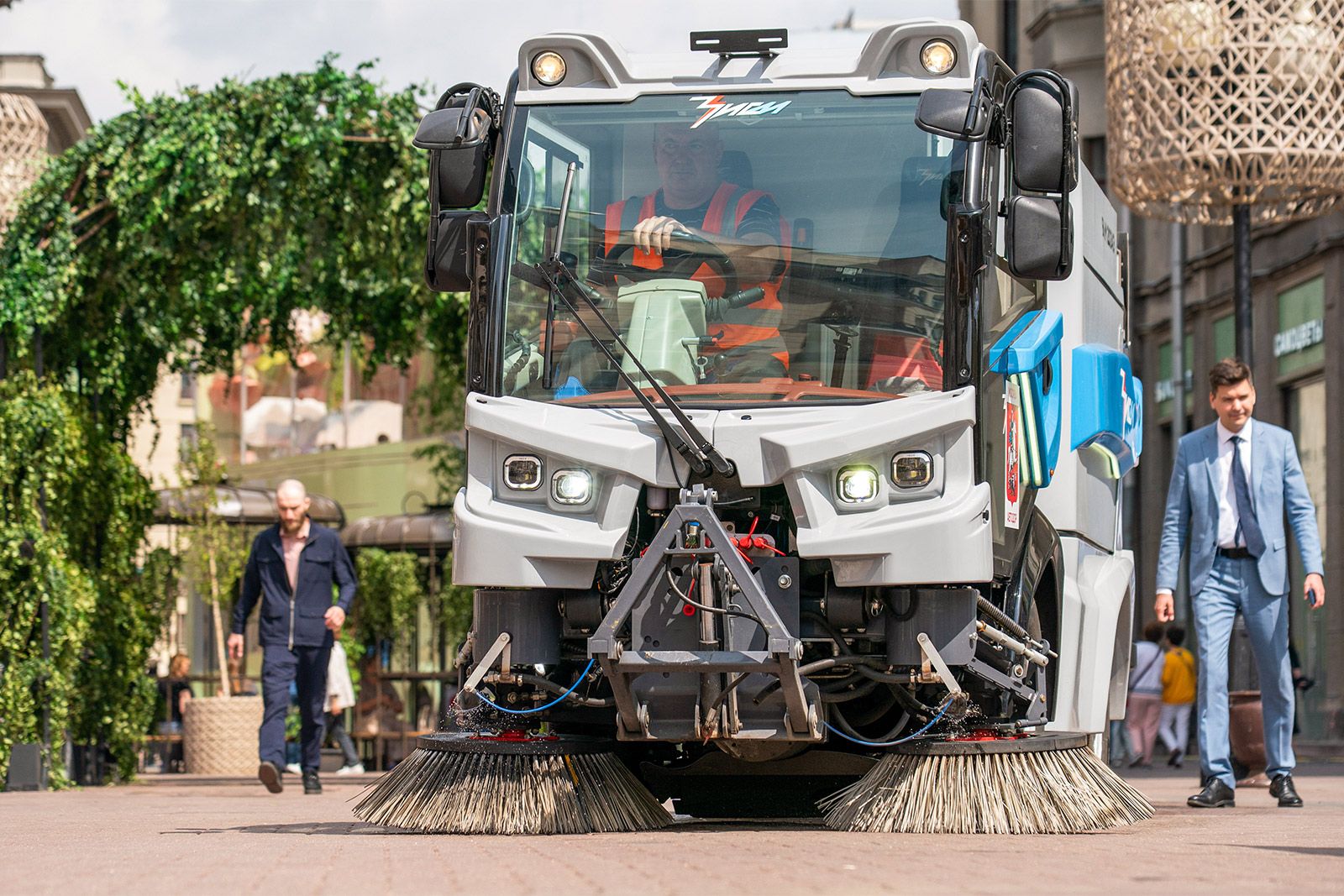
The plant’s flagship product is the VKM 2024E, an innovative battery-electric road sweeper. Featuring domestically manufactured components, it is currently Russia’s only mass-produced electric vehicle of its class, which is specifically designed for year-round operation in urban environments.
“It is compact, versatile and highly manoeuvrable. It can be used to clean streets and parks within the city throughout the year. Importantly, it generates significantly less noise than diesel-powered equivalents, thus making it suitable for residential areas and night-time operations,” Sergei Sobyanin adds.
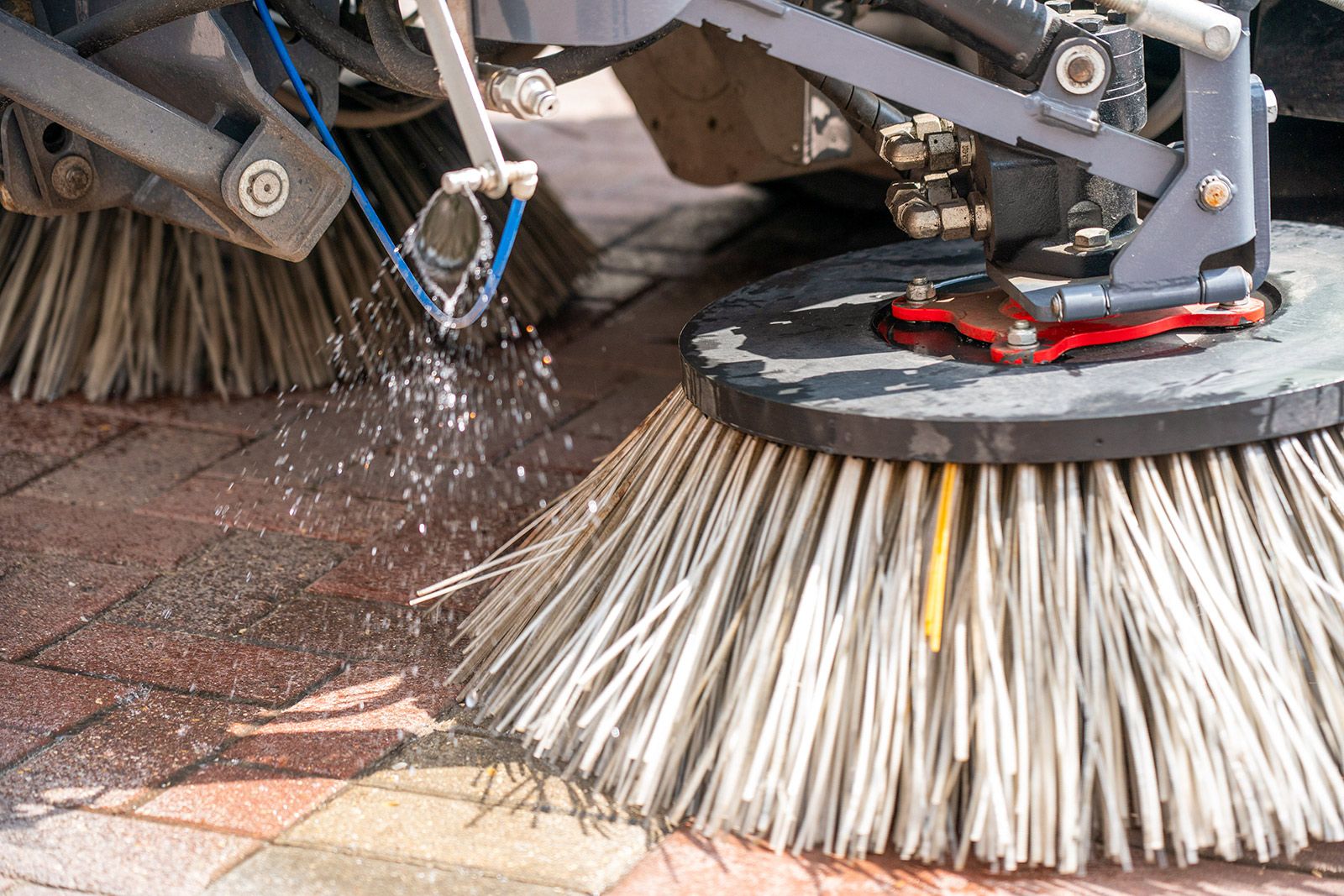
In summer, the vehicle can operate as a road sweeper and vacuum cleaner; in addition, it may be fitted with a front-mounted brush or a spray-washing attachment. In winter, it can be equipped with a de-icing agent spreader and a front-mounted snow brush. The spacious cab features panoramic visibility and climate control to ensure operator comfort in all weather conditions.
Its intuitive control system brings all vehicle functions together on a single joystick-operated console reducing operator fatigue and improving workplace safety. The vehicle has an operating speed of 12 km/h when using its cleaning attachments and a maximum road speed of 40 km/h. Moreover, it can run for up to six hours on a single charge, with a full recharge taking approximately two hours.
The plant’s in-house R&D team has played a major role in bringing the vehicle to life as they developed the key engineering solutions, design documentation and manufacturing processes underpinning serial production.
The vehicle has also been designed with future autonomous operation in mind, its architecture incorporating provisions for the integration of autonomous driving systems at a later stage.
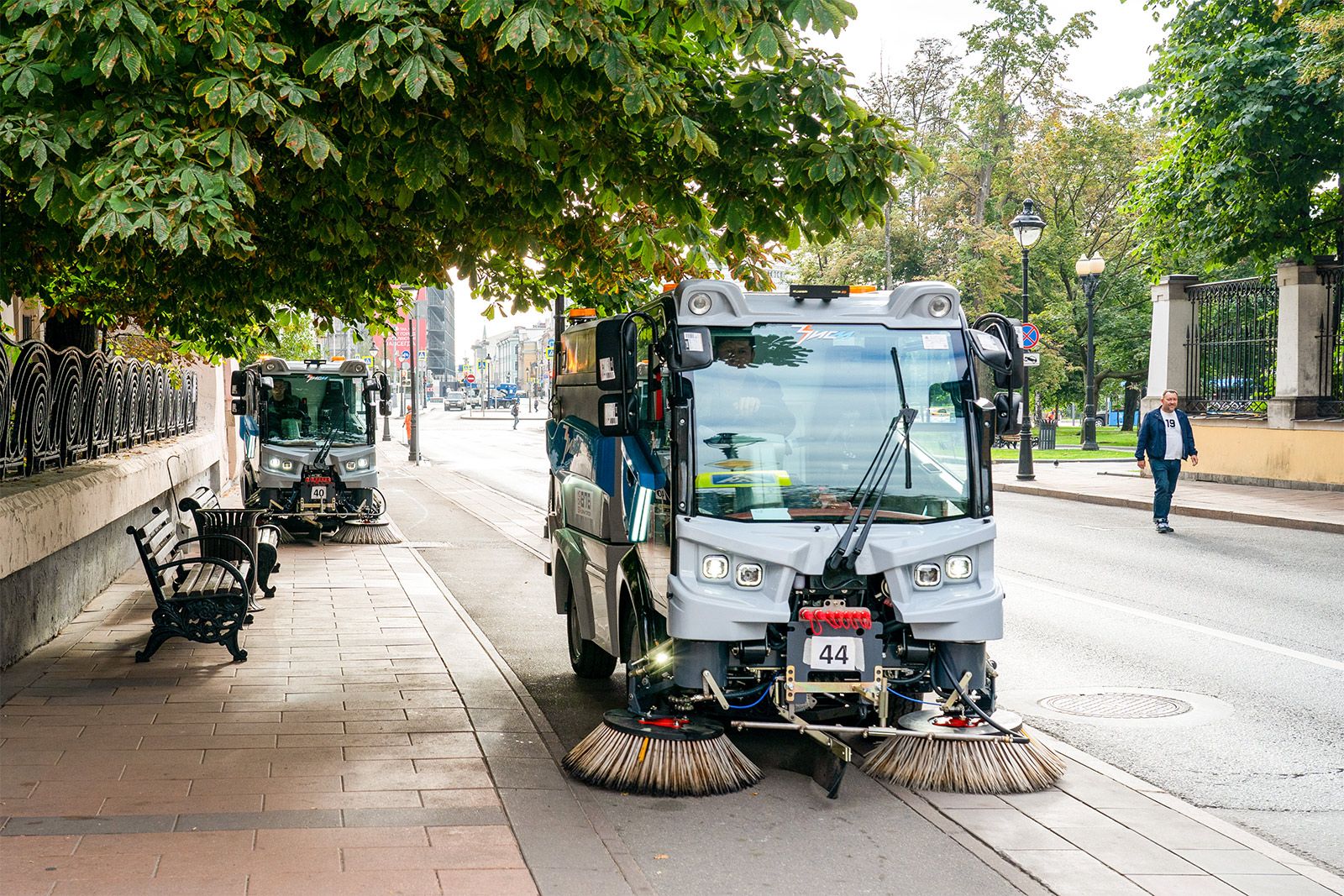
Around 360 of Russia’s most advanced electric vacuum sweepers manufactured at ZIS are already in operation on Moscow’s streets, cleaning downtown thoroughfares and public spaces, including Tverskaya and Mokhovaya streets, the Garden Ring, Kutuzovsky Prospekt and Victory Park on Poklonnaya Hill. They also operate along major roads and at key infrastructure sectors, such as Leninsky Prospekt, Volgogradsky Prospekt, Ryazansky Prospekt, Krasnopresnenskaya and Derbenevskaya Embankments, Leningradskoye Motorway and other locations across the city.
“I am positive that over time the vehicles they manufacture will become the standard for municipal services both in Moscow and in cities across Russia,” Sergei Sobyanin shares.
Technopolis Moscow SEZ
The Technopolis Moscow Special Economic Zone (SEZ) is a designated area with a special legal status, offering investors preferential arrangements for doing business. Established in 2006, it gained significant momentum after the Moscow Government took over the project in September 2016. Over the past decade, Technopolis Moscow has grown into Russia’s largest special economic zone, both in terms of investment and the total footprint of operating businesses.
SEZ residents are exempt from property, transport and land taxes for 10 years from the date they are granted the resident status, also benefiting from a corporate income tax rate of just 2 per cent. Additional incentives include a free customs modality and preferential land lease terms.
Today, it is home to more than 250 high-tech companies, including 131 registered residents;
they have created over 34,000 jobs in all. Technopolis Moscow also accommodates several specialized industrial clusters covering pharmaceuticals, electric vehicle manufacturing, elevator and vertical transportation systems, photonics and microelectronics.
The 10 sites accommodating the SEZ’s high-tech businesses span a total area of more than 430 hectares, with nearly 2.5 million square meters of industrial, commercial and office space arranged for operations to date. The footprint is expected to more than double to reach 5.7 million square meters by 2030.
Moscow’s industries
Nowadays, Moscow is Russia’s flagship industrial and scientific engineering hub and home to 4,735 industrial enterprises employing approximately 767,000 people — equivalent to one in every ten working residents.
Moscow’s position as the nation’s major industrial and R&D centre renders it a unique role in developing and manufacturing advanced technologies that are in demand throughout Russia. Indeed, the city is the biggest expertise hub in power electronics, microelectronics, pharmaceuticals and radio-electronic engineering driving these industries nationwide.
In 2025, total revenue generated by Moscow-based industrial enterprises rose by 24 per cent year on year to reach RUB 5.1 trillion,
the businesses having contributed approximately RUB 375 billion in taxes to the local budget — up 5.6 per cent compared with 2024.
A defining trend in Moscow’s industrial growth in recent years has been the rapid expansion of high-tech manufacturing. In 2020, high-tech industries accounted for 30 per cent of total industrial revenues, and their share has risen almost 40 per cent in 2026. By 2030, advanced technologies and innovation are expected to underpin nearly half of everything manufactured in the capital, while the number of people employed in manufacturing is projected to reach approximately 850,000.
Today, Moscow boasts more than 13 million square meters of industrial footprint. By 2030, the city would double its cutting-edge high-tech industrial infrastructure, bringing the total to 25 million square meters.
Since late 2025, the capital’s industrial footprint has already increased by 700,000 square meters, from 13.1 million to 13.8 million square meters, including 300,000 square meters located within the Technopolis Moscow SEZ. At the moment, the city’s principal industrial hub accounts for almost 2.5 million square meters; a further 400,000 square meters of industrial space have been added through private, municipally backed investment projects.
Industrial advancement in Moscow is closely aligned with the city’s environmental agenda.
New manufacturing facilities are introducing green technologies, energy-efficient solutions and closed-loop production processes, taking effort to minimize their environmental impact while preserving a comfortable urban environment.
Much of the newly-built industrial infrastructure has vertical integration at the core, the approach aiming to bring manufacturing facilities, modern office space, R&D labs and employee amenities, including cafés, restaurants and sports facilities, all within a single site.
High-tech industries as drivers of growth
Moscow is the nation’s number one player across several high-tech industrial sectors, ranking first in Russia in radio electronics, electric vehicle manufacturing, aviation, aerospace, and medical industries. The strongest growth in 2025 was recorded in electric vehicle manufacturing, with revenues having increased tenfold. Radio electronics and medical manufacturing also performed strongly, posting growth of 35 per cent and 15 per cent, respectively.
Key performance indicators for the main industrial sectors in 2025 are as follows:
— Radio electronics, including microelectronics and photonics: more than 870 enterprises; revenues rose by 35 per cent up to RUB 1,295 billion.
— Food: more than 350 enterprises; revenues increased by 13 per cent to reach RUB 858 billion.
— Pharmaceuticals and MedTech: more than 300 enterprises; revenues grew by 11 per cent and 15 per cent respectively, reaching RUB 171 billion and RUB 97 billion.
— Electric vehicle manufacturing: revenues increased almost tenfold up to RUB 69 billion.
By establishing domestic production capacity for strategically important goods and developing innovative solutions, Moscow is boosting the share of Russian-made products and technologies in the economy, the products outperforming overseas alternatives in terms of quality, while strengthening the nation’s technological sovereignty.
Russia’s top universities play a major role in supporting the development of some of Moscow-based most advanced high-tech manufacturing facilities, too.