Sergei Sobyanin: Moscow Metro to get ≈ 1,000 new railcars over 3 years
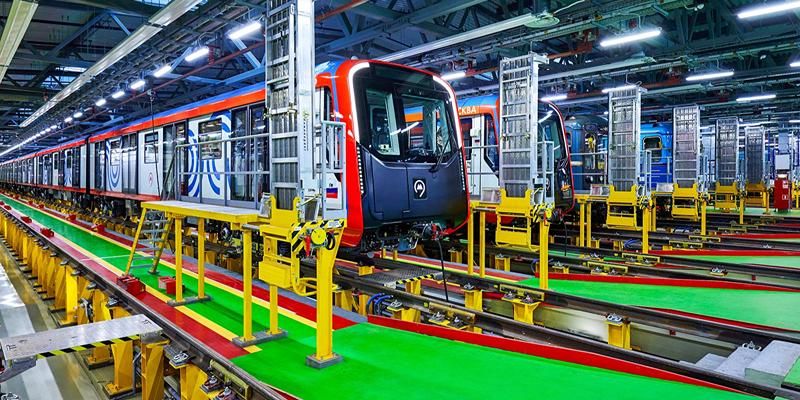
The capital will continue its large-scale fleet renewal program through 2030, RUB 306.1 billion to be allocated between 2027 and 2029, as announced by Sergei Sobyanin on his Max channel, with RUB 82.5 billion roubles to be earmarked for 2027 alone.
“The funds will make it possible to buy state-of-the-art electric and conventional buses, metro cars, and electric trains for the Central Transport Hub,” the Moscow Mayor shares.
Source: Sergei Sobyanin’s Max channel
Moscow is number one electric bus user, indeed. In September 2026, its electric bus fleet marked its eighth anniversary, with the total number of electric bus rides having surpassed 1.1 billion. Today, more than 3,000 electric buses serve over 310 routes in the city, while the number of daily trips has exceeded 1.2 million in 2026.
Over the next three years, Moscow will continue its metro fleet renewal program, cutting-edge, high-tech Russia-made Moskva-2026 trains providing passenger services on the Zamoskvoretskaya and Rublyovo-Arkhangelskaya metro lines at the moment, to be introduced on other routes in the future, as well. Furthermore, it is projected that advanced metro cars will account for 90 per cent by 2030.
Noteworthy, the renewal of the capital’s metro fleet also shapes and drives the nation’s transport manufacturing sector.
“Regional manufacturers of components for the next-gen trains are sustaining tens of thousands of jobs, advancing technologies, and arranging local production facilities,” Sergei Sobyanin notes.
Over the next three years, the authorities are going to purchase 1,600 surface vehicles, approximately 1,000 metro cars, and about 850 rail cars for commuter and interregional services, unmanned technologies and their integration into metro trains and trams to further grow, too.
They will also expand and improve the capital’s route network, including within the Troitsky and Novomoskovsky Administrative Districts (TiNAO) with some extra routes to be added for smaller settlements; a total of 18 extra routes are expected to be introduced by the end of 2026–2027.
Moreover, the commuter network under the Moscow & Region project will continue to enjoy support as they have earmarked a total of RUB 35.2 billion to fund passenger services under the project for 2027–2029, with RUB 11.3 billion allocated for 2027 alone. Today, there are more than 60 routes connecting the capital with the western, northwestern, northern and northeastern communities in the nearby Moscow Region. 79 suburban routes will be integrated into the network by the end of 2026, the number of daily rides to rise up to 216,000 by the year-end, as a result.
To further expand the electric transport network, they will boost the procurement of innovative, eco-friendly electric buses. Engineers and the authorities are in fact developing up-to-date specifications Russian manufacturers for their advanced electric-powered vehicles to replace conventional buses on various routes, meeting the highest global passenger experience standards.
In 2026, Moscow wrapped up its large-scale program for updating the tram fleet, local tram services to be further upgraded with autonomous running systems. With new batteries, street cars will travel even greater distances without being connected to the overhead power lines. In addition, the authorities will build two more single-track tram sections with a total length of about 12 kilometers by the end of 2027.
The line along Entuziastov Motorway will be extended further for those living in the Ivanovskoye district to be able to reach Shosse Entuziastov metro station 40 per cent faster; public transport will be more accessible for 130,000 residents in the capital’s eastern districts, as a result. There are also plans to extend the tram line along Akademik Korolev Street towards Ostankino station on the third Moscow Central Diameter (MCD-3).
On top of that, Moscow actively drives its taxi and car-sharing sectors, the fleets ranking among the largest and newest vehicle fleets in Europe. Through 2027, the municipality will continue to support these services by subsidizing a portion of the lease payments for buying new vehicles. The continuous fleet renewal efforts ensure comfort and safety of taxi and car-sharing services.
“We will continue to drive scheduled electric river transport with more and more electric boats built at the Moscow Shipyard to provide year-round passenger services,” adds Sergei Sobyanin.