Sergei Sobyanin Opens Moscow Transport Museum in the Historic Melnikov Garage
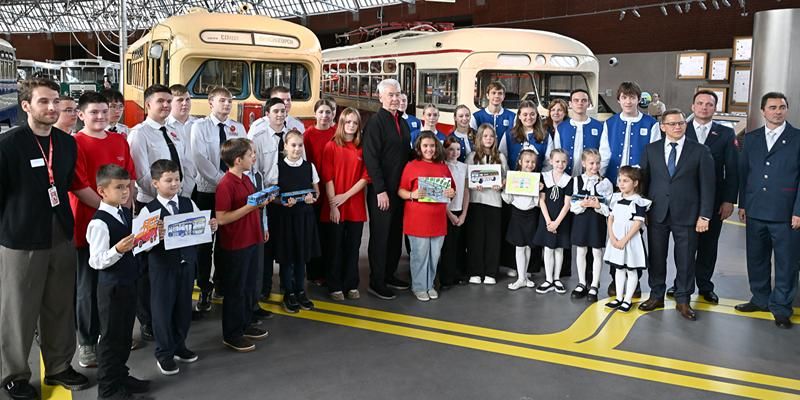
Sergei Sobyanin opened the new permanent exhibition of the Moscow Transport Museum in the unique historic Konstantin Melnikov Garage on Novoryazanskaya Street. The exhibition is dedicated to the history of the capital’s transport, from the advent of horse-drawn trams to the launch of autonomous transport.
“About six years ago, we established the Moscow Transport Museum. It was housed in various temporary adapted premises, but it was quite popular, so we decided to give the Melnikov Garage to the museum. It is a monumental building that turns 100 this year, and we decided to establish a permanent exhibition here. Experts, restorers, builders and transport professionals worked on it for several years. The result is one of the finest transport museums in the world. I am sure it will be very popular with children, students, Moscow residents and visitors to the capital. It will become one of Moscow’s best-loved and most popular sites,” Sergei Sobyanin said.
Oleg Pokusaev, Rector of the Russian University of Transport, noted that under the leadership of the Moscow Mayor, the capital’s transport system has made an unprecedented leap forward, while the renovated museum will inspire young people and encourage them to take an interest in the sector. In addition, Oleg Pokusaev proposed arranging regular visits to the exhibition for university students.
The Moscow Transport Museum’s new modern venue will be able to welcome up to 10,000 people a day. After visiting the exhibition, guests can stop by the nearby Depo. Three Stations food hall. Both venues are located near the Three Stations Square transport hub, making them easy to reach from anywhere in the capital. The Moscow Transport Museum also includes the city’s only museum trolleybus route T. Guided tours are regularly held along the route, introducing visitors to the history of the Basmanny District.
On September 14, the museum is open only to organized groups of children. From September 15, it will operate according to the following schedule: Tuesday through Thursday from 10:00 a. m. to 8:00 p. m. and Friday through Sunday from 10:00 a. m. to 9:00 p. m. (closed on Mondays). Admission to the permanent exhibition is priced at a level comparable to other city museums — 700 rubles, with a 30 per cent discount available to pensioners, students and schoolchildren.
The Moscow Transport Museum is one of Russia’s largest transport museums. The museum complex covers more than 20,000 square meters, an area comparable to three football pitches or one third of the area of Luzhniki Stadium. It comprises:
— a permanent exhibition in the restored Konstantin Melnikov Garage;
— the multifunctional Club space (800 square meters) for exhibitions and cultural and educational events, including forums, conferences, hackathons, film screenings, concerts and presentations. It is equipped with two projectors and screens, as well as sound, lighting, stage and engineering systems;
— an archive and library center, where visitors can work in a comfortable reading room and use an electronic information retrieval system with remote access. The digitized archive contains more than 50,000 items, over 6,000 documents from the Moskvich plant, more than 8,000 documents from the Sokolniki Railcar Repair and Construction Plant, at least 500,000 pages of documentation from the I. A. Likhachev Automobile Plant (ZIL) and 15,000 books, photographs, commemorative albums, pamphlets and printed graphic works devoted to transport;
— the Auto Laboratory with a children’s center and restoration workshop, which hosts master classes and lectures by the Faza Engineering School;
— a café decorated with a unique mosaic from the façade of the Moskvich plant. It consists of four friezes depicting the assembly of cars produced at the plant in different years.
The unique museum complex has been designed as an open urban environment integrated into Moscow’s everyday life, particularly that of the Basmanny District. The green courtyard, open to everyone, is intended for exhibitions of historic and modern vehicles, festivals, themed fairs and family events, as well as socializing and recreation. It features children’s playgrounds, an area for board games, and art installations. The café, reading room and souvenir shop can be visited without purchasing a museum ticket.
The museum will serve not only as an educational venue but also as a research and learning center for students at Moscow colleges and universities, hosting specialized classes, practical workshops and lectures on transport history, engineering and urban development. It will also become a cultural center attracting tourists from different regions of Russia.
“The museum immerses visitors in the city’s history through 2D and 3D videos, multimedia guides, and interactive installations. For example, visitors can imagine themselves as passengers on Moscow’s first Daimler bus and travel from Maryina Roshcha to Ostankino. The simulators let them try their hand at driving a metro train,” Sergei Sobyanin writes on his Max channel.
Source: Moscow Mayor’s Max channel
The Moscow Transport Museum on Novoryazanskaya Street is expected to attract more than 500,000 visitors a year.
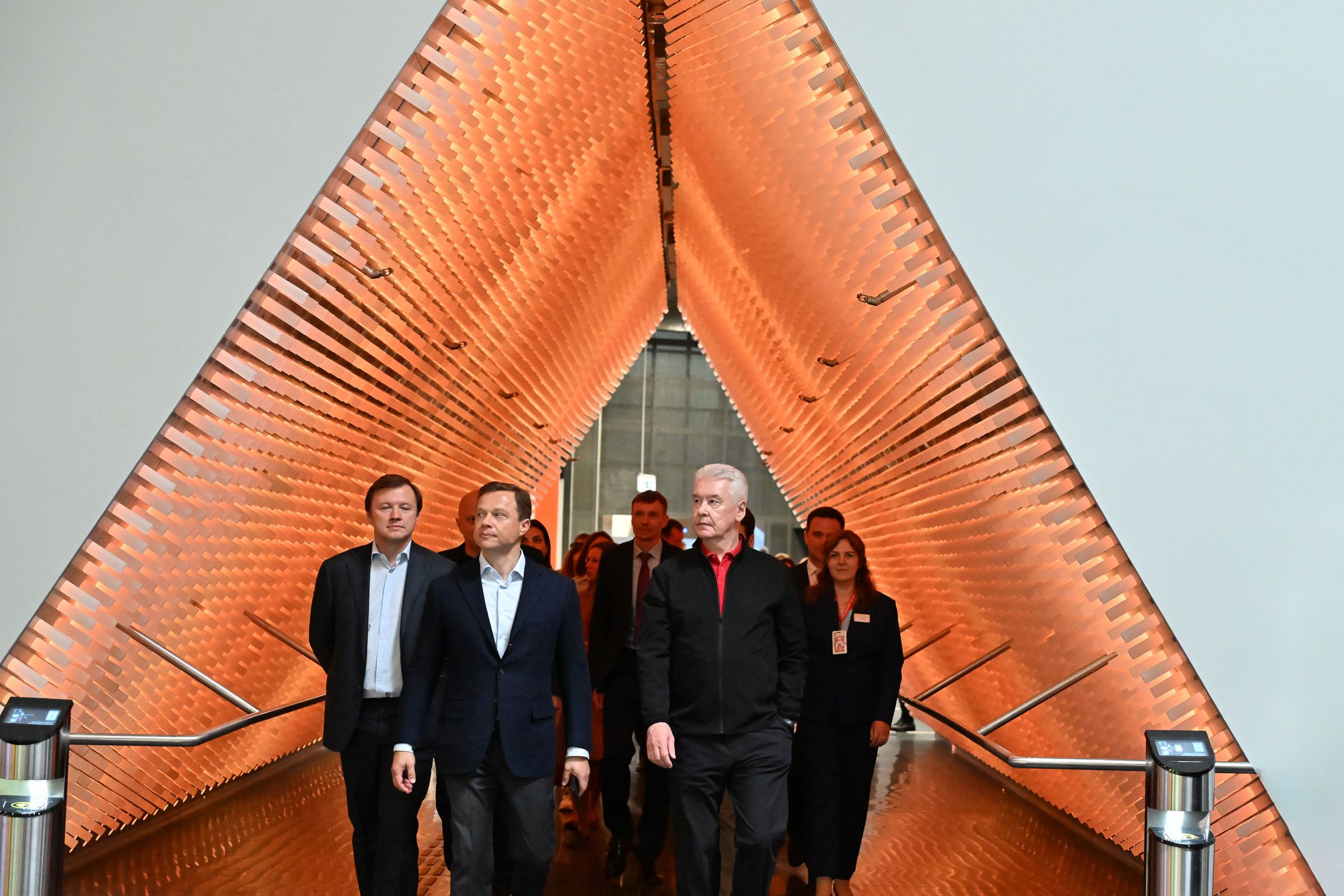
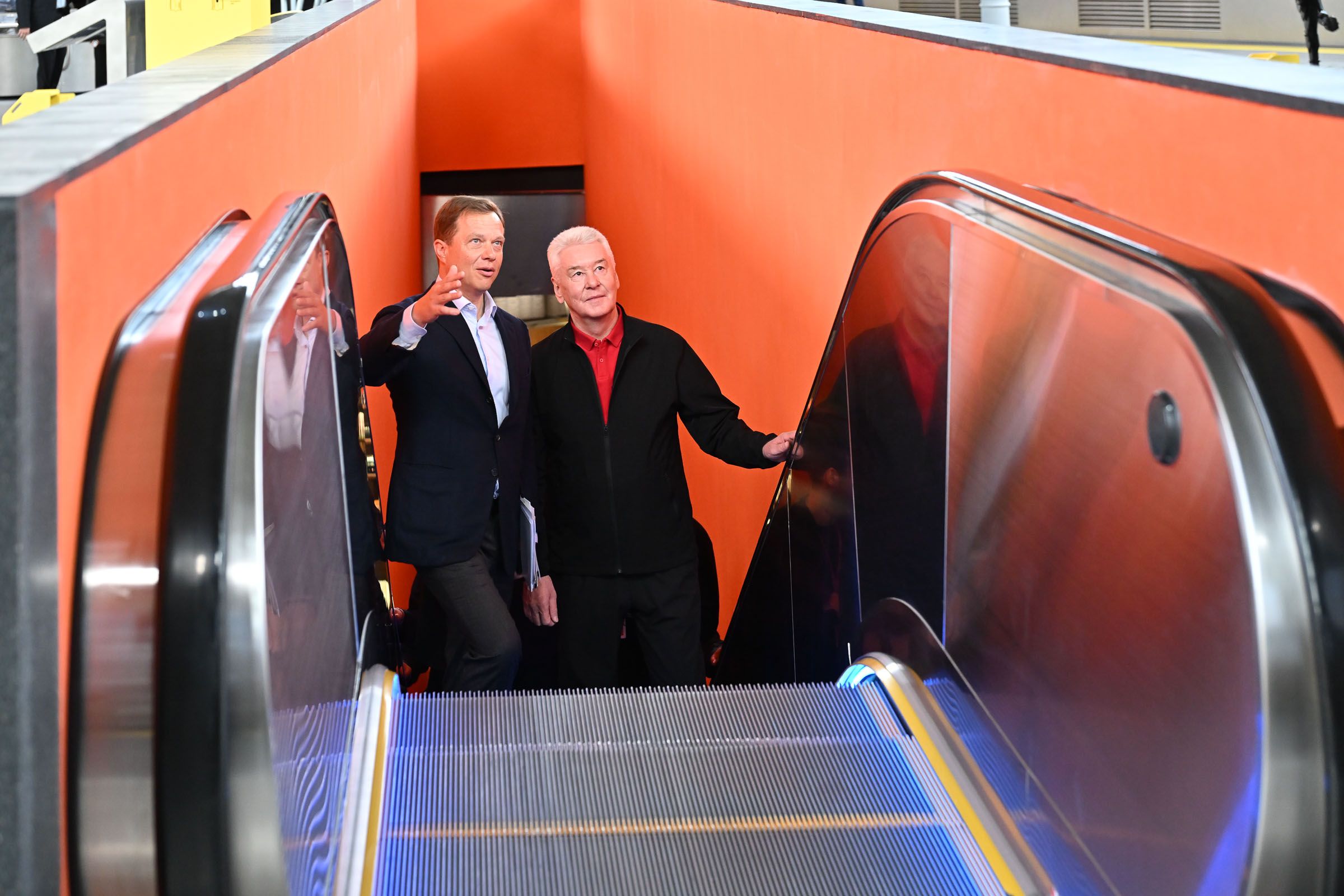
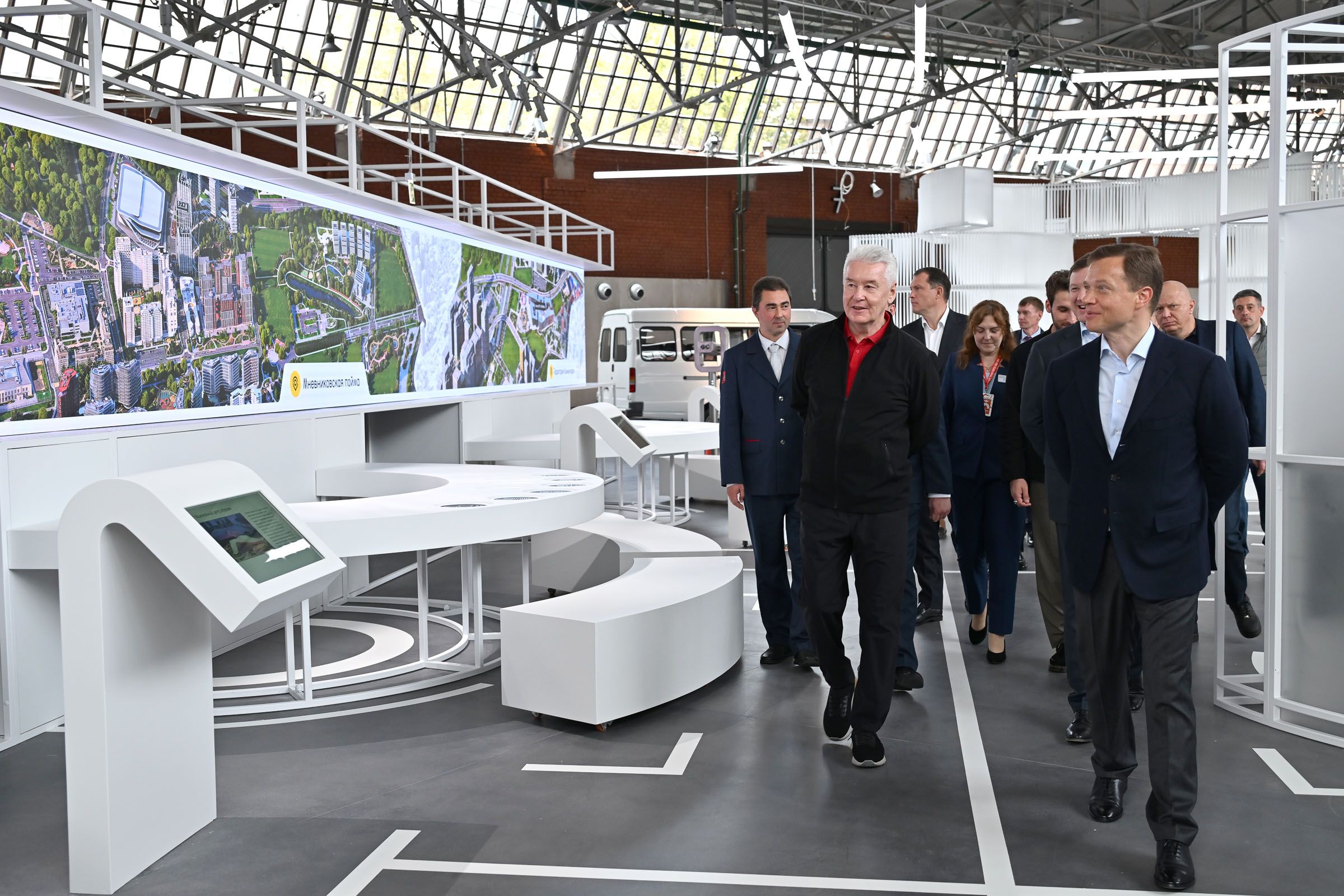
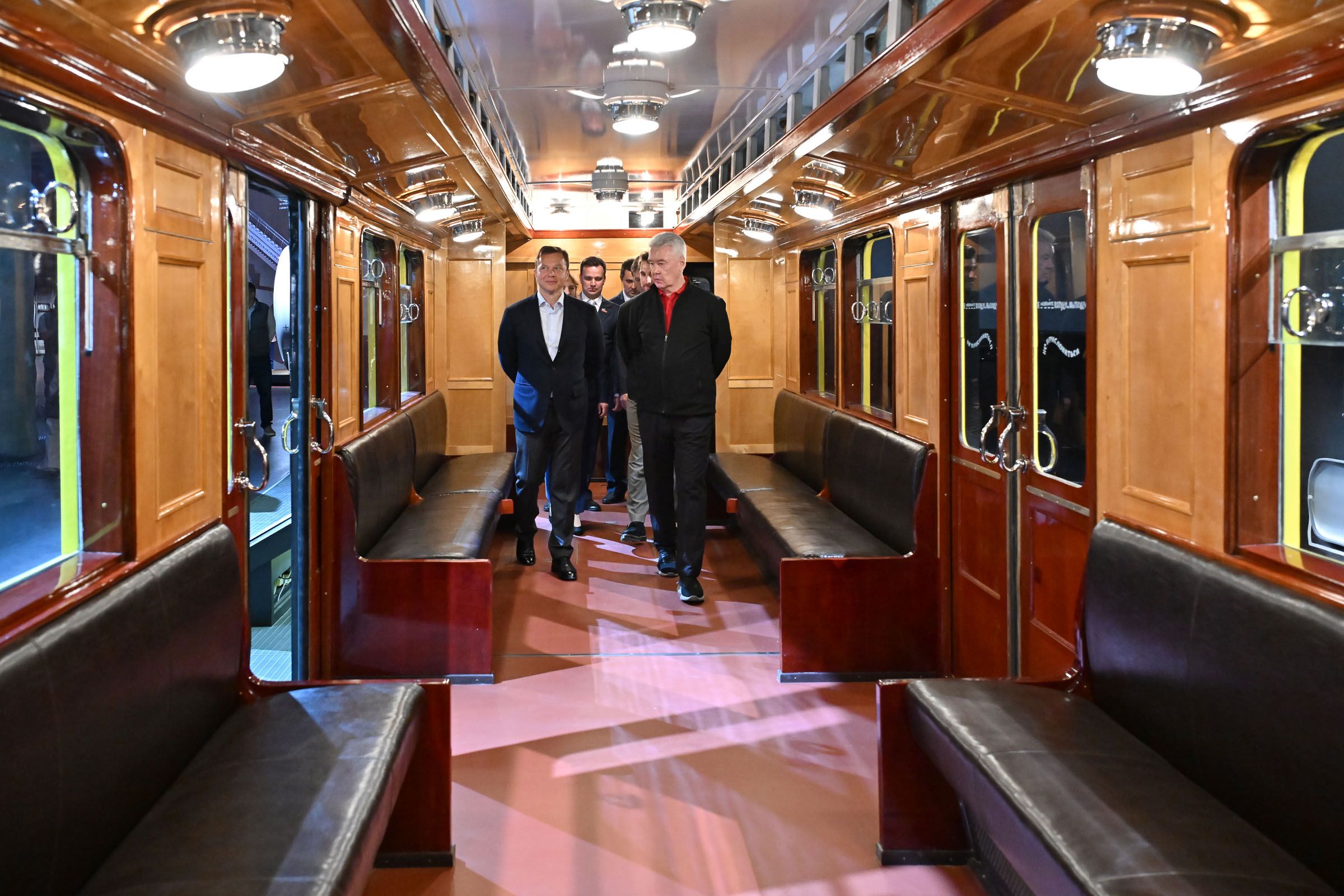
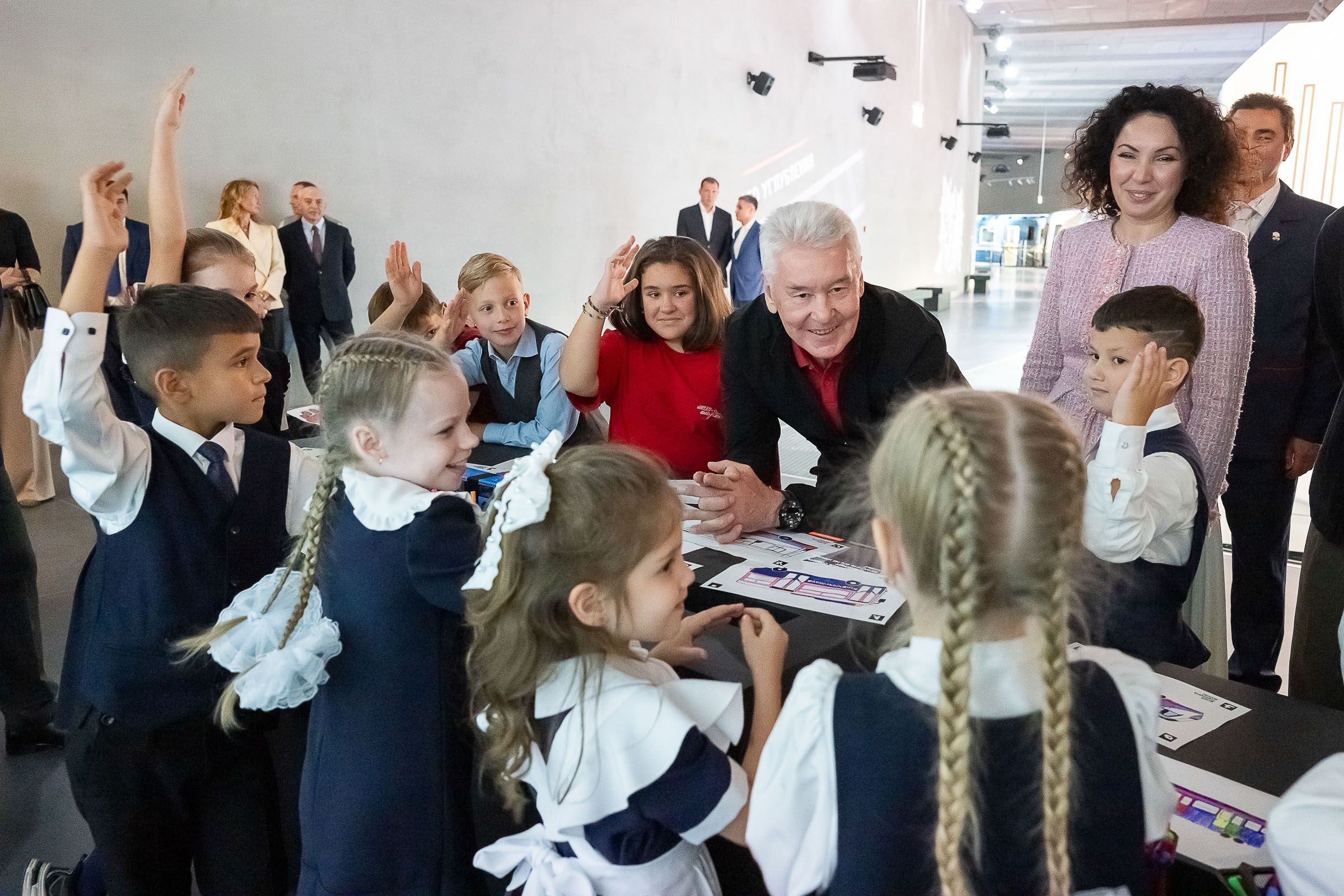

Permanent exhibition
The permanent exhibition of the Moscow Transport Museum covers more than 9,000 square meters and occupies two levels — the ground floor and underground level — of the Konstantin Melnikov Garage. It comprises 13 thematic zones.
At the heart of the exhibition are 53 original examples of historic vehicles and equipment: buses, trams, trolleybuses, an electric bus, municipal special-purpose vehicles, trucks, passenger cars and horse-drawn transport. Visitors will also see more than 220 models of historic vehicles restored by museum staff, over 500 artefacts and 946 pieces of media content, including 2D and 3D videos, computer graphics and videos incorporating archival materials.
A visit to the museum includes immersive and interactive elements that bring the history of transport development to life. The exhibition also features unique exhibits that cannot be found in other transport museums or publicly accessible private collections:
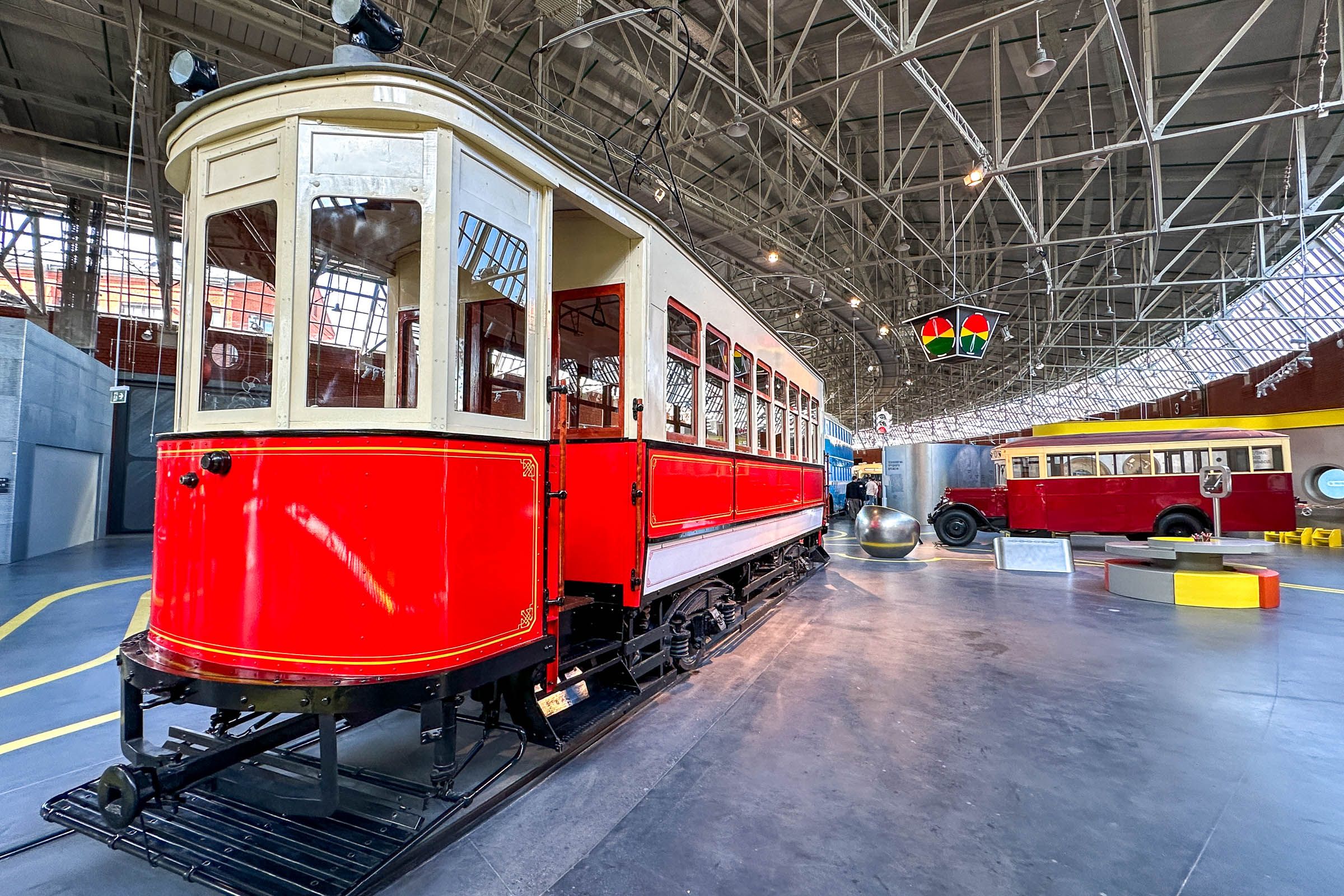
— the only 1872 horse-drawn tram reconstructed using an original chassis;
— a BF tramcar, one of only two surviving examples in the world;
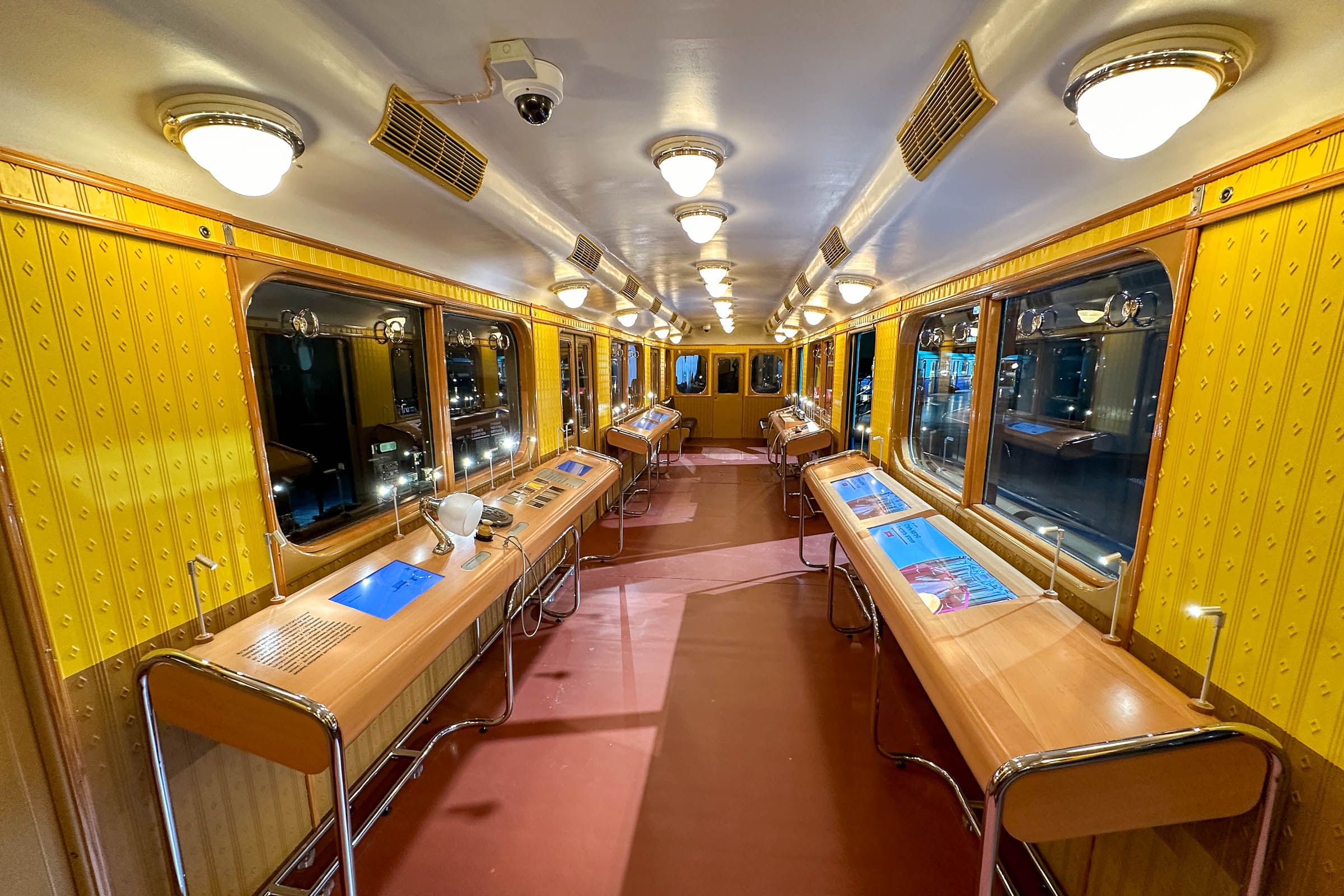
— a type V metro car, the only surviving Berlin U-Bahn car in the eight-door configuration;
— a GAZ-AA one-and-a half ton capacity truck, the most widely used truck during the Great Patriotic War. These vehicles were used to evacuate residents of besieged Leningrad across Lake Ladoga, along the Road of Life;
— a TBES trolleybus, the only surviving vehicle from a series built specifically for operation at the Exhibition of Achievements of the National Economy in 1957;
— a MAZ-200 truck used in the construction of the Third Ring Road.
The exhibition also features a Moskva metro car, the flagship of the new generation of Moscow Metro trains offering a level of comfort comparable to the world’s most advanced counterparts. This series was the first to feature walk-through gangways between cars, wide doorways and USB ports for charging mobile devices.
Other noteworthy artefacts include an 1854 cab driver’s badge, a tram side route sign from the 1920s, a 1935 token for travel on the Moscow Metro, an information sign reading “Train terminates at V.S. Kh. V”. dating from 1939–1959 and a “Stop — Go” pedestrian traffic light from the 1960s.
The main distinguishing feature of the museum’s permanent exhibition is that it does not simply display historic and modern exhibits but creates an integrated exhibition space. It traces the evolution of urban transport in direct connection with the development of the capital, cultural events and changes in people’s lives. Advanced museum technologies and a rich collection of exhibits will allow visitors to see how Moscow’s transport system has developed from the late 19 th century to the present day, from the city’s first master plan to the modern transport breakthrough. One of the museum exhibition’s key zones is devoted to the capital’s rapid transport development since 2010, including current and prospective projects under the development program through 2030.
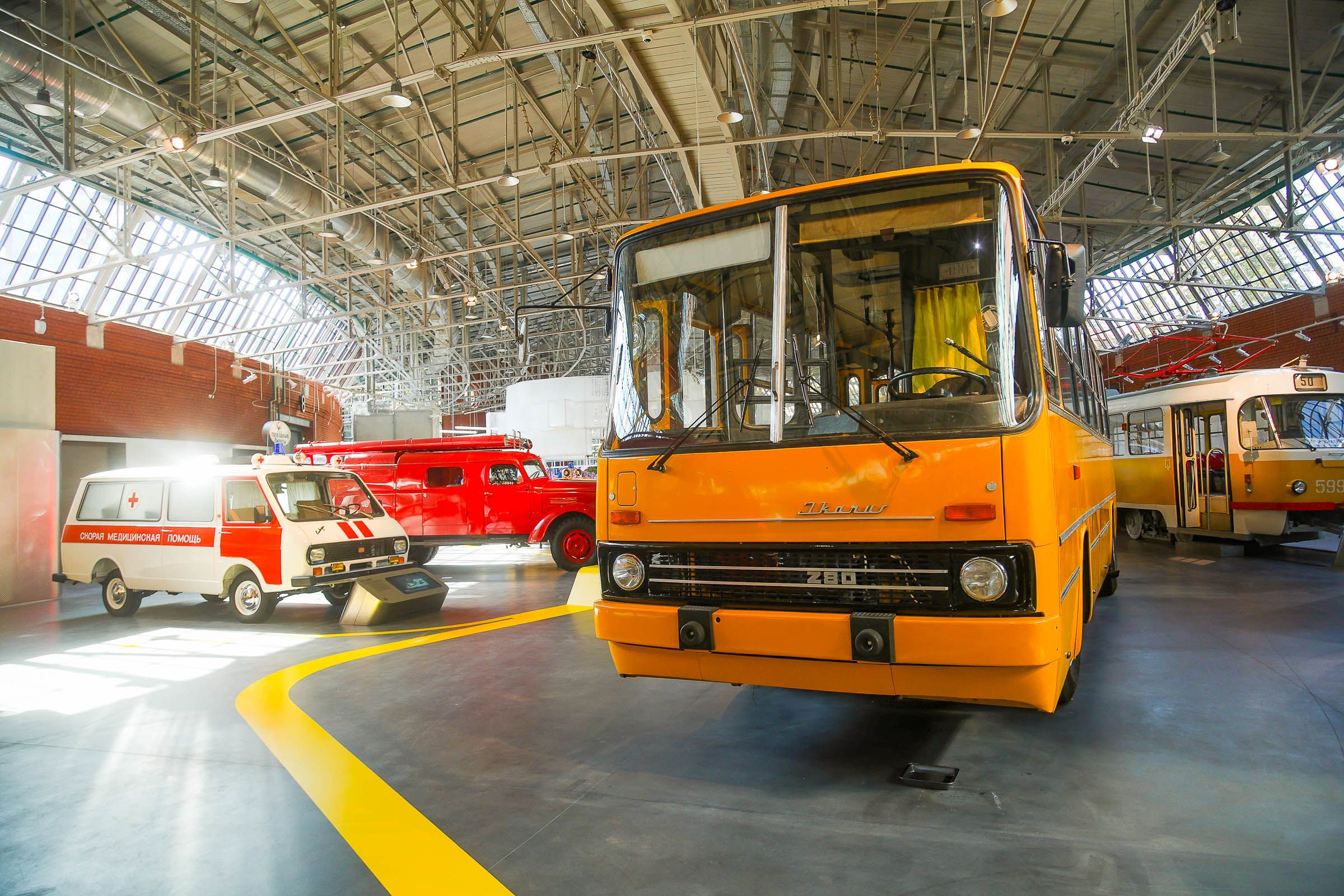
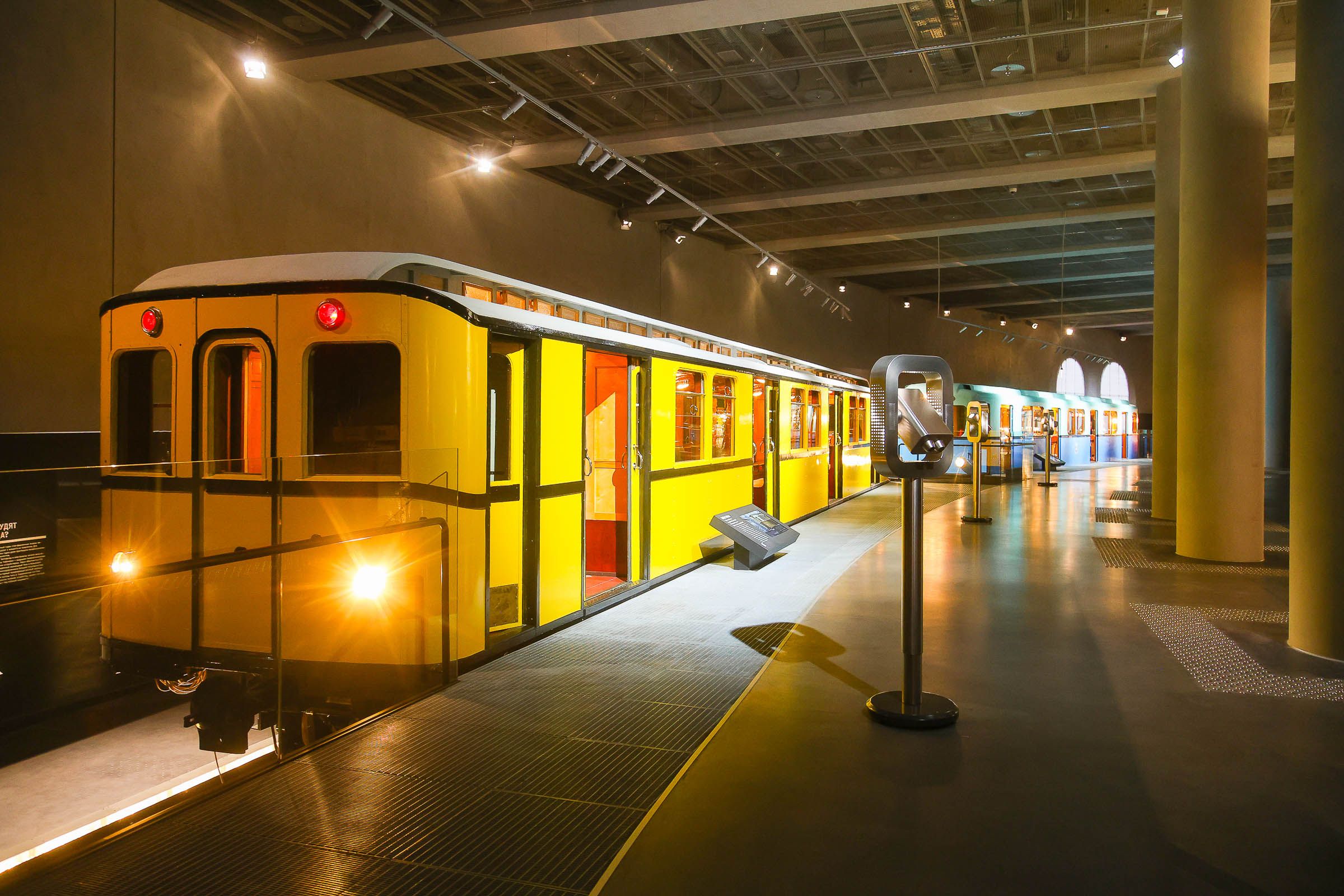
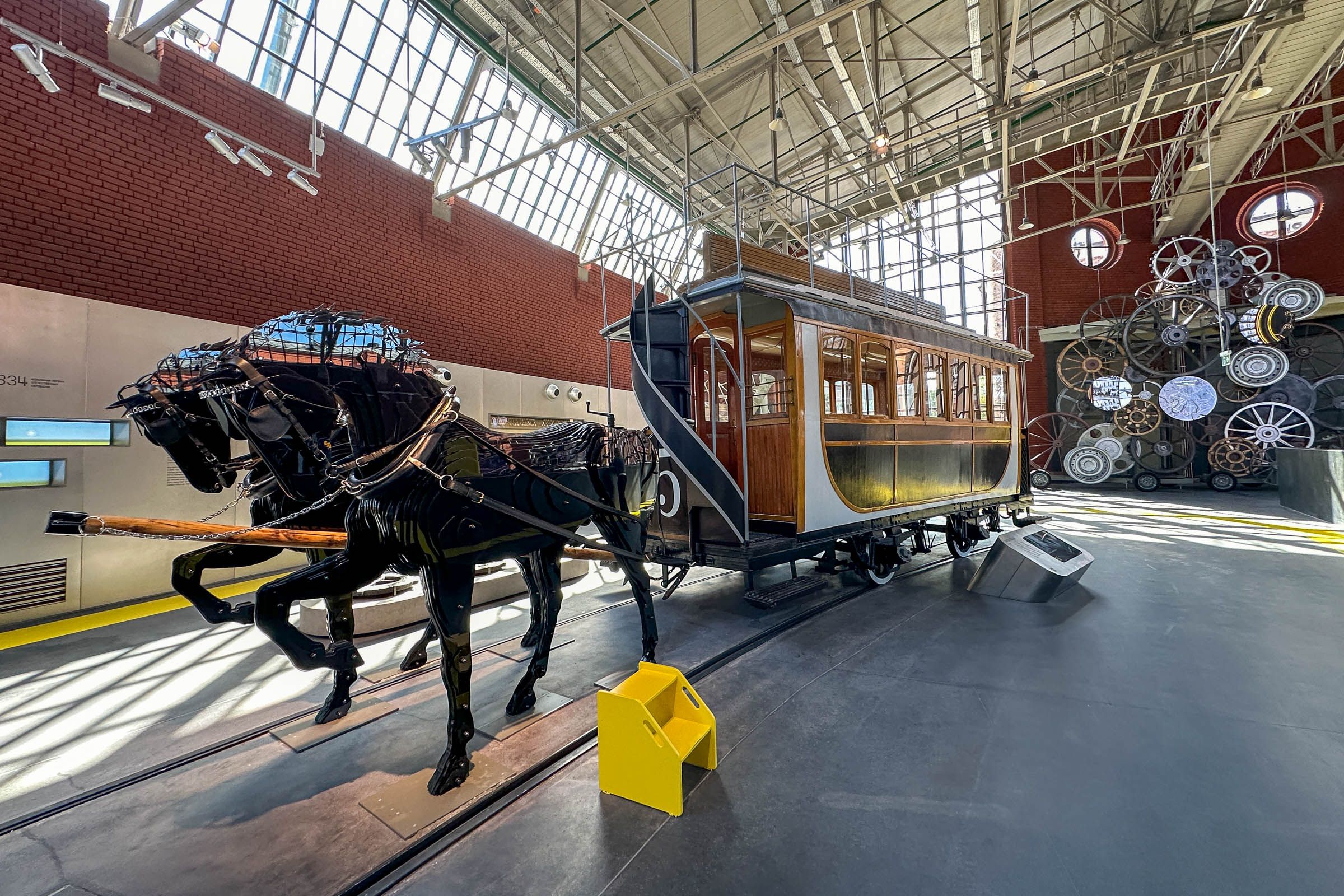
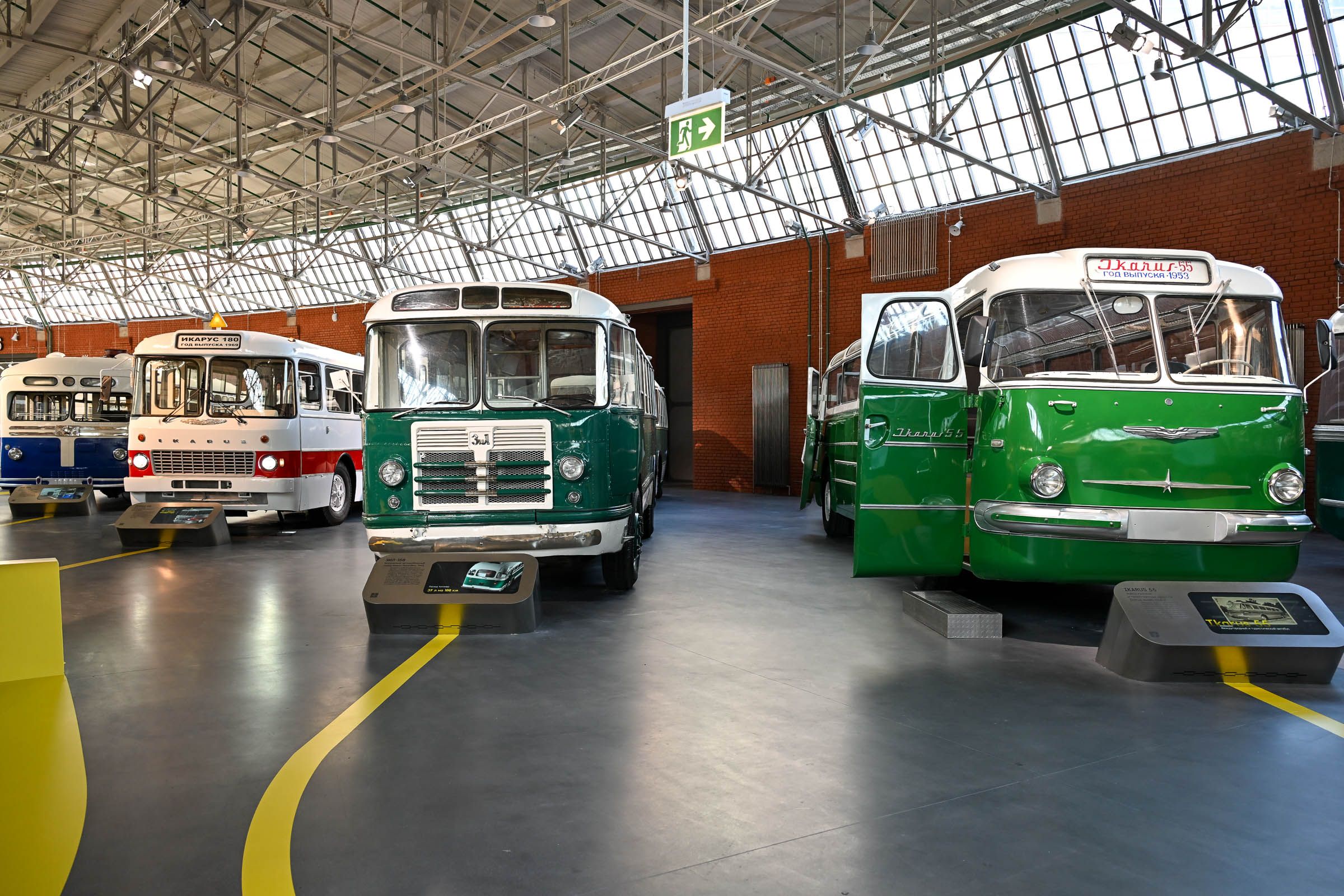
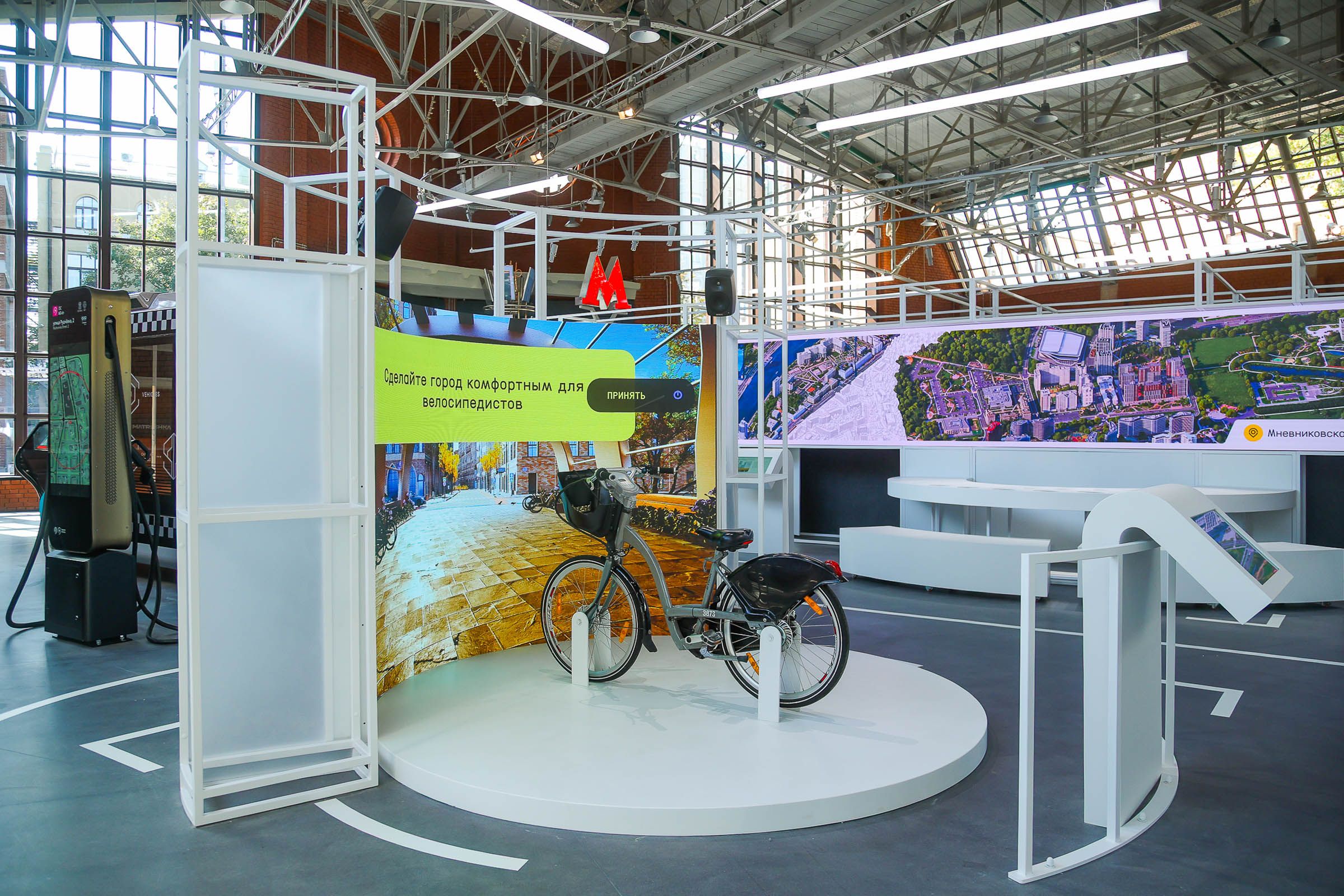
For the first time, the history of the capital’s transport system has been presented as inseparable from the development of Moscow’s automotive industry. Through authentic exhibits, archival materials and multimedia, the museum traces the development of the automotive industry, from the first transport enterprises of the late 19 th century, such as the Dux plant, one of the pioneers of Russian mechanical engineering, to the history of the legendary ZIL plant and today’s high-tech solutions. The exhibition shows how industry shaped the development of urban transport and how transport, in turn, became a driver of Moscow’s economic growth and transformation.
The museum’s ground floor is dedicated to the history of surface transport, from the horse-drawn tram of 1872 to modern autonomous vehicles. It includes six thematic zones:
— Starting point — a prologue exploring the route, the wheel and traction as the fundamental principles of transport;
— From cab driver to tram — about Moscow’s transport system in the second half of the 19 th century, when motor vehicles first began competing with horse-drawn transport;
— Vehicles for the city. 1920s−1930s — about transport in the context of the First Five-Year Plan and industrialization, Constructivist garages and ZIL (ZIS), the Moscow automobile plant that became a symbol of its era;
— A city for people. 1950s−1960s — about changes in Moscow transport after the war, including the flourishing of transport design, the emergence of prestige and mass-market cars and new urban planning concepts;
— Standby mode. 1970s−1980s — about the transport situation that shaped life in the new outlying districts and the machinery that helped the city develop;
— Today — the day after tomorrow — about Moscow’s present and future, including the introduction of smart infrastructure and autonomous transport, the development of multimodal routes and multi-level transport hubs, kicksharing (short-term electric scooter rental services) and green transport.
The underground level is dedicated to the history of the Moscow Metro. It includes seven thematic zones:
— Formula of metro construction — about the first metro builders and modern technologies, including giant tunnel boring machines and twin-track tunnels;
— Formula of a station. An interactive model presents a metro station as a highly complex technological facility incorporating ventilation systems and hermetic blast doors, an escalator machine room and power substations;
— Formula of control — about the operation of the Moscow Metro’s Unified Dispatch center, where visitors can try their hand at being a dispatcher;
— Formula of architecture, featuring the Depository installation. Its compartments use models, photographs, drawings and videos to showcase the diversity of the Moscow Metro’s architectural and artistic design;
— Formula of development — about metro lines, the principles behind their design and their impact on the city’s development;
— Formula of a metro car — about the technical evolution of metro rolling stock. Engineering solutions normally hidden from passengers’ view, from the Westinghouse brake to autonomous train operation systems, are exposed and transformed into interactive exhibits;
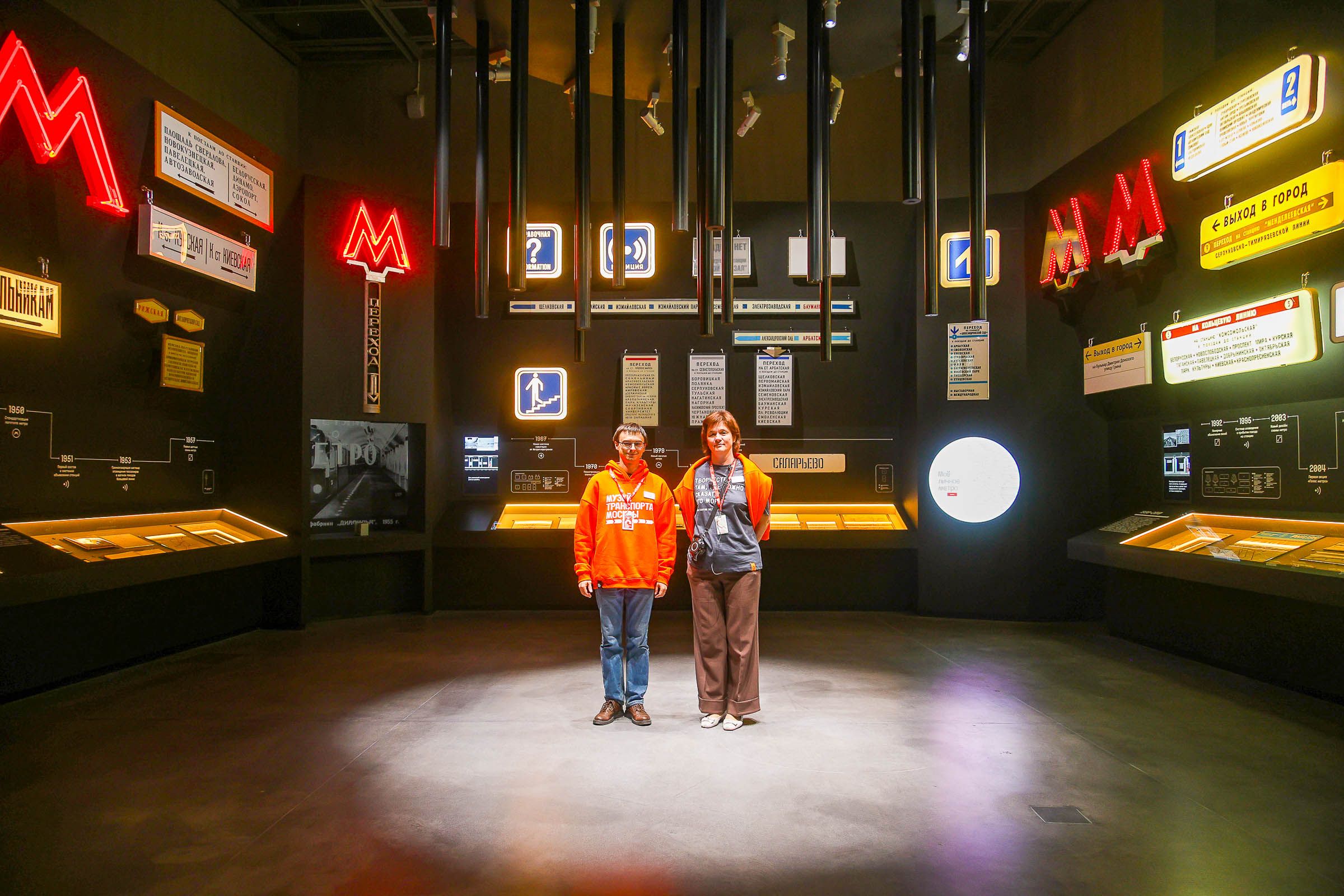
— Formula of navigation — about the history of wayfinding solutions, from the first signs to the metro’s digital ecosystem.
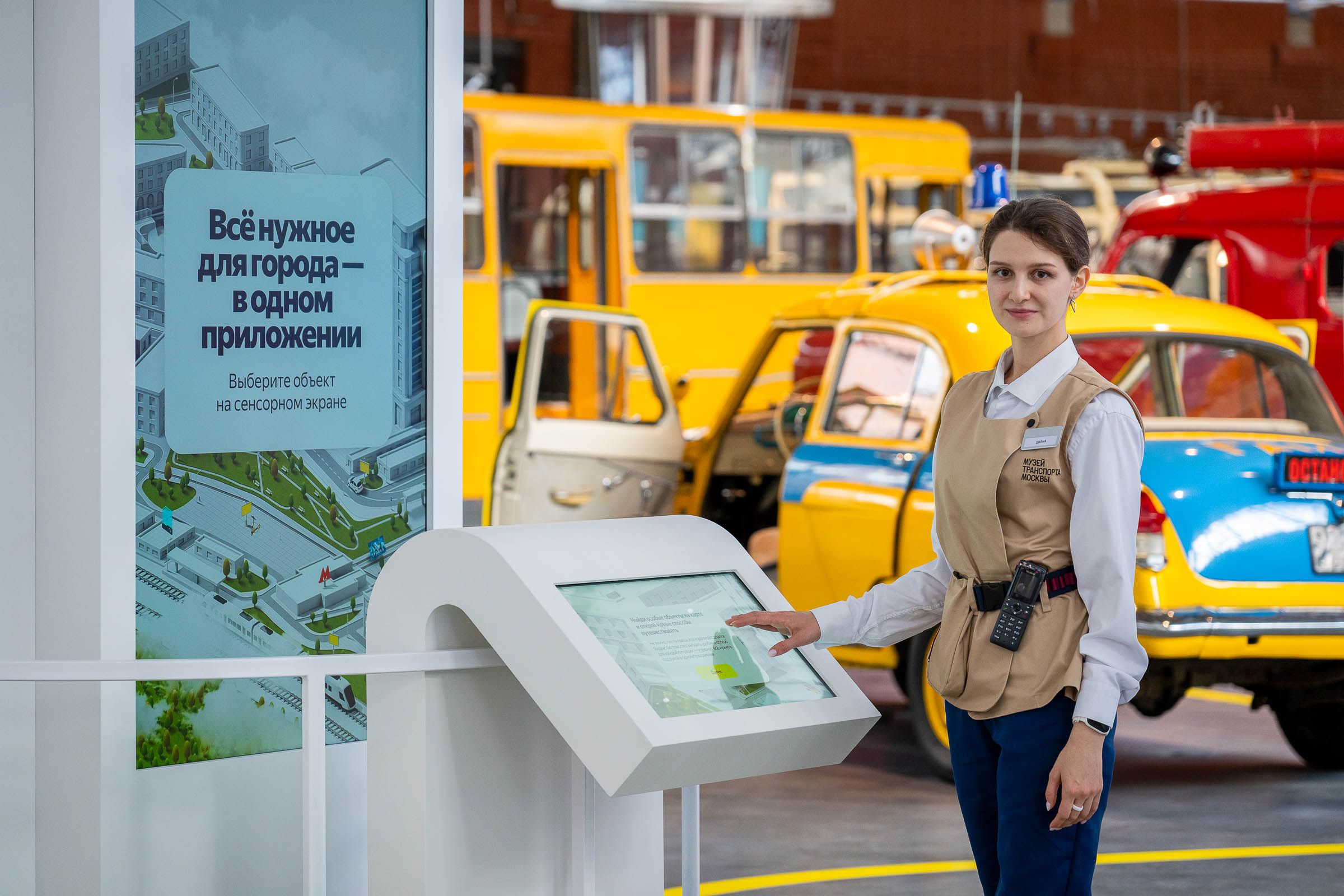
The museum exhibition includes 94 multimedia installations. For example, visitors can learn about the profession of a cab driver and even interact with one through the Moscow — City of Cab Drivers interactive project. The Bus and Internal Combustion Engine Technologies installation lets visitors imagine themselves as passengers on Moscow’s first Daimler bus and travel along the route from Maryina Roshcha to Ostankino. The Constructivist Garages project is dedicated to the history of the museum building. Visitors can see what the garage and its employees looked like in 1929 and learn about the truck departure schedule.
Interactive games have also been created for visitors. For example, Assemble an engine introduces visitors to the design of the Moskvich-412 engine, while Hand over the tool asks players to identify and hand a road worker a hand saw, clamp or steel caulking tool.
The Moscow Transport Museum’s permanent exhibition features 27 simulators for different types of urban transport. Visitors can try their hand at driving a metro car or working as a dispatcher at the Unified Dispatch center, as well as driving a tram in the capital of the future. Visitors can also use a multimedia guide with a screen and headphones offering four routes through the permanent exhibition:
— Where Moscow is going — the history of the capital told through transport and urban landscapes;
— Retro-futuro-immersive walk — a route featuring the most unusual objects and exhibits for those seeking new experiences;
— Sense of the road — transport seen through the eyes of those who created and operated it;
— How it all works — an in-depth look at the technical design of transport and urban infrastructure.
A special children’s route has been developed for young visitors, with stops consisting of interactive points featuring tasks and game-based animation. For example, children can design their own unique car on a display.
A special audio route has been developed for blind and visually impaired visitors. A number of installations feature audio descriptions and Braille labels. A total of 77 tactile models have been created especially for the museum exhibition, including scaled-down detailed replicas of vehicles and urban facilities, including transport infrastructure, as well as a three-dimensional map of Moscow Metro lines.
Restoration of the historic building
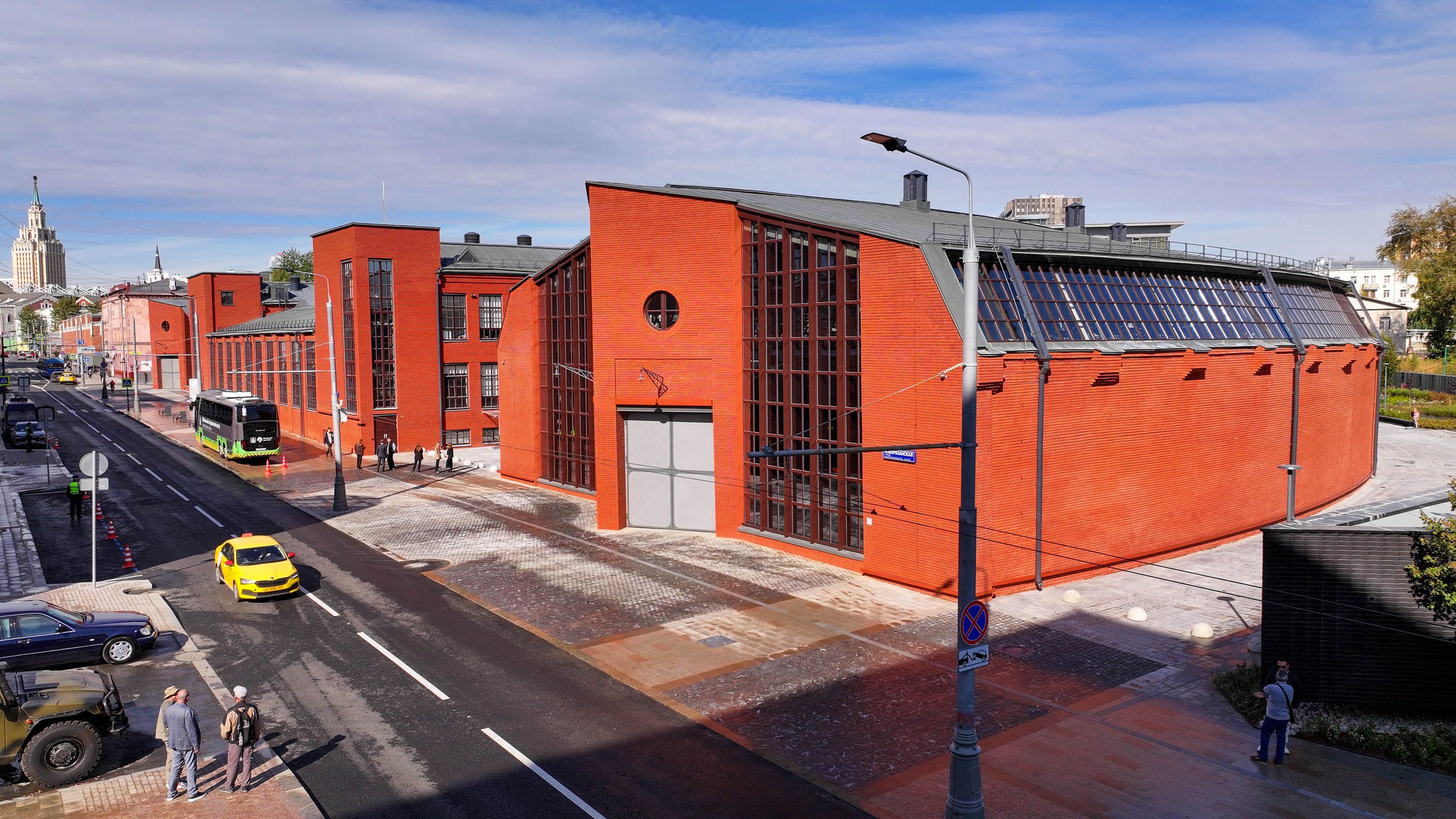
The museum’s permanent exhibition is housed in the restored truck garage designed by architect Konstantin Melnikov at 27 Novoryazanskaya Street, buildings 1 and 3. The building is a cultural heritage site of regional significance.
“For almost a century, the building served purely utilitarian purposes: it was a truck garage, taxi depot, vehicle repair plant and bus depot, remaining closed to the public. We dismantled extensions that distorted its appearance, recreated the stained-glass glazing and restored the building’s historic appearance,” Sergei Sobyanin writes on his Max channel.
Source: Moscow Mayor’s Max channel
The garage on Novoryazanskaya Street was built in 1929–1931 to a design by architect Konstantin Melnikov. He also designed another monument of the Soviet avant-garde, the Bakhmetevsky Garage on Obraztsova Street.
Because of the site’s small size and wedge shape, the garage building was designed in the form of a horseshoe. Truck parking spaces were arranged along its curve. This made it possible to accommodate the maximum number of vehicles in a compact space while allowing them to exit freely onto Novoryazanskaya Street. The building’s main façade consists of several projecting brick sections, with two gates at the end of each, allowing vehicles to travel in opposite directions.
During the major construction projects of the 1930s, the garage on Novoryazanskaya Street was used mainly by various municipal enterprises and trusts. Its trucks delivered bricks for the construction of the Mossovet Hotel, helped dismantle the closed Sukharevsky Market, took part in the reconstruction of the AMO plant and the construction of Moscow’s first garages, removed soil from metro construction shafts and supplied Moscow enterprises with firewood.
In 1938, the building changed its function for the first time: the truck garage was replaced by a taxi depot operating ZIS-101 and GAZ M-1 passenger cars. However, in 1941, following the outbreak of the Great Patriotic War, Vehicle Repair Plant No. 5 was established in the garage, where the legendary ZIS-5 frontline trucks were repaired. After 1945, working in cooperation with other Moscow enterprises, the garage repaired ZIS-8 and ZIS-16 passenger buses and produced the first mass-produced dump trucks and refuse trucks in the Soviet Union. From 1948 to 2015, the site housed Mosgortrans Bus Depot No. 4.
.jpg)
.jpg)
.jpg)
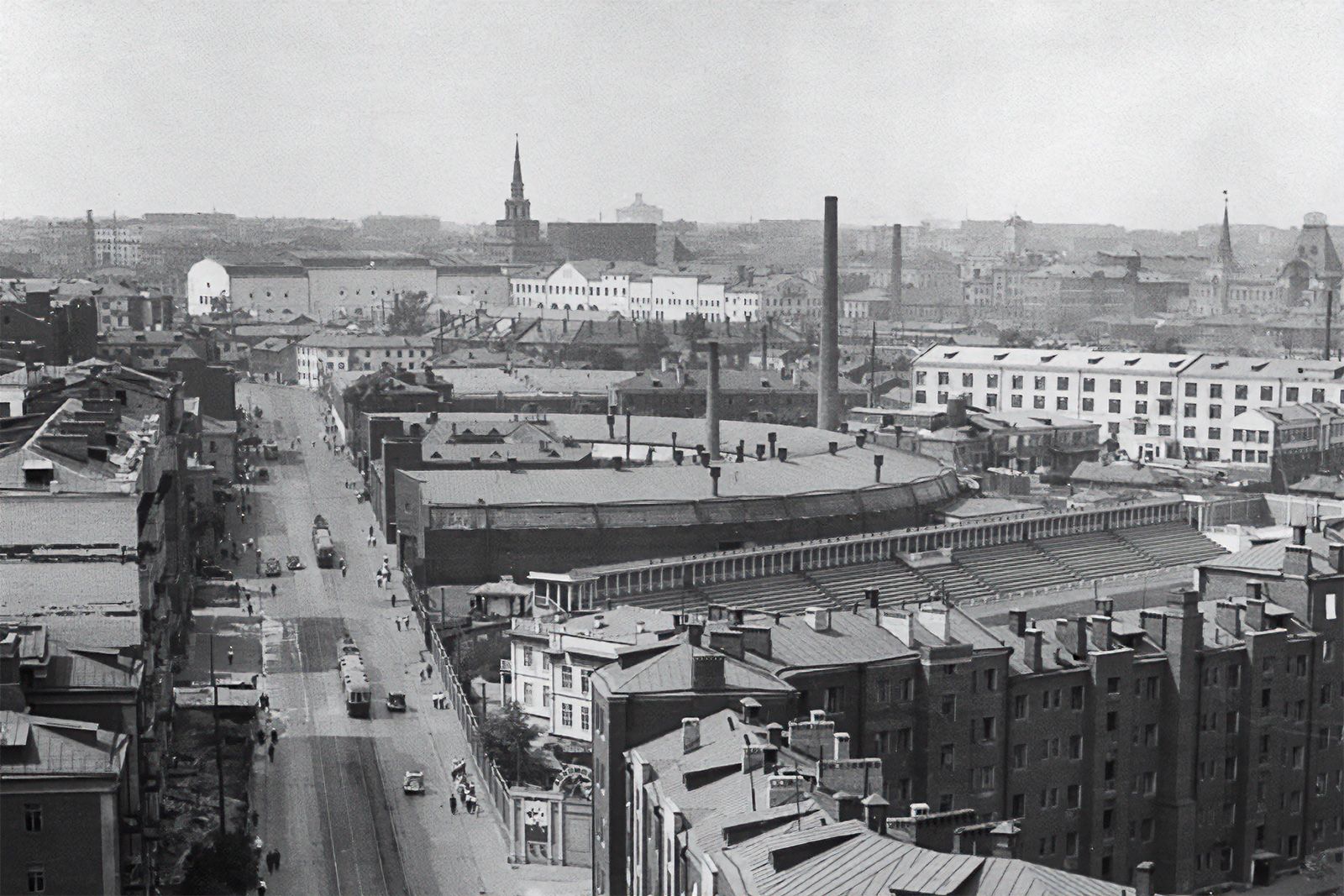
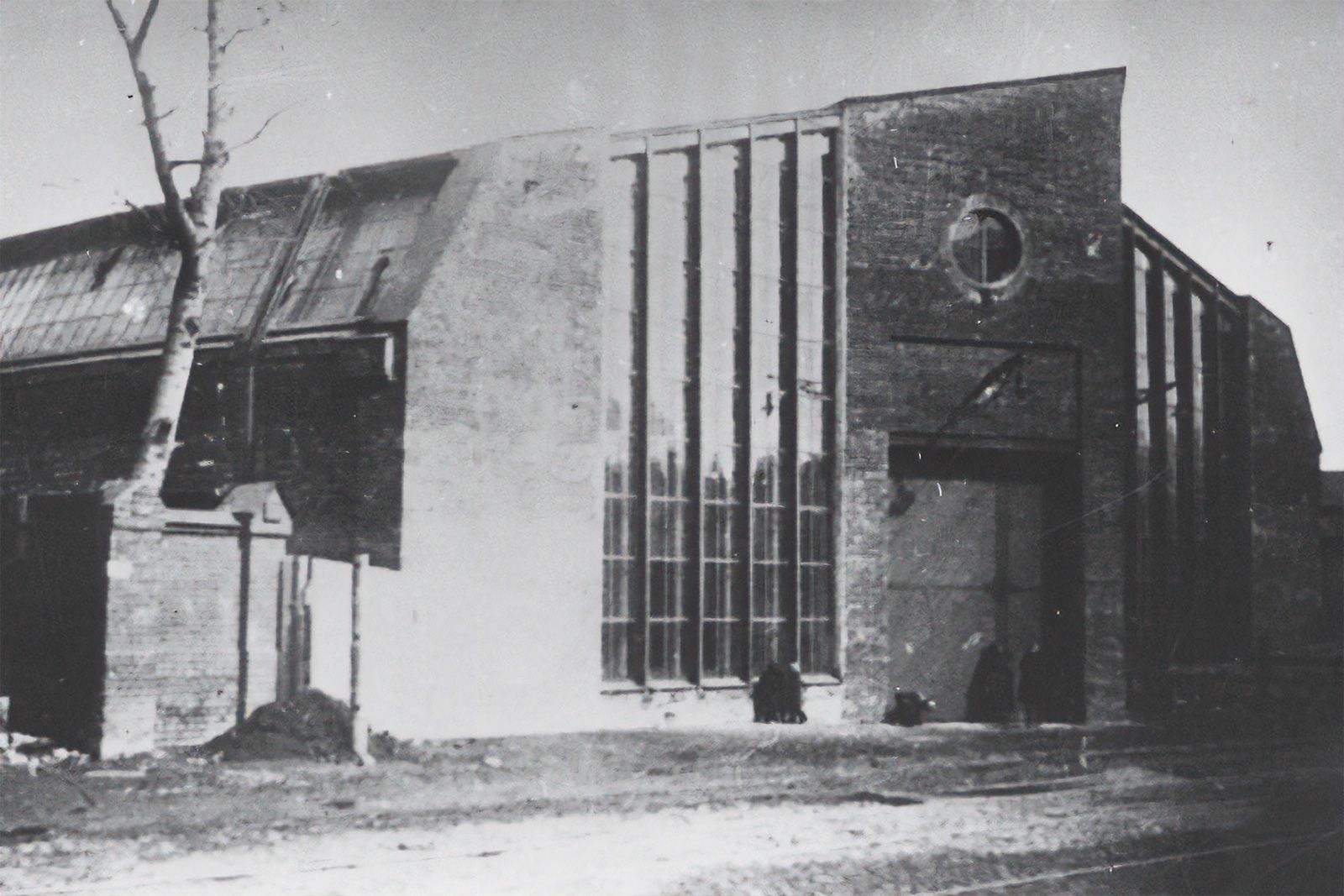
The restoration project, developed by architects Yuri Grigoryan (Project Meganom, LLC) and Boris Savin (Faros, LLC), provided for the restoration of the garage’s historic appearance. In particular, the sloping gables, brickwork, skylight and lost inclined ribbon stained-glass windows forming the outline of the building’s roof were restored. Later utility buildings and extensions that distorted the original appearance of the architectural monument were also dismantled.
The garage’s unique metal trusses were restored. Specialists also conducted additional surveys, then they repaired the masonry and replaced elements that had lost their load-bearing capacity.
Following Konstantin Melnikov’s original design, the unique glazing was recreated, including ribbon stained-glass windows in the roof, vertical stained-glass windows on the end façades of the main building and stained-glass façade windows of the former repair workshops. The original glazing had been lost in the 1960s and replaced with glass blocks, which were removed during restoration.
During the building’s restoration, an underground level was created to house the exhibition dedicated to the Moscow Metro. The builders first reinforced the foundations of the architectural monument and then constructed a diaphragm wall set back from the inner boundaries of the existing walls. The metro cars were subsequently lowered through a specially prepared installation opening more than 22 meters long in the ground-floor slab and placed in their designated positions on a replica section of track.
Thanks to the restoration and the creation of the museum, these architectural monuments have been given a new lease of life and transformed into an open public space capable of welcoming millions of Moscow residents and visitors to the capital every year.
Moscow Transport Museum
The Moscow Transport Museum is an entity subordinate to the Moscow Department of Transport and Road Infrastructure Development. A research and restoration team has been assembled to study, attribute and restore historic vehicles and artefacts, ensuring that the museum collection is maintained in good working order and in a historically accurate condition.
The museum’s holdings include more than 350 passenger cars and trucks, taxis, buses, trolleybuses, municipal service vehicles, legendary one-and-a half ton and three-ton capacity trucks, bicycles and motorcycles. In terms of the scope and uniqueness of its collection, the Moscow Transport Museum has no equivalent in the world and surpasses renowned transport museums in Lucerne, London, New York and Beijing in the scale and diversity of its exhibits, including multimedia and interactive displays.
Thanks to the holdings of its archive and library center, which preserves unique drawings, historic photographs and specialist books, the Moscow Transport Museum ranks among the leading specialized research centers in Russia and other countries and is also a popular educational center for students at transport and technical colleges and universities.
Before the new building on Novoryazanskaya Street opened, the museum held exhibitions and other events at various venues around the city, including VDNKh (Pavilion No. 26), the Northern and Southern River Stations and the Museum of Moscow. Over the past six years, more than one million people have attended the museum’s themed special projects, festivals, lectures, master classes and guided tours.
Moscow museums
Today, more than 450 museums and galleries are open to residents and visitors to the capital. They include municipal, federal, private and departmental institutions. The total area of exhibition spaces and collection storage facilities at these museums exceeds one million square meters, while their collections contain more than 17.2 million items.
Last year, more than 2,500 exhibitions were held in the capital, including projects involving museums from other Russian regions and foreign countries. City-run museums alone welcomed more than 19 million visitors in 2025.
The city pays particular attention to upgrading museum infrastructure and facilities, introducing modern technologies into exhibition spaces and creating comfortable conditions for visitors. For example, a new building of the Vasily Nesterenko Moscow State Art Gallery opened in May 2026. In the summer, following extensive restoration, the restored Church of the Ascension in Kolomenskoye reopened to visitors, with its own exhibition space created for the first time.
Restoration of the Ostankino Estate continues: the Egyptian Pavilion opened there last year, while the Italian Pavilion is due to welcome visitors in the near future. The Museum of Memory opened on the Day of Memory and Sorrow.
Last year, the Biocluster opened at VDNKh, bringing together achievements in biology, advanced educational methods and contemporary art projects. Two new exhibitions at Biocluster venues will welcome visitors soon: Floratopia in Pavilion No. 29, Floriculture and Landscaping, and the World of Dinosaurs project in Pavilion No. 17, Forest Industry.