Sergei Sobyanin Announces Extension of Tagansko-Krasnopresnenskaya Line to Kurkino
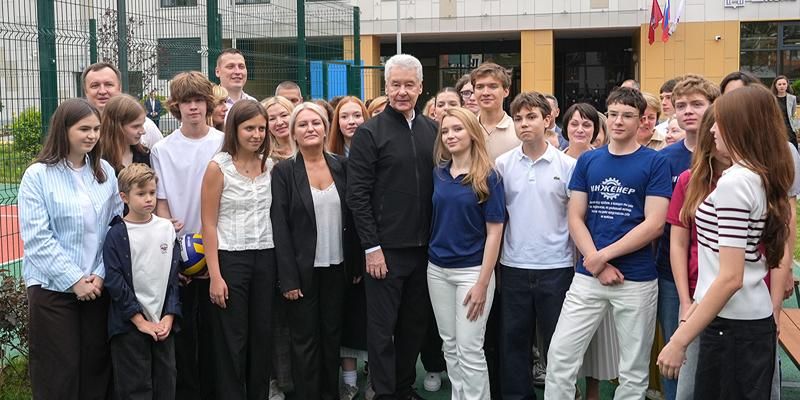
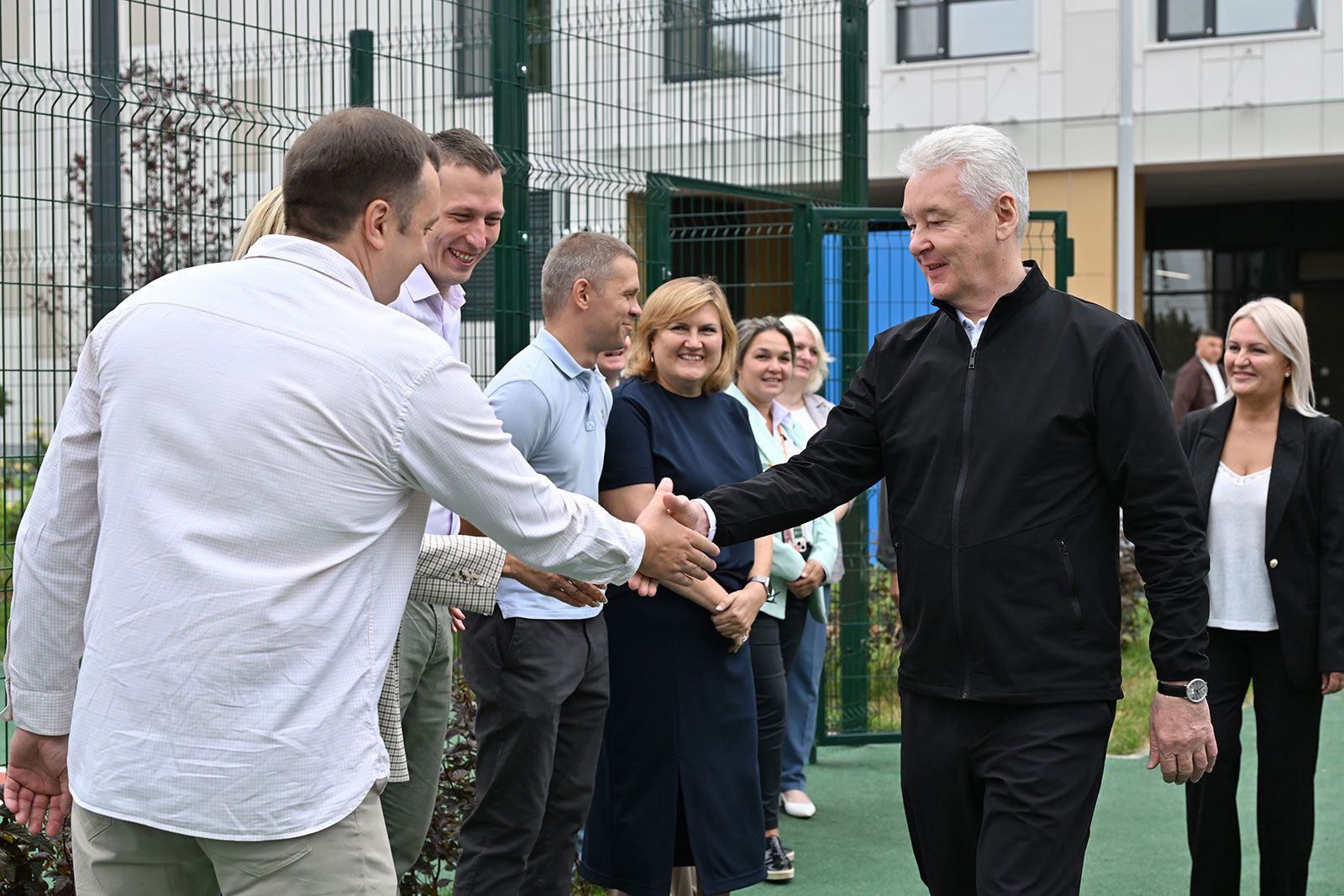
The Tagansko-Krasnopresnenskaya metro line will be extended to the Kurkino District. Sergei Sobyanin announced this during a meeting with teachers and students at the new School No. 2005 built in the district.
“We understand what kind of area this is. It is not just Kurkino with its 35,000 residents: around 300,000 people live in this enclave, including Khimki and Krasnogorsk. A huge number of people travel to Moscow and back every day; the Moscow Ring Road is congested, as are the radial highways. Of course, it is crucial to properly integrate the entire area as well,” Sergei Sobyanin said.
The decision to integrate the district into Moscow’s metro network was made due to congestion on Novokurkinskoye Motorway.
“There will be two stations — Novokurkinskoye Shosse, although we will see what else to call it. We may even call it Khimkinskaya station because that is where the Moscow Region urban district begins. And the second one will be not far from this school; we will determine its location, consult with you and prepare the design next year. You will be able to get to downtown Moscow and back quickly, so in addition to its status as a wonderful, quiet and green district, Kurkino will also gain good transport accessibility,” the Moscow Mayor added.
Anastasia Tkacheva, a 10 th-grade student at School No. 2005, thanked Sergei Sobyanin for the decision to build the metro in the district.
“This is particularly important for us because we will be graduating soon, and it means new opportunities. Of course, it is difficult, but it is great that all of this can be integrated and developed. Thank you so much, because this is really what all of us here need,” Anastasia Tkacheva said.
Metro construction in Kurkino became possible following the launch of the Big Circle Line (BCL) and the third Moscow Central Diameter (MCD-3). In addition, the new Rublyovo-Arkhangelskaya metro line will open in 2026–2027. As a result, the northwestern section of the Tagansko-Krasnopresnenskaya Line will become considerably less congested, making it possible to extend it beyond the Moscow Ring Road.
Planernaya, the terminus of the purple metro line, opened on December 30, 1975. Today, 51 years later, it will become the starting point for a new Moscow Metro development project.
“At this stage, the new underground section will be 5.1 kilometers long. The working names of the stations are Novokurkinskoye Shosse and Kurkino. We will determine the exact locations of the stations after the design work is completed,” the Moscow Mayor wrote on his Max channel.
Source: Moscow Mayor’s Max channel
Currently, a journey from Kurkino by surface public transport to the nearest metro stations — Planernaya (10 routes) and Khovrino (three routes) — takes about 30 minutes.
Thanks to the metro construction, a significant number of residents of Kurkino, Putilkovo (Krasnogorsk) and Khimki — around 150,000 people — will no longer need to use surface transport to reach the metro: they will have a station within a walking distance. Instead of spending 30 minutes on a bus to Planernaya or Khovrino, the walk to the metro will take about five minutes — six times less.
“Thanks to the new stations, travel to central Moscow will become almost twice as fast. For example, a journey to Belorussky Railway Station will take 30 minutes instead of an hour, while a trip to Khoroshyovskaya station on the BCL will take 25 minutes instead of 50. Passengers will be able to make quick and convenient transfers to 22 metro, Moscow Central Circle and Moscow Central Diameters stations. Passenger traffic at Planernaya, currently the terminus of the purple line, will fall by 20 per cent,” Sergei Sobyanin wrote on his Max channel.
Source: Moscow Mayor’s Max channel
In addition, more than 70 social, educational and leisure facilities in the district will become easier to reach.
The Kurkino metro stations are expected to be used by around 70,000 passengers daily. According to estimates, Novokurkinskoye Shosse station will handle 26,000 passengers a day, while Kurkino station will handle 43,000.
Therewith, a more even distribution of passenger flows will reduce the load on the entrance turnstiles at Planernaya, currently the terminus, by 20 per cent, from 50,000 to 39,000 passengers per day. Traffic on nearby sections of the Moscow Ring Road, Leningradskoye Motorway and Novokurkinskoye Motorway will decrease by 5,000 vehicles per day.
The Tagansko-Krasnopresnenskaya Line, more than 42 kilometers long and comprising 23 stations, is one of the longest and most popular radial lines of the Moscow Metro, connecting 15 districts with a total population of two million. Passengers can transfer to 22 stations on Moscow’s rail transport network. More than one million people use the line every day.
Four new stations have opened on the Tagansko-Krasnopresnenskaya Line over the past 15 years. In 2013–2015, the southeastern section of the line was extended by three stations: Lermontovsky Prospekt, Zhulebino and Kotelniki. In 2014, Spartak station opened on the northwestern section.
“According to our estimates, the stations will bring the city closer for 350,000 people who live and work in Kurkino, Khimki and Putilkovo (Krasnogorsk). About 150,000 of them will have a metro station within a walking distance,” the Moscow Mayor wrote on his Max channel.
Source: Moscow Mayor’s Max channel
New School on Sokolovo-Meshcherskaya Street
The new academic building of School No. 2005 was built under the Targeted Investment Program at 2A Sokolovo-Meshcherskaya Street.
“It is a good school, with medical, engineering, IT and even entrepreneurship classes, so this building is specifically for students in grades 10 and 11, for high school students. I hope it will help you choose your future profession and gain solid knowledge. So, congratulations on the upcoming school year!” Sergei Sobyanin said, addressing the students.
The Moscow Mayor added that another 20 new schools and 100 reconstructed schools will open in the capital on September 1 this year. “A record number of new or renovated school places will be available in Moscow,” Sergei Sobyanin emphasized.
The new four-story academic building, with an area of about 6,100 square meters and built to an individual design, provides a comfortable and safe environment for learning and creativity. A barrier-free environment has been created for children with health limitations.
“This is one of 145 new and reconstructed Moscow schools and kindergartens that will open on September 1. The building was constructed under the Targeted Investment Program to an individual design. It will accommodate 448 students in grades 10 and 11,” the Moscow Mayor wrote on his Max channel.
Source: Moscow Mayor’s Max channel
The building’s architectural concept is based on an unconventional geometric solution for the façades, with the entrance areas serving as the main visual accent. Large-format porcelain stoneware panels in white, light milky and mustard shades were used for the façade. To ensure good natural lighting, the building features a translucent aluminum mullion-and-transom curtain-wall system with stained glazing. This technology makes it possible to glaze large openings while maintaining structural reliability.
Students and teachers have access to modern learning and communal spaces. These include an IT training ground, a media library, an academic laboratory and research complex, general-purpose and specialized classrooms, technical and medical units, a dining hall with a kitchen, a transformable gym with a retractable curtain allowing several classes to train simultaneously, a choreography hall, as well as comfortable changing rooms and showers.
“Everyone will feel comfortable in the building, including students with reduced mobility. In this cozy and safe environment, high school students will be able to study, pursue creative activities and sports, and take part in supplementary education. The school is equipped with high-tech infrastructure, including facilities for training in medicine, engineering, IT, entrepreneurship and media,” Sergei Sobyanin wrote on his Max channel.
Source: Moscow Mayor’s Max channel
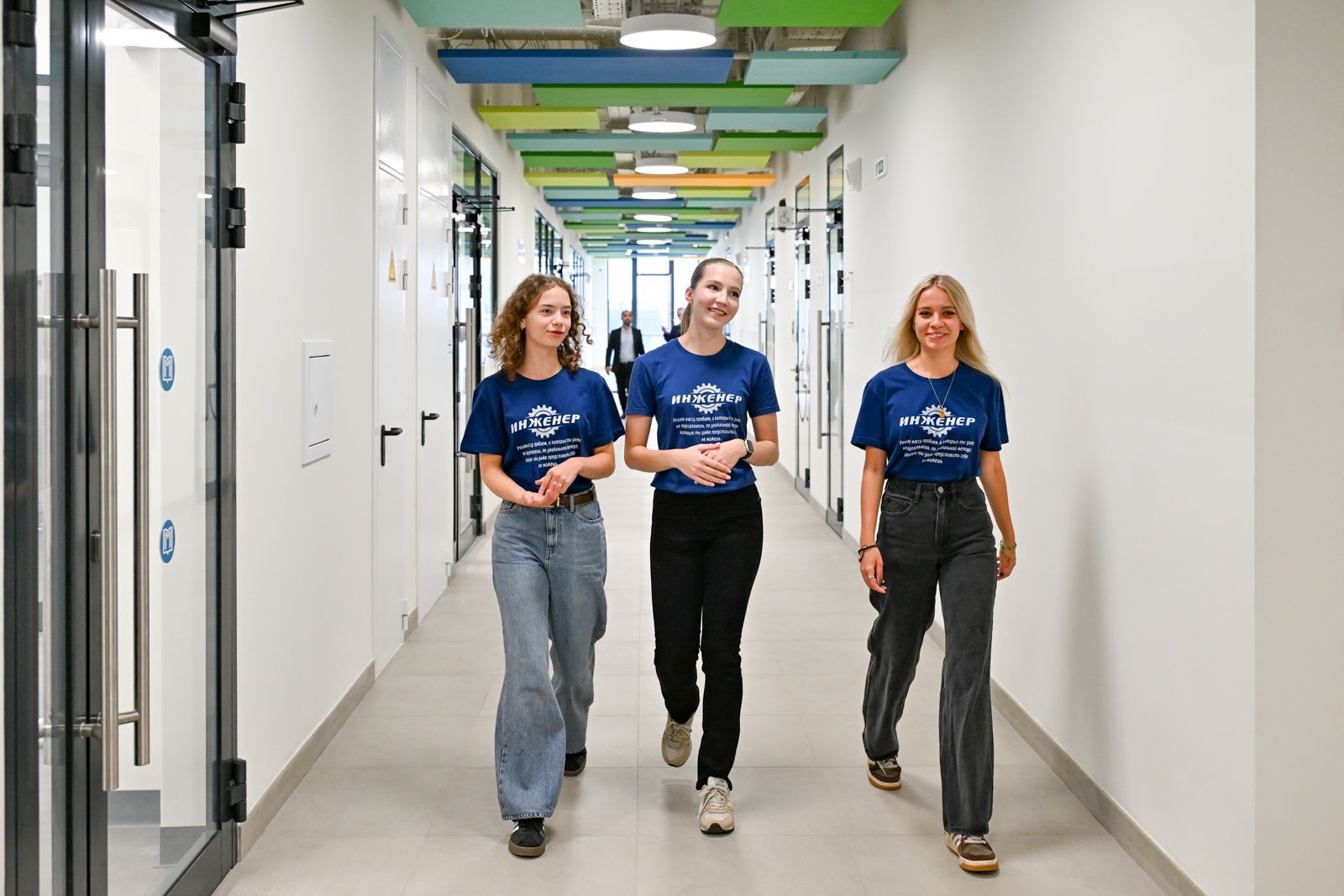
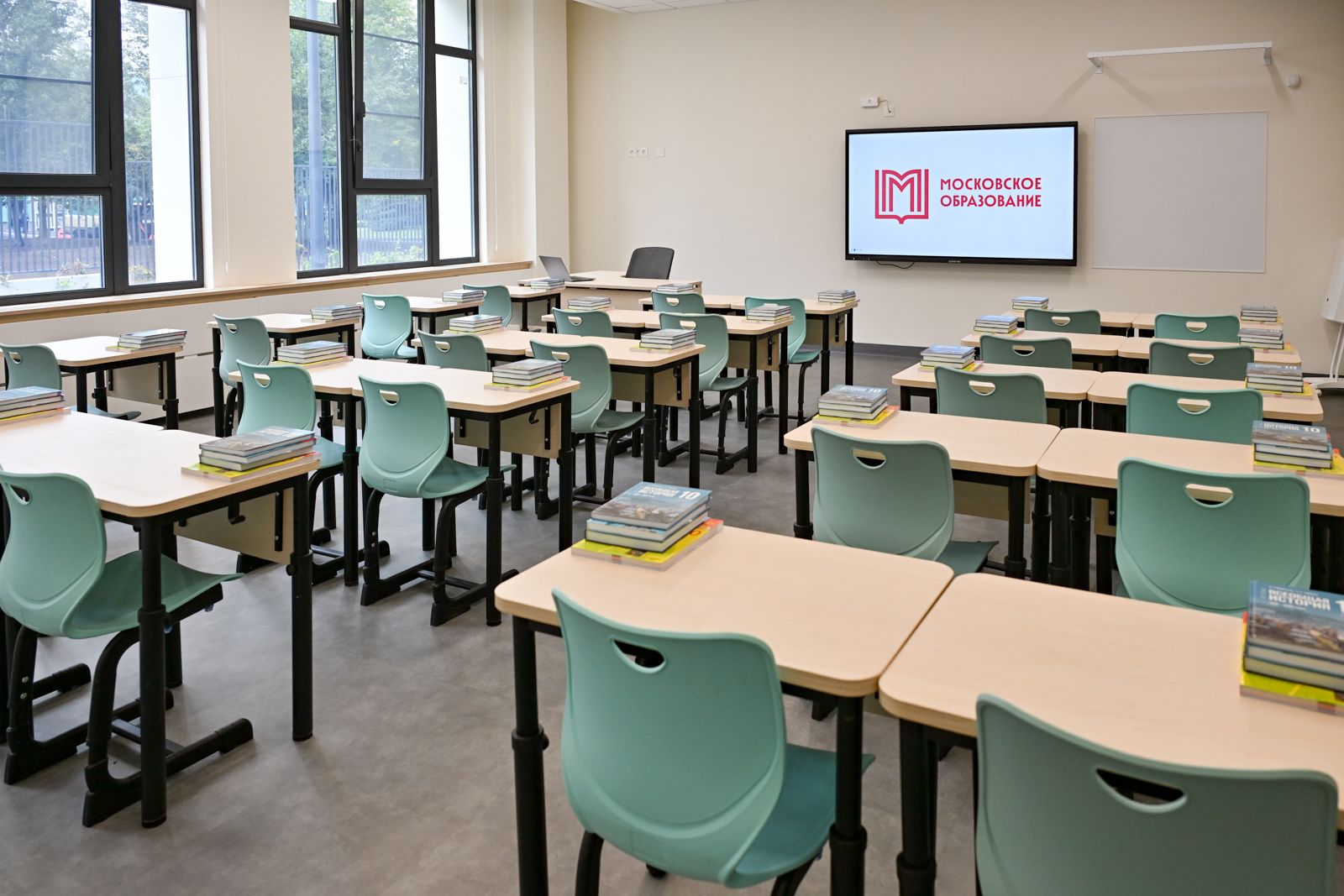
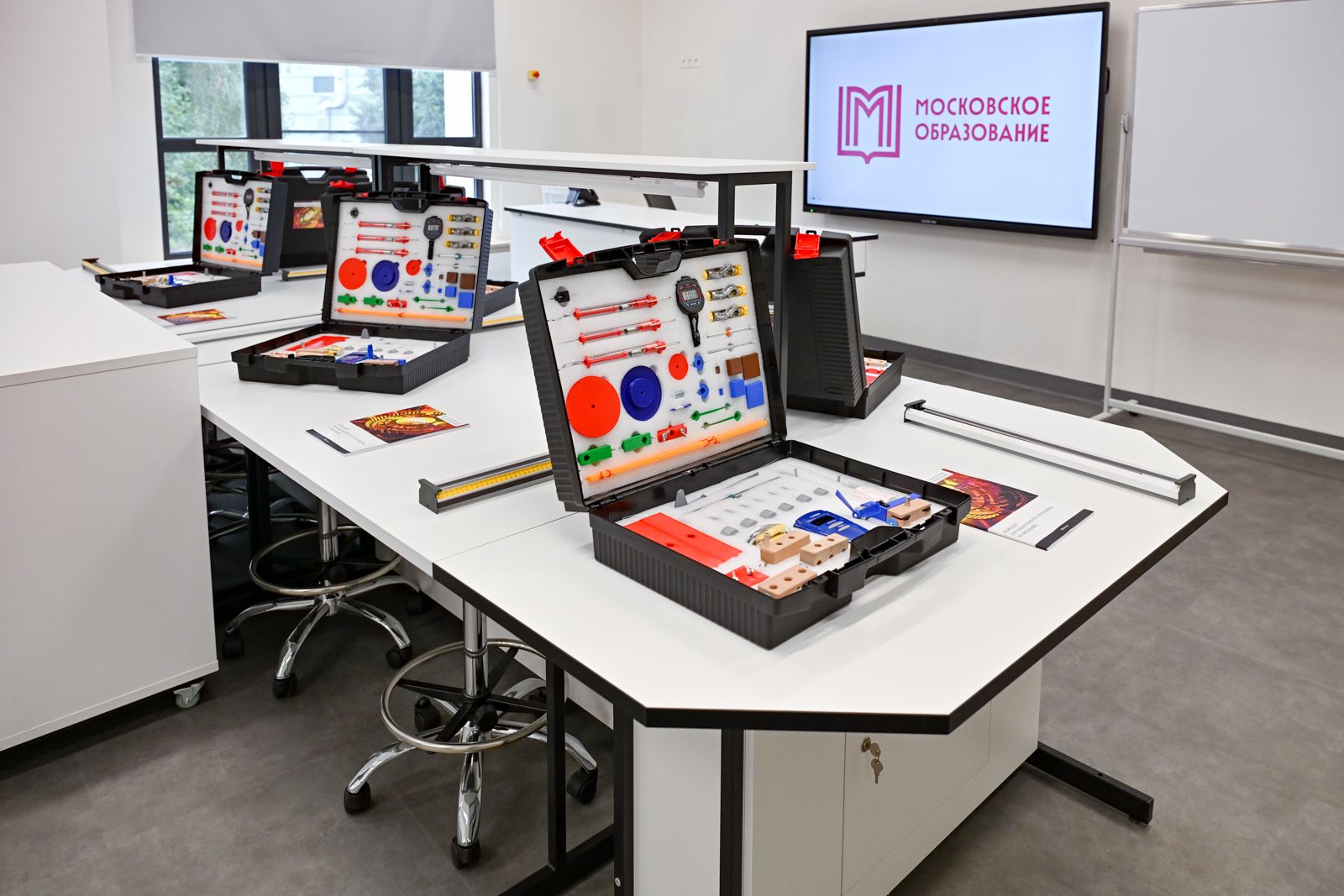
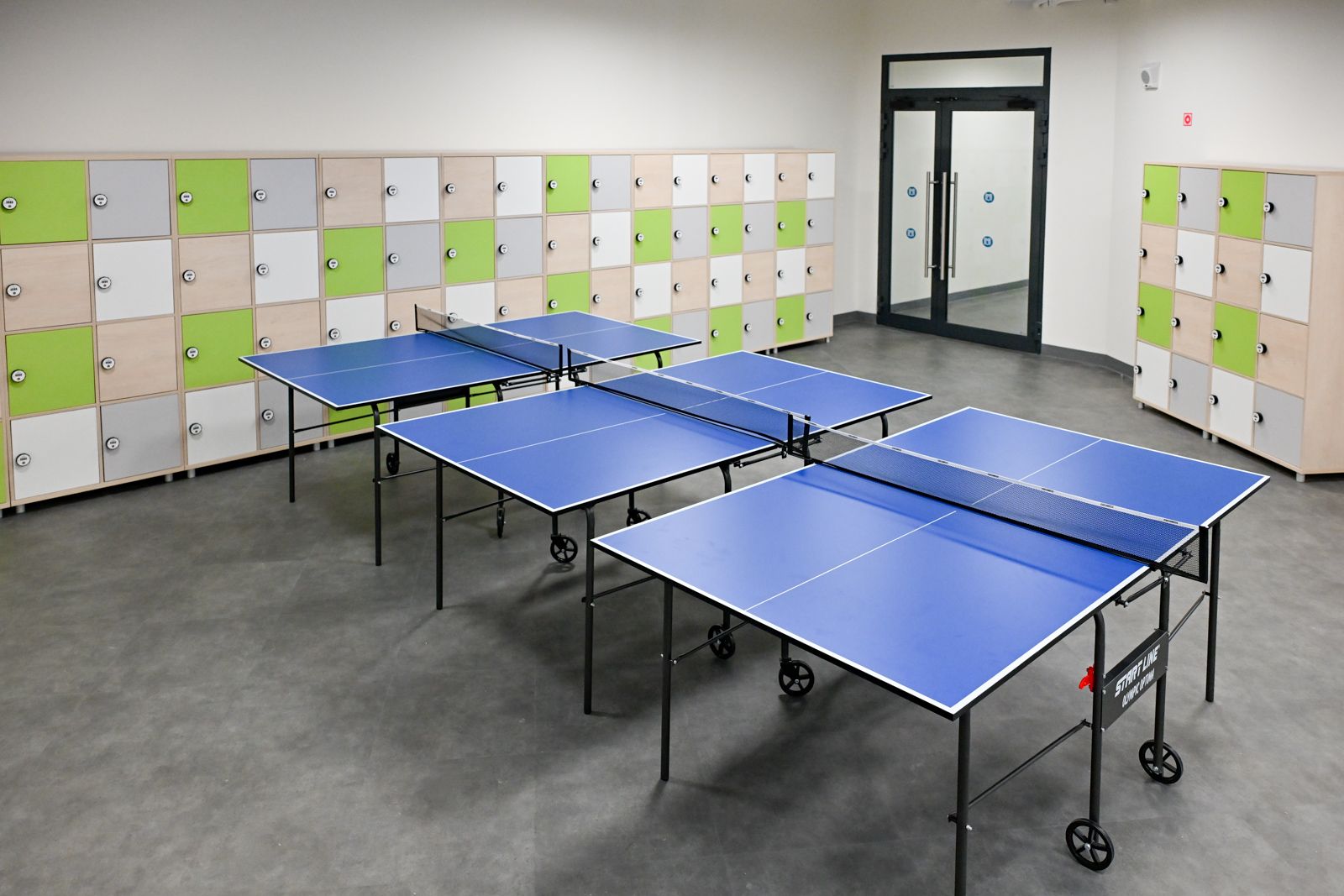
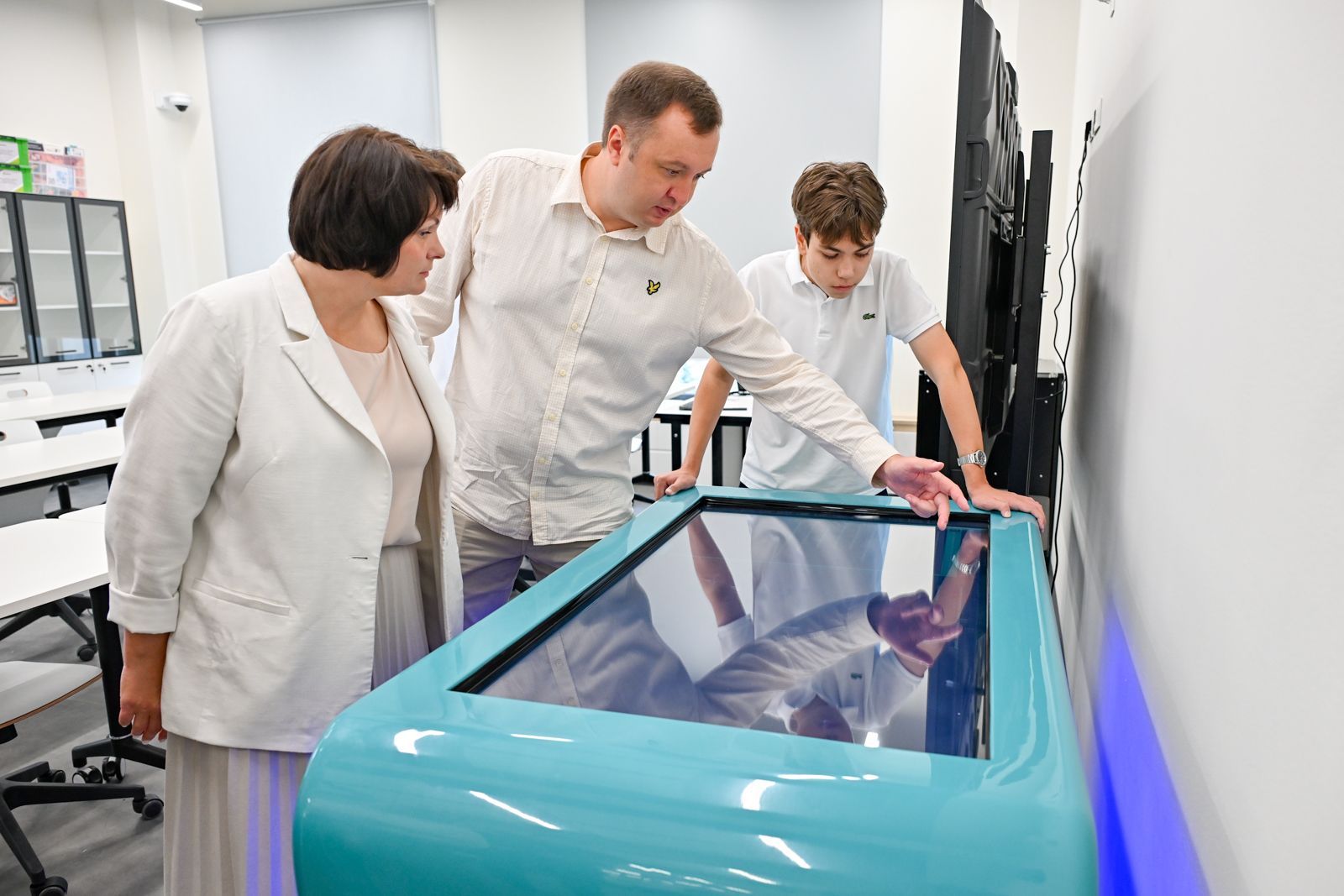
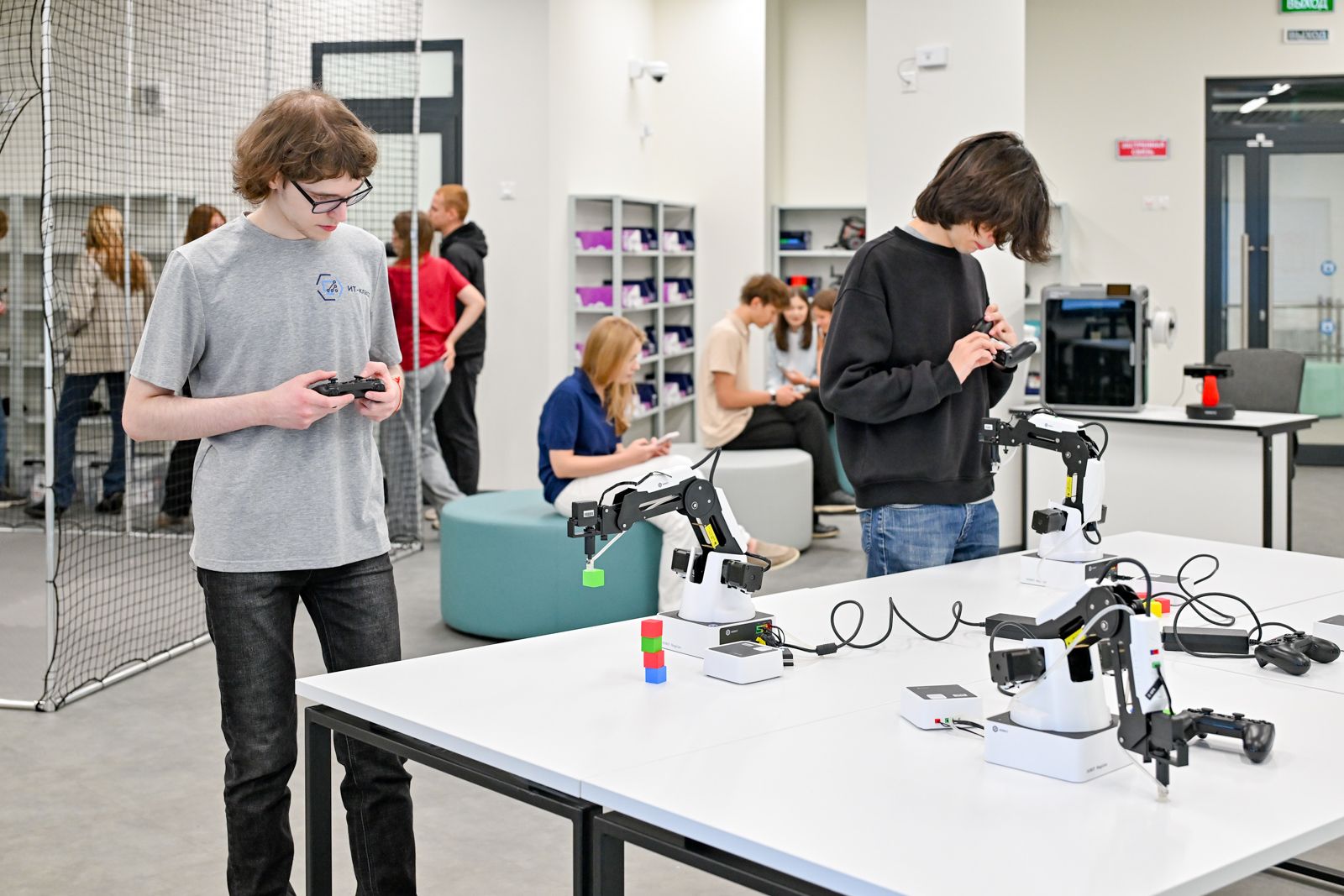
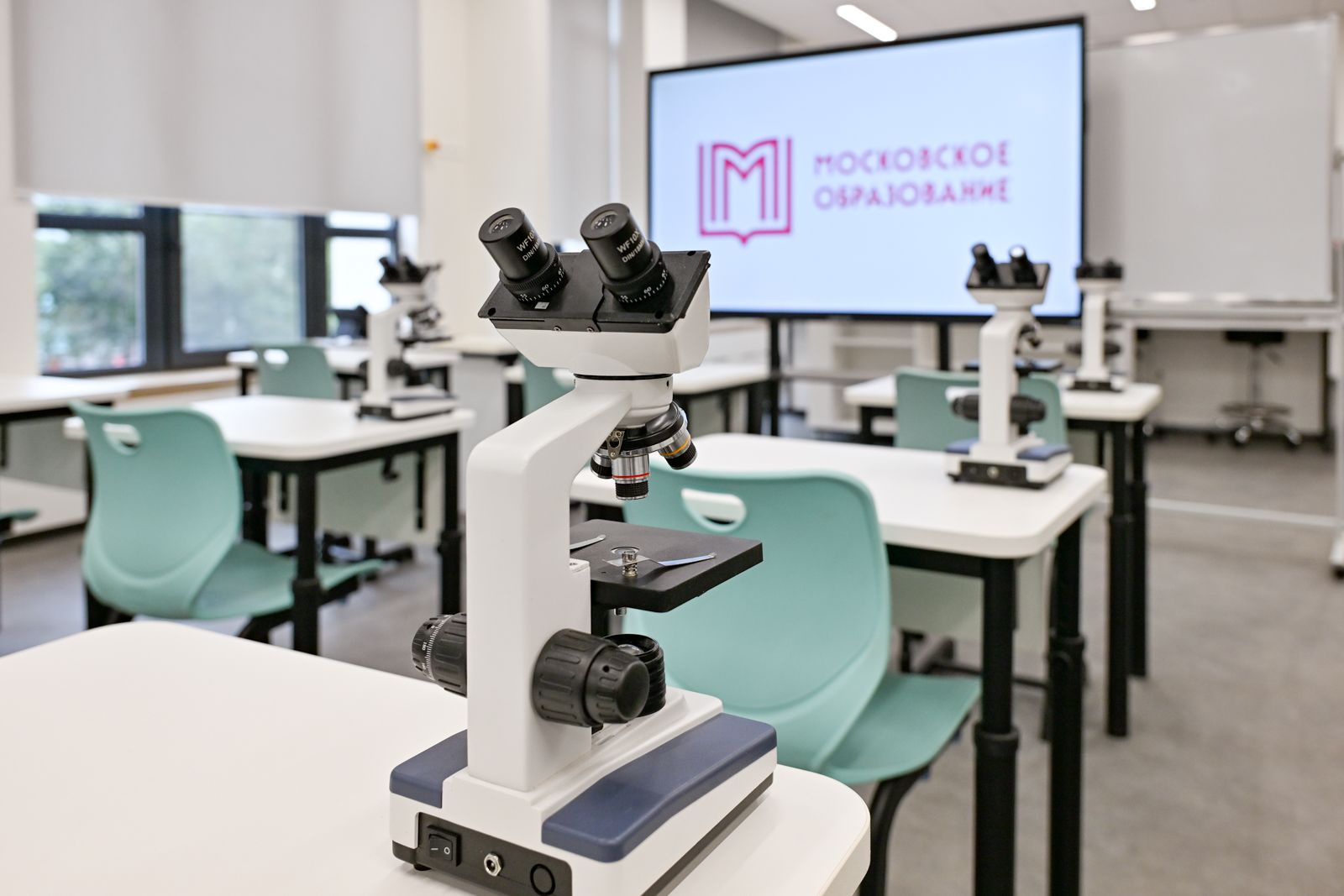
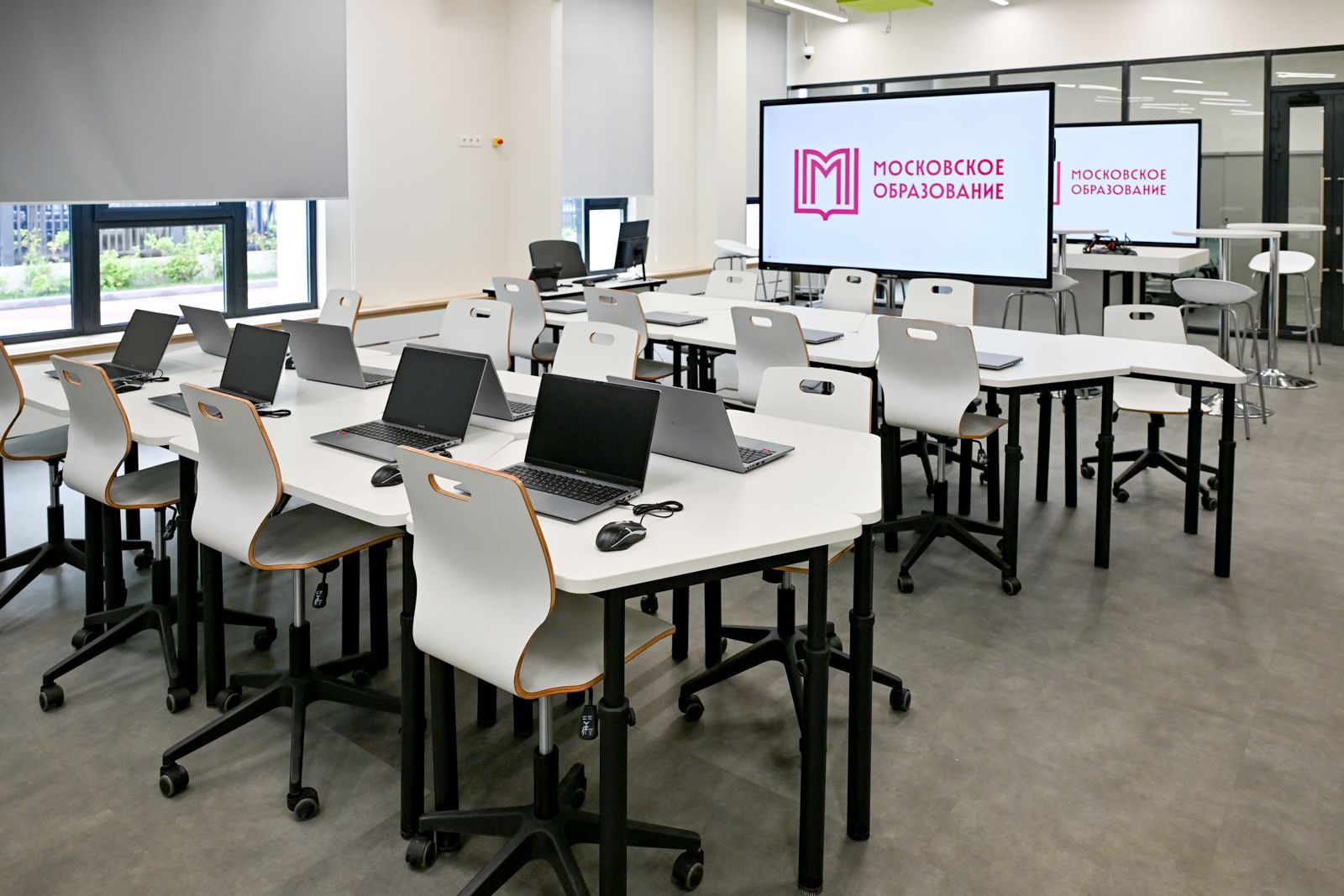
For robotics classes, the school has been equipped with special modules and programming kits. Science classrooms have laboratory equipment for experiments, digital sensors for research and microscopes. Classrooms have interactive panels, while computer rooms are equipped with laptops.
Transformable partitions have been installed in some learning spaces. This makes it possible to adapt classrooms for different lesson and event formats. High-quality materials meeting Moscow school standards, fire safety requirements and hygiene regulations were used for the interior finishing. Factors such as the slip resistance of floor tiles and the durability of finishes were taken into account when selecting them.
The building is equipped with modern engineering systems designed to ensure the comfort and safety of students and teachers. Energy-efficient LED lighting has been installed in classrooms, corridors and communal areas.
One of the new school’s distinctive features is a multifunctional double-height space that will be used for events. It is equipped with a projector and modern lighting and sound equipment. Acoustic panels were used on the walls to reduce noise levels.
The school grounds include a sports area with a multipurpose court for basketball, volleyball and mini-football, a gymnastics area and a quiet recreation zone. As part of comprehensive landscaping, greenery was planted, hardscape was installed, and convenient pedestrian paths were laid.
The new building of School No. 2005 in Kurkino will welcome its first students on September 1. It will accommodate 448 students in grades 10 and 11. Students will be able to study under the city’s pre-professional education projects Medical Classrooms at Moscow Schools, Engineering Classrooms at Moscow Schools, IT Classrooms at Moscow Schools, Entrepreneurship Classrooms at Moscow Schools and Media Classrooms at Moscow Schools.
The building’s high-tech infrastructure will enable high school students to learn 3D modeling, programming, and additive technologies. At the IT training ground, they will be able to study robotics and unmanned aerial vehicles (UAVs), while the engineering laboratory and research complex will give them access to modern 3D printers and scanners. The academic laboratory and science classrooms will enable students to conduct comprehensive environmental monitoring and interdisciplinary research.
Plans include expanding the supplementary education system, including opportunities for students from other schools in the Kurkino District. In the 2026/2027 academic year, new clubs will open for students in grades 8 to 11, including programs preparing them for technical competitions, marathons, contests and Olympiads in areas such as 3D modeling, robotics, artificial intelligence, prototyping and UAVs, as well as programs preparing them for admission to the city’s science, technical and humanities project classes.
In addition, in the 2026/2027 academic year, the new building of School No. 2005 will host basketball tournaments as part of the Winning Ball sports league.
School No. 2005
School No. 2005 comprises seven buildings, including the new building on Sokolovo-Meshcherskaya Street: three school buildings and four preschool buildings. The institution teaches 3,563 children, including 2,928 school students and 635 preschoolers. Its staff numbers 243, including 106 teachers, 35 preschool teachers, and 40 other teaching professionals.
Starting in grade 5, an individual educational pathway is developed for each student. Students can study individual subjects at an advanced level, including mathematics, natural sciences, computer science, English and history.
From grade 7, the school implements the city projects Mathematical Vertical, Science Vertical, IT Vertical and Physics and Mathematics Vertical, as well as individualized curricula under which students study selected subjects in greater depth, including mathematics, physics, biology, chemistry, English, history and Russian. The Cadet Classrooms at Moscow Schools city project is also successfully implemented.
Students in grades 10 and 11 can choose from five study profiles: technology, social sciences and economics, humanities, natural sciences and general studies. This work is carried out under the pre-professional education projects Medical Classrooms at Moscow Schools, Engineering Classrooms at Moscow Schools, IT Classrooms at Moscow Schools, Entrepreneurship Classrooms at Moscow Schools and Media Classrooms at Moscow Schools.
To help students make informed career choices, the school actively cooperates with Moscow universities. They include Lomonosov Moscow State University, National Research University of Electronic Technology (MIET), Bauman Moscow State Technical University, Plekhanov Russian University of Economics, Moscow State Institute of International Relations (MGIMO University) of the Ministry of Foreign Affairs of the Russian Federation, RUDN University, Moscow Institute of Physics and Technology, Pirogov Russian National Research Medical University and Sechenov First Moscow State Medical University. They also include the Financial University under the Government of the Russian Federation, Moscow State University of Technology STANKIN, Higher School of Economics University, Moscow State University of Civil Engineering, Moscow Aviation Institute and the Russian Presidential Academy of National Economy and Public Administration.
The school offers supplementary general education programs at various levels and in different fields, covering 99 per cent of its students. Following the results of the 2024/2025 academic year, the school received a third-degree Moscow Mayor’s Grant.
Last academic year, 191 students graduated from grade 11. Of these, 58 received the federal medal For Outstanding Academic Achievement and 31 received the Moscow medal For Outstanding Academic Achievement. Based on the Unified State Exam results, 74 graduates, or 39 per cent, scored more than 220 points across three subjects, including 34 who scored more than 250 points. Two graduates scored 100 points in one Unified State Exam subject: computer science and chemistry.
In the 2025/2026 academic year, 109 students also received diplomas as winners and prizewinners of the municipal stage of the All-Russian School Olympiad. Sixteen students won or took top spots at the regional stage, while four won at the final stage. Nine students won or took top spots the Moscow School Olympiad.
Students also win prizes at the Masteryata and Moscow Professionals vocational skills championships. The Ticket to the Future early career guidance project for students in grades 6 to 11 is also underway.
Students can develop their creative talents at the ProTheatre, whose company includes parents and teachers as well as students. This year, the theater became a prizewinner in the School Theatre Commonwealth competition.
The Molniya-2005 school sports club is also developing successfully. Its members win prizes in interdistrict swimming competitions and other sports. School students actively participate in the GTO physical fitness standards program: in the 2025/2026 academic year, they earned 243 gold, 467 silver and 197 bronze badges.
The school also features a Prosvet tourism club. Special attention is paid to patriotic education. The school has a Patriot military-patriotic club and a local chapter of the Movement of the First. Primary school students participate in the Orlyata Rossii program. In addition, the Volunteers-2005 group operates at the school, with activities spanning a wide range of areas.
“The Kurkino District is developing rapidly. It already has everything needed for comfortable living, improvement work is under way, and soon it will have a metro connection, opening a new chapter in the district’s life,” the Moscow Mayor emphasized on his Max channel.
Source: Moscow Mayor’s Max channel